A szöveg mérete

() ·

Egy Önnek készült, kézzel festett alkotás

Flowers

Kézzel készített olajfestmény reprodukció

Kézzel festett olajvastú vászon, az Ön által választott méretben és keretben, művészeink készítik meglévőre. ( Váltás nyomtatványra Áttérés digitális képre)

A gyűjtemény leírása

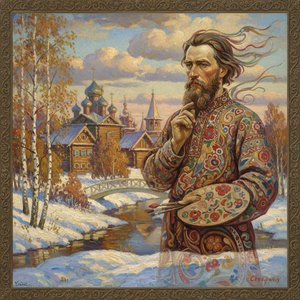
Boris Kustodiev (1878-1927) was a renowned Russian painter celebrated for his vibrant depictions of Russian life, merchant culture, and genre scenes.

A művész életrajza

Kustodiev Boris: A mesmérendező orosz festő, aki a rusztikus élet, a kereskedelmi kultúra és a tájképek gazdag világát ábrázolja. Fedezd fel a színes realisztikumot és a színpompás látványelemeket!

előbb ·

1. fejezet

Mekkora méretű legyen?

Húzza a csúszkát a méret megváltoztatásához; a bal oldali kép a keret valós szélességét mutatja. Az eredeti arányok megmaradnak.

Standard méret
egyedi méretű
CM
INCH

Válasszon előre meghatározott méreteink közül, amelyek megfelelnek a műalkotás eredeti arányainak.

szélesség
magasság

Írja be a kívánt szélességet és magasságot, hogy illeszkedjen a keretéhez vagy a falához. Mivel ez kézzel festett alkotás, egy eltérő formájú méret esetén a művész akár festhet is valamivel többet a kép körül, vagy korolathat is belőle — az Ön döntésének megfelelően. A festés megkezdése előtt küldünk egy digitális tervezetet jóváhagyásra. Az oldalon látható kép nem tartalmazza a végeredményt — csak a tervezet mutatja meg a valódi eredményt.

2. fejezet

Hogyan érkezzen meg?

Válaszd ki a feszített vászon széleit

Válassza ki a keretet

Corner sample of the WhiteWrap canvas edge finish, stretched on tömörfa bars
Fehér Ft1
Corner sample of the BlurSideWrap canvas edge finish, stretched on tömörfa bars
Elmosódott szélek Ft1
Corner sample of the ExtendedWrap canvas edge finish, stretched on tömörfa bars
Kiterjesztett Ft1
Corner sample of the P118B picture frame: formázott polisztirol, 5 cm wide and 3 cm thick
P118B Ft10
Corner sample of the P118H picture frame: formázott polisztirol, 5 cm wide and 3 cm thick
P118H Ft10
Corner sample of the P118W picture frame: formázott polisztirol, 5 cm wide and 3 cm thick
P118W Ft10
Corner sample of the P438Z picture frame: formázott polisztirol, 5.5 cm wide and 3.5 cm thick
P438Z Ft10
Corner sample of the P508JH picture frame: formázott polisztirol, 7 cm wide and 3.5 cm thick
P508JH Ft12
Corner sample of the P508YH picture frame: formázott polisztirol, 7 cm wide and 3.5 cm thick
P508YH Ft12
Corner sample of the P805H picture frame: formázott polisztirol, 5 cm wide and 3.5 cm thick
P805H Ft10
Corner sample of the P805Z picture frame: formázott polisztirol, 5 cm wide and 3.5 cm thick
P805Z Ft10
Corner sample of the P919BZ picture frame: formázott polisztirol, 7 cm wide and 3.5 cm thick
P919BZ Ft10
Corner sample of the P919G picture frame: formázott polisztirol, 7 cm wide and 3.5 cm thick
P919G Ft10
Corner sample of the P919XJ picture frame: formázott polisztirol, 7 cm wide and 3.5 cm thick
P919XJ Ft10
Corner sample of the P959ZH picture frame: formázott polisztirol, 5 cm wide and 3 cm thick
P959ZH Ft10
Corner sample of the P968JZ picture frame: formázott polisztirol, 6 cm wide and 4 cm thick
P968JZ Ft12
Corner sample of the W106C picture frame: tömörfa, 5 cm wide and 3 cm thick
W106C Ft8
Corner sample of the W218G picture frame: tömörfa, 5 cm wide and 3 cm thick
W218G Ft10
Corner sample of the W218JH picture frame: tömörfa, 5 cm wide and 3 cm thick
W218JH Ft8
Corner sample of the W218Y picture frame: tömörfa, 5 cm wide and 3 cm thick
W218Y Ft10
Corner sample of the W307PJ picture frame: tömörfa, 6 cm wide and 3 cm thick
W307PJ Ft10
Corner sample of the W316G picture frame: tömörfa, 6 cm wide and 3 cm thick
W316G Ft10
Corner sample of the W316PJ picture frame: tömörfa, 6 cm wide and 3 cm thick
W316PJ Ft8
Corner sample of the W316Y picture frame: tömörfa, 6 cm wide and 3 cm thick
W316Y Ft10
Corner sample of the W398PJ picture frame: tömörfa, 5 cm wide and 3 cm thick
W398PJ Ft8
Corner sample of the W4111J picture frame: tömörfa, 6.5 cm wide and 3.5 cm thick
W4111J Ft10
Corner sample of the W500HY picture frame: tömörfa, 7 cm wide and 5 cm thick
W500HY Ft15
Corner sample of the W500JH picture frame: tömörfa, 7 cm wide and 5 cm thick
W500JH Ft15
Corner sample of the W692G picture frame: tömörfa, 8 cm wide and 4 cm thick
W692G Ft12
Corner sample of the W849H picture frame: tömörfa, 5 cm wide and 3 cm thick
W849H Ft8
Corner sample of the W940BG picture frame: tömörfa, 7.5 cm wide and 4.5 cm thick
W940BG Ft15
Corner sample of the W953PJ picture frame: tömörfa, 6 cm wide and 3.5 cm thick
W953PJ Ft8
Corner sample of the H24-GOLD picture frame: faragott fa gesszóval, 10 cm wide and 6 cm thick
H24-GOLD Ft30
Corner sample of the H24-SILVER picture frame: faragott fa gesszóval, 10 cm wide and 6 cm thick
H24-SILVER Ft30
Corner sample of the H36-GOLD picture frame: faragott fa gesszóval, 15 cm wide and 6.5 cm thick
H36-GOLD Ft45
Corner sample of the H36-SILVER picture frame: faragott fa gesszóval, 15 cm wide and 6.5 cm thick
H36-SILVER Ft45

Keretprofil: . A kerettel együtt vett teljes méret: .

3. fejezet

Ki festi, és változtatni kellene-e bármit?

Példák a módosíthatóságra: Az arc kicserélése a vásárló fotójára; háziállat hozzáadása (pl. macska kicserélése kutyára); rejtett üzenet elhelyezése a háttérben; a háttér tájéképének vagy elemeinek megváltoztatása.
A megrendelést követően a OriginalUniqueArt.com csapat e-mailt küld a vásárlónak az instrukciókkal, és biztosítja a tervezeti előnézetet

Világszerte elérhető szállítás () 3-4 hét alatt a szokásos 5 hét helyett. (6 november). A minőség nem kérdőjelezhető.

4. fejezet

Az utolsó finomhangolás

Egy felirat, mint egy múzeumban?

A gravírozott bronztábla részletei

This elegant plaque features the artist's name and the title of the artwork, finely engraved for a timeless presentation.

It is made from bronze with a refined, elegant finish. The text is precisely laser-engraved for a sharp and permanent result. Measuring 9x2 cm, the plaque is compact yet easy to read. It's built to be durable and scratch-resistant, offering a professional, museum-quality look. Mounting is simple thanks to the included adhesive backing.

Átlátszó akril tábla részletei

The plaque includes essential engraved details such as the artist's name, the title of the artwork, the date it was created, the type of media used-like oil on canvas or watercolor-a brief description of the piece, and a QR code that links to the complete artwork information.

It is crafted from clear acrylic, offering a sleek, modern appearance. The text is UV-engraved in black to ensure strong visual contrast. With a size of 10x15 cm, it ensures optimal readability. It comes equipped with two metal hooks for secure wall mounting. The plaque is designed to be weather-resistant, making it suitable for various environments, and it includes interactive features that work seamlessly with smartphone scanning.

Fekete akril tábla részletei

This elegant plaque includes engraved information such as the artist's name, the title of the artwork, the date it was created, the type of media used (like oil on canvas or watercolor), a short description of the artwork, and a QR code for quick access to more information.

The plaque itself is made from refined black acrylic with a premium finish. The text is laser-engraved in white for high contrast and readability. Its size is 10x15 cm, designed to be easy to read. It comes with two metal hooks for professional mounting. The design is sleek and fits any interior style. It is also weather-resistant and durable, with built-in digital integration for mobile compatibility.

Egy védőréteg?

Mikor lenne szüksége rá?

5. fejezet

Az Ön által megrendelt festmény

Flowers

Reprodukciós technika

Reprodukció mérete

-

Kiváló mesterművész

Nagyobb részletesség, finomság és bővített gyártási idő

-

Reprodukció keretezése

-

-

A bármely oldalsó méretét túlszálaló 105 cm (kb. 41 hüvelyk) meghaladó műalkotások vagy reprodukciók esetében a keret összeszerelhető készletként, szétszerelve kerül szállításra. Ez a módszer biztosítja a biztonságos szállítást, és megakadályozza a szállítás során fellépő sérüléseket.

Szakmész összeszerelést igényel – ez nem DIY (önösszeszerelhető) termék.
A készletet egy tapasztalt keretező szakembernek kell összeszerelnie és a vásznat feszítenie kell, fa ragasztó (nem tartalmazza a csomag), vásznfeszítő fogó és szorítók használatával, amelyek a ragasztó száradásáig a keretrészeket egymáshoz vuôngjba tartják. A helytelen összeszerelés vagy a nem egyenletes vásznfeszítés maradandó károsíthatja a műalkotást, és ez nem része a garanciánknak.

  • A készlet tartalmazza az összes tömörfa rudat, pontosan méretre vágva.

  • A mellékelt csavarokkal, valamint a sarokszerekhez szükséges faütő ragasztóval kell összeszerelnie (ez nem tartalmazható a csomagban), így a keretrendezőnek külön kell beszereznie.

  • A csomag nem tartalmazza a szükséges professzionális eszközöket: egy vászonfeszítőt és klipseket a rácsok vízszintes tartásához a ragasztó megszáradásáig.

Fontos:
A sarokcsatlakozásokhoz fánylagra van szükség, a keretrudakat szorítókapcsokkal kell rögzíteni, amíg a rag teljesen meg nem szárad, a kész keretre feszített vászonhoz pedig vászonfeszítő fogat szükséges. Ezek egyike sem található meg a készletben. Kérjük, rendelés előtt győződjön meg róla, hogy rendelkezik tapasztalt keretező szakemberrel.

Névtábla

-

-

Védőréteg (Lakk)

Fényes lakk (intenzívabb színek, védelem a fény és a nedvesség hatása ellen)

-

Műalkotásom egyedi igényre szabása

Példák a módosíthatóságra: az arc kicserélése az ügyfél fotójára; háziállat hozzáadása (pl. macska helyett kutya); rejtett üzenet elhelyezése a háttérben; a háttér tájainak vagy elemeinek megváltoztatása.

-

Sürgős

Világszerte szóló szállítás () mindössze 3-4 hét alatt, a szokásos 5 hét helyett. (6 november). A minőség nem kérdőjelezhető.

-

Express szállítás

Világszerte elérhető szállítás területre 5 héten belül. (13 november).

A szállítás díja tartalmazza

Összesített ár

Ft 98120

Összesített ár Ft 98120

Az üvegkeretes opció csak 110 cm alatti méretben érhető el

Minden rendelés mellé tartalmazva

  • Ingyenes globális expressz szállítás
  • Prémium minőségű len vászon
  • Teljes körű szállítási biztosítás
  • Vámvisszatérítési Garancia
  • Hiteles színarányosság garancia
  • 100 napos visszaküldési lehetőség (csak hibás termékek esetén)
  • 100% pénzvisszatérítési garancia
  • Több darab vásárlásakor kedvezmény

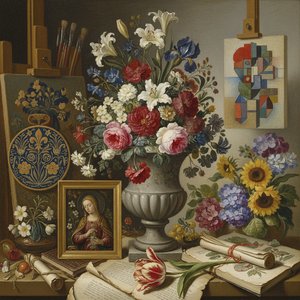
A Symphony of Petals: The Soul of Kustodiev’s Flowers

In the turbulent landscape of 1917, as the winds of the Russian Revolution began to reshape the very foundations of a nation, Boris Mikhailovich Kustodiev turned his gaze toward a more enduring, tranquil beauty. His painting, “Flowers,” is far more than a mere botanical study; it is a breathtaking window into the Russian soul, offering a sanctuary of color and light amidst historical upheaval. Through this exquisite oil on canvas, Kust-odiev invites us to witness a moment of profound stillness, where the ephemeral beauty of nature serves as a poignant counterpoint to the shifting tides of human history.

The composition centers upon a delicate floral arrangement, cradled within a simple yet striking blue vase. Daisies of varying sizes dominate the scene, their bright, innocent faces scattered throughout the bouquet like stars in a twilight sky. Interspersed with these blooms are subtle hints of leaves and the ethereal presence of butterflies, which dance around the arrangement, adding a sense of spontaneous life and movement to the piece. The artist’s palette is masterfully curated, leaning heavily into soothing shades of blue and purple to establish an atmosphere of deep serenity and contemplative peace.

Mastery of Texture and Light

To behold a reproduction of this masterpiece is to experience Kustodiev’s extraordinary command over technique. He was a painter who understood that emotion resides in the surface of the canvas itself. Utilizing a rich, impasto technique, Kustodiev applied thick layers of pigment to create a palpable texture that catches the light and breathes life into every petal. These heavy brushstrokes do not merely represent form; they create a sense of energy and luminosity, making the highlights on the daisies appear to shimmer as if caught in a gentle breeze.

This tactile approach to painting allows the viewer to feel the weight and vitality of the flora. The interplay between the deep, velvety purples and the crisp, bright whites of the daisies creates a visual rhythm that is both captivating and restorative. For the discerning collector or interior designer, this technique offers a multidimensional quality that elevates a room, providing a focal point that changes character depending on the lighting of the space.

A Nostalgic Vision for the Modern Interior

Beyond its aesthetic brilliance, “Flowers” carries a profound symbolic weight. Kustodiev’s work is often characterized by a nostalgic yearning for the vibrant merchant culture and the idyllic rural life of Russia—a world that was rapidly vanishing during his lifetime. By focusing on the simple, unadulterated beauty of a floral arrangement, he captures a sense of timelessness. The painting acts as an emotional anchor, evoking feelings of nostalgia, peace, and a deep connection to the natural world.

For those seeking to infuse their living spaces with inspiration, this artwork serves as a perfect marriage of historical depth and contemporary elegance. Whether placed in a sun-drenched morning room or a sophisticated, moody study, the painting’s serene blue tones and energetic textures provide a sense of calm sophistication. Owning a high-quality reproduction of this Kustodiev masterpiece is not merely an acquisition of decor; it is an invitation to preserve a fragment of history and to surround oneself with the enduring, blooming spirit of the Russian masters.

Kérdések és válaszok

Mely művészeti irányba tartozik a „Flowers”, Kustodiev Boris alkotása?

A "Flowers" a Russian Realism egyik alkotása. A művészeti irány meghatározza azt a művészeti hagyományt, amelybe a mű beágyazódik.

Milyen hangulatot kölcsönözne a "Flowers" egy térnek?

A „Flowers”, Kustodiev Boris alkotása Serene hangulata tökéletesen illeszkedik a javasolt helyszínhez: egy Living Room.

Milyen módon kapcsolódik össze a „Flowers”, Kustodiev Boris alkotása a Russian Realism irányzatot a művész honcountryjához?

A "Flowers" alkotását Kustodiev Boris készítette, aki Oroszország-ban született, a Russian Realism irányzat keretein belül. A művész származása összeköti a művet a Russian Realism stílussal, amelyet Oroszország művészei gyakoroltak.

Több információ erről a festményről

Megtekintés AR előnézet Váltás nyomtatványra Áttérés digitális képre Küldés
Részletek Útmutató Kedvencekhez ad Letöltés Hasonló darabok X-ray felvétel Diavetítés Kérdések és válaszok Statisztika

Számokban kifejezve

  • 1917a festés éve
  • 29választható keretek
  • standard méretek, saját arányokkal
  • 5hetek a festésre és a kézbesítésre
Kustodiev Boris

Kustodiev Boris

1878 - 1927, Oroszország

Gyors információk Kustodiev Boris művészről

  • Artistic Movement Or Style: Realizmus, Nyugdíjas
  • Artists Or Movements Influenced By This Artist: ['Keresztény művészet']
  • Artists Who Influenced This Artist:
    • Repin
    • Perov
  • Date Of Birth: 1878.03.07
  • Date Of Death: 1927.05.28
  • Full Name: Boris Mikhaylovich Kustodiev
  • Nationality: Orosz
  • Notable Artworks:
    • A kereskedő felesége
    • Fontanka
    • Maslenica
  • Place Of Birth: Oroszlány, Oroszország

A művész életrajza

A Life Immersed in Russian Spirit

Boris Mikhailovich Kustodiev, born on March 7, 1878, in Astrakhan, Russia, was an artist whose work became inextricably linked to a vibrant and often idealized depiction of Russian life. His early years were shaped by a profound sense of provinciality, deeply colored by the financial hardships that followed his father’s untimely death – a respected professor of philosophy, history, and logic. This formative experience, witnessing the struggles of merchants and the everyday lives of common folk, profoundly influenced the themes that would dominate his artistic output throughout his career. Kustodiev's initial education began within the confines of the theological seminary in Astrakhan, yet it was private lessons with Pavel Vlasov, a former student of Vasily Perov, that truly ignited his artistic passion and laid the foundation for his distinctive style. This crucial mentorship led him to St. Petersburg and the prestigious Imperial Academy of Arts, where he studied under the renowned Ilya Repin from 1896 to 1903. Repin recognized Kustodiev’s considerable talent early on, even inviting him to assist with a monumental commemorative painting – an invaluable opportunity that provided crucial experience and solidified his artistic commitment to capturing the essence of Russian identity.

Artistic Development and Key Influences

Kustodiev's artistic journey unfolded across a diverse range of genres – portraiture, genre scenes brimming with social commentary, and meticulously illustrated books. However, he consistently returned to portraying the richness and complexity of Russian culture, often focusing on the lives of merchants and rural communities. His style evolved organically over time, initially rooted in Realism but gradually incorporating elements of Art Nouveau’s decorative elegance and flowing lines. He possessed an extraordinary ability not merely to *record* what he saw, but also to convey the atmosphere, mood, and spirit of a particular place or moment – a skill that set him apart from many of his contemporaries. The merchant class, with their traditions, customs, and often-hidden dignity, became a recurring and beloved motif in his work, reflecting those early childhood impressions and offering a sympathetic portrayal of a frequently overlooked segment of Russian society. Paintings like *The Merchant’s Wife* (1918), a masterpiece of nuanced characterization, stand as powerful testaments to this enduring fascination. Beyond portraits, Kustodiev masterfully captured scenes of everyday life – bustling marketplaces overflowing with activity, lively folk festivals such as Maslenitsa (Pancake Week) depicted with exuberant color and energy, and serene landscapes that evoked a deep sense of national pride and connection to the Russian land. His work wasn’t simply representational; it was infused with a palpable love for Russia and its people – a sentiment that resonated deeply with audiences then and continues to captivate viewers today.

European Travels and Artistic Experimentation

During his artistic maturation, Kustodiev embarked on extensive travels throughout Europe, seeking inspiration and broadening his artistic horizons. In 1904, he spent time studying in Paris under René Menard, absorbing the Impressionistic techniques of the era. He also journeyed to Spain (1907), Italy (1909), and Austria, France, and Germany, immersing himself in diverse cultural landscapes. These experiences profoundly influenced his style, introducing him to new compositional approaches and color palettes. Notably, he participated in the exhibitions of the *World of Art* group (Mir Iskusstva) in 1910, a movement that championed innovation and challenged traditional artistic conventions. His early years were marked by experimentation with satirical journals like *Zhupel* (Bugbear) and *Hell’s Mail*, reflecting his engagement with contemporary social issues. These periods of exploration contributed significantly to the development of his unique visual language – a blend of realism, decorative elements, and a deep understanding of Russian culture.

Overcoming Adversity: Resilience in Art

Tragically, Kustodiev's life took a dramatic turn in 1916 when he suffered a debilitating spinal injury, resulting in paraplegia. This devastating event confined him to a wheelchair, presenting immense physical and emotional challenges. However, rather than succumbing to despair, Kustodiev channeled his suffering into an even greater artistic output – a testament to the indomitable spirit of creativity. Despite the limitations imposed by his condition, he continued to paint prolifically, his later works characterized by an intensified joyfulness, vibrant color palettes, and a heightened sense of optimism. It’s as if, unable to fully experience life's pleasures through physical movement, he poured all of his energy into recreating its beauty on canvas – capturing the warmth of human connection, the splendor of nature, and the simple joys of everyday existence. This period saw him further refine his style, embracing a more decorative approach that celebrated the beauty of Russian folk traditions and rural life. His paintings from this time are not merely depictions of reality; they are expressions of hope, resilience, and an unwavering belief in the power of art to transcend adversity.

Legacy and Historical Significance

Boris Kustodiev’s contribution to Russian art lies primarily in his ability to capture the spirit of a rapidly changing era – a period marked by significant social upheaval, political transformation, and a burgeoning cultural identity. He wasn't simply documenting reality; he was interpreting it through a lens of nostalgia, affection, and profound understanding. His paintings offer invaluable insights into the lives of ordinary Russians during the late 19th and early 20th centuries, preserving their traditions, customs, and values for posterity. His work resonated deeply with audiences then and continues to captivate viewers today, serving as a poignant reminder of Russia’s rich cultural heritage. Kustodiev's influence can be seen in the works of subsequent generations of Russian artists who sought to celebrate their national identity and depict the beauty of everyday life. His paintings are now held in prominent collections across Russia, including the Kramskoy Museum of Fine Arts in Voronezh and the Kharkov Museum of Art in Ukraine, ensuring that his artistic vision will continue to inspire and enrich for years to come. He remains a beloved figure in Russian art history, celebrated for his vibrant palette, evocative storytelling, and unwavering commitment to portraying the soul of Russia.

Gyors információk

  • Movement: Russian Realism
  • Location: Arkhangelsk Regional Museum of Fine Arts
  • Artist: Boris Mikhailovich Kustodiev
  • Title: Flowers
  • Influences: Repin

Művészeti kvíz

Minden kérdésre csak egy helyes válasz létezik.

Kérdés 1:
What is the primary artistic style characteristic of Boris Mikhailovich Kustodiev?
Kérdés 2:
In what year was 'Flowers' created?
Kérdés 3:
Where is the painting 'Flowers' currently housed?
Kérdés 4:
What does Kustodiev’s use of shades of blue and purple primarily aim to achieve?
Kérdés 5:
What is the significance of 'Flowers' within Boris Mikhailovich Kustodiev’s artistic oeuvre?