Megtekintés
 Küldés
 Megosztás
 Részletek
 Útmutató

 Letöltés
 Hasonló darabok
 X-ray felvétel
 Diavetítés
 Kérdések és válaszok
 Statisztika
Virgil


 Összes részlet megjelenítése
Az ezen az oldalon megjelenített műalkotások szerzői jogi védelem alatt állnak, ami azt jelenti, hogy törvényileg nem készíthetünk és nem adhatunk el belőlük pontos másolatokat. Ez a védelem olyan nemzetközi megállapodások alapján érvényesül, mint például a Berni Egyezmény és a nemzeti jogszabályok által, beleértve azokat is, amelyeket meghatározott Az USA szerzői jogi törvénye – 17. cím.
Ez a módszer teljes mértékben megfelel a szerzői jogi szabályozásnak, mivel nem tartalmazza a védett műalkotás másolását vagy duplikálását. Ehelyett ez egy kreatív újinterpretáció – egy új festmény, amely az eredetivel való összefüggései miatt hatással van rá, de nem az az.
Giclée / Műnyomat
Múzeumi minőségű giclée vagy vászonnyomat, gyors gyártással és rugalmas finomítási lehetőségekkel. ( Kézzel festett másolat rendelése Áttérés digitális képre)




P118B Ft10

P118H Ft10

P118W Ft10

P438Z Ft10

P508JH Ft12

P508YH Ft12

P805H Ft10

P805Z Ft10

P919BZ Ft10

P919G Ft10

P919XJ Ft10

P959ZH Ft10

P968JZ Ft12

W106C Ft8

W218G Ft10

W218JH Ft8

W218Y Ft10

W307PJ Ft10

W316G Ft10

W316PJ Ft8

W316Y Ft10

W398PJ Ft8

W4111J Ft10

W500HY Ft15

W500JH Ft15

W692G Ft12

W849H Ft8

W940BG Ft15

W953PJ Ft8




Válasszon előre meghatározott méreteink közül, amelyek megfelelnek a műalkotás eredeti arányainak.

Írja be a keretének vagy a falának megfelelő szélességet és magasságot. A nyomatot csak le lehet vágni, soha nem tehető nagyobbá, mint az eredeti kép, így egy eltérő alakú méretnél a kép egy része elveszik. Mielőtt bármit kinyatintanánk, küldünk egy digitális próbamodellt jóváhagyásra. Az oldalon látható kép nem tartalmazza a valós levágást — ezt csak a próbamodell mutatja meg.
Világszerte történő kiszállítás területére mindössze 2 hét alatt, a szokásos 4-5 hét helyett. (3 november)

Ingyenes globális expressz szállítás

Prémium minőségű len vászon

Teljes körű szállítási biztosítás

Vámvisszatérítési Garancia

Hiteles színarányosság garancia

100 napos visszaküldési lehetőség (csak hibás termékek esetén)

100% pénzvisszatérítési garancia

Több darab vásárlásakor kedvezmény
 Az üvegkeretes opció csak 110 cm alatti méretben érhető el

Virgil
Giclée / Műnyomat
Reprodukció mérete
-


Összesített ár
Ft 26538
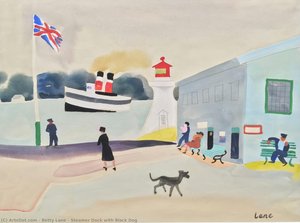
Egy Nyugodt Pillanat Megörökítve Színesfestményként: Betty Lane művének „Virgil”
Betty Lane színesfestménye, „Virgil”, tökéletesen tükrözi az impresszionizmus szellemét – egy olyan művészi mozgalmat, amely nem keresett fotóval való pontos megjelenítést, hanem inkább arra törekedett megközelíteni a fény és szín átjárását, mielőtt azt érzékelték volna. Ez a középkori alkotás körülbelül 1930 és 1940 között született, és egy kis vidéki tájképet mutat be két személyiség által közös útban járva, ami betekintést nyújt egy nyugodt jelenetbe az otthoni élet egyszerű szépsége körében. Lane művészi tudása szinte tökéletesen megfelel az impresszionizmus alapelveinek – a nagy részét szabad ecsettel való munka határozza meg, előnyben részesítve a tonalitás változásokat és nem pedig aprólékos részleteket. Ünnepélyesen figyeljük meg, hogyan használja fel az artista színek játékát és árnyalatokat, hogy mélységet és fényességt érzékeljünk – különösen jól mutatják meg az ég és a növényzet ábrázolása esetén.- Tájékítés: A festmény közepén két személyiség jár közös úton egy földúton, melyet diffüz fény öntöz meg. Személyiségük pontos helyét jelzi az otthoni környezet – egy vidéki táj amely számos hegy és fa található.
- Stílus és Technikája: Lane megközelítése tökéletesen követi az impresszionizmus alapelveit. Szabad ecsettel való munka dominál a kompozícióban, előnyben részesítve a tonalitás változásokat és nem pedig aprólékos részleteket. Ünnepélyesen figyeljük meg, hogyan használja fel az artista színek játékát és árnyalatokat, hogy mélységet és fényességt érzékeljünk – különösen jól mutatják meg az ég és a növényzet ábrázolása esetén.
- Történelmi Kontextusa: „Virgil” megjelenése egy jelentős művészi kísérletezés időszakában következett el világháború utáni első világháború után, amikor az impresszionizmus – melyet olyan művészek támogatottak, mint Monet és Renoir – kihívta meg az akadémiai hagyományokat, előnyben részesítve a szubjektív élményt és az érzékbeli percepció azonnali átadását. Lane művének tükrözése ez a szélesebb körű tendencia arra irányuló törekvésre, hogy elfogadjuk az érzelmeket és az atmoszférát – egy olyan művészi megközelítést, amely képes megkülönböztető élményt nyújtani.
- Színek Palettája: Az artista színek használata visszafogott és kifejező – előnyben részesítve föld színű árnyalatokat, melyek tükrözik a napfényt, ami átszűródik az erdőkön és hegyeken.
- Ecsettel való munka és Textúra: Lane ecsettel való munkája szabad és kifejező – ez megközelíti az ég és levegő mozgását és fényét, valamint növeli a festmény vizuális gazdagságát.
Kérdések és válaszok
„Virgil”, Betty Lane alkotása erős kontrasztokat vagy lágy harmóniákat használ?
A „Virgil”, Betty Lane alkotása színelemzése Érintésmentes kontrasztot és Erős színegyüntetés harmóniát mutat be.
Mely művészhez köthető a "Virgil"?
A "Virgil" alkotását Betty Lane készítette. Az ezen az oldalon található információk Betty Lane eredeti művészetét mutatják be.
Hol tekinthető meg az eredeti „Virgil”, Betty Lane alkotása?
Az eredeti "Virgil" mű megtekinthető a Niagara Historical Society Museum, Niagara-on-the-Lake, Kanada múzeumgyűjteményében.
A művész életrajza
A Life Painted in Light and Shadow
Betty Lane, born Elizabeth Thoburn Lane in Washington D.C. in 1907, was an American artist whose evocative watercolors and oils quietly charted a course through the shifting currents of modernist art. Her life, spanning nearly a century, was one of constant exploration – not just of artistic technique but also of place and perspective. The daughter of a Marine officer and raised amidst a large family, Lane’s early exposure to diverse locales – her father's postings included the Philippines and Santo Domingo in the West Indies – likely instilled in her a lifelong wanderlust and an observant eye for detail. Even as a child, around the age of nine, she demonstrated a natural aptitude for painting, finding solace and expression in watercolor. Though initially enrolled at the Corcoran College of Art and Design, Lane soon realized it didn’t nurture her burgeoning talent; a transfer to the Massachusetts Normal Art School proved pivotal, offering an environment more attuned to her artistic needs. This early search for the right creative space would become a defining characteristic of her career.Parisian Transformations and Early Recognition
The year 1928 marked a turning point with Lane’s journey to Paris. Immersing herself in the vibrant art scene, she studied under the influential Cubist painter André Lhote. This mentorship profoundly impacted her artistic development, instilling a rigorous understanding of form and composition that would underpin her modernist style. Lhote's influence wasn’t about mimicry but rather a foundational training in seeing the world anew – breaking down shapes, exploring spatial relationships, and embracing abstraction as a means to convey deeper truths. Returning to the United States in 1929, Lane settled in Falls Church, Virginia, and Washington D.C., where her work quickly gained attention. A significant milestone arrived in April 1931 with an exhibition at the Phillips Memorial Gallery alongside established artists John Marin and Harold Weston – a testament to Duncan Phillips’s discerning eye and early belief in Lane's potential. This recognition provided crucial encouragement as she navigated the complexities of establishing herself as a professional artist. She quickly found her footing, showcasing her evolving style and capturing the essence of the American landscape with a unique sensitivity.A Transatlantic Dialogue: Years Abroad and Artistic Refinement
The subsequent decade saw Lane embracing a nomadic existence, dividing her time between Cambridge, England, and Paris. These years were characterized by intense artistic exploration and a broadening of horizons. She wasn’t merely *depicting* landscapes; she was absorbing the atmosphere, light, and cultural nuances of each location. From the bustling streets of European cities to the serene countryside, Lane's canvases began to reflect her experiences – capturing not just what she saw but how it *felt*. This period also witnessed a diversification of her subject matter, encompassing portraits, domestic scenes, and increasingly abstract compositions. The influence of these travels is palpable in her evolving style, marked by expressive brushwork and a growing confidence in her use of color. During this time, she experimented with various techniques, incorporating elements of Impressionism and Surrealism into her work, creating a distinctive visual language. Following the outbreak of World War II, Lane relocated to Ontario, Canada from 1939-1946, continuing to paint and refine her artistic voice amidst global upheaval.Expanding Horizons: Teaching, Experimentation, and Lasting Legacy
In 1946, Lane returned to the United States and embarked on a new chapter as a teacher at Miss Porter’s School, where she remained for nearly two decades until 1965. This period wasn’t merely a professional obligation; it was an opportunity to share her passion for art and inspire a new generation of artists. Simultaneously, Lane continued to push the boundaries of her own creative practice, experimenting with woodblock printing, silkscreen, ceramics, and glass – demonstrating a remarkable versatility and willingness to embrace new mediums. After 1960, she settled in Brewster, Massachusetts, but her spirit of exploration remained undimmed. Extensive travels took her to Greece, Mexico, the Soviet Union, and Australia, each journey enriching her artistic vocabulary. Her commitment extended beyond the canvas; in 1977, she became an associate of the Women’s Institute for Freedom of the Press (WIFP), demonstrating a dedication to social causes. Betty Lane passed away in Brewster in 1996, leaving behind a rich and varied body of work that is now gaining increasing recognition. Her paintings are held in prestigious institutions including The Metropolitan Museum of Art, The Phillips Collection, The Provincetown Art Association and Museum, and The Cape Cod Museum of Art. Lane’s legacy lies not just in the beauty of her paintings but also in her unwavering commitment to artistic exploration, her ability to synthesize diverse influences into a unique personal vision, and her quiet determination to forge her own path in a rapidly changing world. Her work serves as a reminder that true artistry is born from both skill and a deeply felt connection to life itself.Artistic Style and Significance
Lane’s artistic style is characterized by a compelling blend of modernist techniques, expressive brushwork, and an acute sensitivity to detail. She moved fluidly between representational and abstract forms, often imbuing her paintings with a palpable sense of atmosphere and emotional depth. Her landscapes are particularly noteworthy for their evocative use of color and light, capturing the essence of a place rather than merely its appearance. *Her portraits, too, possess a remarkable psychological insight*, revealing not just physical likeness but also the inner lives of her subjects. Lane’s contribution to American art resides in her ability to synthesize diverse influences – from Cubism to Impressionism and beyond – into a cohesive and deeply personal vision. While she may not have achieved widespread fame during her lifetime, her work is now being recognized for its artistic merit and historical significance as an example of a woman artist navigating the complexities of the 20th century art world with grace, intelligence, and unwavering dedication to her craft.
Betty Lane
1907 - 1996 , Egyesült Államok
Rövid információk
- Artistic Movement Or Style: Modernista festészet
- Artists Or Movements Influenced By This Artist:
- Kubbistika
- Impressionizmus
- Artists Who Influenced This Artist: ['André Lhote']
- Date Of Birth: 1907-09-30
- Date Of Death: 1996-05-28
- Full Name: Betty Lane
- Nationality: Amerikai Egyesült Államok
- Notable Artworks:
- Men in Truck
- Sketch of House...
- Boathouses & Lighthouse
- Place Of Birth: Washington, USA
Kapcsolódó cikkek

John Constable 25 Mesterműve: A Természet Lényege Vászonon – OriginalUniqueArt.com
Fedezze fel John Constable 25 legszebb művészeti alkotását! Ismerje meg a romantika ikonikus tájképeit, Dedham Vale szépségét és a természet lenyűgöző ábrázolásait. Vászonkép reprodukcióinkkal eleganciát csempészhet otthonába – OriginalUniqueArt.com

A festészet forradalma: 10 ikonikus akvarellművészeti remekmű, melyek örökre megváltoztatták a művészetet
Fedezze fel a 10 legikonikusabb akvarell festményt, melyek megváltoztatták a művészetet! Ismerje meg Turner, Monet és más mesterek történetét. Vásároljon prémium minőségű reprodukciókat a OriginalUniqueArt.com-on – inspiráló faliképek otthonába!

Idyllic Visions: Exploring the Pastoral Scene in Art History – From Arcadia to Modern Interpretations
Explore the captivating history of pastoral art from classical Arcadia to modern masterpieces. Discover key artists like Millet & Cole at OriginalUniqueArt. Find serene landscape paintings for your home.
Evoking Arcadia: A Historical & Aesthetic Exploration of Rural Landscape Art
Explore the rich history of pastoral landscape art, from classical Arcadia to Impressionism & beyond. Discover key artists, movements, and how to collect serene rural scenes for your home. Expert insights at OriginalUniqueArt.

Ephemeral Visions: Exploring the Artistic Legacy & Contemporary Practice of Watercolor Painting
Explore the captivating world of watercolor painting! Discover its rich history, essential techniques, influential artists & collecting tips. A comprehensive guide for art enthusiasts from OriginalUniqueArt.