

 Megtekintés
 Küldés
 Megosztás
 Részletek
 Útmutató

 Letöltés
 Hasonló darabok
 X-ray felvétel
 Diavetítés
 Statisztika
The Bath
 Oil On Canvas
- WallArt
- Impressionism
 1886
1886- 19th Century
 72.0 x 91.0 cm
 Összes részlet megjelenítése
Kézzel készített olajfestmény reprodukció
Kézzel festett olajvastú vászon, az Ön által választott méretben és keretben, művészeink készítik meglévőre. ( Váltás nyomtatványra Áttérés digitális képre)




P118B Ft10

P118H Ft10

P118W Ft10

P438Z Ft10

P508JH Ft12

P508YH Ft12

P805H Ft10

P805Z Ft10

P919BZ Ft10

P919G Ft10

P919XJ Ft10

P959ZH Ft10

P968JZ Ft12

W106C Ft8

W218G Ft10

W218JH Ft8

W218Y Ft10

W307PJ Ft10

W316G Ft10

W316PJ Ft8

W316Y Ft10

W398PJ Ft8

W4111J Ft10

W500HY Ft15

W500JH Ft15

W692G Ft12

W849H Ft8

W940BG Ft15

W953PJ Ft8




Válasszon előre meghatározott méreteink közül, amelyek megfelelnek a műalkotás eredeti arányainak.

Írja be a kívánt szélességet és magasságot, hogy illeszkedjen a keretéhez vagy a falához. Mivel ez kézzel festett alkotás, egy eltérő formájú méret esetén a művész akár festhet is valamivel többet a kép körül, vagy korolathat is belőle — az Ön döntésének megfelelően. A festés megkezdése előtt küldünk egy digitális tervezetet jóváhagyásra. Az oldalon látható kép nem tartalmazza a végeredményt — csak a tervezet mutatja meg a valódi eredményt.
A rendelést követően a OriginalUniqueArt.com csapata e-mailt küld az ügyfélnek az instrukciókért, és biztosít egy előnézeti képet (mockup).
Világszerte elérhető szállítás () 3-4 hét alatt a szokásos 5 hét helyett. (25 október). A minőség nem kérdőjelezhető.

Ingyenes globális expressz szállítás

Prémium minőségű len vászon

Teljes körű szállítási biztosítás

Vámvisszatérítési Garancia

Hiteles színarányosság garancia

100 napos visszaküldési lehetőség (csak hibás termékek esetén)

100% pénzvisszatérítési garancia

Több darab vásárlásakor kedvezmény
 Az üvegkeretes opció csak 110 cm alatti méretben érhető el

The Bath
Reprodukciós technika
Reprodukció mérete
-


Összesített ár
Ft 96158
A Whisper of Domestic Intimacy: Exploring Berthe Morisot's "The Bath"
To stand before Berthe Morisot’s The Bath is to step into a moment suspended in time—a breath held within the soft glow of an afternoon indoors. This painting, executed in 1886, transcends a mere depiction of daily routine; it captures the very essence of private contemplation. The scene unfolds with remarkable delicacy: a woman seated amidst the quiet rituals of self-care, brushing her hair. Morisot does not merely record what she sees; she filters it through the luminous lens of Impressionism, inviting us into an atmosphere thick with unspoken tenderness and domestic tranquility.
The Artistry of Light and Brushwork
Technically, The Bath is a masterclass in handling light. Morisot’s signature touch—those characteristic, visible brushstrokes—are everywhere, giving the canvas a vibrant, almost palpable texture. These strokes do not strive for photographic realism; rather, they are joyful records of how light interacts with color at a specific instant. Observe the interplay between the creamy whites of her dress and the subtle washes of blue and pink adorning the surrounding objects. The artist employs diffused, natural light that seems to emanate from an unseen source, gently illuminating the subject while allowing soft shadows to deepen the sense of space. This masterful handling of paint on canvas transforms simple materials into a symphony of ephemeral color.
Impressionism and the Modern Moment
Historically, this work anchors itself firmly within the revolutionary spirit of Impressionism. While contemporaries like Monet captured grand landscapes or bustling boulevards, Morisot turned her gaze inward, finding profound subject matter in the quotidian life of bourgeois womanhood. The movement sought to capture the fleeting impression—the momentary shimmer, the passing glance. In The Bath, that focus is intensely personal. It speaks to a time when modern life found its beauty not in grand public spectacles, but in these intimate, unscripted moments of repose. Owning a reproduction allows one to connect with this pivotal shift in art history, bringing the spirit of late nineteenth-century Parisian life into a contemporary setting.
Symbolism and Emotional Resonance
Beyond its technical brilliance, the painting resonates with deep emotional currents. The act of grooming oneself, captured here, becomes symbolic of renewal, reflection, and quiet self-possession. There is an undeniable sense of grace emanating from the composition—the gentle curves of the figure contrasting beautifully with the more structured rectangles of the furniture. For the collector or designer, this piece offers more than decoration; it offers a mood. It suggests a sanctuary, a space where one can pause the clamor of the outside world and embrace a moment of serene beauty. The soft palette and intimate subject matter make it an unparalleled accent for any room seeking to evoke calm sophistication.
Bringing History Home
To own a reproduction of The Bath is to curate a piece of art history that feels deeply personal. Our skilled artisans meticulously recreate the texture, the luminosity, and the delicate touch of Morisot’s original oil on canvas. It is an opportunity to possess not just an image, but a tangible echo of artistic genius—a whisper of light from 1886, ready to infuse your space with enduring elegance.
Kérdések és válaszok
Ismer-e más neveket a "The Bath" alkotója, Morisot Berthe?
A „The Bath” alkotójáról, Morisot Berthe nevű művészről ismert egyéb nevek között szerepel Berthe Marie Pauline Morisot, Névváltozat: Berthe Morisot.
Milyen reprodukciós méretet javasol a „The Bath”, Morisot Berthe alkotása alkotáshoz?
A „The Bath”, Morisot Berthe alkotása alkotáshoz egy Medium méretű reprodukciót javasolunk. A méret az arányok megőrzésével módosítható.
Hol és milyen célra ajánlott a "The Bath"?
A(z) „The Bath”, Morisot Berthe alkotása esetében a(z) Relaxation használatát és a(z) Bedroom helyiségben való elhelyezést javasoljuk.
A művész életrajza
A Life Immersed in Light and Intimacy
Berthe Morisot, born in Bourges, France, in 1841, emerged as a pivotal figure within the Impressionist movement, yet her story extends far beyond simply being a “female Impressionist.” To define her solely by gender diminishes the profound originality of her artistic vision and her unwavering commitment to capturing the fleeting moments of modern life. Descended from a bourgeois family with artistic lineage – she was related to the celebrated Rococo painter Jean-Honoré Fragonard – Morisot received an education uncommon for women of her era, one that nurtured her innate talent and fostered a lifelong dedication to painting. Early lessons with Geoffroy-Alphonse Chocarne and Joseph Guichard provided foundational skills, but it was exposure to the masterpieces within the Louvre, copying works by the Old Masters, that truly ignited her artistic sensibility. This period of rigorous training laid the groundwork for her later explorations of light, color, and form. The influence of Jean-Baptiste-Camille Corot proved particularly significant; his emphasis on *plein air* painting – working outdoors directly from nature – became a cornerstone of Morisot’s approach, allowing her to capture the ephemeral qualities of light and atmosphere with remarkable sensitivity.Navigating the Impressionist Circle
Morisot's artistic journey intertwined closely with that of Édouard Manet, whom she met in 1864. Their relationship was one of mutual respect and intellectual exchange, with Manet serving as a mentor and friend. He painted her numerous times, immortalizing her presence within his own evolving style. However, Morisot wasn’t merely a subject; she actively participated in the burgeoning Impressionist movement, becoming a founding member alongside Monet, Degas, Renoir, and Pissarro. In 1874, she boldly exhibited with this group of “rejected” artists, defying the conservative standards of the official Salon. This first Impressionist exhibition marked a turning point in art history, challenging traditional academic conventions and paving the way for new modes of artistic expression. Morisot participated in nearly all subsequent Impressionist exhibitions, consistently showcasing her unique perspective and solidifying her position within the avant-garde. Her work, often depicting intimate scenes of domestic life – women reading, mothers with children, leisurely moments in gardens – offered a distinctly feminine gaze, challenging prevailing societal norms and expanding the scope of acceptable subject matter for female artists.A Distinctive Artistic Voice
What sets Morisot apart is not simply *what* she painted, but *how* she painted it. Her brushwork is characterized by its delicate fluidity, a lightness of touch that conveys an impression of spontaneity and immediacy. She masterfully employed broken color – applying small strokes of pure pigment side-by-side to create a shimmering effect of light and atmosphere. Unlike some of her Impressionist colleagues who focused on grand landscapes or bustling cityscapes, Morisot often chose intimate interior scenes and portraits, exploring the nuances of human relationships and the quiet beauty of everyday life. Her palette is typically soft and harmonious, favoring pastel shades and subtle gradations of color. This isn’t to say her work lacks strength; rather, it possesses a refined elegance and emotional depth that resonates with viewers even today. Critics like Gustave Geffroy recognized this unique quality, hailing her as one of “les trois grandes dames” of Impressionism – alongside Marie Bracquemond and Mary Cassatt – acknowledging her significant contribution to the movement.Influences and Development
Morisot’s artistic development was shaped by a confluence of factors. Her early training with Corot instilled in her a deep appreciation for *plein air* painting, emphasizing direct observation of nature and capturing its fleeting effects of light. The Louvre, with its vast collection of Old Master paintings, provided a crucial foundation in technique and composition. However, it was Manet’s influence that truly liberated her artistic vision. He encouraged her to embrace brighter colors, looser brushwork, and a more modern approach to subject matter. Her relationship with him wasn't solely one of mentorship; she also influenced his style, introducing him to the possibilities of capturing fleeting moments and subtle nuances of light. The works of other artists, such as Delacroix and Millet, also contributed to her evolving artistic vocabulary, though she always maintained a distinctly personal voice.Legacy and Lasting Influence
Berthe Morisot’s life was tragically cut short in 1895, but her artistic legacy endures. Married to Eugène Manet, brother of Édouard, she navigated a world that often underestimated female artists, yet she persevered with unwavering determination. She exhibited under her full maiden name – a subtle act of independence and self-assertion – and consistently challenged conventional expectations. Her work continues to captivate audiences with its delicate beauty, emotional honesty, and innovative technique. Morisot’s influence extends beyond the realm of Impressionism; she paved the way for future generations of female artists, demonstrating that women could achieve artistic excellence and contribute meaningfully to the evolution of art history. Today, her paintings are held in prestigious collections around the world, serving as a testament to her enduring talent and her pivotal role in shaping modern art. Woman in the Green Dress, *The Cradle*, and *Summer’s Day* remain iconic examples of her mastery, inviting viewers into a world of light, intimacy, and quiet contemplation.
Morisot Berthe
1841 - 1895 , Franciaország
Rövid információk
- Artistic Movement Or Style: Impressionista
- Artists Or Movements Influenced By This Artist:
- Corot
- Manet
- Artists Who Influenced This Artist:
- Corot
- Manet
- Date Of Birth: 1841. jan 14.
- Date Of Death: 1895. már 2.
- Full Name: Berthe Morisot
- Nationality: Francia
- Notable Artworks:
- A zöld ruhában lévő nő
- A kiságy
- Nyári nap
- Place Of Birth: Bourges, Francia
Kapcsolódó cikkek
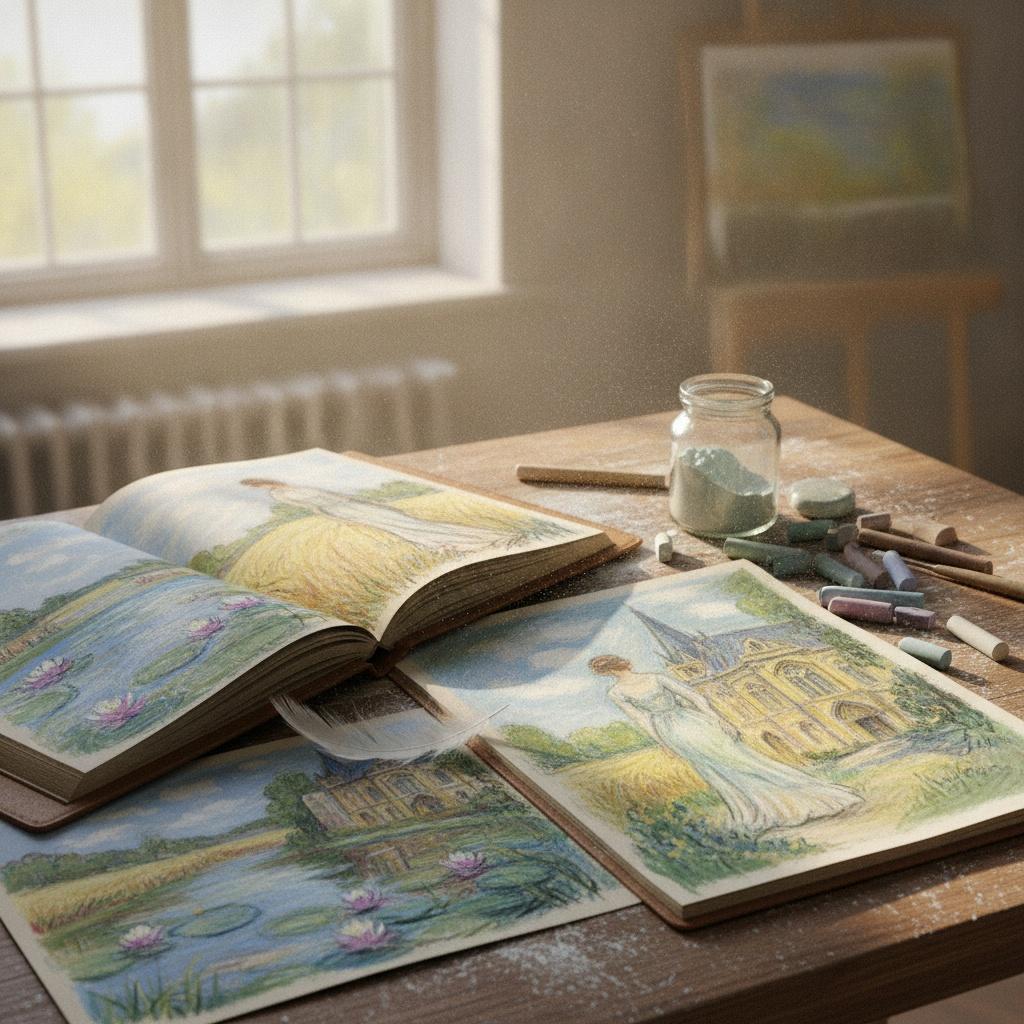
The Soft Magic of Chalk: Capturing Light, Texture, and the Ethereal Soul of Impressionist Masterpieces
Discover the ethereal beauty of pastel and chalk art. Explore how Impressionist masters like Van Gogh and Degas captured light and texture to create timeless, soulful masterpieces for the discerning collector.
Renoir Mesterek: A 25 Leglenyűgözőbb Kép a Francia Impresszionizmus Gyöngyszemeiből | OriginalUniqueArt
Fedezze fel Pierre-Auguste Renoir 25 legszebb művét! Ismerje meg az impresszionizmus gyöngyszemeit, a színek és fény játékát. Vásároljon exkluzív Renoir reprodukciókat otthonába a OriginalUniqueArt.com kínálatából – minőségi faliképek és inspiráló dekoráció.
The Magic of Pastel Art: A Guide to Soft Colors and Velvately Textures in Impressionist Masterpieces
Explore the ethereal beauty of pastel art. Discover how Impressionist masters used soft hues and velvety textures to capture light. A professional guide for art enthusiasts seeking to understand, collect, and appreciate the delicate magic of this timeless medium.

A 10 legikonikus impresszionista tájkép: Művészeti remekművek otthonába – OriginalUniqueArt.com
Fedezze fel a 10 legikonikus impresszionista tájkép festményt! Monet, Renoir és más mesterek alkotásainak története. Olajfestmények, vászonképek otthonába – OriginalUniqueArt.com kínálatából. Explore the full collection online!

Impressionistic Realism's Finest: 10 Masterpieces for Your Home | OriginalUniqueArt
Journey through Impressionistic Realism with 10 iconic masterpieces by Monet, Renoir & Van Gogh. Explore art history, techniques & find museum-quality reproductions for your home at OriginalUniqueArt.com. Discover all masterpieces online!


