
 Megtekintés
 Küldés
 Megosztás
 Részletek
 Útmutató

 Letöltés
 Hasonló darabok
 X-ray felvétel
 Diavetítés
 Kérdések és válaszok
 Statisztika
Nursing Madonna

- 51.0 x 41.0 cm


 Összes részlet megjelenítése
Giclée / Műnyomat
Múzeumi minőségű giclée vagy vászonnyomat, gyors gyártással és rugalmas finomítási lehetőségekkel. ( Kézzel festett másolat rendelése Áttérés digitális képre)




P118B Ft10

P118H Ft10

P118W Ft10

P438Z Ft10

P508JH Ft12

P508YH Ft12

P805H Ft10

P805Z Ft10

P919BZ Ft10

P919G Ft10

P919XJ Ft10

P959ZH Ft10

P968JZ Ft12

W106C Ft8

W218G Ft10

W218JH Ft8

W218Y Ft10

W307PJ Ft10

W316G Ft10

W316PJ Ft8

W316Y Ft10

W398PJ Ft8

W4111J Ft10

W500HY Ft15

W500JH Ft15

W692G Ft12

W849H Ft8

W940BG Ft15

W953PJ Ft8




Válasszon előre meghatározott méreteink közül, amelyek megfelelnek a műalkotás eredeti arányainak.

Írja be a keretének vagy a falának megfelelő szélességet és magasságot. A nyomatot csak le lehet vágni, soha nem tehető nagyobbá, mint az eredeti kép, így egy eltérő alakú méretnél a kép egy része elveszik. Mielőtt bármit kinyatintanánk, küldünk egy digitális próbamodellt jóváhagyásra. Az oldalon látható kép nem tartalmazza a valós levágást — ezt csak a próbamodell mutatja meg.
Világszerte történő kiszállítás területére mindössze 2 hét alatt, a szokásos 4-5 hét helyett. (7 november)

Ingyenes globális expressz szállítás

Prémium minőségű len vászon

Teljes körű szállítási biztosítás

Vámvisszatérítési Garancia

Hiteles színarányosság garancia

100 napos visszaküldési lehetőség (csak hibás termékek esetén)

100% pénzvisszatérítési garancia

Több darab vásárlásakor kedvezmény
 Az üvegkeretes opció csak 110 cm alatti méretben érhető el

Nursing Madonna
Giclée / Műnyomat
Reprodukció mérete
-


Összesített ár
Ft 26396
Bernardino Luini's Tender Reverie: *Nursing Madonna* (1520)
This exquisite hand-painted reproduction captures Bernardino Luini’s masterful depiction of maternal love and innocence – *Nursing Madonna*. Executed in 1520, this intimate portrait transcends a simple representation of motherhood; it is a profound meditation on vulnerability, nourishment, and the enduring bond between mother and child. Measuring 51 x 41 cm, the scale invites a deeply personal connection with the scene, drawing the viewer into Luini’s world of serene contemplation.
A Lombard Master's Influence
Bernardino Luini (1480-1532), born in Runo, Italy, stands as a pivotal figure within the late Italian Renaissance. His artistic journey was profoundly shaped by his association with Leonardo da Vinci, a relationship that infused his work with an unparalleled sensitivity to form and light. Luini’s style, characterized by its gentle realism and expressive detail, reflects this influence while retaining a distinctly Lombard sensibility – a quiet dignity and profound humanity. The painting's execution demonstrates Luini's meticulous attention to texture, particularly evident in the folds of the woman’s dress and the delicate rendering of the baby’s skin.
- Technique: Luini employs a layered glazing technique, building up color gradually to achieve luminous effects and subtle gradations.
- Material: Likely executed in oil on panel, providing rich colors and smooth surfaces.
- Composition: The pyramidal composition directs the viewer's eye towards the central figures, emphasizing their connection and creating a sense of stability and harmony.
Symbolism and Narrative
The scene depicted is deeply rooted in Christian iconography, representing the Virgin Mary nursing the infant Jesus. This motif, prevalent throughout art history, symbolizes not only physical nourishment but also spiritual sustenance – the offering of divine grace. The woman’s red dress, a color traditionally associated with royalty and sacrifice, further elevates the scene's significance. The presence of the two secondary figures adds an element of narrative complexity, perhaps representing witnesses to this sacred moment or symbolizing the broader community that supports and sustains the mother and child. The inclusion of the bottle-like object in the background is intriguing; it may represent a symbol of nourishment beyond just milk, possibly alluding to spiritual sustenance.
Emotional Resonance and Artistic Legacy
*Nursing Madonna* possesses an undeniable emotional power, evoking feelings of tenderness, peace, and reverence. Luini’s ability to capture the quiet intimacy of this moment is remarkable, inviting viewers to contemplate themes of love, protection, and faith. This reproduction offers a unique opportunity to own a piece of art history – a testament to Luini's genius and his profound understanding of the human condition. Its timeless appeal makes it an ideal addition to any collection or a captivating focal point within interior design settings.
Dimensions & Details
Size: 51 x 41 cm
Date: 1520
Artist: Bernardino Luini
Kérdések és válaszok
Bernardino Luini pályájának mely időszakához tartozik a „Nursing Madonna”?
Bernardino Luini pályaművében a „Nursing Madonna” a Early Period korszakba tartozik. Ez az időszak segít összehasonlíthatóvá tenni a művet a művész többi alkotásával.
Milyen színek jellemzik a "Nursing Madonna" alkotást?
A „Nursing Madonna”, Bernardino Luini alkotása színek palettáját úgy jellemzik, mint Earthy. Ez a mű színeinek tömör leírása.
Milyen az „Nursing Madonna”, Bernardino Luini alkotása általános hangulata?
„Nursing Madonna”, Bernardino Luini alkotása művészeti alkotásának összhangulata Romantic. Ez az érzet foglalja össze a mű általános atmoszféráját.
A művész életrajza
A Lombard Luminary: The Life and Art of Bernardino Luini
Bernardino Luini, a name resonating softly within the annals of Italian Renaissance painting, emerged from the picturesque region surrounding Lake Maggiore around 1480. Born in Runo, a small *frazione* near Dumenza, his early life remains shrouded in some mystery, yet it’s clear that destiny propelled him towards Milan, the vibrant artistic heartland of northern Italy. By 1500, he had relocated with his father, poised to absorb the burgeoning creative energy of the city. While accounts vary regarding his initial training—some credit Giovan Stefano Scotto, others Ambrogio Bergognone—a more profound influence was undoubtedly on the horizon: Leonardo da Vinci. The precise nature of their relationship remains debated, but it’s widely believed Luini worked directly under the master, a formative experience that would indelibly shape his artistic trajectory. This apprenticeship wasn't merely technical; it was an immersion into a world of subtle observation, innovative composition, and the elusive quality known as *sfumato*, which Luini would skillfully integrate into his own unique style.The Embrace of Leonardo and the Birth of a Style
Luini’s artistic development wasn’t simply imitation; it was a sensitive assimilation of Leonardo’s techniques filtered through his own Lombard sensibility. He didn’t strive to replicate Da Vinci’s intellectual rigor or anatomical precision, but rather embraced the softer, more lyrical aspects of his style. This is particularly evident in his depictions of women—graceful figures with elongated eyes, often described as “Luinesque” by the discerning eye of Vladimir Nabokov. These captivating gazes possess a gentle melancholy, an inwardness that invites contemplation. Early works like the *Adoration of the Magi* (c. 1505) in San Pietro, Luino, already hint at this emerging style, showcasing a delicate handling of light and shadow and a growing mastery of composition. His frescoes for the Oratory of Santa Maria Nuova in Pilastrello and the subsequent commissions throughout Milan solidified his reputation as a leading artist of the region. The influence of Bernardino Zenale’s *Cantù Polyptych* is also visible in works like *St. Anthony of Padua* (1510s), demonstrating Luini's ability to synthesize diverse influences into a cohesive artistic vision.Frescoes, Palaces, and the Flourishing of Creativity
The first two decades of the 16th century witnessed a period of intense creative activity for Luini. He wasn’t confined to religious subjects; his talents were sought after for secular commissions as well. The frescoes he created between 1509 and 1514 for Villa Pelucca in Sesto San Giovanni stand as a testament to his versatility, depicting mythological scenes with a refined elegance that graced the walls of this aristocratic residence. These works, now housed in Milan’s Pinacoteca di Brera, reveal a painter equally adept at capturing the dynamism of classical narratives and the intimate beauty of human form. He continued to receive prestigious commissions, adorning churches and palaces throughout Lombardy with his distinctive style. His ability to imbue even grand-scale frescoes with an air of intimacy and emotional resonance cemented his position as one of the most sought-after artists of his time.Key Works and Artistic Techniques
Luini’s oeuvre is characterized by a remarkable consistency in style, despite the diversity of commissions he received. His *Adoration of the Magi* (c. 1505) in San Pietro Luino exemplifies his early mastery of composition and use of color, while the frescoes at Villa Pelucca showcase his ability to depict complex narratives with a quiet dignity. The *Madonna della Buonanotte* in the Abbey of Chiaravalle is particularly notable for its serene atmosphere and delicate rendering of the Virgin’s face. A defining feature of Luini's work is his masterful use of *sfumato*, borrowed from Leonardo, which creates an atmospheric haze around figures and objects, lending a sense of depth and mystery to his paintings. His elongated eyes on female figures – often referred to as “Luinesque” – are instantly recognizable and contribute significantly to the expressive power of his portraits. Furthermore, Luini’s compositions frequently feature a flattened perspective, prioritizing emotional impact over strict adherence to Renaissance conventions.Legacy and Enduring Appeal
Bernardino Luini passed away in Milan in June 1532, leaving behind a legacy that extended beyond his own lifetime. His son, Aurelio, followed in his footsteps, continuing the family’s artistic tradition. However, it is Bernardino who remains the more celebrated figure, remembered for his graceful figures, delicate *sfumato*, and the uniquely captivating quality of his “Luinesque” women. His work served as an inspiration to subsequent generations of artists, influencing the development of Lombard painting and contributing to the broader currents of Italian Renaissance art. Today, Luini’s masterpieces can be found in museums and churches throughout Italy—the Pinacoteca di Brera being a particularly rich repository of his works. His paintings continue to enchant viewers with their beauty, grace, and enduring emotional power, offering a glimpse into the artistic sensibilities of a bygone era. Salome with the Head of John the Baptist, for example, continues to captivate audiences with its dramatic intensity and masterful execution, while Holy Family with Saints Anne and John the Baptist exemplifies his serene and harmonious compositions.
Bernardino Luini
1480 - 1532 , Olaszország
Rövid információk
- Artistic Movement Or Style: Reneszánszi, Mannerizmus
- Artists Or Movements Influenced By This Artist: ['Luinesque stílus']
- Artists Who Influenced This Artist: ['Leonardo da Vinci']
- Date Of Birth: c. 1480-1482
- Date Of Death: 1532
- Full Name: Bernardino Luini
- Nationality: Olasz
- Notable Artworks:
- Magi Imádása
- Szent Antal
- Villa Peluccia
- Place Of Birth: Reno, Olaszország
Kapcsolódó cikkek

Giclée Prints Explained: The Ultimate Guide to Museum-Quality Art Reproductions
Master the nuances of Giclée printing with our expert guide. Discover how pigment-based inks and museum-grade substrates create fade-resistant, high-fidelity art reproductions designed for discerning collectors seeking unparalleled quality and longevity.

The Enduring Legacy of Fine Art Prints: Technique, History & Aesthetic Impact
Explore the rich history & techniques of fine art prints. Discover investment potential, assess authenticity, and learn how to preserve your collection with expert guidance. Trusted insights for discerning collectors.
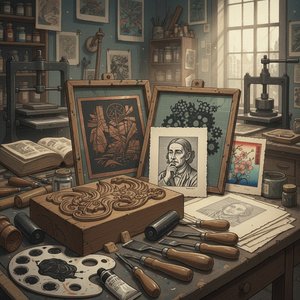
The Enduring Legacy of Printmaking: Techniques, Themes & Artistic Innovation Across Centuries
Explore the rich history of printmaking with OriginalUniqueArt. Discover techniques from intaglio to lithography, learn about collecting valuable prints & find museum-quality reproductions. Expert insights for art enthusiasts and collectors.

Giclée Prints: Archival Quality & Aesthetic Nuances for the Discerning Collector
Explore the world of giclée prints with OriginalUniqueArt. Learn about archival quality, aesthetic nuances & investment potential. Expert guidance for discerning art collectors seeking museum-quality reproductions and lasting value.

Echoes of Time: Exploring the Enduring Appeal & Historical Context of Vintage Art Prints
Explore the captivating world of vintage art prints! Discover their history, collecting tips & enduring appeal. Expert insights on chromolithography and building a legacy collection with OriginalUniqueArt.

