

 Megtekintés
 Küldés
 Megosztás
 Részletek

 Letöltés
 Hasonló darabok
 X-ray felvétel
 Diavetítés
Lorenzo

 Összes részlet megjelenítése
Kézzel készített olajfestmény reprodukció
Kézzel festett olajvastú vászon, az Ön által választott méretben és keretben, művészeink készítik meglévőre. ( Nyomat rendelése Kép letöltése)




P118B $10

P118H $10

P118W $10

P438Z $10

P508JH $12

P508YH $12

P805H $10

P805Z $10

P919BZ $10

P919G $10

P919XJ $10

P959ZH $10

P968JZ $12

W106C $8

W218G $10

W218JH $8

W218Y $10

W307PJ $10

W316G $10

W316PJ $8

W316Y $10

W398PJ $8

W4111J $10

W500HY $15

W500JH $15

W692G $12

W849H $8

W940BG $15

W953PJ $8




Válasszon előre meghatározott méreteink közül, amelyek megfelelnek a műalkotás eredeti arányainak.

Ön megadhat saját méreteket egy adott kerethez vagy térhez igazításhoz. Ha a kiválasztott méret nem egyezik az eredeti kép arányával, akkor a műalkotást levágjuk, vagy további kézzel festett elemekkel meghosszabbítjuk a festményt. A gyártás megkezdése előtt küldünk Önnek egy digitális előnézetet jóváhagyásra.
Kérjük, vegye figyelembe, hogy a képernyőn megjelenő előnézet nem tükrözi a tényleges vágást vagy kiterjesztést. Csak az előnézet fog pontosan mutatni a végső kompozíciót.
Bár egyedi méretek állnak rendelkezésre, javasoljuk, hogy válasszon egy méretet az előre meghatározott listából az eredeti arányok megőrzése érdekében.
A rendelést követően a OriginalUniqueArt.com csapata e-mailt küld az ügyfélnek az instrukciókért, és biztosít egy előnézeti képet (mockup).
Világszerte elérhető szállítás () 3-4 hét alatt a szokásos 5 hét helyett. (18 augusztus). A minőség nem kérdőjelezhető.

Ingyenes globális expressz szállítás

Prémium minőségű len vászon

Teljes körű szállítási biztosítás

Vámvisszatérítési Garancia

Hiteles színpontosság garancia

60 napos visszaküldési lehetőség (csak hibás termékek esetén)

100% pénzvisszatérítési garancia

Több darab vásárlása esetén kedvezmény
 Az üvegkeretes opció csak 110 cm alatti méretben érhető el

Lorenzo
Reprodukciós technika
Reprodukció mérete
-


Összesített ár
$ 300
A művész életrajza
Bartolomeo della Gatta: A Florentine Master of Faith and Form
Born Pietro di Antonio Dei in Florence around 1448, Bartolomeo della Gatta’s life was a fascinating blend of artistic apprenticeship, monastic devotion, and significant contributions to the burgeoning Renaissance art scene. His early years were steeped in the traditions of Florentine goldsmithing – his father’s profession – yet he quickly gravitated towards painting, absorbing techniques from masters like Andrea Verrocchio and likely benefiting from the vibrant workshops of Antonio and Piero Pollaiuolo. This formative period laid the groundwork for a distinctive style characterized by a meticulous attention to detail, a deep understanding of human anatomy, and a masterful use of color and light.
In 1468, a pivotal moment shaped his trajectory: Bartolomeo entered the Order of Camaldoli, taking the name Bartolomeo upon ordination. This monastic commitment profoundly influenced his artistic output, shifting its focus towards religious subjects and imbuing it with a sense of solemnity and spiritual contemplation. His brother, Nicolo, had already embraced this path, providing a familial context for his own dedication to God. The transition marked not an abandonment of painting but rather a channeling of his talents into service of the Church, a role he fulfilled with considerable skill and devotion.
Around 1481, Bartolomeo’s reputation reached Rome, where he was summoned to contribute to the ambitious fresco cycle adorning the walls of the Sistine Chapel. This commission represented a significant step in his career, placing him within the orbit of some of Italy's most influential artists. He collaborated closely with Luca Signorelli, learning from his innovative approach to perspective and anatomical representation. The experience honed his skills and broadened his artistic horizons, exposing him to the grandeur and complexity of papal patronage.
A Master of Religious Scenes and Portraits
Bartolomeo della Gatta’s oeuvre is primarily comprised of religious scenes and portraits, reflecting his monastic vocation and his ability to capture the essence of human emotion within a sacred context. His works are characterized by a serene grace and an almost meditative quality, inviting viewers into a realm of spiritual contemplation. Among his most celebrated paintings is “Lorenzo,” a portrait that exemplifies his skill in rendering subtle expressions and capturing the dignity of his subject. The painting showcases a remarkable level of realism combined with a refined sense of elegance – a hallmark of Florentine art at the time.
Beyond portraits, Bartolomeo excelled in depictions of the Virgin Mary and Christ Child, often imbued with an ethereal beauty and a profound sense of tenderness. “The Lady of the Assumption Gives St Thomas Her Belt” is a particularly striking example, demonstrating his mastery of composition, color harmony, and the depiction of drapery – a skill he likely developed through studying the works of Piero della Francesca. The painting’s intricate details and luminous palette create a captivating visual experience.
His work also includes depictions of Saint Roch, another testament to his ability to convey religious narratives with both emotional depth and artistic finesse. These scenes are not merely illustrations but rather carefully constructed compositions designed to evoke contemplation and inspire faith.
Influence and Artistic Style
Bartolomeo della Gatta’s style is a fascinating synthesis of influences, reflecting the diverse artistic currents circulating in Florence during his lifetime. He was undoubtedly influenced by the naturalism of Florentine painting, particularly the work of Verrocchio and Pollaiuolo, evident in his meticulous rendering of anatomy and his skillful use of light and shadow. However, he also absorbed elements from the more austere style of Piero della Francesca, incorporating principles of linear perspective and a restrained palette into his compositions.
Furthermore, his time in Rome exposed him to the innovations of Luca Signorelli, whose dynamic figures and dramatic lighting techniques undoubtedly impacted his own artistic practice. Bartolomeo’s paintings are not simply imitations of these influences but rather sophisticated interpretations that reflect his unique artistic sensibility. He skillfully blended these diverse elements into a cohesive style characterized by clarity, grace, and spiritual depth.
Legacy and Historical Significance
Despite his relatively short career – he died in Florence in 1502 – Bartolomeo della Gatta left an enduring legacy as one of the leading artists of the Florentine Renaissance. His works are treasured for their technical skill, emotional resonance, and spiritual depth. He was a key figure in the artistic landscape of Arezzo, where he served as abbot of San Clemente and contributed significantly to the region’s cultural heritage.
His collaboration with Luca Signorelli on the Sistine Chapel frescoes cemented his place within the broader context of Renaissance art history. Bartolomeo della Gatta's paintings continue to be studied and admired for their beauty, their technical mastery, and their profound expression of faith – a testament to the enduring power of his artistic vision.

bartolomeo della gatta
1448 - 1502 , Italy
A művészről röviden
- Artistic Movement Or Style: Renaissance Painting
- Artists Or Movements Influenced By This Artist:
- Piero della Francesca
- Perugino
- Artists Who Influenced This Artist:
- Fra Bartolommeo
- Luca Signorelli
- Date Of Birth: 1448 Florence, Italy
- Date Of Death: 1502 Florence, Italy
- Full Name: Bartolomeo della Gatta
- Nationality: Italian (Florentine)
- Notable Artworks:
- Lorenzo
- The Lady Assumption
- St Roch Artwork
- Place Of Birth: Florence, Italy
Kapcsolódó cikkek

Crimson Threads of Narrative: Exploring Symbolism & Representation in Artworks Featuring the Red Dress
Explore the rich symbolism of the red dress in art history! From ancient power displays to iconic portraits like Cézanne’s 'Madame Cezanne', discover the cultural and artistic significance behind this captivating color. Expert analysis & insights.

Luca della Robbia: Renaissance Sculpture & the Innovation of Terracotta Glazing
Discover the innovative terracotta glazing techniques of Luca della Robbia, a Renaissance master sculptor. Explore his iconic works, legacy, and collecting tips with OriginalUniqueArt.
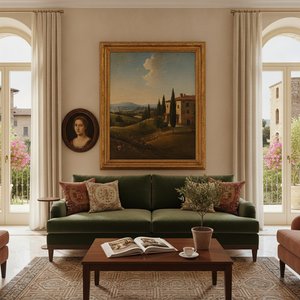
The Art of Italian Living: Transform Your Home with Timeless Landscapes and Renaissance Masterpieces
Elevate your home with the timeless romance of Italy. Discover expert-curated, hand-painted Italian landscapes and Renaissance-inspired masterpieces. From bespoke oil reproductions to custom portraits from photos, transform your space with elegance and artistic passion.

Bartolomeo Pinelli: Neoclassical Linearity & Roman Topography of Memory
Explore the captivating world of Bartolomeo Pinelli, a master Italian engraver renowned for his evocative Roman scenes & historical narratives. Discover his art and legacy with OriginalUniqueArt.

Drama and Light: A Definitive Guide to the Italian Baroque Masterpieces and the Revolution of Chiaroscuro
Explore the dramatic world of Italian Baroque art. Discover how masters like Caravaggio used chiaroscuro and tenebrism to revolutionize painting through light, shadow, and profound realism. A definitive guide for history lovers and art collectors.

