
 Előnézet
 Megosztás
 Megosztás
 Részletek
 Útmutató

 Letöltés
 Hasonló darabok
 X-ray felvétel
 Diavetítés
 Statisztika
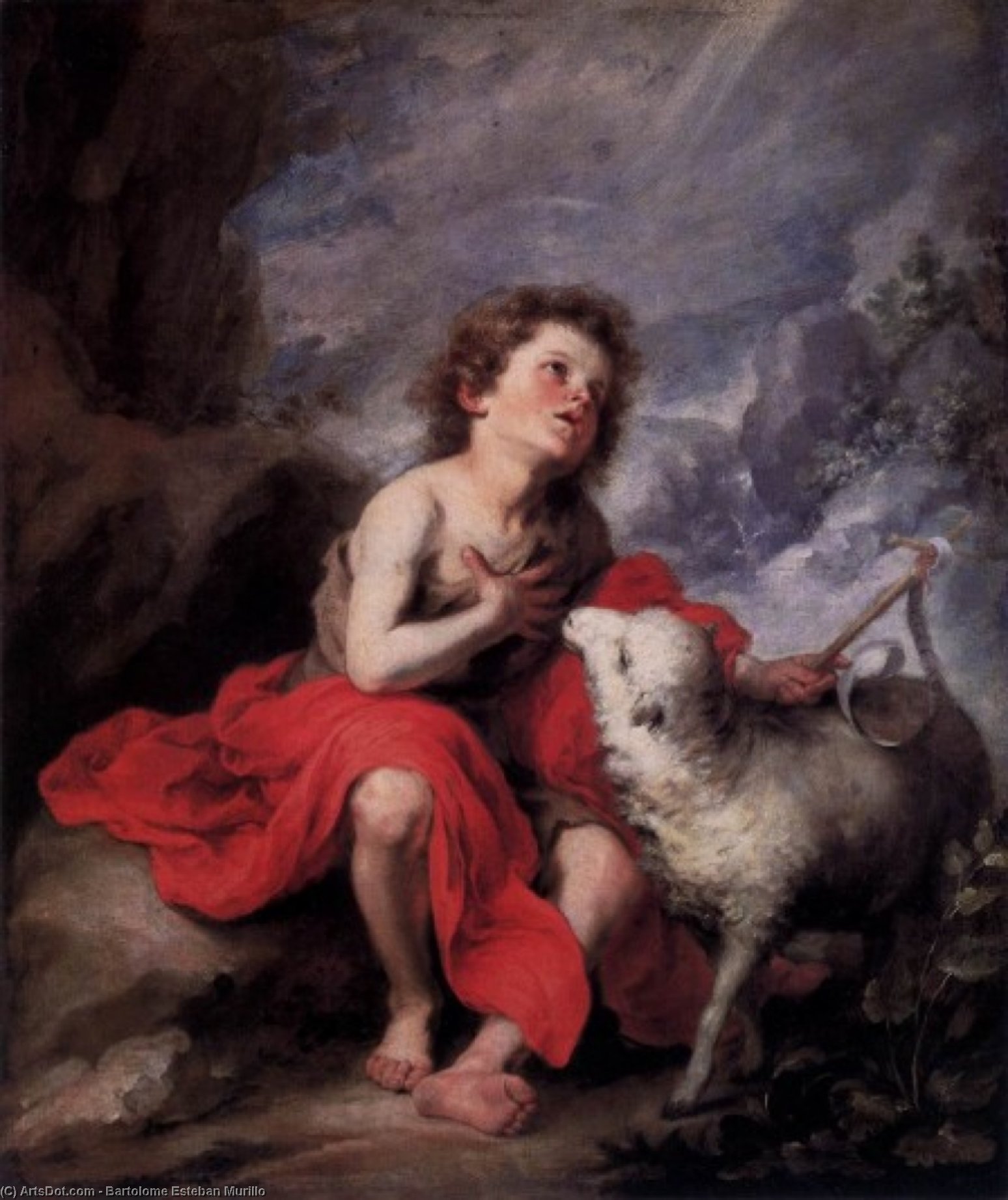
St. John the Baptist as a Child
 Oil On Canvas
- WallArt
- Spanish Baroque
 1665
1665 121.0 x 99.0 cm
 Tovább olvasom
Kézzel készített olajfestmény reprodukció
Kézzel festett olajvastú vászon, az Ön által választott méretben és keretben, művészeink készítik meglévőre. ( Váltás nyomtatványra Áttérés digitális képre)




P118B $10

P118H $10

P118W $10

P438Z $10

P508JH $12

P508YH $12

P805H $10

P805Z $10

P919BZ $10

P919G $10

P919XJ $10

P959ZH $10

P968JZ $12

W106C $8

W218G $10

W218JH $8

W218Y $10

W307PJ $10

W316G $10

W316PJ $8

W316Y $10

W398PJ $8

W4111J $10

W500HY $15

W500JH $15

W692G $12

W849H $8

W940BG $15

W953PJ $8




Válasszon előre meghatározott méreteink közül, amelyek megfelelnek a műalkotás eredeti arányainak.

Ön megadhat saját méreteket egy adott kerethez vagy térhez igazításhoz. Ha a kiválasztott méret nem egyezik az eredeti kép arányával, akkor a műalkotást levágjuk, vagy további kézzel festett elemekkel meghosszabbítjuk a festményt. A gyártás megkezdése előtt küldünk Önnek egy digitális előnézetet jóváhagyásra.
Kérjük, vegye figyelembe, hogy a képernyőn megjelenő előnézet nem tükrözi a tényleges vágást vagy kiterjesztést. Csak az előnézet fog pontosan mutatni a végső kompozíciót.
Bár egyedi méretek állnak rendelkezésre, javasoljuk, hogy válasszon egy méretet az előre meghatározott listából az eredeti arányok megőrzése érdekében.
A rendelést követően a OriginalUniqueArt.com csapata e-mailt küld az ügyfélnek az instrukciókért, és biztosít egy előnézeti képet (mockup).
Világszerte elérhető szállítás () 3-4 hét alatt a szokásos 5 hét helyett. (25 szeptember). A minőség nem kérdőjelezhető.

Ingyenes globális expressz szállítás

Prémium minőségű len vászon

Teljes körű szállítási biztosítás

Vámvisszatérítési Garancia

Tökéletes színarányosság garancia

100 napos visszaküldési garancia (csak gyártási hibás termékek esetén)

100% pénzvisszatérítési garancia

Több darab vásárlásakor kedvezmény
 Az üvegkeretes opció csak 110 cm alatti méretben érhető el

St. John the Baptist as a Child
Reprodukciós technika
Reprodukció méretei
-


Összesített ár
$ 300
A Portrait of Innocence: Exploring Bartolomé Esteban Murillo’s St. John the Baptist as a Child
Bartolomé Esteban Murillo's “St. John the Baptist as a Child,” painted in 1665, transcends mere depiction; it embodies the very essence of Baroque idealism—a masterful distillation of piety and pastoral beauty that continues to resonate with audiences centuries later. This oil on canvas masterpiece resides within the Galleria Corsini in Rome, offering visitors a glimpse into a hidden gem of Italian art alongside its broader European counterparts from the sixteenth and seventeenth centuries. Its quiet contemplation speaks volumes about Murillo’s profound understanding of human emotion and his unwavering commitment to capturing fleeting moments of grace.Subject Matter and Composition
The painting presents a tender tableau: a young boy, believed to be Saint John the Baptist, seated upon weathered rocks amidst a verdant landscape populated by trees—a deliberate echo of biblical imagery celebrating the innocence and purity associated with childhood. Before him rests a sheep, symbolizing humility and pastoral virtue – elements frequently employed in Baroque art to convey moral lessons and spiritual contemplation. Murillo’s compositional choices prioritize serenity and balance; the boy dominates the frame, positioned centrally against the backdrop of nature, drawing the viewer's eye into this serene scene. The subtle diagonal lines created by the rocks contribute to a sense of dynamism within the stillness of the composition.Stylistic Influences and Technique
Murillo’s style is undeniably rooted in the Baroque tradition, yet he distinguishes himself through an exceptional sensitivity to light and shadow—a technique perfected during his formative years under Juan del Castillo. Like Murillo's celebrated “The Good Shepherd Child,” this painting utilizes chiaroscuro – dramatic contrasts between illumination and darkness – to sculpt form and imbue the scene with palpable emotion. The artist meticulously renders textures, from the rough stone beneath the boy’s feet to the fleece of the sheep, demonstrating a remarkable command of artistic craft. Furthermore, Murillo's influence extends beyond his immediate stylistic peers; he shares similarities with Diego Velázquez’s “Prince Baltasar Carlos with the Count-Duke of Olivares,” showcasing a similar preoccupation with capturing psychological realism alongside formal elegance.Symbolism and Spiritual Significance
Beyond its aesthetic beauty, "St. John the Baptist as a Child" carries considerable symbolic weight. The boy represents Christ himself at infancy—a pivotal moment in Christian theology signifying divine humility and foreshadowing redemption. The sheep serves as an emblem of innocence and meekness, mirroring Saint John’s prophetic role as herald of Jesus's arrival. Murillo skillfully employs these symbols to elevate the painting beyond a simple portrait; it becomes a meditation on faith, virtue, and the transformative power of childhood—themes central to Baroque spirituality.Emotional Impact and Legacy
The painting’s enduring appeal lies in its ability to evoke feelings of compassion and tranquility. Murillo achieves this through masterful use of color – muted hues dominate the palette, creating an atmosphere of understated grandeur. The boy's gaze is direct yet gentle, conveying a profound sense of inner peace—a characteristic that distinguishes Baroque art from earlier Renaissance styles. “St. John the Baptist as a Child” remains a testament to Murillo’s artistic genius and his unwavering dedication to portraying human emotion with exquisite subtlety. Its presence in Galleria Corsini ensures its continued appreciation by discerning collectors and interior designers alike, offering a timeless glimpse into the heart of Baroque artistry.A művész életrajza
A Life Bathed in Andalusian Light
Bartolomé Esteban Murillo, a name synonymous with the golden age of Spanish Baroque painting, emerged from the vibrant heart of Seville in 1618. His life, though marked by personal tragedy and societal shifts, blossomed into an artistic career that captured the spirit of his time—a period of religious fervor, social change, and burgeoning artistic innovation. Born to Gaspar Esteban, a barber-surgeon, and María Pérez Murillo, within a large family of fourteen children, young Bartolomé experienced early loss with the passing of both parents in quick succession during his childhood. This hardship led him into the guardianship of his sister’s husband, Juan Agustín Lagares, a pivotal figure who would indirectly guide his artistic path. Murillo's initial training began under Juan del Castillo, a local artist and relative through his mother, laying the foundation for a style that would eventually become uniquely his own. The early years were steeped in the realist traditions prevalent in Seville, absorbing influences from masters like Zurbarán, Ribera, and Cano—artists who prioritized stark realism and dramatic intensity. However, Murillo’s genius lay not in mere imitation but in transforming these foundations into something softer, more luminous, and profoundly human.From Realism to Radiant Grace
Murillo's artistic journey wasn’t a sudden leap to fame but rather an evolution marked by distinct phases. His early works, heavily influenced by the austere realism of his contemporaries, showcased a meticulous attention to detail and a somber palette. Young Man with a Basket of Fruit (Personification of Summer), created around 1640-50, exemplifies this period—a grounded depiction of everyday life rendered with remarkable precision. The figures are presented in a naturalistic setting, reflecting the Seville of his time, and the colors are muted, creating a sense of quiet contemplation. Yet, even in these early pieces, hints of the tenderness and emotional depth that would define his mature style began to emerge. The Young Beggar, painted circa 1645, demonstrates a growing sensitivity towards human suffering, echoing the influence of Velázquez’s masterful portrayals of everyday people. The painting captures the vulnerability of a young child, evoking empathy in the viewer and hinting at the compassionate spirit that would characterize much of his later work. As Murillo matured, his style underwent a remarkable transformation. He moved away from the stark realism of his predecessors, embracing a more polished and refined aesthetic that resonated with the tastes of Seville’s burgeoning bourgeois and aristocratic classes. This shift was particularly evident in his religious works, where he infused traditional iconography with an unprecedented sense of warmth, grace, and emotional accessibility. St. Jerome, painted between 1650-52, stands as a testament to this mature style—a softly luminous depiction that radiates serenity and devotion. The figure is bathed in light, creating a sense of spiritual transcendence, while the details are rendered with exquisite delicacy.A Master of Religious Sentiment and Genre Scenes
Murillo’s artistic output was remarkably diverse, encompassing religious paintings, genre scenes, portraits, and mythological subjects. However, he is most celebrated for his depictions of the Immaculate Conception—a subject that captivated him throughout his career and resulted in numerous variations, each imbued with a unique sense of ethereal beauty. These works, characterized by their delicate brushwork, luminous colors, and graceful compositions, became immensely popular and established Murillo as the preeminent painter of religious imagery in Spain. He skillfully blended traditional iconography with a profound understanding of human emotion, creating images that were both visually stunning and deeply moving. Beyond his sacred subjects, Murillo also excelled at capturing the everyday lives of ordinary people. His genre scenes—depictions of flower girls, street urchins, and beggars—offer a poignant glimpse into the social realities of 17th-century Seville. These paintings are not merely observational studies; they are imbued with a deep sense of empathy and compassion, elevating the humble subjects to a level of dignity and grace. He possessed an extraordinary ability to capture the innocence of childhood, portraying young children with remarkable realism and tenderness. The *Flight into Egypt*, for example, is not just a biblical narrative but also a tender portrayal of a mother protecting her child.Influences and Artistic Development
Murillo’s artistic development was shaped by a complex interplay of influences. His early training under Juan del Castillo provided him with a solid foundation in Seville's realist tradition, drawing inspiration from masters like Zurbarán and Cano. However, he quickly surpassed these influences, developing his own distinctive style that combined realism with an unprecedented sense of luminosity and emotional depth. A pivotal moment in his artistic journey was his visit to Madrid in 1658, where he encountered the works of Velázquez, Rubens, and Van Dyck. These encounters profoundly influenced his technique and aesthetic sensibilities, leading him to embrace a more polished and refined style characterized by soft modeling, rich colors, and graceful compositions. The *Immaculate Conception* series, painted in the early 1650s, exemplifies this shift—a departure from the stark realism of his earlier works and a move towards a more idealized and luminous representation of religious subjects. He was also deeply influenced by the Venetian painters, particularly their mastery of light and color, which he skillfully incorporated into his own work.Legacy and Enduring Influence
Bartolomé Esteban Murillo’s impact on the course of Spanish art—and indeed, European painting—is undeniable. He established a distinctive style that blended religious devotion with humanistic sentiment, creating works that resonated deeply with audiences across social strata. His influence extended far beyond his native Spain, inspiring generations of artists throughout Europe. Gainsborough and ‐Greuze, among others, acknowledged their debt to Murillo’s luminous style and sensitive portrayals of human emotion. He trained numerous pupils in his Seville workshop, ensuring the continuation of his artistic legacy. His paintings can be found in prestigious museums worldwide, including the Museo del Prado in Madrid, the Hermitage Museum in Saint Petersburg, the Wallace Collection in London, and the Timken Museum of Art in San Diego—testaments to his enduring appeal and historical significance. Murillo’s art continues to captivate viewers with its beauty, grace, and profound humanity, solidifying his place as one of the most beloved and influential painters of the Spanish Baroque period. His ability to infuse religious imagery with emotional depth and portray everyday life with empathy ensures that his work remains relevant and inspiring centuries after his death in 1682.
Murillo, Bartolomé Esteban
1618 - 1682 , Spanyolország
Gyors információk
- Artistic Movement Or Style: Barokk festészet
- Artists Or Movements Influenced By This Artist:
- Gainsborough
- Greuze
- Artists Who Influenced This Artist:
- Zurbarán
- Ribera
- Date Of Birth: 1618. jan 1.
- Date Of Death: 1682. ápr 3.
- Full Name: Bartolomé Esteban Murillo
- Nationality: Spanyol
- Notable Artworks:
- Immaculate Conception
- Young Beggar
- St. Jerome
- Place Of Birth: Sevilla, Spanyolország
Kapcsolódó cikkek

A Barokk Mesterek 10 Legikonikusabb Remekműve – OriginalUniqueArt.com
Fedezze fel a barokk művészet 10 legpártosabb remekművét! Caravaggio, Rembrandt és Vermeer alkotásainak története – OriginalUniqueArt.com kínálatában exkluzív reprodukciók és inspiráló dekorációs ötletek várják Önt. Nézze meg most!

John Constable 25 Mesterműve: A Természet Lényege Vászonon – OriginalUniqueArt.com
Fedezze fel John Constable 25 legszebb művészeti alkotását! Ismerje meg a romantika ikonikus tájképeit, Dedham Vale szépségét és a természet lenyűgöző ábrázolásait. Vászonkép reprodukcióinkkal eleganciát csempészhet otthonába – OriginalUniqueArt.com

The Dramatic Flourish: Exploring the Baroque Movement's Enduring Legacy in Art History
Explore the dramatic world of Baroque art! Discover iconic artists like Caravaggio & Rubens, defining techniques, and its lasting impact on art history. Expert insights for collectors & enthusiasts at OriginalUniqueArt.

John Singer Sargent 25 Mesterműve: Elegancia és Portrék a OriginalUniqueArt Galériában
Fedezze fel John Singer Sargent 25 legikonikusabb művészeti alkotását! Portrék, impresszionista stílus és a fény játéka – inspirálódjon Sargent életrajzából és vászonképeiből. Művészeti reprodukciók otthonába a OriginalUniqueArt-on!

Barokk dráma: A nagyság és az érzelem bevonása a kortárs belső terekbe
Fedezze fel a barokk stílus nagyságát és drámáját! Ismerje meg a belsőépítészet jellegzetességeit, inspirálódjon híres enteriőrökből, és valósítsa meg álmai luxus otthonát szakértő útmutatásunkkal.