

 Megtekintés
 Küldés
 Megosztás
 Részletek

 Letöltés
 Hasonló darabok
 X-ray felvétel
 Diavetítés
Saint Francis Receiving the Stigmata
 Oil On Canvas
- WallArt
- Baroque
 1650
1650- Early Modern
 56.0 x 48.0 cm
 English Heritage
 Összes részlet megjelenítése
Kézzel készített olajfestmény reprodukció
Kézzel festett olajvastú vászon, az Ön által választott méretben és keretben, művészeink készítik meglévőre. ( Nyomat rendelése Kép letöltése)




P118B $10

P118H $10

P118W $10

P438Z $10

P508JH $12

P508YH $12

P805H $10

P805Z $10

P919BZ $10

P919G $10

P919XJ $10

P959ZH $10

P968JZ $12

W106C $8

W218G $10

W218JH $8

W218Y $10

W307PJ $10

W316G $10

W316PJ $8

W316Y $10

W398PJ $8

W4111J $10

W500HY $15

W500JH $15

W692G $12

W849H $8

W940BG $15

W953PJ $8




Válasszon előre meghatározott méreteink közül, amelyek megfelelnek a műalkotás eredeti arányainak.

Ön megadhat saját méreteket egy adott kerethez vagy térhez igazításhoz. Ha a kiválasztott méret nem egyezik az eredeti kép arányával, akkor a műalkotást levágjuk, vagy további kézzel festett elemekkel meghosszabbítjuk a festményt. A gyártás megkezdése előtt küldünk Önnek egy digitális előnézetet jóváhagyásra.
Kérjük, vegye figyelembe, hogy a képernyőn megjelenő előnézet nem tükrözi a tényleges vágást vagy kiterjesztést. Csak az előnézet fog pontosan mutatni a végső kompozíciót.
Bár egyedi méretek állnak rendelkezésre, javasoljuk, hogy válasszon egy méretet az előre meghatározott listából az eredeti arányok megőrzése érdekében.
A rendelést követően a OriginalUniqueArt.com csapata e-mailt küld az ügyfélnek az instrukciókért, és biztosít egy előnézeti képet (mockup).
Világszerte elérhető szállítás () 3-4 hét alatt a szokásos 5 hét helyett. (21 augusztus). A minőség nem kérdőjelezhető.

Ingyenes globális expressz szállítás

Prémium minőségű len vászon

Teljes körű szállítási biztosítás

Vámvisszatérítési Garancia

Hiteles színpontosság garancia

60 napos visszaküldési lehetőség (csak hibás termékek esetén)

100% pénzvisszatérítési garancia

Több darab vásárlása esetén kedvezmény
 Az üvegkeretes opció csak 110 cm alatti méretben érhető el

Saint Francis Receiving the Stigmata
Reprodukciós technika
Reprodukció mérete
-


Összesített ár
$ 300
A műalkotás leírása
The Divine Embrace: Saint Francis Receiving the Stigmata
To gaze upon Bartolomé Esteban Murillo's depiction of Saint Francis Receiving the Stigmata is to step directly into the heart of Spanish Baroque piety. This masterful oil painting, executed in 1650, transcends mere portraiture; it is a profound meditation on sacrifice, divine connection, and spiritual ecstasy. The central figure, Saint Francis of Assisi, is captured in a moment of breathtaking vulnerability and ultimate grace. His outstretched arms seem not merely posed, but reaching out to accept the weight of Christ's suffering—the stigmata itself. Murillo has imbued this canvas with an almost palpable sense of sacred drama, inviting the viewer into the hushed reverence of that pivotal spiritual encounter.
A Tapestry of Baroque Devotion and Light
Murillo, a master whose career blossomed in the vibrant crucible of Seville, was renowned for his ability to infuse religious subjects with an astonishing naturalism. His technique here is exemplary; observe how the light seems to emanate from within the scene itself, illuminating Saint Francis's robes and highlighting the wounds that mark his devotion. The composition is richly balanced, drawing the eye inevitably toward the central act of reception. Beyond the saint himself, Murillo thoughtfully includes elements of nature—the serene tree and the watchful bird in the background. These natural details are not mere decoration; they serve as silent witnesses to the sacred event, grounding the miraculous within an earthly, yet divinely blessed, setting.
Symbolism Woven into Canvas
The symbolism at play is deep and resonant. Saint Francis’s embrace of the stigmata represents the ultimate identification with Christ's Passion—a voluntary assumption of suffering for the sake of humanity. The natural elements surrounding him speak to his calling as an ascetic who found divinity in the wilderness. For the collector or decorator, this piece offers more than just aesthetic beauty; it is a potent talisman of faith and enduring spiritual commitment. It speaks to a yearning for transcendence amidst the clamor of daily life.
Bringing Sacred Drama Home
Measuring 56 x 48 cm, this work possesses an intimate scale that allows its emotional weight to settle gently within any space. Whether adorning a chapel niche or serving as a focal point in a richly decorated drawing-room, the presence of Murillo’s hand is unmistakable. Owning a reproduction of this painting means curating not just art, but a piece of history steeped in Andalusian light and Baroque fervor. It offers an immediate connection to the golden age of Spanish art, allowing the viewer to contemplate profound themes of sacrifice and grace every time their eye meets its divine embrace.
A művész életrajza
A Life Bathed in Andalusian Light
Bartolomé Esteban Murillo, a name synonymous with the golden age of Spanish Baroque painting, emerged from the vibrant heart of Seville in 1618. His life, though marked by personal tragedy and societal shifts, blossomed into an artistic career that captured the spirit of his time—a period of religious fervor, social change, and burgeoning artistic innovation. Born to Gaspar Esteban, a barber-surgeon, and María Pérez Murillo, within a large family of fourteen children, young Bartolomé experienced early loss with the passing of both parents in quick succession during his childhood. This hardship led him into the guardianship of his sister’s husband, Juan Agustín Lagares, a pivotal figure who would indirectly guide his artistic path. Murillo's initial training began under Juan del Castillo, a local artist and relative through his mother, laying the foundation for a style that would eventually become uniquely his own. The early years were steeped in the realist traditions prevalent in Seville, absorbing influences from masters like Zurbarán, Ribera, and Cano—artists who prioritized stark realism and dramatic intensity. However, Murillo’s genius lay not in mere imitation but in transforming these foundations into something softer, more luminous, and profoundly human.From Realism to Radiant Grace
Murillo's artistic journey wasn’t a sudden leap to fame but rather an evolution marked by distinct phases. His early works, heavily influenced by the austere realism of his contemporaries, showcased a meticulous attention to detail and a somber palette. Young Man with a Basket of Fruit (Personification of Summer), created around 1640-50, exemplifies this period—a grounded depiction of everyday life rendered with remarkable precision. The figures are presented in a naturalistic setting, reflecting the Seville of his time, and the colors are muted, creating a sense of quiet contemplation. Yet, even in these early pieces, hints of the tenderness and emotional depth that would define his mature style began to emerge. The Young Beggar, painted circa 1645, demonstrates a growing sensitivity towards human suffering, echoing the influence of Velázquez’s masterful portrayals of everyday people. The painting captures the vulnerability of a young child, evoking empathy in the viewer and hinting at the compassionate spirit that would characterize much of his later work. As Murillo matured, his style underwent a remarkable transformation. He moved away from the stark realism of his predecessors, embracing a more polished and refined aesthetic that resonated with the tastes of Seville’s burgeoning bourgeois and aristocratic classes. This shift was particularly evident in his religious works, where he infused traditional iconography with an unprecedented sense of warmth, grace, and emotional accessibility. St. Jerome, painted between 1650-52, stands as a testament to this mature style—a softly luminous depiction that radiates serenity and devotion. The figure is bathed in light, creating a sense of spiritual transcendence, while the details are rendered with exquisite delicacy.A Master of Religious Sentiment and Genre Scenes
Murillo’s artistic output was remarkably diverse, encompassing religious paintings, genre scenes, portraits, and mythological subjects. However, he is most celebrated for his depictions of the Immaculate Conception—a subject that captivated him throughout his career and resulted in numerous variations, each imbued with a unique sense of ethereal beauty. These works, characterized by their delicate brushwork, luminous colors, and graceful compositions, became immensely popular and established Murillo as the preeminent painter of religious imagery in Spain. He skillfully blended traditional iconography with a profound understanding of human emotion, creating images that were both visually stunning and deeply moving. Beyond his sacred subjects, Murillo also excelled at capturing the everyday lives of ordinary people. His genre scenes—depictions of flower girls, street urchins, and beggars—offer a poignant glimpse into the social realities of 17th-century Seville. These paintings are not merely observational studies; they are imbued with a deep sense of empathy and compassion, elevating the humble subjects to a level of dignity and grace. He possessed an extraordinary ability to capture the innocence of childhood, portraying young children with remarkable realism and tenderness. The *Flight into Egypt*, for example, is not just a biblical narrative but also a tender portrayal of a mother protecting her child.Influences and Artistic Development
Murillo’s artistic development was shaped by a complex interplay of influences. His early training under Juan del Castillo provided him with a solid foundation in Seville's realist tradition, drawing inspiration from masters like Zurbarán and Cano. However, he quickly surpassed these influences, developing his own distinctive style that combined realism with an unprecedented sense of luminosity and emotional depth. A pivotal moment in his artistic journey was his visit to Madrid in 1658, where he encountered the works of Velázquez, Rubens, and Van Dyck. These encounters profoundly influenced his technique and aesthetic sensibilities, leading him to embrace a more polished and refined style characterized by soft modeling, rich colors, and graceful compositions. The *Immaculate Conception* series, painted in the early 1650s, exemplifies this shift—a departure from the stark realism of his earlier works and a move towards a more idealized and luminous representation of religious subjects. He was also deeply influenced by the Venetian painters, particularly their mastery of light and color, which he skillfully incorporated into his own work.Legacy and Enduring Influence
Bartolomé Esteban Murillo’s impact on the course of Spanish art—and indeed, European painting—is undeniable. He established a distinctive style that blended religious devotion with humanistic sentiment, creating works that resonated deeply with audiences across social strata. His influence extended far beyond his native Spain, inspiring generations of artists throughout Europe. Gainsborough and ‐Greuze, among others, acknowledged their debt to Murillo’s luminous style and sensitive portrayals of human emotion. He trained numerous pupils in his Seville workshop, ensuring the continuation of his artistic legacy. His paintings can be found in prestigious museums worldwide, including the Museo del Prado in Madrid, the Hermitage Museum in Saint Petersburg, the Wallace Collection in London, and the Timken Museum of Art in San Diego—testaments to his enduring appeal and historical significance. Murillo’s art continues to captivate viewers with its beauty, grace, and profound humanity, solidifying his place as one of the most beloved and influential painters of the Spanish Baroque period. His ability to infuse religious imagery with emotional depth and portray everyday life with empathy ensures that his work remains relevant and inspiring centuries after his death in 1682.
Murillo, Bartolomé Esteban
1618 - 1682 , Spanyolország
A művészről röviden
- Artistic Movement Or Style: Barokk festészet
- Artists Or Movements Influenced By This Artist:
- Gainsborough
- Greuze
- Artists Who Influenced This Artist:
- Zurbarán
- Ribera
- Date Of Birth: 1618. jan 1.
- Date Of Death: 1682. ápr 3.
- Full Name: Bartolomé Esteban Murillo
- Nationality: Spanyol
- Notable Artworks:
- Immaculate Conception
- Young Beggar
- St. Jerome
- Place Of Birth: Sevilla, Spanyolország
Kapcsolódó cikkek
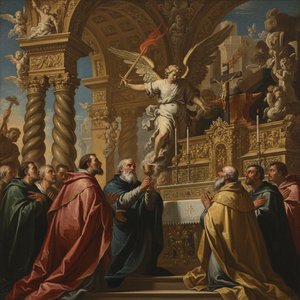
The Golden Age Reforged: Dramatic Realism & Religious Zeal in Spanish Baroque Art
Explore the dramatic world of Spanish Baroque art! Discover masters like Zurbarán & the powerful influence of religious zeal on painting techniques – a guide for collectors and enthusiasts.
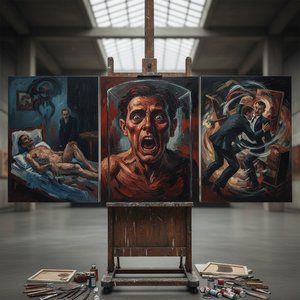
Francis Bacon legkiemelkedőbb művei: 25 lenyűgöző alkotás a modern művészetben | OriginalUniqueArt.com
Fedezze fel Francis Bacon 25 legkiemelkedőbb művét! Ismerje meg a modern művészet ikonikus festőjének sötét, érzelmes világát. Vászonképek, portrék és absztrakt alkotások – inspiráció otthonába. OriginalUniqueArt.com: múzeumi minőségű reprodukciók és exkluzív dekorációk online.

Bartolomé Esteban Murillo: Divine Light & Social Commentary in Golden Age Seville
Explore the captivating world of Bartolomé Esteban Murillo, a master of Spanish Baroque painting. Discover his luminous religious scenes, tender genre paintings & lasting legacy in Golden Age Seville. Learn more at OriginalUniqueArt.

The Dramatic Flourish: Exploring the Baroque Movement's Enduring Legacy in Art History
Explore the dramatic world of Baroque art! Discover iconic artists like Caravaggio & Rubens, defining techniques, and its lasting impact on art history. Expert insights for collectors & enthusiasts at OriginalUniqueArt.

A Barokk Mesterek 10 Legikonikusabb Remekműve – OriginalUniqueArt.com
Fedezze fel a barokk művészet 10 legpártosabb remekművét! Caravaggio, Rembrandt és Vermeer alkotásainak története – OriginalUniqueArt.com kínálatában exkluzív reprodukciók és inspiráló dekorációs ötletek várják Önt. Nézze meg most!

