
 Megtekintés
 Küldés
 Megosztás
 Részletek
 Útmutató

 Letöltés
 Hasonló darabok
 X-ray felvétel
 Diavetítés
 Q&A
Q&A Statisztika
Red house in park

- 60.0 x 80.0 cm


 Összes részlet megjelenítése
Szerezzen be nyomtatásra kész fájlt, amely messze túlmutat a webes előnézeten. Minden általunk értékesített digitális kép az adatbázisunkban található nagy felbontású mesterfájlból származik – általában 5 000 és 15 000 pixel szélességű –, így magabiztosan nyomtathat nagy méretben, sokat vághat a képen, vagy reprodukálhatja a legfinomabb részleteket is.
Stúdiómból egyetlen fájl sem távozik feltartózkodás nélkül. Egy digitális szakértő az eredeti festménnyel összehasonlítja a színeket, és szükség esetén korrigálja azokat, majd professzionális retusználó eszközökkel javítja a tisztaságot és a részletgazdagságot — miközben mindig hű marad a művész vonalvezetéséhez és stílusához. Az eredmény egy olyan kép, amely úgy néz ki, mint egy festmény, és nem úgy, mint egy szűrőzött szkenn.
A végső munka befejezése előtt jóvá kell hagynia a képet: szakértőnk 72 órán belül elküldi azt e-mailben ellenőrzésre. Nem tetszett? Kérhet javításokat vagy korrekciókat, illetve visszatérítést kérhet, amennyiben a minőség nem felel meg az elvárásoknak.
Ez az a minőség, amelyre a kiadók, a design stúdiók, a galériák és a nyomdaték megbízhatnak.
Digitális kép
Töltsön le nagy felbontású fájlt személyes kiállításokhoz, nyomtatáshoz és kreatív projektekhez. ( Váltás nyomtatványra Kézzel festett másolat rendelése)
Minden digitális kép rendeléséhez tartozó extrák
Szakértői digitális kézbesítés, garantáltan
Amikor a OriginalUniqueArt.com szolgáltatást választja, nem csupán egy képet kap – professzionálisan felmagasított digitális műalkotást kap, amely precizitással készült, és amelyet megelégsedési gwarancia tesz biztoslássá. Az alábbiakban automatikusan minden benne 】

Gyors e-mail teslimítés
A nagy felbontású digitális képmásolatát a megrendelést követő 72 órán belül e-mailben elküldjük Önnek – azonnal használható formátumban.

MI-alapú digitális fájljavítás
Műve professzionális módon kerül optimalizálásra fejlett mesterséges intelligencia eszközök és manuális szerkesztés segítségével, biztosítva a maximális részletességet, tisztaságot és színpontosságot.

Örök életű ingyenes újradelivery
Véletlenül törölted vagy elvesztetted a fájlodat? Ne aggódj – bármikor ingyen újra megküldjük neked.

Nincs importköltség – soha
Élvezze műalkotásait azonnal, vám, illeték vagy szállítási költség nélkül – a digitális letöltések mindig adamentesek.

Színpontosság garantálása
Professzionális eszközök és színkezelés segítségével garantáljuk, hogy digitális képe a lehető legpontosabban tükrözze az eredeti színeket.

100 napos elégedettségi garancia
Ha nemມີ elégedett a digitális képével, 100 napon belül felülvizsgáljuk vagy 100% visszatérítjük az amountot – kérdés बिना.

100% Pénzvisszatérítési garancia
Nem tetszett a vásárlás? 100 napon belül teljes visszatérítést garantálunk a digitális fájl megvételétől számítva – kérdés nélkül.

Tömegrendelési kedvezmények
Vásároljon 3 képet, spóroljon 10%-et - Vásároljon 5-öt, spóroljon 15%-et - Vásároljon 10+ képet, spóroljon 20%-at. Kiváló kreatív projektekhez, galériákhoz és ügynökségekhez.
A Moment Frozen in Tranquility: The Vibrant Soul of August Macke
In the fleeting moments before the world was irrevocably changed by the shadows of the Great War, August Macke captured a vision of peace that remains as luminous today as it was in 1914. His masterpiece, "Red House in Park," is far more than a mere landscape; it is a profound emblem of German Expressionism’s brief but incandescent flowering. At first glance, the viewer is greeted by a deceptally simple scene—a solitary red house nestled within a lush, verdant sanctuary. Yet, beneath this tranquil surface lies an intense emotional resonance, a deliberate attempt to distill the very spirit of life through color and form. The painting serves as a poignant window into a pivotal era, capturing a sense of stability and warmth even as the historical tides began to turn toward uncertainty.
The brilliance of Macke’s technique lies in his ability to prioritize feeling over meticulous detail. Eschewing the rigid accuracy of traditional realism, he employs loose, expressive brushstrokes that breathe life into the canvas. The composition is a masterclass in harmonious balance, where the commanding vibrant red of the house acts as a heartbeat for the entire piece, strategically positioned against a textured tapestry of deep greens and earthy browns. Through the skillful use of geometric shapes—squares and rectangles that provide structural integrity—Mackeb creates a sense of permanence. This is further heightened by his use of chiaroscuro, where the delicate interplay of light and shadow sculpts the contours of the trees and the architecture, lending a three-dimensional drama to an otherwise serene setting.
Symbolism and the Language of Color
For the discerning collector or interior designer, "Red House in Park" offers a sophisticated palette that can transform any space. The color choices are not merely descriptive but deeply symbolic; the warmth of the red hue serves as a defiant counterpoint to the pervasive gloom of the early 20th century. This fascination with Fauvist-inspired color palettes allows the artwork to evoke sensations of vitality and joy, making it an ideal centerpiece for rooms designed to inspire energy and calm simultaneously. The pathway leading toward the house invites the viewer’s eye into the scene, creating a sense of depth and dimension that draws one into the heart of the park.
Beyond its aesthetic appeal, the painting carries a heavy historical weight. As a prominent member of Der Blaue Reiter (The Blue Rider) movement, Macke sought to integrate the avant-garde elements of his time—such as the rhythmic energy of Impressionism and the bold color theory of Post-Impressionism—into a cohesive emotional experience. The house itself can be viewed as a symbol of domesticity and sanctuary, a quiet refuge amidst the encroaching chaos of the modern world. To possess a reproduction of this work is to hold a fragment of history—a beautiful, defiant moment of peace captured by an artist whose life was tragically cut short, leaving behind a legacy of light that continues to illuminate the halls of art history.
Kérdések és válaszok
Mikor készült a(z) „Red house in park”, August Macke alkotása?
A „Red house in park”, August Macke alkotása alkotása 1914-ben készült.
Ki készítette a "Red house in park" alkotást, és milyen stílusú?
A „Red house in park” alkotását August Macke készítette German Expressionism stílusban. A művész és a műveszetség meghatározza a mű hagyományát.
„Red house in park”, August Macke alkotása színei tel愈tek vagy fakók?
A „Red house in park”, August Macke alkotása alkotás Balanced Soft telítettségű színekkel készült.
Művész életrajza
A Life Cut Short: The Vibrant World of August Macke
August Robert Ludwig Macke, a name inextricably linked to the brief but brilliant flowering of German Expressionism, lived a life tragically curtailed by the horrors of the First World War. Born in 1887 in Meschede, a small town nestled within the Westphalian countryside, his artistic journey was one of rapid evolution and fervent exploration – a relentless pursuit of capturing not just what he *saw*, but how he *felt* about it. Macke’s early years were marked by a restless spirit and an insatiable curiosity, leading him to move with his family to Bonn, where he began to nurture the nascent talent that would eventually define his legacy. While formally trained at the Düsseldorf Art Academy from 1904-1906 under Adolf Maennchen, it was through independent study, travel, and a profound engagement with the artistic currents of the time that Macke truly forged his own distinctive voice. These formative years were characterized by an absorption of Impressionist and Post-Impressionist techniques – not merely as imitation, but as a foundation upon which to build something entirely new. He supplemented his income through stage design work, honing his compositional skills and developing a keen eye for color and light, essential tools in the creation of his future masterpieces.Influences and Artistic Development
Macke’s artistic trajectory was profoundly shaped by encounters with key figures and movements that swept across Europe at the beginning of the 20th century. A pivotal moment arrived in Paris in 1912, where he met Robert Delaunay, a leading proponent of Orphism – a branch of Cubism focused on pure abstraction and vibrant color harmonies. This encounter proved transformative, introducing Macke to the concept of simultaneous contrast and influencing his work towards a more dynamic and non-representational approach. He began experimenting with broken planes of color and abstracted forms, seeking to convey not just what he saw, but how he *felt* about what he saw – a core principle that would permeate much of his later work. Simultaneously, his close friendship with Franz Marc, a fellow artist and member of the influential group Der Blaue Reiter (The Blue Rider), drew him into the orbit of Wassily Kandinsky and other avant-garde thinkers. While Macke’s style remained distinct from Kandinsky's more purely abstract explorations, he embraced the group’s spirit of artistic freedom and spiritual inquiry, incorporating elements of their shared interest in symbolism and the emotional power of color. His early works often reflected a romantic sensibility, imbued with a deep connection to nature – the shape of a tree, the movement of waves in the water, the harmony between humans and their environment. These scenes were rendered not as literal depictions, but as expressions of mood and feeling, foreshadowing the emotional intensity that would characterize his later paintings.The Blue Rider and Beyond: A Unique Expressionist Vision
As an integral member of Der Blaue Reiter, Macke contributed significantly to the group’s exhibitions and publications, helping to disseminate its radical ideas about art and spirituality. However, he wasn't simply a follower; he forged his own unique path within the movement. Unlike some of his colleagues who leaned towards darker, more angst-ridden themes – often reflecting the anxieties of the time – Macke consistently sought to portray beauty and harmony in the world around him. His paintings, such as Bathing Girls with Town in the Background, exemplify this approach – vibrant colors, simplified forms, and a sense of idyllic tranquility characterize his work. He masterfully blended elements of Fauvism, Cubism, and Futurism into a distinctly personal style, creating compositions that are both visually striking and emotionally resonant. Woman in a Green Jacket, painted in 1913, is another prime example – a portrait radiating warmth and vitality through its bold color palette and confident brushwork. His later works, like Türkisches Café, demonstrate his luminist approach, capturing the play of light and shadow with remarkable sensitivity, evoking a sense of intimate atmosphere and quiet contemplation.Major Achievements and Artistic Style
Macke’s artistic style was characterized by its bold use of color, dynamic compositions, and a unique ability to capture the emotional essence of everyday life. He moved away from traditional academic techniques, embracing instead a more intuitive approach – prioritizing feeling over strict representation. His paintings often feature simplified forms, flattened perspectives, and an emphasis on color as a primary means of expression. He was particularly adept at capturing the fleeting effects of light and shadow, creating a sense of atmosphere and mood that resonated deeply with viewers. Macke’s work can be seen as a bridge between Impressionism, Fauvism, and early Expressionism – a synthesis of diverse influences into a wholly original style. His ability to imbue ordinary subjects – landscapes, portraits, interiors – with an extraordinary emotional intensity is what truly sets his art apart. His paintings are not merely depictions of reality; they are expressions of the artist’s inner world, filtered through the lens of his unique sensibility.A Tragic End and Lasting Legacy
The outbreak of World War I brought a sudden and devastating end to Macke’s promising career. Driven by patriotic fervor, he volunteered for military service in 1914, tragically losing his life just weeks later on September 26th, near the front lines in Champagne, France, at the young age of 27. His final painting, Farewell, poignantly captures the somber mood that descended upon Europe as war engulfed the continent – a testament to the artist’s untimely demise. Despite his tragically short life, August Macke left behind a body of work that continues to captivate and inspire. He remains a significant figure in the history of Expressionism, celebrated for his vibrant colors, dynamic compositions, and optimistic vision. His paintings offer a glimpse into a world on the cusp of change, imbued with a sense of beauty and hope amidst growing uncertainty. Exploring Macke’s world today, through museums like the Staatsgalerie Moderner Kunst in Munich and the Kunstmuseum Bonn, allows us to appreciate the enduring power of his art – a testament to the brilliance of an artist whose life was tragically cut short but whose legacy continues to shine brightly.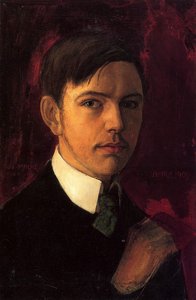
August Macke
1887 - 1914 , Németország
Érmeradatok
- Artistic Movement Or Style: Expressionista
- Artists Or Movements Influenced By This Artist: ['Der Blaue Reiter']
- Artists Who Influenced This Artist:
- Robert Delaunay
- Franz Marc
- Date Of Birth: 1887. jan 3.
- Date Of Death: 1914. szep 26.
- Full Name: August Robert Ludwig Macke
- Nationality: Német
- Notable Artworks:
- Szokobosz es varos
- Bathing Girls with Town
- Türkisches Cafe
- Gartentor
- Farewell
- Place Of Birth: Meschede, Németország