
 Előnézet
 Megosztás
 Megosztás
 Részletek
 Útmutató

 Letöltés
 Hasonló darabok
 X-ray felvétel
 Diavetítés
 Statisztika
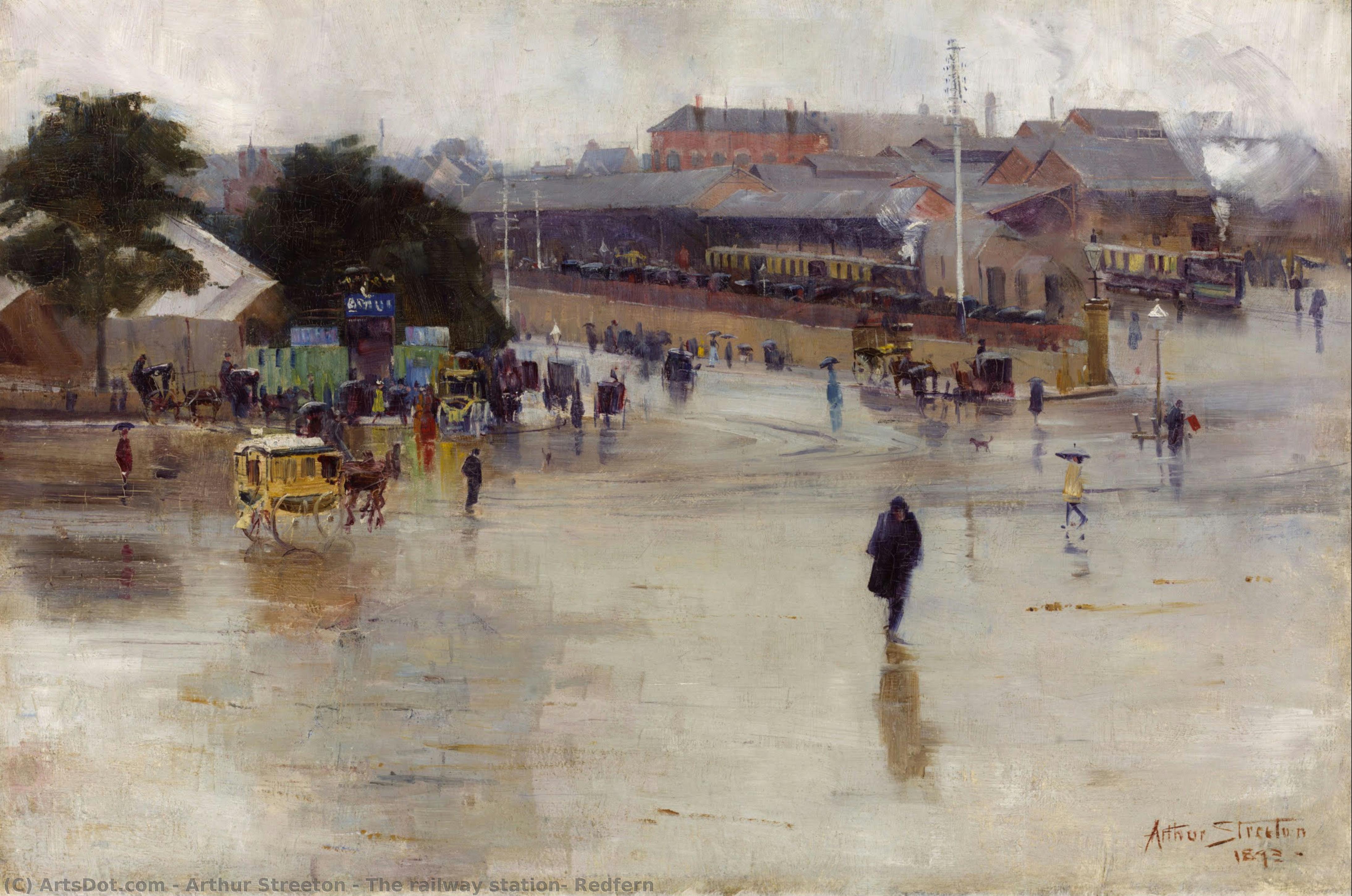
A pályaudvar, Redfern
 Olajfestmény vászonon
- Falfeliratok és faldekoráció
- Heidelberg School
 1893
1893- 19. század
 40.0 x 61.0 cm
 Art Gallery of New South Wales
 Tovább olvasom
Giclée / Műnyomat
Múzeumi minőségű giclée vagy vászonnyomat, gyors gyártással és rugalmas finomítási lehetőségekkel. ( Kézzel festett másolat vásárlása Áttérés digitális képre)




P118B $10

P118H $10

P118W $10

P438Z $10

P508JH $12

P508YH $12

P805H $10

P805Z $10

P919BZ $10

P919G $10

P919XJ $10

P959ZH $10

P968JZ $12

W106C $8

W218G $10

W218JH $8

W218Y $10

W307PJ $10

W316G $10

W316PJ $8

W316Y $10

W398PJ $8

W4111J $10

W500HY $15

W500JH $15

W692G $12

W849H $8

W940BG $15

W953PJ $8




Válasszon előre meghatározott méreteink közül, amelyek megfelelnek a műalkotás eredeti arányainak.

Megadhat saját méreteket is egy konkrét kerethez vagy helyszínhez igazítva. Amennyiben a kiválasztott méret nem egyezik az eredeti kép arányokkal, a műalkotást le fogjuk vágni, vagy kiegészítjük a képet tükrözött vagy egyszínű szélekkel. A gyártás megkezdése előtt egy digitális tervezetet küldünk jóváhagyásra.
Kérjük, vegye figyelembe, hogy a képernyőn látható előnézet nem tükrözi a tényleges levágást vagy kiegészítést. Csak a tervezet mutatja pontosan a végső kompozíciót.
Bár az egyedi méretek is elérhetőek, az eredeti arányok megőrzése érdekében azt javasoljuk, hogy válasszon a előre meghatározott listából származó méretet.
Világszerte történő kiszállítás területére mindössze 2 hét alatt, a szokásos 4-5 hét helyett. (27 szeptember)

Ingyenes globális expressz szállítás

Prémium minőségű len vászon

Teljes körű szállítási biztosítás

Vámvisszatérítési Garancia

Tökéletes színarányosság garancia

100 napos visszaküldési garancia (csak gyártási hibás termékek esetén)

100% pénzvisszatérítési garancia

Több darab vásárlásakor kedvezmény
 Az üvegkeretes opció csak 110 cm alatti méretben érhető el

A pályaudvar, Redfern
Giclée / Műnyomat
Reprodukció méretei
-


Összesített ár
$ 80
Arthur Streeton’s Rain-Drenched Redfern: A Window into Australian Modernism
Arthur Ernest Streeton's "The Railway Station, Redfern" – painted in 1893 – isn’t merely a depiction of a bustling Sydney street; it’s a poignant snapshot of a nation grappling with its identity and finding a distinct artistic voice. This work, now available as a meticulously hand-painted reproduction from OriginalUniqueArt.com, offers a captivating glimpse into the burgeoning world of Australian Impressionism, specifically the Heidelberg School movement. Streeton, born in Mount Duneed, Victoria, possessed an extraordinary sensitivity to light – a quality he relentlessly pursued and brilliantly captured on canvas, often described as “Australian light” – a unique atmospheric effect absent from European landscapes.
The scene unfolds on Devonshire Street, just south of the current Central Station location. Rain slicks the cobblestones, reflecting the muted glow of gaslights and the vibrant hues of passing vehicles: horse-drawn carts jostle alongside early automobiles, while pedestrians, many sheltering under umbrellas, navigate the crowded street. The composition is deliberately asymmetrical, mirroring a key characteristic of Impressionism – an emphasis on capturing fleeting moments rather than precise representation. Streeton masterfully utilizes broken brushstrokes and layering of color to evoke the atmosphere of a wet city morning, prioritizing the *impression* of light and movement over sharp detail.
Technique and Style: A Heidelberg Masterpiece
Streeton’s technique is deeply rooted in the Impressionist tradition, yet uniquely adapted to the Australian context. He employed a ‘plein air’ approach – working outdoors directly from nature – which allowed him to accurately observe and translate the subtle shifts in light and color. Notice how he builds up layers of paint, often applying them with loose, visible brushstrokes, creating a sense of immediacy and dynamism. The palette is dominated by cool blues and greys, punctuated by warmer tones suggesting reflected light and the warmth emanating from the street lamps. The use of complementary colors – particularly the juxtaposition of orange and blue – intensifies the visual impact and adds to the painting’s vibrant energy despite the prevailing gloom.
Crucially, “The Railway Station, Redfern” represents a departure from the more overtly nationalistic landscape paintings popular at the time. While many artists focused on romanticized depictions of the bush, Streeton chose an urban subject – a busy railway station – reflecting the rapid industrialization and urbanization transforming Australia in the late 19th century. This choice demonstrates a willingness to engage with contemporary life and a desire to explore new artistic avenues.
Symbolism and Context: A Nation Forged in Light
The painting’s significance extends beyond its aesthetic qualities; it's deeply intertwined with Australia’s evolving national identity. The railway station itself symbolizes progress, connection, and the nation’s growing integration into the global network. Streeton’s decision to portray this everyday scene – a busy street in the rain – elevates it to an artistic statement, suggesting that beauty and meaning can be found even in the most mundane aspects of life. Furthermore, the painting reflects the broader cultural shift occurring at the time, as Australians began to assert their own distinct artistic style, independent of European influences.
The work’s creation coincided with Streeton's initial visit to Sydney, a pivotal moment for his artistic development. He was captivated by the unique light and atmosphere of the city, which profoundly influenced his subsequent paintings. “The Railway Station, Redfern” serves as a testament to this experience – a vibrant record of a fleeting moment in time, imbued with the spirit of a nation on the cusp of modernity. A hand-painted reproduction from OriginalUniqueArt.com allows you to bring this evocative masterpiece into your home and appreciate its beauty and historical significance for generations to come.
Bringing “The Railway Station, Redfern” Home
OriginalUniqueArt.com offers a stunning range of high-quality reproductions of Arthur Streeton’s "The Railway Station, Redfern." Each reproduction is meticulously crafted by skilled artists using traditional techniques, ensuring that the painting's original colors and textures are faithfully reproduced. Whether you're an art collector, an interior designer seeking to add a touch of Australian Impressionism to your space, or simply someone who appreciates beautiful artwork, this reproduction provides an accessible and authentic way to experience one of Australia’s most iconic paintings.
Explore the available sizes and framing options on our website today. Let OriginalUniqueArt.com transform your living space with a piece of Australian art history!
A művész életrajza
A Pioneer of the Australian Light: The Life and Art of Arthur Streeton
Arthur Ernest Streeton, a name synonymous with the vibrant heart of Australian Impressionism, was more than just an artist; he was a chronicler of a nation’s evolving identity. Born on April 8, 1867, at Mount Duneed, a small coastal village near Geelong in Victoria, his early life was steeped in the quiet beauty of the Australian bush – a landscape that would forever shape his artistic vision. His parents, English migrants who met during their voyage to Australia, instilled in him a deep appreciation for both nature and the burgeoning spirit of a young nation seeking its own distinct voice through art. Streeton’s formal training began at the National Gallery School in Melbourne from 1882 to 1887, providing him with the foundational skills necessary to translate his unique perceptions onto canvas. However, it was his experiences outside the classroom – particularly his immersion in the *plein air* painting traditions of France – that truly ignited his artistic fire and laid the groundwork for his groundbreaking style.The Heidelberg School and Eaglemont’s Influence
Streeton's artistic journey became inextricably linked with the rise of the Heidelberg School, a group of artists dedicated to capturing the essence of Australia through landscape painting. He forged close friendships with luminaries like Tom Roberts and Frederick McCubbin, embarking on countless *plein air* excursions that sought to directly represent the Australian bush – its light, its atmosphere, its very soul. The establishment of the Eaglemont Camp in 1888 proved to be a pivotal moment. Situated just outside Melbourne, this communal farmhouse became a crucible for artistic innovation and collaboration. Here, amidst the warmth of shared meals and spirited discussions, Streeton produced some of his most celebrated works: *Golden Summer, Eaglemont* (1889) and *Still glides the stream, and shall for ever glide* (1890). These paintings weren’t merely scenic depictions; they were imbued with a palpable sense of place – the shimmering heat haze over golden fields, the tranquil stillness of a summer afternoon. The Eaglemont Camp fostered an environment where experimentation thrived, challenging conventional artistic norms and solidifying the Heidelberg School's reputation as a bold and influential force in Australian art. The group’s audacious “9 by 5 Impression Exhibition” in 1889, showcasing small, rapidly executed paintings on cigar box lids, further cemented this legacy, demonstrating their willingness to disrupt established expectations.Seeking Recognition and Artistic Evolution
Driven by an ambition to gain wider recognition for his work, Streeton embarked on a journey to Europe in 1897, sailing aboard the *Polynesien* to London. While he achieved some success exhibiting at the Royal Academy – including a representation in 1900 – he found it difficult to replicate the acclaim he had enjoyed in Australia. The European art scene was fiercely competitive and often resistant to his distinctly Australian vision. Despite this, Streeton continued to paint, exploring diverse subjects such as Venetian scenes like *Palazzo Labia, Venice* (1908), which showcased a shift towards more formal compositions while retaining his characteristic sensitivity to light and color. The outbreak of World War I brought about a period of service for Streeton; he initially attempted to contribute through military medical assistance before ultimately being commissioned as an official war artist in 1918, documenting the devastating realities of the Western Front. His wartime paintings, while starkly contrasting with his earlier idyllic landscapes, reflected his enduring fascination with the natural world and its ability to endure even amidst destruction.A Legacy Etched in Light
Upon returning to Australia in 1923, Arthur Streeton was greeted as a national hero, knighted in 1937 for his invaluable contributions to art. His legacy extends far beyond his individual paintings; he played a crucial role in establishing a uniquely Australian artistic identity – one that celebrated the continent’s vastness and breathtaking beauty. Streeton wasn't simply painting landscapes; he was capturing the spirit of Australia itself, translating its light, its atmosphere, and its inherent sense of wonder onto canvas. His influence can be seen across generations of landscape painters who followed, inspired by his ability to distill the essence of the Australian experience. Furthermore, Streeton’s prolific writing and art criticism helped shape the discourse surrounding Australian art, solidifying his position as a pivotal figure in the nation's cultural history. Arthur Ernest Streeton passed away on September 1, 1943, at Olinda, Victoria, leaving behind a body of work that continues to captivate audiences today – a timeless testament to the beauty and spirit of Australia.Key Works & Themes
- Golden Summer, Eaglemont (1889): Perhaps his most famous work, embodying the heat and light of an Australian summer.
- Still glides the stream, and shall for ever glide (1890): A lyrical depiction of the Yarra River, showcasing his mastery of atmospheric perspective.
- Fire’s on (1891): A powerful representation of the Australian bushfire landscape, capturing both its beauty and danger.
- Palazzo Labia, Venice (1908): Demonstrates his ability to adapt his Impressionistic style to European subjects.
- Egyptian Drink Vendor (1897): A vibrant scene reflecting his travels and exploration of different cultures.

Streeton Arthur Ernest
1867 - 1943 , Ausztália
Gyors információk
- Artistic Movement Or Style: Impressionista, Heidelberg Schule
- Artists Or Movements Influenced By This Artist: ['Ausztrál Impressionizmus']
- Artists Who Influenced This Artist:
- Buvelot
- Turner
- Date Of Birth: Ápril 8, 1867
- Date Of Death: Szeptember 1, 1943
- Full Name: Arthur Ernest Streeton
- Nationality: Ausztrál
- Notable Artworks:
- Golden Summer
- Stream
- Palazzo Labia
- Place Of Birth: Mount Duneed, Ausztrália
Kapcsolódó cikkek

A benyomásosok mesterművei: 10 ikonikus festmény a művészetben és otthonában
Fedezze fel a 10 legikonikusabb impresszionista festményt! Monet, Renoir és más mesterek művészete életre kel OriginalUniqueArt.com-on. Vászonképek, faliképek – inspirálja otthonát a benyomásosok színeivel és hangulatával! Explore the full collection online.
A impresszionizmus 10 legikonikusabb mesterműve – OriginalUniqueArt.com
Fedezze fel a 10 legikonikusabb impresszionista mesterművet! Monet, Degas és Renoir alkotásainak története, technikája és időtálló szépsége. Vászonképek, faliképek – inspirálódjon otthon dekorációjához a OriginalUniqueArt.com kínálatából! Fedezze fel a teljes gyűjteményt online.
Arthur Stockdale Cope: A Study in American Impressionism & Rural Life's Poetics
Explore the life & work of Arthur Stockdale Cope, a prominent British portraitist influenced by American Impressionism. Discover his captivating rural landscapes and royal commissions at OriginalUniqueArt.

Paul Cézanne 25 Mesterműve: A Modern Művészet Úttörői | OriginalUniqueArt
Fedezze fel Paul Cézanne 25 legikonikusabb művét! Ismerje meg a posztimpresszionizmus úttörőjének festményeit, technikáját és inspirációit. Vászonképek, portrék, tájképfestmények – minden otthonba. Böngéssze gyűjteményünket a OriginalUniqueArt-on!

A fény és a szín mögött: Impresszionizmus vs. Posztimpresszionizmus a kifinomult gyűjtő számára
Mélyreható elemzés az impresszionizmus és posztimpresszionizmus közötti különbségekről a kifinomult műgyűjtők számára. Értékbecslés, befektetési tanácsok és a legnagyobb mesterek alkotásai.

