

 Megtekintés
 Küldés
 Megosztás
 Részletek
 Útmutató

 Letöltés
 Hasonló darabok
 X-ray felvétel
 Diavetítés
 Statisztika
Viola Obligato


 Összes részlet megjelenítése
Giclée / Műnyomat
Múzeumi minőségű giclée vagy vászonnyomat, gyors gyártással és rugalmas finomítási lehetőségekkel. ( Kézzel festett másolat rendelése Áttérés digitális képre)




P118B Ft10

P118H Ft10

P118W Ft10

P438Z Ft10

P508JH Ft12

P508YH Ft12

P805H Ft10

P805Z Ft10

P919BZ Ft10

P919G Ft10

P919XJ Ft10

P959ZH Ft10

P968JZ Ft12

W106C Ft8

W218G Ft10

W218JH Ft8

W218Y Ft10

W307PJ Ft10

W316G Ft10

W316PJ Ft8

W316Y Ft10

W398PJ Ft8

W4111J Ft10

W500HY Ft15

W500JH Ft15

W692G Ft12

W849H Ft8

W940BG Ft15

W953PJ Ft8




Válasszon előre meghatározott méreteink közül, amelyek megfelelnek a műalkotás eredeti arányainak.

Írja be a keretének vagy a falának megfelelő szélességet és magasságot. A nyomatot csak le lehet vágni, soha nem tehető nagyobbá, mint az eredeti kép, így egy eltérő alakú méretnél a kép egy része elveszik. Mielőtt bármit kinyatintanánk, küldünk egy digitális próbamodellt jóváhagyásra. Az oldalon látható kép nem tartalmazza a valós levágást — ezt csak a próbamodell mutatja meg.
Világszerte történő kiszállítás területére mindössze 2 hét alatt, a szokásos 4-5 hét helyett. (27 október)

Ingyenes globális expressz szállítás

Prémium minőségű len vászon

Teljes körű szállítási biztosítás

Vámvisszatérítési Garancia

Hiteles színarányosság garancia

100 napos visszaküldési lehetőség (csak hibás termékek esetén)

100% pénzvisszatérítési garancia

Több darab vásárlásakor kedvezmény
 Az üvegkeretes opció csak 110 cm alatti méretben érhető el

Viola Obligato
Giclée / Műnyomat
Reprodukció mérete
-


Összesített ár
Ft 25827
A Dream Woven in Gold: Exploring Viola Obligato
To stand before Viola Obligato is not merely to observe a painting; it is to step through a veil into a moment suspended between waking life and profound reverie. Bathed entirely in the luminous embrace of late afternoon or early twilight, this work whispers tales of longing and exquisite repose. The overall impression is one of melancholic beauty, rendered with visible, tactile brushstrokes that invite the viewer to trace the artist's hand across the canvas. It possesses that unmistakable aura of Symbolism—a style less concerned with documenting reality than with evoking a deep, resonant mood.
The Allure of Aesthetic Symbolism
The composition itself guides the eye through zones of ethereal beauty. The upper expanse is dominated by a sky that seems to breathe, transitioning from molten gold near the horizon to deeper, mysterious blues and greens overhead. This masterful handling of light suggests an almost spiritual dimension to the setting. In the foreground, two figures—a reclining woman whose form speaks of languid grace, and a standing male figure caught in quiet contemplation—anchor the scene. They are connected by a bridge-like structure that seems less like architecture and more like a pathway across memory itself. The entire arrangement eschews sharp realism for an organic flow, making the viewer feel as if they have stumbled upon a private, mythic tableau.
Technique and Luminous Atmosphere
The technical brilliance of this piece lies in its handling of light and texture. The artist has employed a palette overwhelmingly rich in warm tones—ochres, golds, and soft oranges—that bathe the entire scene in a perpetual, diffused glow. This luminosity is key; it softens the edges of the distant castle-like structure, lending it an air of unattainable grandeur, while simultaneously giving palpable depth to the foreground through atmospheric perspective. The visible brushwork is not a flaw but a feature, creating a rich, textured surface that catches the light and adds a physical dimension to the dreamscape.
Symbolism and Emotional Resonance
What elevates Viola Obligato beyond mere decoration is its potent symbolism. The reclining woman often serves as an archetype of beauty or muse in this artistic tradition, while the distant edifice may represent ideals—the unreachable perfection or the weight of history. The interaction between the figures feels charged with unspoken narrative; it speaks to themes of longing, contemplation, and the delicate balance between human connection and the vastness of existence. For the collector or designer, owning this piece means curating not just a wall hanging, but an emotional anchor—a place in the room where one can pause, breathe deeply, and indulge in a moment of exquisite introspection.
Kérdések és válaszok
Hol vásárolható „Viola Obligato”, Arthur B. Davies alkotása képmű kézzel festett másolata?
A "Viola Obligato" kézzel festett olajfesték reprodukció lino vászonon formátumban is elérhető. A rendelés a Kézzel festett másolat oldalon adható le, különböző méretválasztékban.
Milyen méretben és milyen elrendezésben javasolt a(z) "Viola Obligato" kinyomtatása?
Medium méret, Portrait elrendezés: ez a(z) „Viola Obligato”, Arthur B. Davies alkotása alkotáshoz javasolt nyomtatási beállítás.
Mikor készült a "Viola Obligato"?
A „Viola Obligato”, Arthur B. Davies alkotása alkotása 1895-ben készült.
A művész életrajza
A Mystic in the Modern Age: The Life and Art of Arthur B. Davies
Arthur Bowen Davies, born in Utica, New York, in 1862, occupies a uniquely complex position within the narrative of American art. He wasn’t simply *of* his time—the tumultuous era bridging the 19th and 20th centuries—but actively shaped it, serving as both a conduit for European modernism and a champion of distinctly American artistic voices. His journey began with an early fascination for landscape painting, sparked by a touring exhibition that showcased the works of George Inness and the Hudson River School masters. This initial exposure instilled in him a reverence for nature’s beauty and a technical proficiency that would remain hallmarks of his style throughout his career. However, Davies wasn't destined to become merely another practitioner of traditional landscape; he possessed an inner vision, a yearning to express something beyond the purely representational. After studies at the Chicago Academy of Design and the Art Students League in New York, he began to forge a path that blended romantic sensibilities with emerging modernist ideals. His early career involved illustration work, but his true calling lay in painting—in creating worlds imbued with symbolism and emotional resonance.The Ashcan School & The Armory Show: A Catalyst for Change
Davies’s artistic development unfolded against a backdrop of significant social and cultural shifts. He became associated with “The Eight,” a group of artists who challenged the conservative norms of the National Academy of Design in 1908. While often linked to the Ashcan School—a movement known for its gritty depictions of urban life—Davies stood somewhat apart. Where artists like John Sloan focused on the raw realities of city streets, Davies sought refuge in a more ethereal realm. His paintings weren’t about documenting the visible world; they were about evoking moods, dreams, and spiritual longings. Nevertheless, his involvement with The Eight demonstrated his commitment to artistic independence and his willingness to challenge established conventions. This spirit of rebellion culminated in his pivotal role as one of the organizers of the 1913 Armory Show—a watershed moment that introduced European modernism (Cubism, Fauvism, Futurism) to a largely unsuspecting American public. The show was met with both outrage and excitement, irrevocably altering the course of American art history. Davies’s contribution wasn't merely logistical; he possessed an exceptional understanding of contemporary artistic trends and a keen eye for talent, making him instrumental in selecting the works exhibited. He understood that art needed to reflect the changing world, even if that meant embracing radical new forms.A Language of Symbolism & Ethereal Visions
Davies’s mature style is characterized by its lyrical quality, delicate brushwork, and evocative use of color. His paintings often feature figures—often women or mythological beings—immersed in dreamlike landscapes. These aren't portraits in the traditional sense; they are archetypal representations of human emotions and spiritual states. Unicorns: Legend, Sea Calm, perhaps his most famous work, exemplifies this approach. The painting depicts a group of ethereal figures frolicking with unicorns on a tranquil shore—a scene that is both enchanting and deeply symbolic. His works frequently explore themes of longing, loss, and the search for transcendence. He wasn’t interested in depicting reality as it *is*, but rather as it *feels*. This emphasis on subjective experience aligns him with Symbolist painters like Odilon Redon and Pierre Puvis de Chavannes, artists who sought to express inner truths through evocative imagery. Davies's palette is often muted and harmonious, creating a sense of atmosphere and mystery. He masterfully employed techniques such as glazing and scumbling to achieve luminous effects and subtle gradations of tone. His art invites contemplation, urging viewers to look beyond the surface and delve into the realm of the imagination.Influences & Artistic Development
Davies’s early work was heavily influenced by the Hudson River School, particularly George Inness's atmospheric landscapes. However, he quickly moved beyond mere imitation, absorbing elements of Impressionism and Symbolism from European artists like Claude Monet and Gustave Moreau. The Armory Show profoundly impacted his artistic trajectory, exposing him to Cubism and other avant-garde movements that challenged traditional notions of representation. He experimented with geometric forms and flattened perspectives, incorporating these influences into his own distinctive style. Despite this experimentation, Davies remained rooted in a Romantic sensibility, retaining a deep appreciation for beauty and emotion. His work evolved over time, reflecting the changing artistic landscape of the early 20th century while maintaining a consistent focus on spiritual themes and evocative imagery.A Contradictory Legacy
The life of Arthur B. Davies was marked by contradictions. While publicly advocating for artistic freedom and innovation, he maintained a relatively conservative personal life—at least, the one presented to the world. The revelation after his death in Florence, Italy, in 1928, that he had lived a double life with two families—Virginia Meriwether Davies, whom he married in 1892, and Edna—shocked the art community. This hidden aspect of his biography adds another layer of complexity to his artistic persona. Despite this personal turmoil, or perhaps because of it, Davies left an indelible mark on American art. He was a pivotal figure in the development of American modernism, bridging the gap between traditional aesthetics and avant-garde experimentation. His influence can be seen in the work of subsequent generations of artists who continued to explore themes of spirituality, symbolism, and emotional expression.- He remains a testament to the power of art to transcend boundaries—both artistic and personal.
- His paintings continue to resonate with viewers seeking beauty, mystery, and a glimpse into the hidden depths of the human soul.

Arthur B. Davies
1862 - 1928 , Egyesült Államok
Rövid információk
- Artistic Movement Or Style: Modernista, Szimbolista
- Artists Or Movements Influenced By This Artist:
- Amerikai Modernizmus
- Ashcan School
- Artists Who Influenced This Artist:
- George Inness
- Corot
- Millet
- Date Of Birth: 1862. szeptember 26.
- Date Of Death: 1928. október 24.
- Full Name: Arthur Bowen Davies
- Nationality: Amerikai
- Notable Artworks: ['Unicorns: Legend']
- Place Of Birth: Utica, USA
Kapcsolódó cikkek

Az olajfestészet örökös hagyatéka: technika, történelem és kortárs gyakorlat
Fedezze fel az olajfestészet történetét, technikáit és a kortárs művészeti trendeket! Szakértői útmutatók, híres festők alkotásai és tippek az olajfestmény ápolásához. Inspirálódjon most!

Oil on Canvas: A Historical & Technical Exploration of a Timeless Artistic Medium
Explore the rich history & enduring techniques of oil painting on canvas. Discover the science behind its longevity, conservation practices, and contemporary relevance. Expert insights for art enthusiasts.
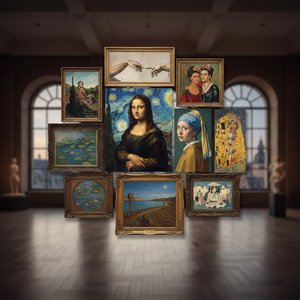
A művészettörténet 10 ikonikus olajfestménye – OriginalUniqueArt.com
Fedezze fel a művészettörténet 10 legikonikusabb olajfestményét! Leonardo, Van Gogh, Rembrandt és más mesterek remekművei – történetükkel, technikájukkal. Vászonképek otthonába a OriginalUniqueArt.com-on! Fedezze fel a teljes gyűjteményt online.

The Enduring Legacy of Oil on Canvas: Technique, History & Aesthetic Impact
Explore the rich history & techniques of oil painting – from Renaissance masters to Impressionism. Discover pigments, layering methods, and why this timeless medium endures. Expert insights for artists & art enthusiasts.

The Soul of Impressionism: Why Oil on Canvas Captures Eternal Light and Timeless Emotion
Discover the enchanting alchemy of Impressionism. Explore how the mastery of oil on canvas, through glazing and impasto, captures eternal light and emotion. Perfect for lovers of Monet and Van Gogh seeking the profound depth of hand-painted fine art.


