
 Megtekintés
 Küldés
 Megosztás
 Részletek
 Útmutató

 Letöltés
 Hasonló darabok
 X-ray felvétel
 Diavetítés
 Q&A
Q&A Statisztika
Emil Hertzka

- 29.0 x 36.0 cm


 Összes részlet megjelenítése
Giclée / Műnyomat
Múzeumi minőségű giclée vagy vászonnyomat, gyors gyártással és rugalmas finomítási lehetőségekkel. ( Kézzel festett másolat rendelése Áttérés digitális képre)




P118B Ft10

P118H Ft10

P118W Ft10

P438Z Ft10

P508JH Ft12

P508YH Ft12

P805H Ft10

P805Z Ft10

P919BZ Ft10

P919G Ft10

P919XJ Ft10

P959ZH Ft10

P968JZ Ft12

W106C Ft8

W218G Ft10

W218JH Ft8

W218Y Ft10

W307PJ Ft10

W316G Ft10

W316PJ Ft8

W316Y Ft10

W398PJ Ft8

W4111J Ft10

W500HY Ft15

W500JH Ft15

W692G Ft12

W849H Ft8

W940BG Ft15

W953PJ Ft8




Válasszon előre meghatározott méreteink közül, amelyek megfelelnek a műalkotás eredeti arányainak.

Írja be a keretének vagy a falának megfelelő szélességet és magasságot. A nyomatot csak le lehet vágni, soha nem tehető nagyobbá, mint az eredeti kép, így egy eltérő alakú méretnél a kép egy része elveszik. Mielőtt bármit kinyatintanánk, küldünk egy digitális próbamodellt jóváhagyásra. Az oldalon látható kép nem tartalmazza a valós levágást — ezt csak a próbamodell mutatja meg.
Világszerte történő kiszállítás területére mindössze 2 hét alatt, a szokásos 4-5 hét helyett. (1 november)

Ingyenes globális expressz szállítás

Prémium minőségű len vászon

Teljes körű szállítási biztosítás

Vámvisszatérítési Garancia

Hiteles színarányosság garancia

100 napos visszaküldési lehetőség (csak hibás termékek esetén)

100% pénzvisszatérítési garancia

Több darab vásárlásakor kedvezmény
 Az üvegkeretes opció csak 110 cm alatti méretben érhető el

Emil Hertzka
Giclée / Műnyomat
Reprodukció mérete
-


Összesített ár
Ft 26198
A Portrait of Ambition: Emil Hertzka by Arnold Schoenberg
This intimate portrait, rendered in 1910, offers a rare glimpse into the burgeoning artistic ambitions of Arnold Schoenberg, one of the most revolutionary figures in musical history. Painted by Schoenberg himself – a surprising and revealing act – the work transcends a simple likeness; it’s a carefully constructed statement about his aspirations and the perceived value of his increasingly influential art. The subject, a man with a distinguished reddish-brown beard and mustache, gazes directly at the viewer, an arresting intensity that speaks to Schoenberg's own self-assurance and desire for recognition. The slightly faded appearance of the painting lends it an aged quality, hinting at the passage of time and perhaps a subtle acknowledgement of the challenges he faced in establishing his reputation.
The Context of Innovation
- Vienna's Artistic Landscape: 1910 Vienna was a crucible of artistic innovation. Schoenberg, along with figures like Alban Berg and Anton Webern, was at the forefront of the Second Viennese School, challenging traditional harmonic structures and paving the way for atonality – a radical departure from established musical norms.
- Hertzka's Role: Emil Hertzka was a prominent art dealer who recognized Schoenberg’s potential early on. The correspondence between them reveals Schoenberg’s strategic thinking; he understood the power of association and sought to leverage his reputation within the music world to gain wider acceptance for his visual work.
- A Moment of Transition: This painting represents a pivotal moment in Schoenberg's career, just as he was solidifying his position as a leading composer and beginning to explore new artistic avenues.
Symbolism and Technique – A Calculated Impression
Schoenberg’s technique is characterized by a meticulous attention to detail, particularly in the rendering of the subject's facial features and the textures of his clothing. The use of muted tones and subtle gradations of light and shadow creates a sense of depth and realism, while simultaneously conveying an air of formality and sophistication. The glasses worn by the sitter are not merely a stylistic choice; they suggest intellectualism and perhaps a detachment from conventional perspectives – qualities central to Schoenberg’s revolutionary approach to music. The direct gaze of the subject is particularly significant, demanding engagement from the viewer and subtly asserting Schoenberg's confidence in his artistic abilities.
Beyond the Brushstroke: A Statement of Value
The inscription accompanying the painting – “You know that I paint. What you do not know is that my work is highly praised by experts…” – reveals Schoenberg’s anxieties and strategic calculations. He was acutely aware of the skepticism surrounding his foray into visual art, particularly given his groundbreaking musical innovations. By emphasizing the praise he received from "experts," he sought to bypass public opinion and directly appeal to a discerning audience. His desire for a patron, coupled with his assertion that owning a painting by him would be “much more interesting” than commissioning a work from a lesser-known artist, underscores his ambition to establish himself as a significant figure in both the music and art worlds. This portrait is not simply a representation of a man; it’s a carefully crafted testament to Schoenberg's belief in his own artistic genius.
Kérdések és válaszok
Hol vásárolható „Emil Hertzka”, Arnold Schönberg alkotása kézzel festett másolata?
A „Emil Hertzka”, Arnold Schönberg alkotása kézzel festett másolataival a ez a weboldal oldalon találkozhat, kézzel festett olajfesték reprodukció lino vászonon formában, melyet a(z) Kézzel festett másolat oldalon lehet megrendelni.
Hol vásárolhatom meg „Emil Hertzka”, Arnold Schönberg alkotása digitális képét?
A „Emil Hertzka”, Arnold Schönberg alkotása digitális képét a következő oldalon vásárolhatja meg: Digitális alkotás: magas felbontású digitális kép letöltése.
Milyen érzelmet közvetít a Early Modern Music korszakból származó "Emil Hertzka" című alkotás?
A "Emil Hertzka" a Early Modern Music korszak Reflective érzelmi hangulatát tükrözi.
A művész életrajza
korai évek és zenei kezdés
arnold schoenberg, az osztrák-amerikai zeneszerző 1874. szeptember 13-án született Ausztriában, Bécsben. korai éveket szerény körülmények jellemezték, apja cipész volt. ennek ellenére schoenberg veleszületett zenepassziója arra késztette, hogy nagyrészt önmagát nevelte fel ezen a területen.zenei fejlődés és meghatározó művek
schoenberg korai alkotásai, mint például a verklärte nacht (1899), egy brahmsi–wagneri szintézist mutatottak be. fejlődése során a második bécsi iskola központi alakjává vált, anton webern és alban berg mellett. kompozíciói, köztük a 2. hang quartet (1907–1908), az erwartung (1909) és a pierrot lunaire (1912), az atonalitás innovatív megközelítését példázták.tanítás, emigráció és későbbi évek
a nacionalsocialisták hatalomra jutása miatt schoenberg 1933-ban lemondott a porzsandai művészeti akadémiáról, mivel zenéjét „decadensnek” bémeztették. ezt követően az Egyesült Államokban tanított, többek között a kaliforniai університеtemen, Los Angelesben (1936–1944), ahol számos létesítmény jeho nevét viseli. [https://OriginalUniqueArt.com/@/arnold-schoenberg](fedezze fel schoenberg életének és műveinek további részleteit az OriginalUniqueArt oldalon).- schoenberg felfedezte a filmzenét és tonálisabb zenét írt, melynek legkiemelkedőbb alkotása a 2. kamara szimfonikus (1939) volt.
- byron stílusában szatirizálta a fasciszta tyrannusokat az ode to napoleon (1942) című művében.
- a háború utáni bécs tiszteletbeli állampolgárságot ajánlott neki, de egészségi állapota romlott, amit a hang trió (194lagy)-ban ábrázolt.
örökség és hatás
amint a világ megtudta a holokauszt borzalmait, schoenberg áldozatait a a survivor from warsaw (1947) című alkotással emlékeztette meg. az izraeli konzervatórium és zeneakadémia 1951-ben tiszteletbeli elnökké választotta. [https://OriginalUniqueArt.com/@@/a@d3bqc7-the-museum-destroyed-by-fire-(united-states)](tudjon meg többet műveinek hatásáról az OriginalUniqueArt oldalon). főbb pontok:- schoenberg innovatív zenéje a 20. századi klasszikus zene egyik legbefolyásosabb és legvitatottabb alkotása volt.
- legalább három generációs zeneszerző továbbfejlesztette annak valamileg formális elveit.
- esztétikai és zenetörténeti nézetei olyan zeneművészeket és kutatókat befolyásoltak, mint theodor w. adorno és carl dahlhaus.

Arnold Schönberg
1874 - 1951 , Ausztria
Rövid információk
- Artistic Movement Or Style: Dodekafónia; Expresszionizmus
- Artists Or Movements Influenced By This Artist:
- Anton Webern
- Alban Berg
- Artists Who Influenced This Artist:
- Johannes Brahms
- Richard Wagner
- Date Of Birth: 1874. szeptember 13.
- Date Of Death: 1951
- Full Name: Arnold Schoenberg
- Nationality: Osztrák-amerikai
- Notable Artworks:
- Suite, op. 29
- Music Typewriter
- Staffliner
- Place Of Birth: Wien, Ausztria
Kapcsolódó cikkek

Timeless Vienna: Capturing the Imperial Elegance of Austria Through the Lens of Art History
Explore the imperial grandeur of Vienna through art history. Discover the architectural mastery of Otto Wagner and the elegance of the Secessionist movement in this sophisticated guide to Austria's timeless aesthetic legacy.

Beyond Symbolism: Exploring the Spiritual Landscapes of Mikalojus Konstantinas Čiurlionis's Art
Explore the captivating world of Mikalojus Konstantinas Čiurlionis, a pioneer of abstract art. Discover his unique blend of music and painting, spiritual themes, and lasting influence on Lithuanian culture. Learn more at OriginalUniqueArt.
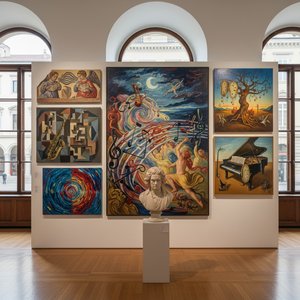
Harmonies on Canvas: Exploring the Visual Representation of Music in Art History
Explore the fascinating history of music's visual representation in art! From ancient symbolism to modern abstraction, discover how artists have captured sound and emotion on canvas. Expert insights & stunning examples.

Gustav Klimt 25 Mesterműve: A Szecesszió Aranykora – Vászonképek és Dekorációk
Fedezze fel Gustav Klimt 25 legpazarabb művészeti alkotását! A szecesszió aranykora, ikonikus portrék és szerelmesek története. Vászonképek, reprodukciók és inspiráció otthonába – OriginalUniqueArt.com.

The Vienna Secession: A Rebellion of Form & Spirit in Fin-de-Siècle Art
Discover the revolutionary Vienna Secession art movement! Explore Klimt, Olbrich & more. Learn about its history, characteristics & lasting influence on modern art. High-quality reproductions available.


