

 Előnézet
 Megosztás
 Megosztás
 Részletek
 Útmutató

 Letöltés
 Hasonló darabok
 X-ray felvétel
 Diavetítés
 Statisztika
Flora, Scattering Flowers


 Tovább olvasom
Kézzel készített olajfestmény reprodukció
Kézzel festett olajvastú vászon, az Ön által választott méretben és keretben, művészeink készítik meglévőre. ( Váltás nyomtatványra Áttérés digitális képre)




P118B Ft10

P118H Ft10

P118W Ft10

P438Z Ft10

P508JH Ft12

P508YH Ft12

P805H Ft10

P805Z Ft10

P919BZ Ft10

P919G Ft10

P919XJ Ft10

P959ZH Ft10

P968JZ Ft12

W106C Ft8

W218G Ft10

W218JH Ft8

W218Y Ft10

W307PJ Ft10

W316G Ft10

W316PJ Ft8

W316Y Ft10

W398PJ Ft8

W4111J Ft10

W500HY Ft15

W500JH Ft15

W692G Ft12

W849H Ft8

W940BG Ft15

W953PJ Ft8




Válasszon előre meghatározott méreteink közül, amelyek megfelelnek a műalkotás eredeti arányainak.

Írja be a kívánt szélességet és magasságot, hogy illeszkedjen a keretéhez vagy a falához. Mivel ez kézzel festett alkotás, egy eltérő formájú méret esetén a művész akár festhet is valamivel többet a kép körül, vagy korolathat is belőle — az Ön döntésének megfelelően. A festés megkezdése előtt küldünk egy digitális tervezetet jóváhagyásra. Az oldalon látható kép nem tartalmazza a végeredményt — csak a tervezet mutatja meg a valódi eredményt.
A rendelést követően a OriginalUniqueArt.com csapata e-mailt küld az ügyfélnek az instrukciókért, és biztosít egy előnézeti képet (mockup).
Világszerte elérhető szállítás () 3-4 hét alatt a szokásos 5 hét helyett. (23 október). A minőség nem kérdőjelezhető.

Ingyenes globális expressz szállítás

Prémium minőségű len vászon

Teljes körű szállítási biztosítás

Vámvisszatérítési Garancia

Tökéletes színarányosság garancia

100 napos visszaküldési garancia (csak gyártási hibás termékek esetén)

100% pénzvisszatérítési garancia

Több darab vásárlásakor kedvezmény
 Az üvegkeretes opció csak 110 cm alatti méretben érhető el

Flora, Scattering Flowers
Reprodukciós technika
Reprodukció méretei
-


Összesített ár
Ft 96443
A Serenade in Bloom: Capturing Nature's Ephemeral Grace
To gaze upon this scene is to step through a veil into a moment suspended between dream and reality. The painting, Flora, Scattering Flowers, presents us with an idyllic tableau where the human spirit seems perfectly attuned to the gentle rhythms of nature. At its heart stands a woman, clad in flowing blue garments that echo the tranquility of a distant river. She is not merely posing; she is participating in a quiet communion with the bounty surrounding her, holding forth blossoms as if offering secrets whispered only to the breeze. The composition guides the eye effortlessly across this pastoral setting, suggesting a leisurely stroll through an overgrown garden or meadow.
The Symbolism of Flora and Flight
The very title speaks to themes of ephemerality and abundance. The scattering flowers are more than mere decoration; they are potent symbols of life's fleeting beauty—the perfect bloom that must eventually fade, yet in its passing, it creates a breathtaking moment of perfection. This sense of delicate transience is echoed by the two birds visible in the azure expanse above. They seem to be messengers, carrying away moments of pure freedom across the sky. Furthermore, the inclusion of the potted plant anchors the scene, suggesting that even cultivated beauty finds its counterpart in wild, untamed growth. The overall atmosphere achieved is one of profound serenity, a visual balm for the modern soul.
Echoes of Symbolism and Artistic Lineage
While the specific context places this work within an unknown period, the sensibility resonates deeply with the Symbolist movements that captivated artists like Arnold Böcklin. Though perhaps not directly by him, the painting shares a kinship with the Romantic fascination for allegory and the merging of mythic narrative with natural settings. The gentle melancholy inherent in such scenes—the beauty tinged with the knowledge of its passing—is a hallmark of art that seeks to explore deeper truths beyond mere depiction. It invites contemplation on cycles: birth, bloom, scattering, and rest.
Bringing Arcadia Home: Decorating with Dreamlike Charm
For the collector or designer seeking to infuse a space with an aura of peaceful sophistication, this reproduction offers unparalleled depth. Imagine this piece gracing a sunlit drawing-room or a tranquil bedroom retreat. The soft blues and vibrant bursts of floral color provide natural focal points, while the overall pastoral calm acts as a visual anchor for any room's decor scheme. It is art that does not shout but rather whispers its beauty into your daily life, transforming a mere wall into a portal to an idealized, blooming afternoon.
Gyakran Ismételt Kérdések
Van-e rozšíngtott valóság (AR) előnézete a(z) "Flora, Scattering Flowers" alkotásnak?
A „Flora, Scattering Flowers”, Arnold Böcklin alkotása AR előnézet oldala kiterjesztett valóságot használ, hogy az alkotást egy kompatibilis eszközön, az Ön saját környezetében is megmutassa.
Mi a művészettörténeti helye a(z) „Flora, Scattering Flowers”, Arnold Böcklin alkotása alkotásnak?
Történelmileg a "Flora, Scattering Flowers" a szélesebb körű 19th Century korszak Symbolism alkotása.
Milyen orientációban készült a „Flora, Scattering Flowers”, Arnold Böcklin alkotása?
A „Flora, Scattering Flowers”, Arnold Böcklin alkotása Tall formátumú alkotás. A formátum a kompozíció arányait határozza meg.
A művész életrajza
Early Life and Training
Arnold Böcklin, a Swiss symbolist painter, was born on October 16, 1827, in Basel, Switzerland. His father, Christian Frederick Böcklin, descended from an old family of Schaffhausen and engaged in the silk trade. Arnold’s mother, Ursula Lippe, was a native of the same city. He began his artistic journey at the Düsseldorf Academy under Schirmer, where he developed a strong connection with Anselm Feuerbach. This period firmly established him within the Düsseldorf School of Painting, known for its emphasis on realism and meticulous detail. Böcklin’s early training instilled in him a deep appreciation for classical forms and a keen eye for capturing atmospheric effects – qualities that would profoundly shape his later work. Basel, his birthplace, provided a rich cultural backdrop, exposing him to both the traditions of Swiss art and the burgeoning artistic movements of Europe.Artistic Career and Symbolism
Böcklin’s artistic trajectory led him through various European cities, each leaving its distinct mark on his style. Paris became a crucial stage in his development, where he worked at the Louvre, immersing himself in the masterpieces of the past. Later, Rome profoundly influenced his palette and subject matter, drawing him into the world of classical mythology and allegory. His work consistently explored themes of death, mortality, and the subconscious—elements that would become hallmarks of the Symbolist movement. Böcklin’s early works, such as *Great Park* (1857), showcased ancient mythology with a haunting beauty, while pieces like *Nymph and Satyr* (1858) and *Sappho* (1859) demonstrated his ability to evoke emotion through carefully constructed compositions. A particularly significant piece from this period was *Portrait of Myself, with Death Playing a Violin* (1872), which offered a poignant meditation on the human condition—a work that foreshadowed the darker, more introspective themes he would later explore.The Isle of the Dead and Legacy
Perhaps Böcklin’s most enduring achievement is his five versions of *The Isle of the Dead* (1880-1886). Inspired by the English Cemetery in Florence—where his daughter was buried—these monumental paintings created a dreamlike landscape of decaying beauty, shrouded in mist and melancholy. The series became an iconic representation of the Symbolist movement, capturing a sense of profound loss and timelessness. Böcklin’s work resonated deeply with younger artists like Hans Thoma, who sought to emulate his evocative style, and influenced composers such as Richard Strauss, who drew inspiration from the mood and atmosphere of Böcklin's paintings. Clement Greenberg famously described Böcklin’s work as “one of the most consummate expressions” of its time, recognizing its profound impact on the development of modern art. His style shared affinities with the Pre-Raphaelites, emphasizing the realm of dreams, mysticism, and the exploration of hidden emotions—a legacy that continues to captivate viewers today.Museums and Collections
Arnold Böcklin’s artistic output is preserved in several prominent museums around Switzerland:- Öffentliche Kunstsammlung (Basel, Switzerland)
- Kunstmuseum Basel (Switzerland)
- Museum Kunsthaus Zürich (Zürich, Switzerland)
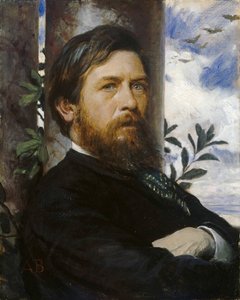
Arnold Böcklin
1827 - 1901 , Svájc
Gyors információk
- Artistic Movement Or Style: Szimbolista
- Artists Or Movements Influenced By This Artist:
- Hans Thoma
- Pre-Raphaelites
- Artists Who Influenced This Artist:
- Schirmer
- Feuerbach
- Date Of Birth: 1827. okt. 16.
- Date Of Death: 1901. jan. 16.
- Full Name: Arnold Böcklin
- Nationality: Svájci
- Notable Artworks:
- Isle of the Dead
- Nymph and Satyr
- Sappho
- Portrait of Myself
- Place Of Birth: Basel, Svájc
Kapcsolódó cikkek

Blossoms of Time: A Historical & Aesthetic Exploration of Floral Painting Across Cultures
Explore the rich history of floral painting! Discover symbolism, techniques & masterpieces from Van Huysum to O'Keeffe. Expert insights for art lovers & collectors at OriginalUniqueArt.
Nyugalom és Béke a Vásznon: 10 Klasszikus Műalkotás, Amik Megnyugtatnak – OriginalUniqueArt.com
Fedezze fel 10 klasszikus műalkotást, melyek nyugalmat és békét árasztanak! Monet, Renoir és más festők remekművei inspirálják otthonát. Prémium art reprodukciók a OriginalUniqueArt.com-on – válassza ki kedvenc hangulatos tájképeit vagy absztrakt műveit!
Marianne North legszebb festményei: 25 műalkotás a természet szépségéről | OriginalUniqueArt
Fedezze fel Marianne North 25 legszebb festményét! Ismerje meg a viktoriánus kor virágfestőjének lenyűgöző tájképeit és botanikai illusztrációit. Műalkotások vásárlása, faliképek otthonába – OriginalUniqueArt.com.
Blossoming Symbolism: A Historical Journey Through Flowers in Western Painting
Explore the rich history of flower symbolism in Western painting! Discover how artists from the Renaissance to Modernism used blossoms to convey meaning, emotion & beauty. Learn about iconic artworks and movements.

Blossoms of Time: A Historical Journey Through Flower Painting
Explore the captivating history of flower painting! Discover Dutch masters, symbolic meanings, & botanical art. Expert insights & high-quality reproductions at OriginalUniqueArt.
