Előnézet
 Megosztás
 Megosztás
 Részletek
 Útmutató

 Letöltés
 Hasonló darabok
 X-ray felvétel
 Diavetítés
 Statisztika
Virágos tájképek
 Olajfestmény vászonon
- Falfeliratok és faldekoráció
- Mannerist Innovation
 1591
1591- Korai modern kor
 73.0 x 56.0 cm
 Tovább olvasom
Giclée / Műnyomat
Múzeumi minőségű giclée vagy vászonnyomat, gyors gyártással és rugalmas finomítási lehetőségekkel. ( Kézzel festett másolat vásárlása Áttérés digitális képre)




P118B Ft10

P118H Ft10

P118W Ft10

P438Z Ft10

P508JH Ft12

P508YH Ft12

P805H Ft10

P805Z Ft10

P919BZ Ft10

P919G Ft10

P919XJ Ft10

P959ZH Ft10

P968JZ Ft12

W106C Ft8

W218G Ft10

W218JH Ft8

W218Y Ft10

W307PJ Ft10

W316G Ft10

W316PJ Ft8

W316Y Ft10

W398PJ Ft8

W4111J Ft10

W500HY Ft15

W500JH Ft15

W692G Ft12

W849H Ft8

W940BG Ft15

W953PJ Ft8




Válasszon előre meghatározott méreteink közül, amelyek megfelelnek a műalkotás eredeti arányainak.

Megadhat saját méreteket is egy konkrét kerethez vagy helyszínhez igazítva. Amennyiben a kiválasztott méret nem egyezik az eredeti kép arányokkal, a műalkotást le fogjuk vágni, vagy kiegészítjük a képet tükrözött vagy egyszínű szélekkel. A gyártás megkezdése előtt egy digitális tervezetet küldünk jóváhagyásra.
Kérjük, vegye figyelembe, hogy a képernyőn látható előnézet nem tükrözi a tényleges levágást vagy kiegészítést. Csak a tervezet mutatja pontosan a végső kompozíciót.
Bár az egyedi méretek is elérhetőek, az eredeti arányok megőrzése érdekében azt javasoljuk, hogy válasszon a előre meghatározott listából származó méretet.
Világszerte történő kiszállítás területére mindössze 2 hét alatt, a szokásos 4-5 hét helyett. (10 október)

Ingyenes globális expressz szállítás

Prémium minőségű len vászon

Teljes körű szállítási biztosítás

Vámvisszatérítési Garancia

Tökéletes színarányosság garancia

100 napos visszaküldési garancia (csak gyártási hibás termékek esetén)

100% pénzvisszatérítési garancia

Több darab vásárlásakor kedvezmény
 Az üvegkeretes opció csak 110 cm alatti méretben érhető el

Virágos tájképek
Giclée / Műnyomat
Reprodukció méretei
-


Összesített ár
Ft 25071
Giuseppe Arcimboldo Virágos Tájai: Természet és Mesterségesiség Keleti Szimfóniája
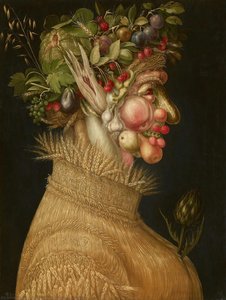
Giuseppe Arcimboldo, a 16. századi olasz reneszánszi festő, nem egyszerű portrék alkotója volt; inkább egyedi, szokatlan kompozíciók mestere, akik a természet és az emberi lényeg közötti kapcsolatot, szépséget és hanyatlékonyságot εξερευνálnak. A 1591-ben elkészült "Virágos Tájak" (Floral Still Life) egy lenyűgöző példa erre, amely a természeti elemeket – virágokat, leveleket, gyümölcsöket – felhasználva egy emberi arckép alkotását mutatja be. Ez a darab nem csupán vizuálisan vonzó, hanem mélyebb jelentőséggel is bír, mely a reneszánszi világban virágzó természet- és művészetközösség szimbolikus kifejezése.
Arcimboldo munkássága a reneszánsz kortársai számára egyedülálló volt. A klasszikus reneszánszi festészet, amely az idealizált formát hangsúlyozta, Arcimboldival szemben a komplexitást, a túlzó motívumokat és a valóság szimbolikus torzulásait részesítette előnyben. A "Virágos Tájak" egy gyönyörű példája ennek az újító stílnak, melyet részletesen olajkrétával festett ki – valószínűleg vászonra vagy fa panelre. Minden virág, levél és szár precíz módon van ábrázolva, így egy gazdag textúrájú, színvilággal teli tapétálódik össze, amely egyértelműen felismerhető emberi formát alkot.
A Habsburg Birodalom és a Szimbolikus Portrék
Arcimboldo a Habsburg császárlakók szolgáló festője volt három generációval – I. Ferdinánd, Mátyás és Rudolf II – számára. Művei mélyen be voltak ágyazva az időszak szellemiségébe, tükrözve a természetrajzi kutatások, alegóriák és rejtett jelentések érdeklődését. Ezek a "összetette portrék" nem csupán dísztárgyak; gyakran hordoztak politikai vagy vallási szimbolikát, melyek a császárlakók hatalmát, böltségét vagy természet iránti kapcsolatát fejezték ki. A virágos kompozíciók jelentése több értelmezést is magukban foglalhat: gazdagságot, termékenységet és az élet eltelhetőségét szimbolizálja.
A Habsburg Birodalom a 16. század végén virágzó politikai központ volt, ahol a művészet fontos szerepet töltött be a hatalmi pozíciók megerősítésében és a császárlakók szellemi elitének megnyerésében. Arcimboldo munkássága a Habsburg udvarban egyedülálló helyre kapott, mivel a festő képes volt a reneszánszi világ szellemiségét – a természet iránti szeretetet, a tudományos kutatásokat és az esztétikai szépséget – a saját, egyedi stílusába ötvözni. A virágos kompozíciók nem csupán a császárlakók számára voltak fontosak, hanem a Habsburg Birodalom szimbólumai is, melyek a császarlakók hatalmát és befolyását fejezték ki.
A Virágok Szimbolikája: Élet, Halál és Újrafakulás
A virágok kiválasztása kulcsfontosságú. Nem csupán esztétikai vonásuk miatt fontosak, hanem a hagyományos jelentésük révén is. A virágok számos érzelmet és koncepciót szimbolizálnak – szeretetet, szépséget, törékenységet, újjászületést, de akár halálot is. Arcimboldo kompozíciójában a virágok egyfajta eleganciát sugároznak, mely a természeti szépség és az emberi lényeg közötti harmonikus kapcsolatot fejezi ki. A festő a virágok különböző színvilágait és formáit felhasználva egy komplex, dinamikus képet alkot, amely a természet örök életciklusát szimbolizálja.
A "Virágos Tájak" egyfajta metafora is az emberi lényeg törékenységére és változékonyságára. A virágok gyorsan elszáradnak, de a természet folyamatosan új életet hoz. Arcimboldo festménye emlékeztet bennünket arra, hogy az élet egy rövid, értékes időszak, melynek során minden élőlénynek megtalálnia kell a helyét a természeti világban.
A Festés Művészete: Detailing és Technika
Arcimboldo festményeinek részletei lenyűgözőek. A festő precíz módon ábrázolja minden virágot, levelet és szárt, így egy gazdag textúrájú, színvilággal teli tapétálódik össze, amely egyértelműen felismerhető emberi formát alkot. Az olajkrétával készült festmény a reneszánszi művészek egyik legjelentősebb képviselője, aki a részletekre való odafigyelés és a precíz munka révén hozta létre ezt a lenyűgöző műalkotást.
Gyakran Ismételt Kérdések
Mikor készült a "Virágos tájképek"?
A „Virágos tájképek”, Arcimboldo alkotása alkotásának éve 1591.
Hol láthatom a(z) "Virágos tájképek" előnézetét?
A „Virágos tájképek” Előnézet oldalán megtekintheti a művészeti alkotást megrendelés előtt.
Mennyi volt Arcimboldo életkora, amikor a "Virágos tájképek" készült?
Arcimboldo 64 éves volt, amikor 1591 évben megalkotta a "Virágos tájképek" alkotást. A korúsítás az alkotó születési évéből, 1527 fel основании került kiszámítva.
Ki a "Virágos tájképek" alkotója?
A "Virágos tájképek" alkotója Arcimboldo. A mű Arcimboldo nevére van katalógusozva.
Milyen kontraszt jellemzi „Virágos tájképek”, Arcimboldo alkotása alkotást?
A „Virágos tájképek”, Arcimboldo alkotása Nyilatkozat kontrasztot mutat a világos és sötét részek között.
Milyen érzelmi hangulat kíséri a "Virágos tájképek" alkotás Mannerist Innovation stílusát?
A Mannerist Innovation irányzaton belül, a "Virágos tájképek" egy Belső elmélyülésre invitáló hangulatban készült.
Hogyan tudok nyomtatványt vásárolni a(z) „Virágos tájképek”, Arcimboldo alkotása alkotásból?
A „Virágos tájképek”, Arcimboldo alkotása nyomtatványa megrendelhető a ez az oldal oldalon: minőségi giclée nyomat pamutvászonon vagy archiváló vászonpapíron.
A művész életrajza
A World Reimagined: The Enigmatic Art of Giuseppe Arcimboldo
Giuseppe Arcimboldo, a name that conjures images both whimsical and profoundly strange, remains one of the most singular figures in Renaissance art. Born in Milan in 1527, his career unfolded against the backdrop of a Europe steeped in intellectual ferment, religious upheaval, and an insatiable curiosity about the natural world. While initially recognized for more conventional works – frescoes adorning cathedrals and portraits adhering to established courtly standards – Arcimboldo’s enduring legacy rests upon a series of composite heads constructed entirely from meticulously arranged objects: fruits, vegetables, flowers, books, even musical instruments. These weren't mere playful exercises in visual trickery; they were complex allegories, imbued with symbolism that resonated deeply within the Renaissance worldview and continue to fascinate audiences today. His father, Biagio Arcimboldo, was an artist himself, providing young Giuseppe with early artistic training and likely influencing his initial foray into design work for stained glass windows and frescoes at Milan Cathedral beginning around 1549. This foundational experience honed his technical skill and eye for detail—qualities that would become hallmarks of his later, more unconventional creations.Early Years and Artistic Foundations
Giuseppe Arcimboldo’s artistic journey began within a family steeped in the traditions of art. His father, Biagio Arcimboldo, was himself a painter, working primarily as a designer for stained glass windows and frescoes within the grand cathedral of Milan. This early exposure to craftsmanship and visual storytelling undoubtedly shaped young Giuseppe's developing skills. He received his initial training at the Duomo, learning the techniques of fresco painting and the intricacies of creating intricate designs for religious imagery. This period instilled in him a deep appreciation for detail, color theory, and the ability to translate complex ideas into visually compelling forms. It’s believed that this foundation in traditional artistic practices provided a crucial springboard for his later experimentation with more unconventional approaches. The influence of the Milanese art scene—a hub of creativity during the Renaissance—likely fostered a spirit of innovation and a willingness to challenge established norms, qualities that would ultimately define Arcimboldo's unique style.Courtly Commissions and the Rise of a Unique Style
Arcimboldo’s trajectory took a significant turn in 1562 when he was appointed court portraitist to Ferdinand I at the Habsburg court in Vienna. This marked the beginning of over two decades serving as an artistic polymath for three successive Habsburg rulers: Maximilian II and his son, Rudolf II. This appointment thrust him into the heart of European power, providing him with unparalleled access to imperial patronage and a stimulating environment for creative exploration. Beyond painting portraits – though even these often displayed subtle eccentricities – Arcimboldo’s duties encompassed costume design, festival decorations, and the organization of imperial collections. It was within this environment of refined taste and intellectual curiosity that his signature style began to blossom. The courtly demand for novelty and spectacle provided fertile ground for experimentation, allowing him to move beyond traditional portraiture towards the creation of his celebrated “composite heads.” These weren’t born from a sudden impulse but evolved gradually, building upon Renaissance fascination with puzzles, riddles, and the exploration of hidden meanings within seemingly ordinary objects. The influence of earlier artists who experimented with *trompe l'oeil* effects and distorted perspectives can be detected, yet Arcimboldo synthesized these elements into something entirely his own—a unique visual language that challenged conventional notions of representation.Decoding the Symbolism: More Than Meets the Eye
To dismiss Arcimboldo’s work as mere whimsicality is to overlook its profound intellectual depth. Each object within his composite portraits was carefully chosen, laden with symbolic meaning related to the sitter's character, profession, or social status. *The Librarian*, for example, isn’t simply a face constructed from books; it’s a subtle critique of scholarly pretension—a commentary on those who amass knowledge without truly engaging with its content. The animal tails forming the beard represent dusters, hinting at neglected volumes gathering dust on shelves. Similarly, his portraits of the seasons – particularly *Vertumnus*, depicting Emperor Rudolf II as the Roman god of gardens and change – are rich in botanical symbolism, reflecting the emperor’s patronage of science and natural history. These weren't intended to be immediately deciphered; they were designed to provoke contemplation, inviting viewers to unravel layers of meaning hidden within the seemingly playful arrangement of objects. The very act of constructing a human likeness from inanimate matter served as a meditation on the interconnectedness of all things—a reflection of Renaissance Neoplatonism’s belief in the underlying harmony of the universe.Legacy and Rediscovery: A Precursor to Surrealism
Despite his success during his lifetime, Arcimboldo's reputation waned in the centuries following his death in 1593. His work was often relegated to the realm of curiosities—appreciated for its technical skill but dismissed as lacking serious artistic merit. It wasn’t until the 20th century that a renewed appreciation for his art emerged, fueled by the rise of Surrealism. Artists like Salvador Dalí recognized in Arcimboldo a kindred spirit—a visionary who dared to challenge conventional perceptions and explore the subconscious through unexpected juxtapositions of imagery. The influence of Arcimboldo can be seen in Dalí’s own dreamlike compositions and his fascination with metamorphosis and illusion. Today, Arcimboldo is celebrated as a pivotal figure in art history—a precursor to Surrealism whose innovative use of symbolism and playful distortion continues to inspire artists and captivate audiences worldwide. His paintings are housed in prestigious museums such as the Kunsthistorisches Museum in Vienna and the Louvre in Paris, ensuring that his unique vision will continue to resonate for generations to come. His legacy is a testament to the enduring power of imagination and the ability of art to transform our understanding of the world around us.Key Achievements
* **Innovative Portraiture:** Arcimboldo revolutionized portrait painting by moving beyond traditional representations, creating composite heads that were both visually striking and intellectually stimulating. * **Symbolic Mastery:** His works are rich in symbolism, reflecting Renaissance philosophical ideas and offering layers of interpretation for viewers. * **Courtly Influence:** He served as a key artistic figure at the Habsburg court, shaping trends in design, decoration, and costume. * **Precursor to Surrealism:** His unconventional approach paved the way for later surrealist artists, demonstrating the power of dreamlike imagery and unexpected juxtapositions.
Arcimboldo
1527 - 1593 , Olaszország
Gyors információk
- Artistic Movement Or Style: Mannerizmus, Surrealizmus
- Artists Or Movements Influenced By This Artist: ['Salvador Dalí']
- Artists Who Influenced This Artist: ['Leonardo da Vinci']
- Date Of Birth: 1527. ápril 5.
- Date Of Death: 1593. július 11.
- Full Name: Giuseppe Arcimboldo
- Nationality: Olasz
- Notable Artworks:
- A négy évszak
- Könyvtár
- Vertumnus
- Place Of Birth: Milan, Olaszország
Kapcsolódó cikkek

Blossoms of Time: A Historical Journey Through Flower Painting
Explore the captivating history of flower painting! Discover Dutch masters, symbolic meanings, & botanical art. Expert insights & high-quality reproductions at OriginalUniqueArt.

Jan Jansz Wijnants: A Study in Dutch Golden Age Still Life & Floral Transience
Explore the captivating world of Jan Wijnants and Dutch Golden Age still life painting. Discover symbolism, masterful techniques & lasting influence on floral art history. Learn more!

Blossoms of Time: A Historical & Aesthetic Exploration of Floral Painting Across Cultures
Explore the rich history of floral painting! Discover symbolism, techniques & masterpieces from Van Huysum to O'Keeffe. Expert insights for art lovers & collectors at OriginalUniqueArt.

Silent Narratives: Exploring the Enduring Appeal of Still Life Painting Across Centuries
Explore the rich history of still life painting with OriginalUniqueArt. Discover Dutch Masters, decode vanitas symbolism & learn about collecting timeless art. Expert insights and museum-quality reproductions.
Blossoming Symbolism: A Historical Journey Through Flowers in Western Painting
Explore the rich history of flower symbolism in Western painting! Discover how artists from the Renaissance to Modernism used blossoms to convey meaning, emotion & beauty. Learn about iconic artworks and movements.