

 Megtekintés
 Küldés
 Megosztás
 Részletek
 Útmutató

 Letöltés
 Hasonló darabok
 X-ray felvétel
 Diavetítés
 Statisztika
The Theorbo Player
 Oil On Canvas
- WallArt
- Baroque
 1615
1615- Early Modern
 119.0 x 85.0 cm
 Galleria Sabauda
 Összes részlet megjelenítése
Kézzel készített olajfestmény reprodukció
Kézzel festett olajvastú vászon, az Ön által választott méretben és keretben, művészeink készítik meglévőre. ( Váltás nyomtatványra Áttérés digitális képre)




P118B Ft10

P118H Ft10

P118W Ft10

P438Z Ft10

P508JH Ft12

P508YH Ft12

P805H Ft10

P805Z Ft10

P919BZ Ft10

P919G Ft10

P919XJ Ft10

P959ZH Ft10

P968JZ Ft12

W106C Ft8

W218G Ft10

W218JH Ft8

W218Y Ft10

W307PJ Ft10

W316G Ft10

W316PJ Ft8

W316Y Ft10

W398PJ Ft8

W4111J Ft10

W500HY Ft15

W500JH Ft15

W692G Ft12

W849H Ft8

W940BG Ft15

W953PJ Ft8




Válasszon előre meghatározott méreteink közül, amelyek megfelelnek a műalkotás eredeti arányainak.

Írja be a kívánt szélességet és magasságot, hogy illeszkedjen a keretéhez vagy a falához. Mivel ez kézzel festett alkotás, egy eltérő formájú méret esetén a művész akár festhet is valamivel többet a kép körül, vagy korolathat is belőle — az Ön döntésének megfelelően. A festés megkezdése előtt küldünk egy digitális tervezetet jóváhagyásra. Az oldalon látható kép nem tartalmazza a végeredményt — csak a tervezet mutatja meg a valódi eredményt.
A rendelést követően a OriginalUniqueArt.com csapata e-mailt küld az ügyfélnek az instrukciókért, és biztosít egy előnézeti képet (mockup).
Világszerte elérhető szállítás () 3-4 hét alatt a szokásos 5 hét helyett. (27 október). A minőség nem kérdőjelezhető.

Ingyenes globális expressz szállítás

Prémium minőségű len vászon

Teljes körű szállítási biztosítás

Vámvisszatérítési Garancia

Hiteles színarányosság garancia

100 napos visszaküldési lehetőség (csak hibás termékek esetén)

100% pénzvisszatérítési garancia

Több darab vásárlásakor kedvezmény
 Az üvegkeretes opció csak 110 cm alatti méretben érhető el

The Theorbo Player
Reprodukciós technika
Reprodukció mérete
-


Összesített ár
Ft 96851
The Resonance of Skill: An Encounter with The Theorbo Player
To gaze upon this portrait is to step directly into the vibrant, intellectual atmosphere of early seventeenth-century Italy. Antiveduto Gramatica’s depiction of The Theorbo Player is far more than a mere likeness; it is a carefully constructed tableau vivant, capturing not just a man, but an entire cultural moment—the confluence of artistry, scholarship, and refined leisure during the Baroque dawn. The subject commands attention with his posture and the magnificent instrument cradled in his hands. His attire, featuring that distinctive ruffled collar, whispers tales of period formality, suggesting a gentleman whose life was interwoven with the pleasures and prestige of music.
A Study in Composition and Symbolism
Gramatica’s genius lies in how he balances the central figure against the surrounding scholarly accoutrements. Notice the placement of the objects: to the left, two volumes rest upon a surface, suggesting deep learning; near the bottom right, another book anchors the composition, while a simple bowl occupies the lower left quadrant. These elements are not arbitrary additions. They function as visual signifiers, elevating the musician from mere entertainer to an educated *artista*. The Theorbo itself—a complex and resonant instrument—becomes the focal point of this intellectual portraiture. It speaks to a time when musical mastery was considered a profound form of human accomplishment, worthy of permanent commemoration alongside classical literature.
Technique and Historical Context
Painted around 1615, this work emerges from the rich, transitional period leading into full Baroque splendor. While Gramatica’s biography notes his foundational training in engraving, the resulting painting exhibits a mastery of portraiture that grounds it firmly within the era's aesthetic currents. The handling of light across the man’s suit and the polished wood of the instrument suggests a skilled application of oil paint, allowing for subtle gradations of shadow and highlight. It is a testament to an artist navigating the burgeoning styles of Rome and Siena, creating a piece that feels both historically authentic and intimately personal.
Bringing Baroque Elegance Home
For the discerning collector or designer seeking to infuse a space with the gravitas and romance of history, this reproduction offers unparalleled depth. Imagine this scene rendered in your drawing-room: the quiet dignity of the musician contrasted against the implied energy of his art form. Owning a piece like this is acquiring a narrative—a tangible connection to the patronage systems and cultural values of the early 17th century. It serves not only as decoration but as a sophisticated conversation starter, inviting viewers to contemplate the enduring power of art and intellect.
Kérdések és válaszok
Milyen színtelítettséggel rendelkezik „The Theorbo Player”, Antiveduto Gramatica alkotása?
A „The Theorbo Player”, Antiveduto Gramatica alkotása színei Subtle Color telítettségűek. A telítettség azt mutatja meg, hogy a színek mennyire élénkek vagy fakók.
Milyen helyet foglal el a művészettörténelemben a "The Theorbo Player"?
Történelmileg a "The Theorbo Player" a szélesebb körű Early Modern korszak Baroque alkotása.
Milyen színintenzitással rendelkezik a „The Theorbo Player”, Antiveduto Gramatica alkotása?
A "The Theorbo Player" színtelítettsége Monochromatic. Az intenzitás azt mutatja meg, mennyire erőteljesnek tűnnek a színek.
A művész életrajza
Antiveduto Gramatica: A Quiet Voice Amidst Baroque Splendor
Antiveduto Gramatica (1571-1626) stands as a fascinating figure in the burgeoning Italian Baroque, an artist whose output, though relatively modest compared to contemporaries like Caravaggio or Bernini, possesses a distinctive aesthetic and a profound connection to the intellectual currents of his time. Born in Siena—though precise details regarding his birthplace remain elusive—Gramatica’s early life was shaped by familial aspirations for artistic renown, foreshadowing a career dedicated to mastering the craft of painting. His apprenticeship with Giovanni Domenico Angelini in Perugia provided invaluable foundational experience, primarily focused on producing small-scale copper engravings—a technique that would inform his later stylistic choices and demonstrate an understanding of visual communication beyond mere fresco decoration.
Gramatica quickly established himself as an independent artist in Rome around 1591, capitalizing on the burgeoning artistic environment fostered by papal patronage. He gained renown for his skill in crafting portraits of prominent men, earning him the moniker “gran capadamente,” referencing his specialization in heads of figures. This mastery of portraiture allowed him to navigate the complex social hierarchies of Rome, capturing not just the likeness but the very essence of the era's elite. His association with the Accademia di San Luca proved pivotal, cementing his ties to Cardinal Francesco Maria del Monte—a figure whose influence extended far beyond artistic circles and who championed humanist ideals amidst the turbulent political landscape of Rome. Gramatica’s election as “principe” of the academy in 1624 reflected this connection and underscored the importance of scholarly pursuits alongside artistic creation.
The Artistry of Detail and Devotion
Gramatica's artistic style is characterized by a meticulous attention to detail and an understated elegance that distinguishes him from the more flamboyant expressions of Baroque art. Unlike many artists of his era who embraced dramatic chiaroscuro to create theatrical tension, Gramatica often employed a more controlled light, allowing for a clarity that highlights the textures of fabric, the warmth of skin, and the profound emotion within his subjects. This is perhaps most movingly seen in works such as Mary Magdalene at the Tomb, where he captures a poignant moment of grief and faith, utilizing rich detail to ground a sacred historical scene in a palpable, human reality.
His repertoire extended beautifully from religious iconography to secular portraiture and allegorical studies. In his depictions of musicality, such as The Theorbo Player, one can observe the rich Baroque textures and the intimate connection between the performer and their instrument. Furthermore, his ability to weave intellectual symbolism into his work is evident in pieces like La Musa Urania, where a woman with a mirror reflects the introspective and scholarly spirit of the age. Through these varied subjects, Gramatica demonstrated a versatile hand capable of both the sacred and the cerebral.
Legacy and Historical Significance
The historical significance of Antiveduto Gramatica lies in his role as a bridge between the late Renaissance traditions and the emerging Baroque sensibility. While he did not seek to overturn the established order with radical naturalism, his refined technique and ability to infuse portraiture with psychological depth contributed significantly to the Roman school's evolution. His life and work serve as a testament to the importance of the Accademia di San Luca in fostering an environment where art and intellect could coexist.
To reflect on Gramatica's contributions is to appreciate the subtle nuances of the Italian Baroque:
- Technical Precision: His background in engraving brought a unique, fine-lined clarity to his oil paintings.
- Intellectual Depth: His connection to humanist patrons like Cardinal Del Monte infused his work with layers of symbolic meaning.
- Portraiture Mastery: He remains a vital figure for studying the evolution of character studies and the depiction of status in 17th-century Rome.

Antiveduto Gramatica
1571 - 1626 , Italy
Rövid információk
- Full Name: antiveduto gramatica
- Nationality: Italian
- Date Of Birth: 1571
- Date Of Death: 1626
- Place Of Birth: Siena, Italy
- Notable Artworks:
- St. Cecília and two musician angels
- Mary Magdalene at the Tomb
- Virgin and Child with Saint Anne
- Artistic Movement Or Style: Proto-Baroque
- Artists Who Influenced This Artist: Giovanni domenico angelini
- Artists Or Movements Influenced By This Artist: Raphael
Kapcsolódó cikkek

A Barokk Mesterek 10 Legikonikusabb Remekműve – OriginalUniqueArt.com
Fedezze fel a barokk művészet 10 legpártosabb remekművét! Caravaggio, Rembrandt és Vermeer alkotásainak története – OriginalUniqueArt.com kínálatában exkluzív reprodukciók és inspiráló dekorációs ötletek várják Önt. Nézze meg most!

Baroque Classicism: The Grandeur of Order and Drama in 17th-Century Art History
Explore the profound elegance of Baroque Classicism. Discover how 17th-century masters synthesized dramatic emotion with classical order through the lens of the Counter-Reformation and the works of legends like Carlo Maratta and Andrea Sacchi.

Baroque Classicism: Reconciling Drama & Order in 17th-Century Art
Explore the captivating world of Baroque Classicism! Discover its history, key artists like Caravaggio & Rubens, and defining characteristics. Expert insights & high-quality reproductions at OriginalUniqueArt.

A barokk dráma ereje: fény, mozgás és érzelmek a 17. századi festészetben
Ismerje meg a barokk festészet drámai erejét és technikáit szakértőnkkel. Fedezze fel a fény és árnyék mesterművészetét még ma!
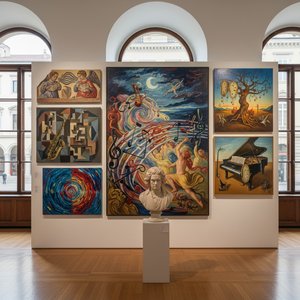
Harmonies on Canvas: Exploring the Visual Representation of Music in Art History
Explore the fascinating history of music's visual representation in art! From ancient symbolism to modern abstraction, discover how artists have captured sound and emotion on canvas. Expert insights & stunning examples.