A szöveg mérete

() ·

Egy Önnek készült, kézzel festett alkotás

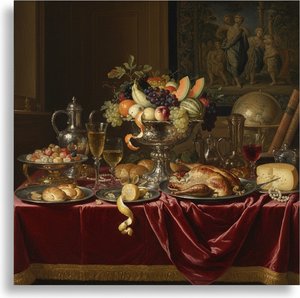
Still Life (2)

Kézzel készített olajfestmény reprodukció

Kézzel festett olajvastú vászon, az Ön által választott méretben és keretben, művészeink készítik meglévőre. ( Váltás nyomtatványra Áttérés digitális képre)

A gyűjtemény leírása

Vibrant roses and carnations bloom in this exquisite Dutch Golden Age still life by Anna Elisabeth Ruysch, capturing the lush elegance of 1690 through rich colors that invite you to bring nature into your home.

A művész életrajza

Discover Anna Elisabeth Ruysch, a Dutch Golden Age flower painter renowned for her exquisite botanical still lifes & detailed depictions of nature's beauty.

előbb ·

1. fejezet

Mekkora méretű legyen?

Húzza a csúszkát a méret megváltoztatásához; a bal oldali kép a keret valós szélességét mutatja. Az eredeti arányok megmaradnak.

Standard méret
egyedi méretű
CM
INCH

Válasszon előre meghatározott méreteink közül, amelyek megfelelnek a műalkotás eredeti arányainak.

szélesség
magasság

Írja be a kívánt szélességet és magasságot, hogy illeszkedjen a keretéhez vagy a falához. Mivel ez kézzel festett alkotás, egy eltérő formájú méret esetén a művész akár festhet is valamivel többet a kép körül, vagy korolathat is belőle — az Ön döntésének megfelelően. A festés megkezdése előtt küldünk egy digitális tervezetet jóváhagyásra. Az oldalon látható kép nem tartalmazza a végeredményt — csak a tervezet mutatja meg a valódi eredményt.

2. fejezet

Hogyan érkezzen meg?

Válaszd ki a feszített vászon széleit

Válassza ki a keretet

Corner sample of the WhiteWrap canvas edge finish, stretched on tömörfa bars
Fehér Ft1
Corner sample of the BlurSideWrap canvas edge finish, stretched on tömörfa bars
Elmosódott szélek Ft1
Corner sample of the ExtendedWrap canvas edge finish, stretched on tömörfa bars
Kiterjesztett Ft1
Corner sample of the P118B picture frame: formázott polisztirol, 5 cm wide and 3 cm thick
P118B Ft10
Corner sample of the P118H picture frame: formázott polisztirol, 5 cm wide and 3 cm thick
P118H Ft10
Corner sample of the P118W picture frame: formázott polisztirol, 5 cm wide and 3 cm thick
P118W Ft10
Corner sample of the P438Z picture frame: formázott polisztirol, 5.5 cm wide and 3.5 cm thick
P438Z Ft10
Corner sample of the P508JH picture frame: formázott polisztirol, 7 cm wide and 3.5 cm thick
P508JH Ft12
Corner sample of the P508YH picture frame: formázott polisztirol, 7 cm wide and 3.5 cm thick
P508YH Ft12
Corner sample of the P805H picture frame: formázott polisztirol, 5 cm wide and 3.5 cm thick
P805H Ft10
Corner sample of the P805Z picture frame: formázott polisztirol, 5 cm wide and 3.5 cm thick
P805Z Ft10
Corner sample of the P919BZ picture frame: formázott polisztirol, 7 cm wide and 3.5 cm thick
P919BZ Ft10
Corner sample of the P919G picture frame: formázott polisztirol, 7 cm wide and 3.5 cm thick
P919G Ft10
Corner sample of the P919XJ picture frame: formázott polisztirol, 7 cm wide and 3.5 cm thick
P919XJ Ft10
Corner sample of the P959ZH picture frame: formázott polisztirol, 5 cm wide and 3 cm thick
P959ZH Ft10
Corner sample of the P968JZ picture frame: formázott polisztirol, 6 cm wide and 4 cm thick
P968JZ Ft12
Corner sample of the W106C picture frame: tömörfa, 5 cm wide and 3 cm thick
W106C Ft8
Corner sample of the W218G picture frame: tömörfa, 5 cm wide and 3 cm thick
W218G Ft10
Corner sample of the W218JH picture frame: tömörfa, 5 cm wide and 3 cm thick
W218JH Ft8
Corner sample of the W218Y picture frame: tömörfa, 5 cm wide and 3 cm thick
W218Y Ft10
Corner sample of the W307PJ picture frame: tömörfa, 6 cm wide and 3 cm thick
W307PJ Ft10
Corner sample of the W316G picture frame: tömörfa, 6 cm wide and 3 cm thick
W316G Ft10
Corner sample of the W316PJ picture frame: tömörfa, 6 cm wide and 3 cm thick
W316PJ Ft8
Corner sample of the W316Y picture frame: tömörfa, 6 cm wide and 3 cm thick
W316Y Ft10
Corner sample of the W398PJ picture frame: tömörfa, 5 cm wide and 3 cm thick
W398PJ Ft8
Corner sample of the W4111J picture frame: tömörfa, 6.5 cm wide and 3.5 cm thick
W4111J Ft10
Corner sample of the W500HY picture frame: tömörfa, 7 cm wide and 5 cm thick
W500HY Ft15
Corner sample of the W500JH picture frame: tömörfa, 7 cm wide and 5 cm thick
W500JH Ft15
Corner sample of the W692G picture frame: tömörfa, 8 cm wide and 4 cm thick
W692G Ft12
Corner sample of the W849H picture frame: tömörfa, 5 cm wide and 3 cm thick
W849H Ft8
Corner sample of the W940BG picture frame: tömörfa, 7.5 cm wide and 4.5 cm thick
W940BG Ft15
Corner sample of the W953PJ picture frame: tömörfa, 6 cm wide and 3.5 cm thick
W953PJ Ft8
Corner sample of the H24-GOLD picture frame: faragott fa gesszóval, 10 cm wide and 6 cm thick
H24-GOLD Ft30
Corner sample of the H24-SILVER picture frame: faragott fa gesszóval, 10 cm wide and 6 cm thick
H24-SILVER Ft30
Corner sample of the H36-GOLD picture frame: faragott fa gesszóval, 15 cm wide and 6.5 cm thick
H36-GOLD Ft45
Corner sample of the H36-SILVER picture frame: faragott fa gesszóval, 15 cm wide and 6.5 cm thick
H36-SILVER Ft45

Keretprofil: . A kerettel együtt vett teljes méret: .

3. fejezet

Ki festi, és változtatni kellene-e bármit?

Példák a módosíthatóságra: Az arc kicserélése a vásárló fotójára; háziállat hozzáadása (pl. macska kicserélése kutyára); rejtett üzenet elhelyezése a háttérben; a háttér tájéképének vagy elemeinek megváltoztatása.
A megrendelést követően a OriginalUniqueArt.com csapat e-mailt küld a vásárlónak az instrukciókkal, és biztosítja a tervezeti előnézetet

Világszerte elérhető szállítás () 3-4 hét alatt a szokásos 5 hét helyett. (5 november). A minőség nem kérdőjelezhető.

4. fejezet

Az utolsó finomhangolás

Egy felirat, mint egy múzeumban?

A gravírozott bronztábla részletei

This elegant plaque features the artist's name and the title of the artwork, finely engraved for a timeless presentation.

It is made from bronze with a refined, elegant finish. The text is precisely laser-engraved for a sharp and permanent result. Measuring 9x2 cm, the plaque is compact yet easy to read. It's built to be durable and scratch-resistant, offering a professional, museum-quality look. Mounting is simple thanks to the included adhesive backing.

Átlátszó akril tábla részletei

The plaque includes essential engraved details such as the artist's name, the title of the artwork, the date it was created, the type of media used-like oil on canvas or watercolor-a brief description of the piece, and a QR code that links to the complete artwork information.

It is crafted from clear acrylic, offering a sleek, modern appearance. The text is UV-engraved in black to ensure strong visual contrast. With a size of 10x15 cm, it ensures optimal readability. It comes equipped with two metal hooks for secure wall mounting. The plaque is designed to be weather-resistant, making it suitable for various environments, and it includes interactive features that work seamlessly with smartphone scanning.

Fekete akril tábla részletei

This elegant plaque includes engraved information such as the artist's name, the title of the artwork, the date it was created, the type of media used (like oil on canvas or watercolor), a short description of the artwork, and a QR code for quick access to more information.

The plaque itself is made from refined black acrylic with a premium finish. The text is laser-engraved in white for high contrast and readability. Its size is 10x15 cm, designed to be easy to read. It comes with two metal hooks for professional mounting. The design is sleek and fits any interior style. It is also weather-resistant and durable, with built-in digital integration for mobile compatibility.

Egy védőréteg?

Mikor lenne szüksége rá?

5. fejezet

Az Ön által megrendelt festmény

Still Life (2)

Reprodukciós technika

Reprodukció mérete

-

Kiváló mesterművész

Nagyobb részletesség, finomság és bővített gyártási idő

-

Reprodukció keretezése

-

-

A bármely oldalsó méretét túlszálaló 105 cm (kb. 41 hüvelyk) meghaladó műalkotások vagy reprodukciók esetében a keret összeszerelhető készletként, szétszerelve kerül szállításra. Ez a módszer biztosítja a biztonságos szállítást, és megakadályozza a szállítás során fellépő sérüléseket.

Szakmész összeszerelést igényel – ez nem DIY (önösszeszerelhető) termék.
A készletet egy tapasztalt keretező szakembernek kell összeszerelnie és a vásznat feszítenie kell, fa ragasztó (nem tartalmazza a csomag), vásznfeszítő fogó és szorítók használatával, amelyek a ragasztó száradásáig a keretrészeket egymáshoz vuôngjba tartják. A helytelen összeszerelés vagy a nem egyenletes vásznfeszítés maradandó károsíthatja a műalkotást, és ez nem része a garanciánknak.

  • A készlet tartalmazza az összes tömörfa rudat, pontosan méretre vágva.

  • A mellékelt csavarokkal, valamint a sarokszerekhez szükséges faütő ragasztóval kell összeszerelnie (ez nem tartalmazható a csomagban), így a keretrendezőnek külön kell beszereznie.

  • A csomag nem tartalmazza a szükséges professzionális eszközöket: egy vászonfeszítőt és klipseket a rácsok vízszintes tartásához a ragasztó megszáradásáig.

Fontos:
A sarokcsatlakozásokhoz fánylagra van szükség, a keretrudakat szorítókapcsokkal kell rögzíteni, amíg a rag teljesen meg nem szárad, a kész keretre feszített vászonhoz pedig vászonfeszítő fogat szükséges. Ezek egyike sem található meg a készletben. Kérjük, rendelés előtt győződjön meg róla, hogy rendelkezik tapasztalt keretező szakemberrel.

Névtábla

-

-

Védőréteg (Lakk)

Fényes lakk (intenzívabb színek, védelem a fény és a nedvesség hatása ellen)

-

Műalkotásom egyedi igényre szabása

Példák a módosíthatóságra: az arc kicserélése az ügyfél fotójára; háziállat hozzáadása (pl. macska helyett kutya); rejtett üzenet elhelyezése a háttérben; a háttér tájainak vagy elemeinek megváltoztatása.

-

Sürgős

Világszerte szóló szállítás () mindössze 3-4 hét alatt, a szokásos 5 hét helyett. (5 november). A minőség nem kérdőjelezhető.

-

Express szállítás

Világszerte elérhető szállítás területre 5 héten belül. (12 november).

A szállítás díja tartalmazza

Összesített ár

Ft 98120

Összesített ár Ft 98120

Az üvegkeretes opció csak 110 cm alatti méretben érhető el

Minden rendelés mellé tartalmazva

  • Ingyenes globális expressz szállítás
  • Prémium minőségű len vászon
  • Teljes körű szállítási biztosítás
  • Vámvisszatérítési Garancia
  • Hiteles színarányosság garancia
  • 100 napos visszaküldési lehetőség (csak hibás termékek esetén)
  • 100% pénzvisszatérítési garancia
  • Több darab vásárlásakor kedvezmény

A Symphony of Petals and Light

In the quiet splendor of Still Life (2), Anna Elisabeth Ruysch invites us into a world where time seems to suspend itself amidst the delicate arrangement of nature's finest offerings. Created around 1690, this masterpiece serves as a breathtaking testament to the Dutch Golden Age, a period when the mastery of light and texture reached unparalleled heights. The composition centers on a lush bouquet, where roses and carnations emerge from a stately vase with such vitality that one can almost sense the faint fragrance lingering in the air. Each petal is rendered with a meticulous devotion to reality, capturing the soft velvet of a blooming rose alongside the crisp, intricate edges of a carnation. This is not merely a depiction of flora; it is an immersive experience of botanical elegance.

The artist’s technique reveals a profound connection to the scientific precision of her era. Growing up in the household of the renowned botanist Frederik Ruysseb, Anna Elisabeth possessed an eye trained by both art and anatomy. This dual heritage is evident in the way she handles the interplay of light and shadow. The vibrant, rich colors of the flowers are balanced by the subtle, grounded presence of an apple and an orange resting upon the table, adding a sense of weight and earthly permanence to the ephemeral beauty of the blossoms. The brushwork, though incredibly fine, possesses a fluid grace that allows the light to dance across the surfaces, creating a luminous quality that breathes life into every element of the still life.

Symbolism and the Elegance of Permanence

Beyond its surface beauty, the painting carries a profound symbolic weight characteristic of seventeenth-century Dutch art. The arrangement of seasonal flowers, often blooming at different times, serves as a memento mori—a gentle reminder of the fleeting nature of life and the transient beauty of the natural world. Yet, through Ruysch’s masterful hand, this transience is captured and made eternal. The inclusion of ripe fruit suggests abundance and the bounty of the earth, while the opulent gold frame that surrounds the work elevates the subject matter from a simple domestic scene to an object of high prestige and contemplation.

For the discerning collector or interior designer, this artwork offers more than just visual delight; it provides a focal point of sophisticated character. The deep, saturated tones and the classical arrangement make it an ideal centerpiece for spaces that demand a sense of history and luxury. Whether placed in a sunlit morning room to evoke freshness or in a formal study to add a layer of academic depth, Still Life (2) brings with it an atmosphere of quiet dignity. It is a piece that does not merely decorate a wall but enriches the very soul of a room, offering a timeless window into a vanished era of botanical wonder.

Kérdések és válaszok

Milyen érzést közvetít ajándékként a "Still Life (2)"?

A "Still Life (2)" Calm érzetet áraszt, ajándékként pedig Anniversary ajánljuk.

Melyik szakaszába tartozik Anna Elisabeth Ruysch pályájának a "Still Life (2)" (1690)?

A 1690 évszám alapján a "Still Life (2)" Anna Elisabeth Ruysch Mature Period korszakába tartozik.

Hol vásárolhatom meg „Still Life (2)”, Anna Elisabeth Ruysch alkotása digitális képét?

A „Still Life (2)”, Anna Elisabeth Ruysch alkotása digitális képét a következő oldalon vásárolhatja meg: Digitális alkotás: magas felbontású digitális kép letöltése.

Több információ erről a festményről

Megtekintés AR előnézet Váltás nyomtatványra Áttérés digitális képre Küldés
Részletek Útmutató Kedvencekhez ad Letöltés Hasonló darabok X-ray felvétel Diavetítés Kérdések és válaszok Statisztika

Számokban kifejezve

  • 1690a festés éve
  • 29választható keretek
  • standard méretek, saját arányokkal
  • 5hetek a festésre és a kézbesítésre
Anna Elisabeth Ruysch

Anna Elisabeth Ruysch

1666 - 1754, Netherlands

Gyors információk Anna Elisabeth Ruysch művészről

  • Full Name: Anna Elisabeth Ruysch
  • Nationality: Dutch
  • Date Of Birth: 1666
  • Date Of Death: 1754
  • Place Of Birth: The Hague, Netherlands
  • Notable Artworks: ['Still Life (2)']
  • Artistic Movement Or Style: Golden Age flower painting
  • Artists Who Influenced This Artist:
    • Willem van Aelst
    • Maria Sibylla Merian

A művész életrajza

A Life Immersed in Blooms: The World of Anna Elisabeth Ruysch

Anna Elisabeth Ruysch, born in The Hague in 1666 and passing away in Amsterdam in 1754 at the remarkable age of 87, was a Dutch Golden Age flower painter whose delicate artistry flourished amidst a family deeply entwined with the scientific study of nature. While often overshadowed by her celebrated sister, Rachel Ruysch, Anna’s own contributions to botanical still life painting deserve recognition for their exquisite detail and quiet beauty. Her story is not one of flamboyant ambition but rather of a talented artist navigating domestic responsibilities while maintaining a lifelong passion for capturing the ephemeral grace of the natural world. Her father, Frederik Ruysch, was a preeminent botanist and anatomist whose renowned museum of anatomical specimens – featuring insects alongside flowers and plants – provided an early and immersive education in observation and representation for both his daughters. The family’s move to Amsterdam placed them at the heart of artistic and scientific life, with Frederik serving as professor of anatomy and botany and supervisor of the city's botanical garden. This environment undoubtedly fostered Anna’s keen eye and meticulous technique.

Early Training and Artistic Development

The Ruysch household was a crucible of natural curiosity, and it is highly probable that both Anna and Rachel received their initial artistic training from Willem van Aelst, a respected still life painter to whom Rachel was apprenticed around the age of fifteen. Some scholars suggest possible instruction with Maria Sibylla Merian as well, though concrete evidence remains elusive. Regardless of specific teachers, the influence of Van Aelst is discernible in the sisters’ compositions – particularly their use of dynamic S-curve arrangements that imbue their floral displays with a sense of lively movement. Anna's early works demonstrate an impressive ability to render textures and forms with remarkable precision, mirroring her father’s dedication to accurate depiction in his scientific studies. However, unlike Rachel who pursued painting as a primary profession, Anna’s artistic endeavors were often interwoven with the demands of family life.

Marriage, Family Life, and Continued Practice

In 1688, at the age of twenty-two, Anna married Isaak Hellenbroek, a paint dealer in Amsterdam. This union brought financial stability but also shifted her focus away from full-time artistic production. The couple established a successful business on the Damrak, one of Amsterdam’s principal avenues, and raised at least six children, three of whom survived to adulthood. While marriage often curtailed the careers of women artists during this period, Anna continued to paint, albeit less frequently than her sister. Interestingly, in 1742, records indicate that Isaak Hellenbroek earned an income comparable to Rachel Ruysch’s – a testament to the success of their business and perhaps reflecting the value placed on artistic patronage within their social circle. After her husband's death in 1749, Anna, along with her son Frederik Hendrik, continued to manage the paint shop, demonstrating a remarkable resilience and entrepreneurial spirit.

A Legacy of Delicate Detail

Because Anna Ruysch rarely signed her paintings, attributing works definitively to her remains challenging. Fewer than ten paintings are currently accepted as being unequivocally hers. However, those that have been confidently identified reveal a mastery of floral representation characterized by subtle color palettes, intricate detailing, and a refined sense of composition. Like Rachel, she favored arrangements featuring a diverse array of blooms, often incorporating insects and small animals to add visual interest and symbolic depth. The S-curve technique, inherited from Van Aelst, is prominent in her work, creating a sense of graceful movement within the still life. While her output was smaller than that of her sister, Anna’s paintings possess a unique charm and quiet elegance. In recent years, works attributed to Ruysch have achieved significant prices at auction – £201,600 for one painting in 2022 and £327,000 for another – reflecting a growing appreciation for her artistry.

Historical Significance and Enduring Appeal

Anna Elisabeth Ruysch’s significance lies not only in the beauty of her paintings but also in her representation of a woman artist navigating the complexities of 17th-century Dutch society. She embodies a generation of female artists who balanced domestic responsibilities with creative pursuits, often working within established traditions while imbuing their art with personal expression. Her work provides valuable insight into the cultural values and artistic practices of the Golden Age, showcasing the enduring appeal of botanical still life painting as a genre that celebrated both scientific observation and aesthetic beauty. Though less widely recognized than her sister, Anna Ruysch’s legacy continues to blossom through the rediscovery and appreciation of her delicate and captivating works.

Gyors információk

  • Artist: Anna Elisabeth Ruysch
  • Year: 1690
  • Artistic style: Dutch Golden Age