

 Megtekintés
 Küldés
 Megosztás
 Részletek

 Letöltés
 Hasonló darabok
 X-ray felvétel
 Diavetítés
resurrection


 Összes részlet megjelenítése
Kézzel készített olajfestmény reprodukció
Kézzel festett olajvastú vászon, az Ön által választott méretben és keretben, művészeink készítik meglévőre. ( Nyomat rendelése Kép letöltése)




P118B $10

P118H $10

P118W $10

P438Z $10

P508JH $12

P508YH $12

P805H $10

P805Z $10

P919BZ $10

P919G $10

P919XJ $10

P959ZH $10

P968JZ $12

W106C $8

W218G $10

W218JH $8

W218Y $10

W307PJ $10

W316G $10

W316PJ $8

W316Y $10

W398PJ $8

W4111J $10

W500HY $15

W500JH $15

W692G $12

W849H $8

W940BG $15

W953PJ $8




Válasszon előre meghatározott méreteink közül, amelyek megfelelnek a műalkotás eredeti arányainak.

Ön megadhat saját méreteket egy adott kerethez vagy térhez igazításhoz. Ha a kiválasztott méret nem egyezik az eredeti kép arányával, akkor a műalkotást levágjuk, vagy további kézzel festett elemekkel meghosszabbítjuk a festményt. A gyártás megkezdése előtt küldünk Önnek egy digitális előnézetet jóváhagyásra.
Kérjük, vegye figyelembe, hogy a képernyőn megjelenő előnézet nem tükrözi a tényleges vágást vagy kiterjesztést. Csak az előnézet fog pontosan mutatni a végső kompozíciót.
Bár egyedi méretek állnak rendelkezésre, javasoljuk, hogy válasszon egy méretet az előre meghatározott listából az eredeti arányok megőrzése érdekében.
A rendelést követően a OriginalUniqueArt.com csapata e-mailt küld az ügyfélnek az instrukciókért, és biztosít egy előnézeti képet (mockup).
Világszerte elérhető szállítás () 3-4 hét alatt a szokásos 5 hét helyett. (29 augusztus). A minőség nem kérdőjelezhető.

Ingyenes globális expressz szállítás

Prémium minőségű len vászon

Teljes körű szállítási biztosítás

Vámvisszatérítési Garancia

Hiteles színpontosság garancia

60 napos visszaküldési lehetőség (csak hibás termékek esetén)

100% pénzvisszatérítési garancia

Több darab vásárlása esetén kedvezmény
 Az üvegkeretes opció csak 110 cm alatti méretben érhető el

resurrection
Reprodukciós technika
Reprodukció mérete
-


Összesített ár
$ 300
A Resurrection of Antiquity: The Visionary Spirit of Andrea Mantegna
In the quiet, transformative era of the early Renaissance, few works capture the profound intersection of divine triumph and archaeological passion as exquisitely as Andrea Mantegna’s Resurrection. Painted around 1460, this masterpiece serves as much more than a mere biblical illustration; it is a breathtaking testament to the power of rediscovery. Born near Padua, Mantegna was a child of a changing world, one where the dust of fallen Roman empires was being swept away by an intense scholarly hunger for classical truth. Through his eyes, we do not just witness the rising of Christ; we witness the rebirth of an entire aesthetic era, where the grandeur of ancient Rome is resurrected through the meticulous application of oil and pigment.
The painting presents a scene of celestial victory, portraying Jesus Christ as he ascends from the tomb. He stands atop a stone structure, his arms outstretched in a gesture that bridges the gap between the earthly and the divine. In one hand, he holds the cross, and in the other, a book, symbols that anchor his spiritual authority within the physical realm. Surrounding this central, luminous figure is a tapestry of human emotion: soldiers and onlookers are captured in various states of awe, some kneeling in reverence while others stand frozen by the miraculous event. Even the natural world participates in this sacred drama, with birds fluttering through the sky and perched upon rocks, suggesting that all of creation vibrates in harmony with this moment of eternal life.
The Sculptural Precision of a Renaissance Master
What distinguishes Mantegna’s technique from his contemporaries is an almost obsessive dedication to sculptural realism. Influenced heavily by his mentor Francesco Squarcione, Mantegna approached the wooden panel not merely as a surface for color, but as a medium for carving light and shadow. He employed a sophisticated layering process of oil paint to achieve a remarkable depth and luminosity, creating an illusion of three-dimensionality that rivals the monumental marble sculptures of antiquity. Every fold of fabric, every weathered edge of the stone tomb, and every anatomical detail of the figures is rendered with a precision that feels tactile, as if one could reach out and touch the cold, heavy weight of the Roman-inspired architecture.
This stylistic choice was deeply rooted in the historical context of the 15th century. As excavations at Pompeii and Herculaneum began to reveal the lost splendor of the Roman world, Mantegna sought to translate these archaeological findings into visual language. His use of perspective—often lowering the horizon to grant his subjects a sense of monumental scale—invites the viewer into a space that feels both historically grounded and spiritually elevated. For the discerning collector or interior designer, this painting offers more than just decoration; it provides a window into a period of intense intellectual curiosity, making it a profound focal point for any space dedicated to the appreciation of classical beauty and historical depth.
An Emotional Resonance for the Modern Collector
Beyond its technical brilliance, the Resurrection possesses an emotional gravity that remains undiminished by the passage of centuries. There is a palpable sense of tension and release within the composition—the stillness of death being shattered by the kinetic energy of life. The subtle shading and modeling of the figures evoke a sense of reverence, mirroring the awe one might feel when standing before the ruins of a great civilization. It is a work that speaks to themes of endurance, transformation, and the eternal struggle between darkness and light.
For those seeking to adorn a curated collection or a sophisticated living space, a high-quality reproduction of this work offers an unparalleled opportunity to engage with art history. The painting’s rich textures and dramatic composition provide a sense of timelessness, making it an ideal centerpiece for environments that value intellectual rigor and aesthetic elegance. To possess such a piece is to hold a fragment of the Renaissance spirit—a reminder that even from the shadows of the past, something magnificent can always be reborn.
A művész életrajza
A Renaissance Forged in Antiquity: The Life and Art of Andrea Mantegna
Andrea Mantegna, born near Padua around 1431, stands as a pivotal figure bridging the Early and High Renaissances. His artistic journey wasn’t merely about adopting classical forms; it was an immersive excavation of antiquity, a passionate attempt to resurrect the spirit of Rome within the burgeoning Italian Renaissance. Unlike many contemporaries who drew inspiration from classical models, Mantegna possessed a unique fervor for archaeological accuracy. This obsession stemmed from his formative years under Francesco Squarcione, a painter and collector whose workshop functioned less as a traditional studio and more as an academy dedicated to the study of Roman ruins, sculptures, and inscriptions. It was within these walls, surrounded by fragments of a lost empire, that Mantegna’s artistic vision began to take shape—a vision characterized by sculptural forms, dramatic perspective, and an almost obsessive attention to detail. His early life remains somewhat shrouded in mystery; accounts suggest he was discovered as a promising apprentice, his innate talent recognized and nurtured by Squarcione despite humble origins. This unconventional beginning perhaps fueled Mantegna’s relentless pursuit of artistic mastery and his determination to forge a style distinctly his own.The Gonzaga Court and the Illusion of Reality
Mantegna's career truly blossomed when he entered the service of the Gonzaga family in Mantua, becoming court painter in 1488. This patronage provided him with an unprecedented level of artistic freedom and a platform to realize his most ambitious projects. The Gonzaga’s were not simply patrons; they were collaborators, commissioning works that pushed the boundaries of artistic innovation. It was during this period that Mantegna created what is arguably his masterpiece: the *Camera degli Sposi* (Bridal Chamber) frescoes in the Palazzo Ducale. This groundbreaking work transcends mere decoration; it's a complete illusionistic environment, seamlessly integrating architecture and painting to create an extended sense of space. The frescoes depict scenes from the life of the Gonzaga family, portraits that are remarkably lifelike and engaging, and a breathtaking *di sotto in sù* (seen from below) ceiling panel that creates the illusion of an open sky. This masterful manipulation of perspective wasn’t simply about technical skill; it was about creating a world within a room, blurring the lines between reality and representation. The *Camera degli Sposi* is considered one of the most important achievements in Renaissance art, demonstrating Mantegna's unparalleled ability to create convincing illusions and transform a simple chamber into a monumental space. Beyond the *Camera degli Sposi*, Mantegna continued to produce works of exceptional quality for the Gonzaga court, including the monumental series *Triumphs of Caesar*. These paintings, inspired by Roman triumphal processions, are not merely historical depictions; they are elaborate allegories celebrating the power and prestige of the Gonzaga family, presented with a grandeur that rivals the imperial ambitions of ancient Rome.A Master of Perspective and Anatomical Precision
Mantegna’s artistic innovations extended far beyond illusionistic environments. He was a pioneer in the use of perspective, frequently adjusting the horizon line to create dramatic effects and a sense of monumentality. His meticulous attention to anatomical detail was equally revolutionary for his time. He wasn't content with simply representing the human form; he dissected it, studied its musculature, and rendered it with a precision that was unparalleled. This dedication to anatomical accuracy wasn’t merely an exercise in technical skill; it reflected Mantegna’s deep engagement with classical sculpture and his desire to emulate the idealized forms of antiquity. He sought not just to depict the human body but to capture its inherent dignity and power. His influence on subsequent generations of artists, including Raphael and Michelangelo, is undeniable, as they built upon his foundations in perspective, anatomy, and composition. Mantegna’s use of *trompe-l'oeil* – creating illusions so convincing they deceive the eye – further enhanced this effect, blurring the boundaries between painting and reality.Early Works and Influences
Mantegna’s early career was shaped significantly by his apprenticeship with Francesco Squarcione. Squarcione’s workshop served as a unique training ground, exposing Mantegna to Roman ruins, sculptures, and inscriptions – a direct connection to antiquity that profoundly influenced his artistic vision. This immersion in the past instilled in him a deep respect for classical art and a desire to emulate its grandeur and realism. His early works, such as the *Agony in the Garden* (c. 1460-65), demonstrate this influence vividly. The composition, with its dramatic lighting and sculptural figures, echoes the style of ancient Roman sculpture, while the meticulous detail and precise perspective are hallmarks of Mantegna’s distinctive approach. He also drew inspiration from other artists, including Donatello, whose dynamic sculptures influenced his depiction of human form, and Giovanni Bellini, whose use of color and atmospheric effects contributed to his evolving artistic style.Legacy and Enduring Influence
Andrea Mantegna died in Mantua in 1506, leaving behind a legacy that continues to resonate with art historians and enthusiasts alike. His work represents a crucial turning point in the history of Renaissance art, bridging the gap between the Early and High Renaissance styles. He wasn’t simply an imitator of classical forms; he was an interpreter, adapting ancient motifs and techniques to create something entirely new and uniquely his own. His meticulous attention to detail, his mastery of perspective, and his profound engagement with classical antiquity established him as a leading figure of his time. Mantegna’s exploration of classical themes helped revive interest in ancient art and culture, paving the way for the artistic achievements of the High Renaissance. His influence can be seen in the works of countless artists who followed, from Raphael's graceful compositions to Michelangelo's powerful figures. Today, his paintings are housed in major museums around the world, including The National Gallery in London and the Pinacoteca di Brera in Milan, where they continue to inspire awe and admiration.
Andrea Mantegna
1431 - 1506 , Olaszország
A művészről röviden
- Artistic Movement Or Style: Korai reneszánsza
- Artists Or Movements Influenced By This Artist:
- Raffaello
- Michelangelo
- Artists Who Influenced This Artist:
- Squarcione
- Donatello
- Date Of Birth: 1431
- Date Of Death: 1506
- Full Name: Andrea Mantegna
- Nationality: Olasz
- Notable Artworks:
- Camera degli Sposi
- Triumphs Caesar
- Lamentáció
- Place Of Birth: Padova, Olaszország
Kapcsolódó cikkek

The Enduring Legacy of Oil on Canvas: Technique, History & Aesthetic Impact
Explore the rich history & techniques of oil painting – from Renaissance masters to Impressionism. Discover pigments, layering methods, and why this timeless medium endures. Expert insights for artists & art enthusiasts.

Oil on Canvas: A Historical & Technical Exploration of a Timeless Artistic Medium
Explore the rich history & enduring techniques of oil painting on canvas. Discover the science behind its longevity, conservation practices, and contemporary relevance. Expert insights for art enthusiasts.

The Enduring Power of Painting: A Historical & Contemporary Exploration of Form and Emotion
Explore the rich history & enduring techniques of oil painting with OriginalUniqueArt. Discover masterpieces, learn about art collecting, and find authentic handmade reproductions crafted by skilled artists.
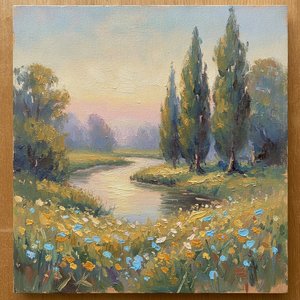
The Timeless Charm of Oil on Board: Reimagining Texture and Light through the Impressionist Lens
Discover the profound intimacy of oil on panel. Explore how Impressionist masters used rigid supports to capture light, texture, and impasto depth through exquisite, handmade oil reproductions for discerning collectors.

Az olajfestészet örökös hagyatéka: technika, történelem és kortárs gyakorlat
Fedezze fel az olajfestészet történetét, technikáit és a kortárs művészeti trendeket! Szakértői útmutatók, híres festők alkotásai és tippek az olajfestmény ápolásához. Inspirálódjon most!



