

 Megtekintés
 Küldés
 Megosztás
 Részletek
 Útmutató

 Letöltés
 Hasonló darabok
 X-ray felvétel
 Diavetítés
 Statisztika
The Emerald


 Összes részlet megjelenítése
Kézzel készített olajfestmény reprodukció
Kézzel festett olajvastú vászon, az Ön által választott méretben és keretben, művészeink készítik meglévőre. ( Váltás nyomtatványra Áttérés digitális képre)




P118B Ft10

P118H Ft10

P118W Ft10

P438Z Ft10

P508JH Ft12

P508YH Ft12

P805H Ft10

P805Z Ft10

P919BZ Ft10

P919G Ft10

P919XJ Ft10

P959ZH Ft10

P968JZ Ft12

W106C Ft8

W218G Ft10

W218JH Ft8

W218Y Ft10

W307PJ Ft10

W316G Ft10

W316PJ Ft8

W316Y Ft10

W398PJ Ft8

W4111J Ft10

W500HY Ft15

W500JH Ft15

W692G Ft12

W849H Ft8

W940BG Ft15

W953PJ Ft8




Válasszon előre meghatározott méreteink közül, amelyek megfelelnek a műalkotás eredeti arányainak.

Írja be a kívánt szélességet és magasságot, hogy illeszkedjen a keretéhez vagy a falához. Mivel ez kézzel festett alkotás, egy eltérő formájú méret esetén a művész akár festhet is valamivel többet a kép körül, vagy korolathat is belőle — az Ön döntésének megfelelően. A festés megkezdése előtt küldünk egy digitális tervezetet jóváhagyásra. Az oldalon látható kép nem tartalmazza a végeredményt — csak a tervezet mutatja meg a valódi eredményt.
A rendelést követően a OriginalUniqueArt.com csapata e-mailt küld az ügyfélnek az instrukciókért, és biztosít egy előnézeti képet (mockup).
Világszerte elérhető szállítás () 3-4 hét alatt a szokásos 5 hét helyett. (26 október). A minőség nem kérdőjelezhető.

Ingyenes globális expressz szállítás

Prémium minőségű len vászon

Teljes körű szállítási biztosítás

Vámvisszatérítési Garancia

Hiteles színarányosság garancia

100 napos visszaküldési lehetőség (csak hibás termékek esetén)

100% pénzvisszatérítési garancia

Több darab vásárlásakor kedvezmény
 Az üvegkeretes opció csak 110 cm alatti méretben érhető el

The Emerald
Reprodukciós technika
Reprodukció mérete
-


Összesített ár
Ft 96158
The Emerald: A Window into Alphonse Mucha's Art Nouveau World
Alphonse Mucha’s “The Emerald” is more than just a beautiful image; it’s a meticulously crafted portal to the heart of Art Nouveau, a movement that redefined aesthetics at the turn of the 20th century. This poster design, brimming with flowing lines, organic forms, and a profound sense of luxury, exemplifies Mucha's mastery of decorative art and his ability to capture the spirit of a burgeoning era. The piece immediately draws the eye with its vibrant color palette – warm browns, golds, and oranges punctuated by the arresting red-orange beak of the fantastical bird – creating an atmosphere of opulent serenity.
At its core, “The Emerald” is a study in controlled beauty. Mucha’s meticulous attention to detail is evident in every aspect of the composition. The woman, rendered with a delicate grace characteristic of Mucha's style, leans against a stylized bird – a creature simultaneously familiar and otherworldly – while lilies and leafy plants cascade downwards, anchoring the design and reinforcing its connection to nature, a key theme within Art Nouveau. The circular frame isn’t merely decorative; it elevates the entire scene, imbuing it with a sense of completeness and timeless elegance, hallmarks of Mucha's approach.
Decoding the Symbolism
Beyond its purely aesthetic qualities, “The Emerald” is rich in symbolic meaning. The woman herself embodies idealized feminine beauty – a recurring motif in Mucha’s work – but she transcends simple portraiture. Her pose and the surrounding elements suggest an embodiment of nature's grace and fertility. The bird, often interpreted as a symbol of transformation or exotic allure, adds a layer of mystery to the scene. The lilies, traditionally associated with purity and renewal, further enhance this sense of ethereal beauty. Together, these elements create a harmonious whole that speaks to themes of luxury, elegance, and perhaps even a touch of hidden sensuality – emotions Mucha skillfully evoked through his art.
The Art of Lithography
“The Emerald”’s remarkable detail is the result of Mucha's masterful use of lithography, a printing technique that allowed for incredibly fine linework and subtle color gradations. As a skilled lithographer himself, Mucha meticulously crafted each element of the design using stone or metal plates, applying ink with precision to achieve the desired effects. The process demanded patience and skill, resulting in an image that retains the textural qualities of paint – the draping fabric, the voluminous hair, the delicate petals of the flowers – despite being a poster reproduction. The smooth, polished appearance of the bird’s beak further demonstrates Mucha's attention to detail and his understanding of how different materials could be rendered effectively.
A Legacy of Art Nouveau
Created around 1900, “The Emerald” stands as a quintessential example of Alphonse Mucha’s contribution to the Art Nouveau movement. His work, alongside that of artists like Gustav Klimt and Aubrey Beardsley, helped shape the visual landscape of Europe at the turn of the century. Today, reproductions like this one allow us to appreciate not only Mucha's artistic talent but also the enduring appeal of his vision – a vision that celebrates beauty, nature, and the power of decorative art to transport us to another time and place.
Kérdések és válaszok
Hogyan tekinthetem meg előre a(z) „The Emerald”, Alphonse Mucha alkotása reprodukcióját?
A „The Emerald” Előnézet oldalán megtekintheti a művészeti alkotást megrendelés előtt.
Milyen szín vezeti a „The Emerald”, Alphonse Mucha alkotása kompozícióját?
A(z) "The Emerald" alkotásban leginkább a Rosy Brown (#cba868) szín tűnik ki. A domináns szín hasznos, amikor egy műalkotást össze kell egyeztetni egy belső térrel.
Milyen témák jelennek meg a(z) „The Emerald”, Alphonse Mucha alkotása alkotásban?
A "The Emerald" alkotás tárgyai: woman, floral, art nouveau, alphonse mucha, decorative, elegant, mystical.
A művész életrajza
Early Life and Artistic Beginnings
Alphonse Maria Mucha, a name synonymous with the opulent beauty of Art Nouveau, was born on July 15, 1860, in the small Moravian town of Ivanačice. His early life, steeped in the traditions of his Czech homeland, laid the foundation for an artistic vision that would soon captivate Europe. From a young age, Alphonse displayed a remarkable talent for drawing – a gift nurtured by his family’s modest circumstances and a supportive local merchant who provided him with paper, a luxury at the time. This nascent skill blossomed into a passionate pursuit, leading him to study at the Academy of Fine Arts in Prague, though he quickly grew disillusioned with the academy's rigid adherence to classical conventions.
Seeking a more expressive and personal style, Mucha embarked on a journey to Paris in 1887. This move marked a pivotal moment, as it propelled him into the heart of the burgeoning Art Nouveau movement – a period characterized by its celebration of natural forms, flowing lines, and intricate ornamentation. Paris offered a vibrant artistic landscape, influenced by artists like Pierre-Auguste Renoir and Gustave Moreau, whose works subtly shaped Mucha’s developing aesthetic.
The Rise to Fame: Sarah Bernhardt and the “Mucha Style”
Alphonse Mucha's career took an extraordinary turn in 1894 when he was unexpectedly commissioned to design a poster for the play Gismonda, starring the legendary actress Sarah Bernhardt. This seemingly simple task ignited a phenomenal success that catapulted him to international fame. The poster, a masterpiece of Art Nouveau elegance featuring Bernhardt’s captivating image surrounded by swirling floral motifs, became an instant sensation and established what would become known as the “Mucha Style” – a distinctive blend of decorative beauty, stylized femininity, and graceful movement.
This collaboration with Bernhardt proved to be transformative. It launched a prolific period of poster design, magazine illustrations, and theatrical set designs, solidifying Mucha’s reputation as one of the foremost artists of his time. He continued to create stunning visuals for Bernhardt throughout the 1890s, further cementing his signature style.
The Universal Exhibition and International Recognition
The pinnacle of Mucha's early career arrived in 1900 with the invitation to decorate the Bosnia and Herzegovina Pavilion at the Universal Exposition in Paris. This prestigious commission brought him unprecedented international recognition. Alongside his work on the Bosnian pavilion, he collaborated on the Austrian Pavilion, showcasing his artistic versatility and expanding his influence across Europe. The sheer scale of these projects demonstrated Mucha’s ability to translate his distinctive style into grand, public displays – a testament to his growing reputation as a leading figure in the Art Nouveau movement.
The Slav Epic: A Monumental Undertaking
Following his success in Paris, Charles Richard Crane, an American industrialist and passionate supporter of Slavic culture, recognized Mucha’s unique talent and provided him with substantial financial backing. This generous patronage enabled Mucha to embark on a monumental project – The Slav Epic (1912-1930) – a series of twenty large-scale paintings depicting the history and mythology of all the Slavic peoples. This ambitious undertaking, spanning nearly two decades, became Mucha’s magnum opus and remains one of the most significant works in his oeuvre. The *Slav Epic* is not merely a historical chronicle; it's a vibrant tapestry of cultural identity, rendered with Mucha’s signature elegance and symbolic richness.
Legacy and Influence
Alphonse Mucha’s impact on art and design extends far beyond his individual creations. His distinctive Art Nouveau style profoundly influenced generations of artists, designers, and illustrators. His emphasis on decorative beauty, flowing lines, and idealized female figures continues to resonate today, evident in everything from graphic design to fashion. Furthermore, his work served as a powerful symbol of Czech national identity, particularly during the period of Czechoslovakia’s independence. Alphonse Mucha's legacy is not simply one of artistic brilliance; it’s a testament to the enduring power of beauty, symbolism, and cultural expression.

Alphonse Mucha
1860 - 1939 , Csehország
Rövid információk
- Artistic Movement Or Style: Art Nouveau
- Artists Or Movements Influenced By This Artist: ['Prokopcová']
- Artists Who Influenced This Artist:
- Renoir
- Moreau
- Date Of Birth: 1860. 7. 15.
- Date Of Death: 1939. 7. 14.
- Full Name: Alphonse Maria Mucha
- Nationality: Cseh
- Notable Artworks:
- Slav Epic
- Salon des Cent
- A Slavonic Uprising
- Place Of Birth: Brno, Cseh Köztársaság
Kapcsolódó cikkek
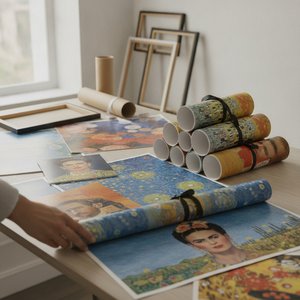
OriginalUniqueArt.com F.A.Q.: Premium Art Poster Prints – Vivid Colors & Versatile Sizing
Discover OriginalUniqueArt.com's premium art poster prints. Featuring 12-color archival pigments for vivid color fidelity and versatile sizing for bespoke decor. Expertly crafted museum-quality reproductions designed for discerning collectors and professional decorators.