

 Megtekintés
 Küldés
 Megosztás
 Részletek

 Letöltés
 Hasonló darabok
 X-ray felvétel
 Diavetítés
Cornfield


 Összes részlet megjelenítése
Giclée / Műnyomat
Múzeumi minőségű giclée vagy vászonnyomat, gyors gyártással és rugalmas finomítási lehetőségekkel. ( Kézzel festett másolat rendelése Kép letöltése)




P118B $10

P118H $10

P118W $10

P438Z $10

P508JH $12

P508YH $12

P805H $10

P805Z $10

P919BZ $10

P919G $10

P919XJ $10

P959ZH $10

P968JZ $12

W106C $8

W218G $10

W218JH $8

W218Y $10

W307PJ $10

W316G $10

W316PJ $8

W316Y $10

W398PJ $8

W4111J $10

W500HY $15

W500JH $15

W692G $12

W849H $8

W940BG $15

W953PJ $8




Válasszon előre meghatározott méreteink közül, amelyek megfelelnek a műalkotás eredeti arányainak.

Megadhat saját méreteket is egy konkrét kerethez vagy helyszínhez igazítva. Amennyiben a kiválasztott méret nem egyezik az eredeti kép arányokkal, a műalkotást le fogjuk vágni, vagy kiegészítjük a képet tükrözött vagy egyszínű szélekkel. A gyártás megkezdése előtt egy digitális tervezetet küldünk jóváhagyásra.
Kérjük, vegye figyelembe, hogy a képernyőn látható előnézet nem tükrözi a tényleges levágást vagy kiegészítést. Csak a tervezet mutatja pontosan a végső kompozíciót.
Bár az egyedi méretek is elérhetőek, az eredeti arányok megőrzése érdekében azt javasoljuk, hogy válasszon a előre meghatározott listából származó méretet.
Világszerte történő kiszállítás területére mindössze 2 hét alatt, a szokásos 4-5 hét helyett. (22 augusztus)

Ingyenes globális expressz szállítás

Prémium minőségű len vászon

Teljes körű szállítási biztosítás

Vámvisszatérítési Garancia

Hiteles színpontosság garancia

60 napos visszaküldési lehetőség (csak hibás termékek esetén)

100% pénzvisszatérítési garancia

Több darab vásárlása esetén kedvezmény
 Az üvegkeretes opció csak 110 cm alatti méretben érhető el

Cornfield
Giclée / Műnyomat
Reprodukció mérete
-


Összesített ár
$ 80
Gyűjthető leírása
Cornfield: A Symphony of Emotion and Color
Alexej Georgewitsch von Jawlensky’s “Cornfield,” painted in 1905, stands as a cornerstone of Expressionist art—a movement that sought to convey inner feelings rather than objective reality. More than just a depiction of a rural landscape, it's an immersive experience designed to resonate with the viewer on a profound emotional level.
- Style and Technique: Jawlensky’s approach was characterized by bold brushstrokes—a deliberate rejection of Impressionistic subtlety—and a palette saturated with vibrant hues. He employed oil paint on panel, allowing for textural richness and capturing the luminous quality of sunset light with remarkable precision.
- Historical Context: The painting emerged during a period of significant artistic upheaval, mirroring the anxieties and passions simmering beneath the surface of European society at the turn of the century. Expressionism responded to the disillusionment following World War I and embraced subjective experience as its primary impetus.
The cornfield itself serves as more than just a visual element; it embodies potent symbolism. The towering grasses represent resilience and growth—a defiant assertion of life amidst perceived darkness. Scattered figures symbolize humanity’s connection to the natural world, inviting contemplation on themes of solitude and communion.
- Symbolism: The dominant colors—warm yellows and oranges—evoke feelings of optimism and tranquility, suggesting a moment of respite from worldly concerns. They are juxtaposed against cooler blues and greens, hinting at underlying melancholy and acknowledging the inevitable passage of time.
- Emotional Impact: “Cornfield” compels viewers to confront their own emotions—to consider questions of beauty, loss, and the enduring power of nature. It’s a painting that lingers in memory long after initial observation, prompting introspection and fostering a deeper appreciation for artistic expression.
Jawlensky's influence extends beyond Expressionism; he drew inspiration from Fauvism and incorporated elements of Byzantine iconography into his work. “Cornfield” exemplifies this fusion—a testament to the artist’s ability to synthesize diverse stylistic influences into a singular vision.
- Influences: Jawlensky's artistic journey was marked by experimentation and innovation, constantly pushing boundaries and redefining conventions. His unwavering commitment to conveying emotion solidified his legacy as one of the most significant artists of his era.
"Cornfield," currently housed at Kunstmuseum Bern, Switzerland—a museum renowned for its expansive collection spanning centuries—offers a captivating glimpse into the artistic spirit of a transformative moment in art history. Its enduring appeal lies not merely in its visual beauty but also in its capacity to provoke contemplation and inspire emotional resonance.
A művész életrajza
A Life Painted in Emotion: The Journey of Alexej von Jawlensky
Alexej von Jawlensky, born Alexej Georgewitsch von Jawlensky on March 13, 1864, in the Russian town of Torzhok, embarked on a path that would firmly establish him as a pivotal figure within early twentieth-century Expressionism. His formative years were characterized by frequent relocations, culminating in a settling within Moscow at the age of ten—an experience that likely instilled a sense of displacement and perhaps, a yearning for deeper connection, themes subtly woven into the emotional core of his later artistic explorations. Initially drawn to a military career, Jawlensky’s encounter with the vibrant world of art during the 1880 Moscow World Exposition proved transformative. This exposure ignited within him a passion that would ultimately supersede any sense of duty, leading him down a path dedicated to visual expression. Securing a posting in St. Petersburg through his social connections allowed Jawlensky to formally study at the Art Academy from 1889 to 1896, balancing artistic pursuits with military obligations. It was during this period that he crossed paths with Ilya Repin, a prominent Russian realist painter, and more importantly, met Marianne von Werefkin. Werefkin, herself an accomplished artist of considerable means, became not only his mentor but also a crucial benefactor, providing him the financial stability to fully dedicate himself to his craft. Their relationship was complex, deeply intertwined with artistic ambition and mutual support, shaping the trajectory of both their careers.Munich and the Seeds of Expressionist Innovation
The move to Munich in 1894 marked a turning point for Jawlensky. He enrolled at Anton Ažbe’s private school, immersing himself in an environment that encouraged experimentation and challenged conventional academic approaches. This period witnessed his growing engagement with avant-garde ideas circulating within the European art world. The influence of artists like Ferdinand Hodler, Jan Verkade, and Paul Sérusier proved particularly significant, exposing him to principles of symbolism and synthetism—movements that prioritized subjective experience and emotional resonance over strict representational accuracy. Jawlensky’s artistic style began to evolve, moving away from the realism he had initially studied. He became increasingly interested in exploring the expressive potential of color and form, simplifying compositions and intensifying hues to convey inner states rather than merely depicting external appearances. This exploration led him towards abstraction, a path that would define much of his later work. His involvement with groups like the Neue Künstlervereinigung München (NKvM) further solidified his commitment to artistic innovation, placing him at the heart of a burgeoning Expressionist movement. The NKvM, though short-lived, was a crucible for radical ideas, and Jawlensky’s participation demonstrated his willingness to challenge established norms and embrace new modes of visual language.The Mystical Heads: A Descent into Spiritual Essence
Around 1909, Jawlensky embarked on what would become his most iconic series—the “Mystical Heads.” These intensely colored portraits, often depicting faces reduced to essential forms, are not merely representations of individuals but rather explorations of spiritual essence and inner life. The heads possess a haunting quality, their simplified features and vibrant palettes conveying a sense of profound emotion and psychological depth. Works like Schokko with Red Hat (1909) and Portrait of Alexander Sakharoff (1909) exemplify this period, showcasing his mastery of color and composition. These weren’t portraits in the traditional sense; they were attempts to capture something beyond physical likeness—the soul, the inner landscape of the sitter. He distilled faces into geometric shapes, emphasizing the power of color to evoke emotion and spiritual resonance. Throughout the 1910s, Jawlensky continued to refine his style, moving towards an even greater degree of abstraction. His compositions became increasingly geometric, with forms distilled to their most fundamental elements. He developed a formulaic approach, often employing a limited range of colors arranged in carefully balanced configurations. Violet Turban (1911) demonstrates this stylistic evolution, showcasing his ability to create powerful visual statements through the interplay of color and shape.Exile, Resilience, and Lasting Legacy
The outbreak of World War I brought upheaval to Jawlensky’s life. Expelled from Germany in 1914 due to his Russian origins, he sought refuge in Switzerland, where he encountered Emmy Scheyer. Scheyer became a devoted champion of his work, tirelessly promoting it in the United States and securing him recognition on an international stage. Despite facing increasing health challenges—including severe arthritis that progressively limited his ability to paint—Jawlensky continued to create until his death in Wiesbaden, Germany, on March 15, 1941. His later works, created under immense physical hardship, are a testament to his unwavering dedication to artistic expression. Today, Alexej von Jawlensky is celebrated as a key figure in the development of Expressionism. His paintings are held in prominent museum collections worldwide, including the Museum Ostwall in Dortmund and the Städtische Galerie im Lenbachhaus in Munich. His exploration of color, form, and spiritual themes continues to resonate with audiences, solidifying his place as one of the most important artists of the early twentieth century. He left behind a body of work that is both visually striking and emotionally profound, offering a glimpse into the inner world of an artist who dared to challenge conventions and embrace the power of subjective expression.Influences and Artistic Associations
Jawlensky’s artistic journey was shaped by a network of influential figures and movements:- Ilya Repin: Early mentor providing foundational training in realist techniques.
- Marianne von Werefkin: Crucial benefactor, mentor, and artistic partner who supported his development.
- Ferdinand Hodler: Influenced Jawlensky’s use of simplified forms and symbolic imagery.
- Jan Verkade & Paul Sérusier: Introduced him to the principles of symbolism and synthetism, shaping his approach to color and composition.
- Wassily Kandinsky & Franz Marc: Collaborators within Der Blaue Reiter, fostering a shared commitment to artistic innovation.

Jawlenszky
1864 - 1941 , Oroszország
A művészről röviden
- Artistic Movement Or Style: Expressionizmus
- Artists Or Movements Influenced By This Artist:
- Hodler Ferdinánd
- Blaue Reiter
- Artists Who Influenced This Artist:
- Repin Ilja Jefimovics
- Werefkin Marianna von
- Date Of Birth: 1864. március 13.
- Date Of Death: 1941. március 15.
- Full Name: Alexej Georgewitsch von Jawlensky
- Nationality: Orosz
- Notable Artworks:
- Schokko feketepapucs
- Lila kalap
- Öngyűjthető portré
- Place Of Birth: Torzhok, Oroszország
Kapcsolódó cikkek

A Romantikus Tájképfestészet 10 Legikonikusabb Műalkotása – OriginalUniqueArt.com
Fedezze fel a romantikus tájképfestészet 10 legikonikusabb műalkotását! Caspar David Friedrich, J.M.W. Turner és más mesterek festményeinek története – inspiráló olajfestmények otthonába. OriginalUniqueArt.com: múzeumi minőségű reprodukciók és egyedi dekorációk online.

John Constable 25 Mesterműve: A Természet Lényege Vászonon – OriginalUniqueArt.com
Fedezze fel John Constable 25 legszebb művészeti alkotását! Ismerje meg a romantika ikonikus tájképeit, Dedham Vale szépségét és a természet lenyűgöző ábrázolásait. Vászonkép reprodukcióinkkal eleganciát csempészhet otthonába – OriginalUniqueArt.com

Evocations of Place: A Historical Journey Through Landscape Art
Explore the rich history of landscape art with OriginalUniqueArt. Discover renowned artists, movements like Impressionism & Romanticism, and expert guidance for collecting timeless pieces. Find your perfect serene escape today!
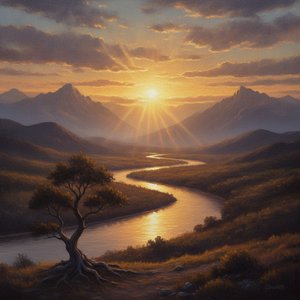
Golden Hour Magic: Capturing the Ethereal Beauty of Sunset Landscapes in Fine Art
Embark on a visual journey through the golden hour. Discover how master painters capture the ethereal glow of sunsets, from Monet's Impressionism to the Hudson River School. Explore timeless techniques and bring the magic of twilight into your home with exquisite fine art reproductions.

A 10 legikonikus impresszionista tájkép: művészeti remekművek otthonába | OriginalUniqueArt.com
Fedezze fel a 10 legikonikus impresszionista tájkép festményt! Monet, Renoir, Degas és más művészek remekművei. Vászonképek, faliképek otthonába – inspirálódjon OriginalUniqueArt.com-on! Explore the full collection online.



