Váltás nyomtatványra
 Összes részlet megjelenítése







































 A bármely oldalsó méretét túlszálaló 105 cm (kb. 41 hüvelyk) meghaladó műalkotások vagy reprodukciók esetében a keret összeszerelhető készletként, szétszerelve kerül szállításra. Ez a módszer biztosítja a biztonságos szállítást, és megakadályozza a szállítás során fellépő sérüléseket.


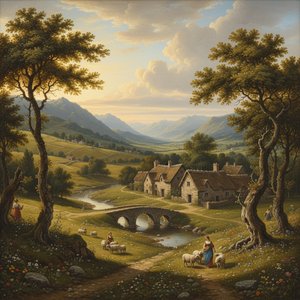
LE REMOULEUR: A Portrait of Rural Labor and Romantic Vision
Alexandre Gabriel Decamps’ “Le Remouleur” (The Tanner) stands as a cornerstone of Orientalist painting—a genre that sought to capture the exotic allure of Eastern cultures through European eyes. Painted circa 1835, this monumental canvas transcends mere depiction; it embodies a profound engagement with both observation and emotion, cementing Decamps’ place among the luminaries of Romanticism.
- Subject Matter: The artwork centers on a solitary tanner—a leatherworker—engaged in his craft. This wasn't simply an exercise in realism; it represented a deliberate choice to portray the everyday lives of ordinary people, particularly those connected to the land and its traditions – a fascination that would define Decamps’ oeuvre.
- Style & Technique: Decamps’ distinctive style is characterized by bold brushstrokes—thick impasto—that imbue the canvas with palpable texture. He meticulously rendered the hide, capturing its roughness and sheen with remarkable accuracy. The artist's masterful use of chiaroscuro – dramatic contrasts between light and shadow – amplifies the scene’s emotional impact, highlighting the remouleur’s figure against the muted backdrop of his workshop.
- Composition & Perspective: The triangular composition directs the viewer’s gaze towards the central figure, anchoring the dynamism of the cart and its surroundings. Linear perspective subtly establishes depth, while atmospheric haze softens the distant landscape, creating an illusion of space that enhances the painting's immersive quality.
Beyond its technical prowess, “Le Remouleur” resonates with symbolic significance. The presence of animals—the remouleur’s dog and the woman’s dog—represents a connection to nature and harkens back to pastoral ideals prevalent in Romantic thought. Decamps' depiction isn’t merely aesthetically pleasing; it speaks to themes of labor, tradition, and the quiet dignity of rural existence.
Furthermore, Decamps’ work aligns with the broader intellectual currents of his time. As Henry James eloquently noted, “Le Remouleuer” embodies a spirit akin to Rousseau's exploration of nature—a desire to capture the sublime beauty of the natural world and its influence on human consciousness. This ambition distinguishes Decamps from many of his contemporaries who prioritized idealized grandeur; instead, he championed an honest portrayal of life’s realities.
- Historical Context: Created during the Romantic era (roughly 1800-1850), “Le Remouleur” reflects a fascination with exotic locales and folklore. Decamps' artistic vision challenged academic conventions, prioritizing expressive emotion over formal correctness—a hallmark of Romantic art’s rejection of Neoclassical restraint.
- Emotional Impact: The painting evokes feelings of tranquility mingled with melancholy – capturing the essence of rural life and hinting at a timeless beauty. It invites contemplation on themes of perseverance, craftsmanship, and the enduring connection between humanity and the natural world.
“Le Remouleur” remains an exceptional achievement in Orientalist painting—a testament to Decamps’ artistic genius and his unwavering commitment to capturing both visual splendor and emotional truth. Its enduring appeal lies in its ability to transport viewers back to a bygone era, fostering appreciation for the artistry of Romanticism and celebrating the dignity of rural labor.
Kérdések és válaszok
Mekkora a fényerke „LE REMOULEUR”, Alexandre Gabriel Decamps alkotása alkotásnak?
A „LE REMOULEUR”, Alexandre Gabriel Decamps alkotása alkotás Soft Shadow fényerőséggel rendelkezik. A fényerő azt mutatja meg, hogy a színek mennyire tűnnek visszafényesnek.
Milyen viszonyban áll egymáshoz a "LE REMOULEUR" színei?
A "LE REMOULEUR" színharmóniája úgy van rögzítve, mint Unified Palette.
Milyen orientációjú a „LE REMOULEUR”, Alexandre Gabriel Decamps alkotása?
A „LE REMOULEUR”, Alexandre Gabriel Decamps alkotása egy Landscape kompozíció. A nyomtatási méret kiválasztása előtt érdemes ellenőrizni az arányokat.
 Megtekintés
 Küldés
 Megosztás
 Részletek
 Útmutató

 Letöltés
 Hasonló darabok
 X-ray felvétel
 Diavetítés
 Q&A
Q&A Statisztika