
 Megtekintés
 Küldés
 Megosztás
 Részletek
 Útmutató

 Letöltés
 Hasonló darabok
 X-ray felvétel
 Diavetítés
 Kérdések és válaszok
 Statisztika
Eyewear

 Összes részlet megjelenítése
Az ezen az oldalon megjelenített műalkotások szerzői jogi védelem alatt állnak, ami azt jelenti, hogy törvényileg nem készíthetünk és nem adhatunk el belőlük pontos másolatokat. Ez a védelem olyan nemzetközi megállapodások alapján érvényesül, mint például a Berni Egyezmény és a nemzeti jogszabályok által, beleértve azokat is, amelyeket meghatározott Az USA szerzői jogi törvénye – 17. cím.
Ez a módszer teljes mértékben megfelel a szerzői jogi szabályozásnak, mivel nem tartalmazza a védett műalkotás másolását vagy duplikálását. Ehelyett ez egy kreatív újinterpretáció – egy új festmény, amely az eredetivel való összefüggései miatt hatással van rá, de nem az az.
Giclée / Műnyomat
Múzeumi minőségű giclée vagy vászonnyomat, gyors gyártással és rugalmas finomítási lehetőségekkel. ( Kézzel festett másolat rendelése Áttérés digitális képre)




P118B Ft10

P118H Ft10

P118W Ft10

P438Z Ft10

P508JH Ft12

P508YH Ft12

P805H Ft10

P805Z Ft10

P919BZ Ft10

P919G Ft10

P919XJ Ft10

P959ZH Ft10

P968JZ Ft12

W106C Ft8

W218G Ft10

W218JH Ft8

W218Y Ft10

W307PJ Ft10

W316G Ft10

W316PJ Ft8

W316Y Ft10

W398PJ Ft8

W4111J Ft10

W500HY Ft15

W500JH Ft15

W692G Ft12

W849H Ft8

W940BG Ft15

W953PJ Ft8




Válasszon előre meghatározott méreteink közül, amelyek megfelelnek a műalkotás eredeti arányainak.

Írja be a keretének vagy a falának megfelelő szélességet és magasságot. A nyomatot csak le lehet vágni, soha nem tehető nagyobbá, mint az eredeti kép, így egy eltérő alakú méretnél a kép egy része elveszik. Mielőtt bármit kinyatintanánk, küldünk egy digitális próbamodellt jóváhagyásra. Az oldalon látható kép nem tartalmazza a valós levágást — ezt csak a próbamodell mutatja meg.
Világszerte történő kiszállítás területére mindössze 2 hét alatt, a szokásos 4-5 hét helyett. (15 november)

Ingyenes globális expressz szállítás

Prémium minőségű len vászon

Teljes körű szállítási biztosítás

Vámvisszatérítési Garancia

Hiteles színarányosság garancia

100 napos visszaküldési lehetőség (csak hibás termékek esetén)

100% pénzvisszatérítési garancia

Több darab vásárlásakor kedvezmény
 Az üvegkeretes opció csak 110 cm alatti méretben érhető el

Eyewear
Giclée / Műnyomat
Reprodukció mérete
-


Összesített ár
Ft 26174
A Study in Cool Detachment: Alex Katz’s “Eyewear”
- Subject & Composition: “Eyewear” presents a strikingly simple yet compelling portrait of a man, his face largely obscured by dark sunglasses. The composition is boldly frontal and centered, emphasizing the subject's presence while simultaneously creating a sense of distance. Katz masterfully uses this direct gaze – or rather, *lack* of gaze due to the sunglasses – to invite contemplation.
- Style & Technique: This work exemplifies Alex Katz’s signature style: a flattened pictorial space, bold outlines, and a deliberate reduction of detail. It's not about meticulous realism; it’s about capturing an *essence*. The digital painting technique contributes to the smooth, almost graphic quality, reminiscent of screen printing or billboard advertising. Katz eschews traditional modeling with light and shadow, opting instead for areas of flat color that define form. This approach aligns him with Pop Art sensibilities, though his work maintains a distinct coolness and emotional restraint often absent in more exuberant examples of the movement.
- Historical Context & Influences: Alex Katz emerged as a significant figure in American art during the 1950s and 60s, bridging Abstract Expressionism and Pop Art. While influenced by artists like Kitagawa Utamaro – known for his refined portraits of Japanese beauties – Katz developed a uniquely contemporary aesthetic. He rejected the intensely personal expression of the Abstract Expressionists, favoring instead a more objective and detached observation of modern life. His work often reflects the visual culture of advertising and mass media.
- Symbolism & Emotional Impact: The sunglasses are key to understanding the emotional core of “Eyewear.” They act as a barrier, shielding the subject’s eyes – traditionally considered windows to the soul – from direct engagement. This creates an air of mystery and aloofness. Is this a statement about privacy in modern society? A commentary on the performative nature of identity? Or simply an exploration of formal qualities—the interplay of dark shapes against a solid background? The ambiguity is intentional, allowing viewers to project their own interpretations onto the work. The cool palette and simplified forms contribute to a sense of emotional distance, inviting contemplation rather than immediate empathy.
- Interior Design & Collectibility: “Eyewear”’s bold simplicity makes it an exceptionally versatile piece for interior design. Its graphic quality complements modern and contemporary spaces, adding a sophisticated touch without overwhelming the room. The limited color palette – dark grey and white with black accents – ensures it integrates seamlessly into various décor schemes. As a work by a highly respected artist like Alex Katz, this piece (or a high-quality reproduction) represents not only an aesthetic investment but also a connection to a significant chapter in art history.
- This artwork is a testament to Katz’s ability to distill complex ideas into strikingly simple forms. It's a portrait that doesn't reveal everything, and perhaps, that's precisely its power.
Kérdések és válaszok
Ki készítette a(t): "Eyewear"?
A "Eyewear" alkotója Alex Katz. A mű Alex Katz nevére van katalógusozva.
Milyen színharmóniát mutat be „Eyewear”, Alex Katz alkotása?
A „Eyewear”, Alex Katz alkotása egy Balanced Harmony színharmóniát mutat be.
A „Eyewear”, Alex Katz alkotása jogtalanul védett (public domain)?
A „Eyewear”, Alex Katz alkotása szerzői jogi státusza: a mű még szerzői jog védi. Ez határozza meg, hogy a kép másolatai szabadon készíthetők-e.
A művész életrajza
Early Life and Education
Alex Katz, a name synonymous with cool detachment and vibrant color, was born on July 24th, 1927, in the bustling borough of Brooklyn, New York – specifically in Sheepshead Bay. His early years were shaped by a move to St. Albans, Queens, a shift that instilled within him a keen observation of everyday life and its subtle nuances. From a young age, Katz displayed an undeniable passion for art, a spark ignited by the world around him. This nascent interest led him to pursue formal studies at the Cooper Union in 1946-1949, where he immersed himself in the theories and techniques of Modern art under the guidance of Morris Kantor. However, it was his time at the Skowhegan School of Painting and Sculpture in Maine that truly proved transformative. This experience, spanning from 1949 to 1950, fundamentally altered his approach to painting, emphasizing direct observation and capturing subjects *from life* – a principle he would carry with him throughout his illustrious career. The emphasis on plein air painting at Skowhegan provided Katz with a profound understanding of light, color, and composition, laying the groundwork for his distinctive style.Artistic Style and Influences
Katz’s artistic signature is instantly recognizable: a captivating blend of simplicity, bold colors, and an almost unnerving emotional distance. His work often falls into two distinct categories – portraiture and landscape – yet these genres rarely exist in isolation; they frequently intertwine to create complex and layered compositions. His style isn't simply minimalist; it’s carefully constructed, a deliberate choice of elements designed to evoke a specific mood or feeling. It is believed that Katz was profoundly influenced by the Japanese woodblock artist Kitagawa Utamaro, whose meticulous attention to detail and ability to capture human emotion resonated deeply with the young painter. Interestingly, comparisons have also been drawn between Katz’s work and that of contemporary artists like Andy Warhol and Keith Haring – a testament to his innovative approach and willingness to challenge conventional artistic boundaries. A key element of Katz's technique is his experimentation with "cutouts" – meticulously painting on panels of wood or aluminum before carefully removing sections, creating an almost architectural quality within the artwork. Furthermore, he developed a signature method of directly applying paint to shaped aluminum sheets, resulting in freestanding portraits that exist as tangible objects within the space around them. Perhaps most notably, Katz is recognized for his use of monochrome backgrounds – a bold departure from traditional portraiture and a deliberate move towards Pop Art aesthetics, separating him from many of his gestural figure painter contemporaries.Notable Works and Development
Katz’s artistic journey began modestly in the late 1950s with small collages featuring figures set within landscapes. These early works served as a crucial stepping stone, allowing him to refine his compositional skills and explore the relationship between human form and its environment. As the decade progressed, portraiture became increasingly central to his work, with paintings of friends and his wife, Ada, forming a recurring theme – a testament to their enduring connection and mutual influence. A pivotal moment in Katz’s career arrived in the 1960s when he began experimenting with dramatically cropped faces, drawing inspiration from film and advertising techniques. This stylistic shift resulted in iconic images like "Alex Katz: Thursday Night" and “Ada in Black Sweater,” instantly recognizable for their stark simplicity and arresting composition. Simultaneously, Katz embarked on a prolific career in printmaking, producing numerous editions of lithographs, etchings, silkscreens, woodcuts, and linoleum cuts – expanding his artistic vocabulary and reaching new audiences. In the late 1980s and 1990s, Katz turned his attention to landscapes, creating “environmental” paintings that sought to immerse the viewer in a sense of place. These works moved away from traditional landscape painting, emphasizing looser edges and painterly brushstrokes, conveying an almost tactile quality. More recently, Katz has explored new avenues, including night pictures – a departure from his sunlit landscapes – and floral paintings bursting with blossoms, demonstrating a continued willingness to push the boundaries of his artistic practice.Achievements and Historical Significance
Alex Katz’s impact on contemporary art is undeniable. He stands as one of the most important painters of our time, recognized globally for his distinctive style and unwavering commitment to his vision. His work has been exhibited in over 200 solo shows and nearly 500 group exhibitions worldwide, solidifying his position as a leading figure in the art world. Katz’s influence extends beyond individual artworks; he is credited with pioneering techniques that continue to inspire artists today. He was awarded an honorary doctorate from Colby College in 1984, recognizing his contributions to the arts and his dedication to artistic excellence. Throughout his career, Katz has maintained a close relationship with institutions such as the Whitney Museum of American Art, Tate Gallery, Guggenheim Museum Bilbao, and numerous museums across Europe and Asia. His work is held in prestigious private collections, further cementing his legacy as an artist of enduring significance. Beyond his individual achievements, Katz’s artistic journey reflects a broader cultural shift – a move away from traditional representational art towards a more direct and immediate engagement with the world around us. He remains a vital voice in contemporary art, continually challenging conventions and pushing the boundaries of what is possible.
Alex Katz
1927 - , Amerikai Egyesült Államok
Rövid információk
- Artistic Movement Or Style: Pop Art, figuratív művészet
- Artists Or Movements Influenced By This Artist:
- Andy Warhol
- Keith Haring
- Artists Who Influenced This Artist: ['Kitagawa Utamaro']
- Date Of Birth: 1927. 07. 24.
- Full Name: Alex Katz
- Nationality: Amerikai Egyesült Államok
- Notable Artworks:
- Thursday Night
- Ada in Black Sweater
- Place Of Birth (City And Country): Brooklyn, USA
Kapcsolódó cikkek

Atmospheric Elegance: Exploring the Iconic Umbrella and Parasol Masterpieces of Renoir, Monet, and Degas
Explore expert analysis of iconic Impressionist works by Renoir, Monet, and Degas. Discover the magic of light and atmosphere today.

Alex Katz: A Study in Contemporary Portraiture & Minimalist Aesthetic Evolution
Explore the captivating world of Alex Katz – a pioneer of contemporary portraiture. Discover his minimalist aesthetic, iconic subjects, and lasting influence on modern art. A guide for discerning collectors.

Ipari hangulatú művészet: A 10 legikonikusabb alkotás a faladra | OriginalUniqueArt
Fedezze fel a 10 legikonikusabb ipari hangulatú műalkotást! Kandinsky, Léger és más mesterek festményeinek története. Szürke árnyalatok, gyári stílus, loft dekoráció inspiráció – mind OriginalUniqueArt-on. Művészeti nyomatok a faladra! Explore the full collection online.

The Geometry of Presence: Mastering Composition and Stance in Classical Portraiture
Master the secrets of classical portraiture through geometry and light. Explore the techniques of the Old Masters today.
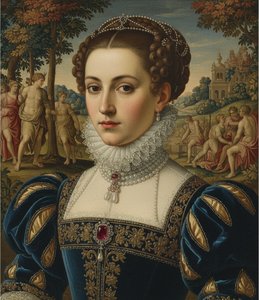
Agnolo Bronzino: Mastering Courtly Portraiture & the Enigmatic Gaze of Renaissance Florence
Explore the captivating world of Agnolo Bronzino, Renaissance master portraitist. Discover his elegant style, symbolic depth & lasting influence on art history. Expert insights for collectors.