Menü
INGYENES MŰVÉSZETI TANÁCSADÁS
MegtekintésMegtekintés Műalkotás AR előnézeteMűalkotás AR előnézete Nyomat rendelése Nyomat rendeléseKép letöltése Kép letöltése KüldésKüldés


RészletekRészletek Kedvencekhez ad Kedvencekhez ad LetöltésLetöltés Hasonló darabokHasonló darabok X-ray felvételX-ray felvétel DiavetítésDiavetítés

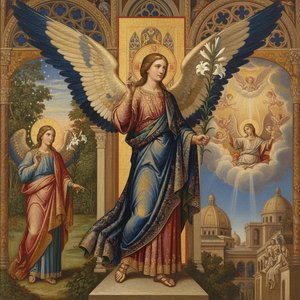
Annunciation

Admire Alessandro Allori’s masterpiece, ‘Annunciation,’ depicting Gabriel announcing Mary's pregnancy to Zechariah. Explore the serene Florentine Renaissance style and masterful detail of this iconic painting.

Fedezd fel Alessandro Allori (1535-1607) nagy művészt! Értsd meg az ő különleges stílusát, szomorú tájképeit és titokzatos alkotásait. Együtt vizsgáljuk meg ezt a fényűző korszakot!

Kézzel készített olajfestmény reprodukció

Kézzel festett olajvastú vászon, az Ön által választott méretben és keretben, művészeink készítik meglévőre. (Nyomat rendelése Nyomat rendeléseKép letöltése Kép letöltése)

P118B $10
P118H $10
P118W $10
P438Z $10
P508JH $12
P508YH $12
P805H $10
P805Z $10
P919BZ $10
P919G $10
P919XJ $10
P959ZH $10
P968JZ $12
W106C $8
W218G $10
W218JH $8
W218Y $10
W307PJ $10
W316G $10
W316PJ $8
W316Y $10
W398PJ $8
W4111J $10
W500HY $15
W500JH $15
W692G $12
W849H $8
W940BG $15
W953PJ $8

Standard
custom
CM
INCH

Válasszon előre meghatározott méreteink közül, amelyek megfelelnek a műalkotás eredeti arányainak.

szélesség
magasság

Ön megadhat saját méreteket egy adott kerethez vagy térhez igazításhoz. Ha a kiválasztott méret nem egyezik az eredeti kép arányával, akkor a műalkotást levágjuk, vagy további kézzel festett elemekkel meghosszabbítjuk a festményt. A gyártás megkezdése előtt küldünk Önnek egy digitális előnézetet jóváhagyásra.
Kérjük, vegye figyelembe, hogy a képernyőn megjelenő előnézet nem tükrözi a tényleges vágást vagy kiterjesztést. Csak az előnézet fog pontosan mutatni a végső kompozíciót.
Bár egyedi méretek állnak rendelkezésre, javasoljuk, hogy válasszon egy méretet az előre meghatározott listából az eredeti arányok megőrzése érdekében.

Példák arra, mit lehet módosítani: az arc kicserélése az ügyfél fotójára; háziállat hozzáadása (pl. macska helyett kutya); rejtett üzenet elhelyezése a háttérben; a háttér tájának vagy elemeinek megváltoztatása.
A rendelést követően a OriginalUniqueArt.com csapata e-mailt küld az ügyfélnek az instrukciókért, és biztosít egy előnézeti képet (mockup).

Világszerte elérhető szállítás () 3-4 hét alatt a szokásos 5 hét helyett. (16 augusztus). A minőség nem kérdőjelezhető.

why_choose_icon
Ingyenes globális expressz szállítás
why_choose_icon
Prémium minőségű len vászon
why_choose_icon
Teljes körű szállítási biztosítás
why_choose_icon
Vámvisszatérítési Garancia
why_choose_icon
Hiteles színpontosság garancia
why_choose_icon
60 napos visszaküldési lehetőség (csak hibás termékek esetén)
why_choose_icon
100% pénzvisszatérítési garancia
why_choose_icon
Több darab vásárlása esetén kedvezmény

Összesített ár

$ 300

reproduction

Annunciation

Reprodukciós technika

Reprodukció mérete

-

Összesített ár

$ 300

Gyors információk

  • Movement: Mannerism
  • Artist: Alessandro Allori
  • Medium: Oil on canvas
  • Subject or theme: Religious iconography
  • Location: Galleria dell'Accademia, Florence
  • Title: Annunciation
  • Artistic style: Sculptural quality; Polished surfaces

A műalkotás leírása

Alessandro Allori’s “Annunciation”: A Florentine Masterpiece Illuminated by Mannerist Elegance

Alessandro Allori's "Annunciation," completed in 1603 and currently residing within the Galleria dell'Accademia in Florence, stands as a testament to the enduring legacy of Florentine Mannerism. Painted during a period marked by artistic experimentation and intellectual fervor—a reaction against the idealized beauty of High Renaissance ideals—this monumental fresco embodies Allori’s signature style: a masterful blend of sculptural precision and luminous color that continues to captivate viewers centuries later.

The Composition & Technique – Sculptural Form Meets Radiant Light

Allori meticulously crafted this scene with an unwavering dedication to anatomical accuracy, reflecting the influence of humanist scholarship prevalent at the time. The figures—the angel Gabriel and Mary—are rendered with elongated proportions and subtly twisted poses, characteristic of Mannerist aesthetics. These forms aren’t merely realistic; they strive for a heightened sense of drama and emotion, conveying spiritual contemplation through carefully orchestrated gestures and drapery folds. Allori employed tempera paint on plaster, a technique favored by Florentine artists during this era, ensuring exceptional durability and preserving the vibrancy of his pigments—particularly the brilliant blues and golds that dominate the composition. The artist skillfully manipulated light to create an ethereal atmosphere, highlighting the angel’s halo and casting shadows across Mary's face, enhancing the emotional depth of the portrayal.

Historical Context & Artistic Influences: Bronzino’s Legacy

“Annunciation” emerged from a milieu profoundly shaped by Agnolo Bronzino’s artistic dominance. Bronzino, Allori’s mentor, championed a style characterized by polished surfaces and restrained emotion—a deliberate departure from the exuberant expressiveness of Raphael and Michelangelo. This stylistic kinship is palpable in “Annunciation,” where Allori avoids overt sentimentality, opting instead for an understated elegance that prioritizes intellectual contemplation. The painting reflects broader artistic trends of its time – a fascination with classical ideals combined with a nuanced exploration of psychological complexity—a hallmark of Mannerist art’s ambition to capture the human condition with unprecedented subtlety.

Symbolism & Narrative Depth: Lily and Bird – Echoes of Divine Grace

Beyond its technical brilliance, “Annunciation” is rich in symbolic significance. The lily held by Gabriel represents purity and virginity—essential attributes ascribed to Mary—a motif frequently employed in religious iconography throughout the Renaissance. Similarly, the bird perched upon Mary’s shoulder symbolizes hope and divine grace, reinforcing the narrative's central theme: God’s intervention in human affairs. Allori’s careful attention to detail extends beyond mere representation; he seeks to communicate profound spiritual truths through visual language—a testament to the enduring power of art as a vehicle for conveying religious belief and artistic innovation.

Emotional Impact & Artistic Resonance – A Timeless Vision

“Annunciation” transcends its historical context, continuing to resonate with audiences today due to its ability to evoke feelings of serenity and reverence. The painting’s luminous colors and sculptural forms invite contemplation—encouraging viewers to consider the profound mysteries of faith and divine grace. Like many masterpieces of Mannerist art, it exemplifies a commitment to artistic excellence that prioritizes intellectual engagement alongside aesthetic beauty—a legacy that ensures Alessandro Allori's “Annunciation” remains an unforgettable emblem of Florentine artistic heritage.

A művész életrajza

A Florentine Legacy: The Life and Art of Alessandro Allori

Alessandro Allori, born in Florence on May 31st, 1535, stands as a compelling figure within the late Mannerist school. His artistic journey was profoundly shaped by circumstance; orphaned at a young age, he found an unlikely father figure and mentor in Agnolo Bronzino, one of Florence’s most celebrated painters. This adoption wasn't merely familial—it was an immersion into a world of refined technique, intellectual rigor, and the distinctive aesthetic principles that would come to define Allori’s own style. Bronzino instilled within him not only technical mastery but also a particular sensibility: a preference for polished surfaces, elongated forms, and a cool, almost sculptural quality in his figures. This influence became the cornerstone of Allori's artistic identity, though it often drew criticism for its perceived derivativeness throughout his career. He supplemented this foundational training with anatomical studies – even undertaking dissections at the Hospital of Santa Maria Nuova – demonstrating a commitment to understanding the human form that underpinned his stylized representations.

The Echoes of Mannerism and Artistic Development

Allori’s work is deeply rooted in the Mannerist tradition, an artistic movement characterized by its artificiality, elegance, and emphasis on stylistic sophistication over naturalistic representation. However, he wasn't a revolutionary; rather, he was a skilled interpreter and developer of existing forms. Critics often noted his tendency to draw heavily from pre-existing art, refining and reinterpreting the works of masters like Michelangelo and Raphael through the lens of Bronzino’s aesthetic. This isn’t necessarily a detraction—it speaks to Allori's role as a crucial link in the transmission of artistic knowledge within Florentine circles. His paintings are marked by an almost unsettling smoothness, figures possessing a marble-like quality that lends them a two-dimensional, statue-esque appearance. This effect wasn’t simply a matter of technique; it was a deliberate aesthetic choice, reflecting the Mannerist desire to elevate art above nature, to create images of idealized beauty and intellectual complexity. He headed one of Florence's most important workshops alongside Santi di Tito, and his pupils included notable artists like Cristofano del Altissimo, Cesare Dandini, Aurelio Lomi, and his own son, Cristofano Allori, ensuring the continuation of this artistic lineage.

Major Works and Patronage

Allori’s career flourished under the patronage of prominent Florentine families, most notably the Medici. He contributed significantly to several important decorative projects for them, including his work on the Studiolo of Francesco I in the Palazzo Vecchio. His *Pearl Fishers*, part of this elaborate chamber, exemplifies his ability to create complex allegorical scenes filled with graceful figures and intricate detail. He also expanded upon frescoes begun by earlier masters like Andrea del Sarto and Franciabigio within the Villa di Poggio a Caiano, demonstrating both his technical skill and his willingness to engage with the artistic legacy of Florence. Beyond these grand commissions, Allori produced numerous portraits, religious paintings, and altarpieces that showcase his mastery of composition, color, and form. A notable example is “Allegory of Human Life,” housed in the Uffizi Gallery, which encapsulates the Renaissance humanist ideals prevalent during his time. His "Stories of St. Jerome" fresco further demonstrates his skill in narrative painting and illusionistic space.

Legacy and Historical Significance

Alessandro Allori died in Florence on September 22nd, 1607, leaving behind a body of work that continues to fascinate and challenge art historians. While often overshadowed by the more innovative artists of his time, his significance lies in his role as a key figure in the late Mannerist movement and as a transmitter of artistic tradition. He wasn’t an innovator in the same vein as Michelangelo or Leonardo da Vinci, but he was a supremely skilled craftsman who refined and developed existing styles, ensuring their survival for future generations. The story of a painting – possibly a portrait of Eleonora di Toledo de' Medici – returned to the Gemäldegalerie in Berlin after decades lost adds an intriguing layer to his legacy. His influence extended through his numerous pupils, most notably his son Cristofano Allori, who continued the family’s artistic tradition. Allori’s paintings remain valuable testaments to the elegance and intellectual complexity of Florentine Mannerism, offering a glimpse into a world where art was not merely about representation but about the pursuit of idealized beauty and refined expression. He remains an important figure for understanding the transition from Renaissance artistry towards the Baroque period.

Exploring Allori’s World Today

  • Museum Collections: Discover Alessandro Allori's masterpieces in institutions like the Uffizi Gallery, the Gemäldegalerie in Berlin, and various other museums worldwide.
  • Notable Works: Explore iconic paintings such as “Allegory of Human Life,” “Stories of St. Jerome,” and his contributions to the Studiolo of Francesco I.
  • Further Research: Delve deeper into Allori’s life and art through resources like Wikipedia, Getty Museum archives, and scholarly articles on Florentine Mannerism.
Alessandro Allori

Alessandro Allori

1535 - 1607 , Olaszország

A művészről röviden

  • Artistic Movement Or Style: Mannerizmus
  • Artists Or Movements Influenced By This Artist: ['Cristofano Allori']
  • Artists Who Influenced This Artist: ['Agnolo Bronzino']
  • Date Of Birth: 1535. május 31.
  • Date Of Death: 1607. szeptember 22.
  • Full Name: Alessandro Allori
  • Nationality: Olasz
  • Notable Artworks:
    • Allegoria az életből
    • Szent Jeromos történetei
  • Place Of Birth: Firenze, Olaszország
Fedezze fel a műalkotásokat témák, stílusok és jellemzők szerint csoportosítva.