Megtekintés
 Küldés
 Megosztás
 Részletek

 Letöltés
 Hasonló darabok
 X-ray felvétel
 Diavetítés
 Statisztika
Three Peasants in Conversation
 Engraving
- WallArt
- Northern Renaissance
 1497
1497- Renaissance
 108.0 x 77.0 cm
 Metropolitan Művészeti Múzeum
 Összes részlet megjelenítése
Kézzel készített olajfestmény reprodukció
Kézzel festett olajvastú vászon, az Ön által választott méretben és keretben, művészeink készítik meglévőre. ( Áttérés Nyomtatványra Áttérés digitális képre)




P118B $10

P118H $10

P118W $10

P438Z $10

P508JH $12

P508YH $12

P805H $10

P805Z $10

P919BZ $10

P919G $10

P919XJ $10

P959ZH $10

P968JZ $12

W106C $8

W218G $10

W218JH $8

W218Y $10

W307PJ $10

W316G $10

W316PJ $8

W316Y $10

W398PJ $8

W4111J $10

W500HY $15

W500JH $15

W692G $12

W849H $8

W940BG $15

W953PJ $8




Válasszon előre meghatározott méreteink közül, amelyek megfelelnek a műalkotás eredeti arányainak.

Ön megadhat saját méreteket egy adott kerethez vagy térhez igazításhoz. Ha a kiválasztott méret nem egyezik az eredeti kép arányával, akkor a műalkotást levágjuk, vagy további kézzel festett elemekkel meghosszabbítjuk a festményt. A gyártás megkezdése előtt küldünk Önnek egy digitális előnézetet jóváhagyásra.
Kérjük, vegye figyelembe, hogy a képernyőn megjelenő előnézet nem tükrözi a tényleges vágást vagy kiterjesztést. Csak az előnézet fog pontosan mutatni a végső kompozíciót.
Bár egyedi méretek állnak rendelkezésre, javasoljuk, hogy válasszon egy méretet az előre meghatározott listából az eredeti arányok megőrzése érdekében.
A rendelést követően a OriginalUniqueArt.com csapata e-mailt küld az ügyfélnek az instrukciókért, és biztosít egy előnézeti képet (mockup).
Világszerte elérhető szállítás () 3-4 hét alatt a szokásos 5 hét helyett. (11 szeptember). A minőség nem kérdőjelezhető.

Ingyenes globális expressz szállítás

Prémium minőségű len vászon

Teljes körű szállítási biztosítás

Vámvisszatérítési Garancia

Hiteles színpontosság garancia

100 napos visszaküldési lehetőség (csak hibás termékek esetén)

100% pénzvisszatérítési garancia

Több darab vásárlása esetén kedvezmény
 Az üvegkeretes opció csak 110 cm alatti méretben érhető el

Three Peasants in Conversation
Reprodukciós technika
Reprodukció mérete
-


Összesített ár
$ 350
A Quiet Encounter in the Northern Renaissance
In the delicate, monochromatic world of Albrecht Dürer’s "Three Peasants in Conversation," time seems to decelerate, inviting the viewer into a private, whispered moment from the year 1497. This exquisite engraving is far more than a mere study of rural life; it is a profound window into the soul of the Northern Renaissance. Through his masterful use of line and shadow, Dür and his contemporaries moved away from the rigid, symbolic abstractions of the Middle Ages toward a breathtakingly humanistic realism. Here, we find no grand kings or divine apparitions, but rather three humble figures caught in the midst of an intimate exchange. The composition draws us inward, centering our focus on the subtle gestures and shared proximity of these men, creating an atmosphere of quiet dignity that resonates across centuries.
The technical brilliance of this piece lies in Dürer’s unparalleled command over the medium of engraving. To look closely at this work is to witness a triumph of patience and precision. Using burins and gravers to incise fine, rhythmic lines into a copper plate, the artist achieved a level of texture that feels almost tactile. One can sense the rough, heavy weave of the peasants' garments, the weathered creases of their skin, and the soft weight of their hats, all rendered through a sophisticated system of hatching and cross-hatching. This interplay of light and dark—the stark contrast between deep, velvety blacks and luminous whites—gives the figures a sculptural volume, making them appear to emerge from the paper into our own space.
The Beauty of the Everyday
For the discerning collector or interior designer, "Three Peasants in Conversation" offers a timeless aesthetic that bridges the gap between historical gravity and modern minimalist elegance. The monochromatic palette makes it an incredibly versatile piece for sophisticated decor; it possesses a quiet strength that complements both classical study rooms and contemporary, light-filled galleries. There is a profound emotional resonance in Dürer’s ability to find the extraordinary within the ordinary. By elevating the simple act of conversation among common folk to the status of high art, he challenges us to find beauty in our own fleeting, everyday interactions.
Beyond its visual appeal, the artwork serves as a conversation starter, embodying the intellectual curiosity and humanist ideals of the 15th century. It evokes a sense of nostalgia for a slower, more observant era, making it an ideal centerpiece for those who value art with depth, history, and a soulful narrative. Owning a high-quality reproduction of this masterpiece is not merely about decorating a wall; it is about bringing a piece of the Renaissance spirit—a spirit of meticulous observation and profound respect for the human condition—into the modern home.
A művész életrajza
A Life Forged in Nuremberg: The Early Years and Apprenticeship
Albrecht Dürer, a name synonymous with the German Renaissance, emerged from the bustling artisan city of Nuremberg in 1471. His father, Albrecht Dürer the Elder, was a successful goldsmith who had immigrated from Hungary, bringing with him a lineage steeped in craftsmanship. It was within this environment—the scent of metal and the meticulous precision of handiwork—that young Albrecht’s artistic inclinations first took root. Though his father envisioned a similar path for him, apprenticing him initially in the family trade, it soon became undeniable that Albrecht possessed an exceptional gift for drawing. At thirteen, he transitioned to the workshop of Michael Wolgemut, Nuremberg's leading artist at the time. This was no mere technical training; it was immersion into a world of illuminated manuscripts, painted panels, and—crucially—the burgeoning art of woodcut illustration. The sheer volume of work produced by Wolgemut’s workshop, including the extensive illustrations for the *Nuremberg Chronicle*, provided Dürer with an unparalleled foundation in design, composition, and the mechanics of image-making. A remarkable silverpoint self-portrait from 1484, created when he was barely a teenager, stands as astonishing evidence of his precocious talent—a testament to a burgeoning artistic identity already taking shape. This early work demonstrates a keen eye for detail, an understanding of perspective, and a nascent desire to capture the essence of human form – qualities that would define his entire career.The Italian Influence and Artistic Maturation
Dürer’s ambition extended far beyond the confines of Nuremberg. Driven by an insatiable curiosity and a desire to master the art of painting, he embarked on his first journey to Italy in 1494. This was not simply a sightseeing trip; it was a pilgrimage to the heart of the Renaissance. He encountered the works of masters like Raphael, Giovanni Bellini, and Leonardo da Vinci—artists who were redefining the possibilities of form, perspective, and human expression. The impact of this exposure was profound. Dürer absorbed the classical motifs, harmonious compositions, and subtle sfumato techniques that characterized Italian art, yet he never abandoned his Northern European sensibility for meticulous detail and symbolic depth. He was particularly fascinated by the use of light and shadow in Venetian painting, which would later influence his own work. A second sojourn to Italy between 1505 and 1507 further solidified these influences, allowing him to study ancient Roman ruins and refine his understanding of anatomy and proportion. This synthesis of Northern precision and Italian grace became the hallmark of Dürer’s unique artistic style. He returned from Italy not just with new techniques but also with a renewed sense of purpose – to synthesize the best elements of both traditions into a distinctly German Renaissance art.Mastering the Mediums: Painting, Engraving, and Woodcut
Dürer was a master of multiple mediums, each offering him distinct avenues for creative expression. His paintings, though fewer in number than his prints, demonstrate a remarkable command of oil paint and an ability to capture both physical likeness and psychological depth. Works like the *Feast of the Rose Garlands* (1506) reveal a vibrant palette influenced by Venetian colorism, showcasing his growing mastery of layering pigments and creating luminous effects. However, it was in the realm of printmaking—particularly engraving and woodcut—that Dürer truly revolutionized artistic practice. He elevated these techniques from mere reproductive methods to independent art forms, capable of conveying complex narratives and profound emotions. The *Apocalypse* series (1498), a collection of fourteen woodcuts illustrating the Book of Revelation, showcased his mastery of this medium despite its inherent limitations – he skillfully used hatching and cross-hatching to create dramatic contrasts of light and shadow. Later engravings like *Melencolia I* (1514) and *Saint Jerome in His Study* (1514) are testaments to his unparalleled skill—intricate compositions filled with symbolic meaning and executed with breathtaking precision. He didn’t just depict reality; he imbued it with layers of intellectual and spiritual significance, transforming the printed image into a powerful vehicle for artistic expression.A Theorist and Innovator: The Legacy of Albrecht Dürer
Dürer was not merely an artist; he was a scholar, a theorist, and an innovator who sought to understand the underlying principles governing artistic creation. He believed in the mathematical foundations of art and dedicated himself to establishing a scientific approach to representation. His treatises on geometry, proportion, and human anatomy—most notably *Four Books of Human Proportion* (1528)—were groundbreaking for their time, demonstrating his commitment to rigorous observation and rational analysis. These writings were not simply academic exercises; they were intended to elevate the status of artists from mere craftsmen to intellectual practitioners. Dürer’s work on perspective, in particular, laid the groundwork for future generations of artists and architects. He meticulously documented the rules of linear perspective, providing a systematic approach to creating realistic spatial illusions. His theoretical writings, combined with his artistic achievements, cemented his reputation as one of the most influential figures in the history of Northern Renaissance art. He remains, to this day, one of the most important figures in the history of Western art.Influences and Enduring Impact
- Michael Wolgemut: Dürer’s initial mentor, providing foundational skills in drawing, painting, and woodcut techniques.
- Leonardo da Vinci: Inspired Dürer’s exploration of anatomy, perspective, and sfumato—the subtle blending of tones.
- Raphael: Influenced Dürer’s compositional harmony and idealized forms.
- Giovanni Bellini: Contributed to Dürer's understanding of color and Venetian painting traditions.
Dürer’s influence reverberates through centuries of art history. His meticulous realism, his innovative use of printmaking, and his theoretical writings continue to inspire artists and scholars alike. He demonstrated that art could be both technically masterful and intellectually rigorous—a legacy that continues to shape the artistic landscape today.
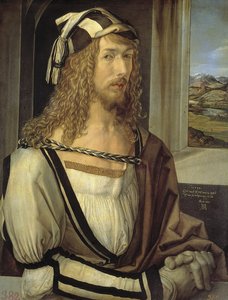
Albrecht Dürer
1471 - 1528 , Olaszország
A művészről röviden
- Artistic Movement Or Style: német reneszánszi
- Artists Or Movements Influenced By This Artist:
- Nördlingeni iskola
- olasz reneszánszi
- Artists Who Influenced This Artist:
- Leonardo da Vinci
- Raffaello
- Giovanni Bellini
- Date Of Birth: 1471. máj 21.
- Date Of Death: 1528. ápr. 6.
- Full Name: Albrecht Dürer
- Nationality: német
- Notable Artworks:
- Apokalipszis
- Melencolia I
- Szent Jéremy
- Place Of Birth: Nürnberget, Németország
Kapcsolódó cikkek

Monochrome Visions: Exploring the Aesthetic & Historical Significance of Black & White Photography
Explore the rich history & artistic power of black and white photography. From early techniques to iconic masters like Ansel Adams, discover why monochrome continues to captivate art lovers today. Expert insights for collectors.

A Fehér Szín Mesterei: 10 Híres Festmény, Amelyek Elvarázsolnak – OriginalUniqueArt.com
Fedezze fel a 10 legikonikusabb fehér tónusú festményt! Monet, Van Gogh és más mesterek alkotásainak története. Vászonképek, reprodukciók – inspiráció otthonába. OriginalUniqueArt.com: minőségi művészet online.
Timeless & Chic: Elevating Your New Home with the Sophistication of Black and White Photography
Transform your new home with the timeless allure of black and white photography. OriginalUniqueArt.com specializes in elegant monochrome decor and custom hand-painted wedding portraits that turn cherished milestones into lasting, soulful masterpieces. Elevate your space with ease.

A Fekete Szín Mesterei: 10 Híres Festmény, Amelyek Elvarázsolnak – OriginalUniqueArt.com
Fedezze fel a 10 leghíresebb, fekete tónusú festményt! Rembrandt, Goya és Manet remekművei elvarázsolják. Művészettörténet, inspiráció otthonába – OriginalUniqueArt.com kínálatából. Fedezze fel a teljes gyűjteményt online!
Shadow & Soul: Why Black & White Photography Remains the Ultimate Power Move in Modern Art
Discover why black & white photography remains a powerful force in contemporary art. Explore the impact of light, shadow, and texture through a visual journey of monochrome mastery and learn how to elevate your space with timeless grayscale aesthetics.