A szöveg mérete

() ·

Egy Önnek készült, kézzel festett alkotás

Judas

Kézzel készített olajfestmény reprodukció

Kézzel festett olajvastú vászon, az Ön által választott méretben és keretben, művészeink készítik meglévőre. ( Váltás nyomtatványra Áttérés digitális képre)

A gyűjtemény leírása

Albert Tucker's haunting 'Judas' (1955) is an Expressionist masterpiece depicting betrayal and despair through distorted figures & earthy tones. Explore the painting’s symbolism and the artist’s legacy.

A művész életrajza

Explore the art of Albert Tucker (1905-1995), a Canadian artist known for his expressive figurative paintings, social commentary, and depictions of city life & wartime experiences. Discover works reflecting themes of alienation, morality, and human c

előbb ·

1. fejezet

Mekkora méretű legyen?

Húzza a csúszkát a méret megváltoztatásához; a bal oldali kép a keret valós szélességét mutatja. Az eredeti arányok megmaradnak.

Standard méret
egyedi méretű
CM
INCH

Válasszon előre meghatározott méreteink közül, amelyek megfelelnek a műalkotás eredeti arányainak.

szélesség
magasság

Írja be a kívánt szélességet és magasságot, hogy illeszkedjen a keretéhez vagy a falához. Mivel ez kézzel festett alkotás, egy eltérő formájú méret esetén a művész akár festhet is valamivel többet a kép körül, vagy korolathat is belőle — az Ön döntésének megfelelően. A festés megkezdése előtt küldünk egy digitális tervezetet jóváhagyásra. Az oldalon látható kép nem tartalmazza a végeredményt — csak a tervezet mutatja meg a valódi eredményt.

2. fejezet

Hogyan érkezzen meg?

Válaszd ki a feszített vászon széleit

Válassza ki a keretet

Corner sample of the WhiteWrap canvas edge finish, stretched on tömörfa bars
Fehér Ft1
Corner sample of the BlurSideWrap canvas edge finish, stretched on tömörfa bars
Elmosódott szélek Ft1
Corner sample of the ExtendedWrap canvas edge finish, stretched on tömörfa bars
Kiterjesztett Ft1
Corner sample of the P118B picture frame: formázott polisztirol, 5 cm wide and 3 cm thick
P118B Ft10
Corner sample of the P118H picture frame: formázott polisztirol, 5 cm wide and 3 cm thick
P118H Ft10
Corner sample of the P118W picture frame: formázott polisztirol, 5 cm wide and 3 cm thick
P118W Ft10
Corner sample of the P438Z picture frame: formázott polisztirol, 5.5 cm wide and 3.5 cm thick
P438Z Ft10
Corner sample of the P508JH picture frame: formázott polisztirol, 7 cm wide and 3.5 cm thick
P508JH Ft12
Corner sample of the P508YH picture frame: formázott polisztirol, 7 cm wide and 3.5 cm thick
P508YH Ft12
Corner sample of the P805H picture frame: formázott polisztirol, 5 cm wide and 3.5 cm thick
P805H Ft10
Corner sample of the P805Z picture frame: formázott polisztirol, 5 cm wide and 3.5 cm thick
P805Z Ft10
Corner sample of the P919BZ picture frame: formázott polisztirol, 7 cm wide and 3.5 cm thick
P919BZ Ft10
Corner sample of the P919G picture frame: formázott polisztirol, 7 cm wide and 3.5 cm thick
P919G Ft10
Corner sample of the P919XJ picture frame: formázott polisztirol, 7 cm wide and 3.5 cm thick
P919XJ Ft10
Corner sample of the P959ZH picture frame: formázott polisztirol, 5 cm wide and 3 cm thick
P959ZH Ft10
Corner sample of the P968JZ picture frame: formázott polisztirol, 6 cm wide and 4 cm thick
P968JZ Ft12
Corner sample of the W106C picture frame: tömörfa, 5 cm wide and 3 cm thick
W106C Ft8
Corner sample of the W218G picture frame: tömörfa, 5 cm wide and 3 cm thick
W218G Ft10
Corner sample of the W218JH picture frame: tömörfa, 5 cm wide and 3 cm thick
W218JH Ft8
Corner sample of the W218Y picture frame: tömörfa, 5 cm wide and 3 cm thick
W218Y Ft10
Corner sample of the W307PJ picture frame: tömörfa, 6 cm wide and 3 cm thick
W307PJ Ft10
Corner sample of the W316G picture frame: tömörfa, 6 cm wide and 3 cm thick
W316G Ft10
Corner sample of the W316PJ picture frame: tömörfa, 6 cm wide and 3 cm thick
W316PJ Ft8
Corner sample of the W316Y picture frame: tömörfa, 6 cm wide and 3 cm thick
W316Y Ft10
Corner sample of the W398PJ picture frame: tömörfa, 5 cm wide and 3 cm thick
W398PJ Ft8
Corner sample of the W4111J picture frame: tömörfa, 6.5 cm wide and 3.5 cm thick
W4111J Ft10
Corner sample of the W500HY picture frame: tömörfa, 7 cm wide and 5 cm thick
W500HY Ft15
Corner sample of the W500JH picture frame: tömörfa, 7 cm wide and 5 cm thick
W500JH Ft15
Corner sample of the W692G picture frame: tömörfa, 8 cm wide and 4 cm thick
W692G Ft12
Corner sample of the W849H picture frame: tömörfa, 5 cm wide and 3 cm thick
W849H Ft8
Corner sample of the W940BG picture frame: tömörfa, 7.5 cm wide and 4.5 cm thick
W940BG Ft15
Corner sample of the W953PJ picture frame: tömörfa, 6 cm wide and 3.5 cm thick
W953PJ Ft8
Corner sample of the H24-GOLD picture frame: faragott fa gesszóval, 10 cm wide and 6 cm thick
H24-GOLD Ft30
Corner sample of the H24-SILVER picture frame: faragott fa gesszóval, 10 cm wide and 6 cm thick
H24-SILVER Ft30
Corner sample of the H36-GOLD picture frame: faragott fa gesszóval, 15 cm wide and 6.5 cm thick
H36-GOLD Ft45
Corner sample of the H36-SILVER picture frame: faragott fa gesszóval, 15 cm wide and 6.5 cm thick
H36-SILVER Ft45

Keretprofil: . A kerettel együtt vett teljes méret: .

3. fejezet

Ki festi, és változtatni kellene-e bármit?

Példák a módosíthatóságra: Az arc kicserélése a vásárló fotójára; háziállat hozzáadása (pl. macska kicserélése kutyára); rejtett üzenet elhelyezése a háttérben; a háttér tájéképének vagy elemeinek megváltoztatása.
A megrendelést követően a OriginalUniqueArt.com csapat e-mailt küld a vásárlónak az instrukciókkal, és biztosítja a tervezeti előnézetet

Világszerte elérhető szállítás () 3-4 hét alatt a szokásos 5 hét helyett. (6 november). A minőség nem kérdőjelezhető.

4. fejezet

Az utolsó finomhangolás

Egy felirat, mint egy múzeumban?

A gravírozott bronztábla részletei

This elegant plaque features the artist's name and the title of the artwork, finely engraved for a timeless presentation.

It is made from bronze with a refined, elegant finish. The text is precisely laser-engraved for a sharp and permanent result. Measuring 9x2 cm, the plaque is compact yet easy to read. It's built to be durable and scratch-resistant, offering a professional, museum-quality look. Mounting is simple thanks to the included adhesive backing.

Átlátszó akril tábla részletei

The plaque includes essential engraved details such as the artist's name, the title of the artwork, the date it was created, the type of media used-like oil on canvas or watercolor-a brief description of the piece, and a QR code that links to the complete artwork information.

It is crafted from clear acrylic, offering a sleek, modern appearance. The text is UV-engraved in black to ensure strong visual contrast. With a size of 10x15 cm, it ensures optimal readability. It comes equipped with two metal hooks for secure wall mounting. The plaque is designed to be weather-resistant, making it suitable for various environments, and it includes interactive features that work seamlessly with smartphone scanning.

Fekete akril tábla részletei

This elegant plaque includes engraved information such as the artist's name, the title of the artwork, the date it was created, the type of media used (like oil on canvas or watercolor), a short description of the artwork, and a QR code for quick access to more information.

The plaque itself is made from refined black acrylic with a premium finish. The text is laser-engraved in white for high contrast and readability. Its size is 10x15 cm, designed to be easy to read. It comes with two metal hooks for professional mounting. The design is sleek and fits any interior style. It is also weather-resistant and durable, with built-in digital integration for mobile compatibility.

Egy védőréteg?

Mikor lenne szüksége rá?

5. fejezet

Az Ön által megrendelt festmény

Judas

Reprodukciós technika

Reprodukció mérete

-

Kiváló mesterművész

Nagyobb részletesség, finomság és bővített gyártási idő

-

Reprodukció keretezése

-

-

A bármely oldalsó méretét túlszálaló 105 cm (kb. 41 hüvelyk) meghaladó műalkotások vagy reprodukciók esetében a keret összeszerelhető készletként, szétszerelve kerül szállításra. Ez a módszer biztosítja a biztonságos szállítást, és megakadályozza a szállítás során fellépő sérüléseket.

Szakmész összeszerelést igényel – ez nem DIY (önösszeszerelhető) termék.
A készletet egy tapasztalt keretező szakembernek kell összeszerelnie és a vásznat feszítenie kell, fa ragasztó (nem tartalmazza a csomag), vásznfeszítő fogó és szorítók használatával, amelyek a ragasztó száradásáig a keretrészeket egymáshoz vuôngjba tartják. A helytelen összeszerelés vagy a nem egyenletes vásznfeszítés maradandó károsíthatja a műalkotást, és ez nem része a garanciánknak.

  • A készlet tartalmazza az összes tömörfa rudat, pontosan méretre vágva.

  • A mellékelt csavarokkal, valamint a sarokszerekhez szükséges faütő ragasztóval kell összeszerelnie (ez nem tartalmazható a csomagban), így a keretrendezőnek külön kell beszereznie.

  • A csomag nem tartalmazza a szükséges professzionális eszközöket: egy vászonfeszítőt és klipseket a rácsok vízszintes tartásához a ragasztó megszáradásáig.

Fontos:
A sarokcsatlakozásokhoz fánylagra van szükség, a keretrudakat szorítókapcsokkal kell rögzíteni, amíg a rag teljesen meg nem szárad, a kész keretre feszített vászonhoz pedig vászonfeszítő fogat szükséges. Ezek egyike sem található meg a készletben. Kérjük, rendelés előtt győződjön meg róla, hogy rendelkezik tapasztalt keretező szakemberrel.

Névtábla

-

-

Védőréteg (Lakk)

Fényes lakk (intenzívabb színek, védelem a fény és a nedvesség hatása ellen)

-

Műalkotásom egyedi igényre szabása

Példák a módosíthatóságra: az arc kicserélése az ügyfél fotójára; háziállat hozzáadása (pl. macska helyett kutya); rejtett üzenet elhelyezése a háttérben; a háttér tájainak vagy elemeinek megváltoztatása.

-

Sürgős

Világszerte szóló szállítás () mindössze 3-4 hét alatt, a szokásos 5 hét helyett. (6 november). A minőség nem kérdőjelezhető.

-

Express szállítás

Világszerte elérhető szállítás területre 5 héten belül. (13 november).

A szállítás díja tartalmazza

Összesített ár

Ft 98001

Összesített ár Ft 98001

Az üvegkeretes opció csak 110 cm alatti méretben érhető el

Minden rendelés mellé tartalmazva

  • Ingyenes globális expressz szállítás
  • Prémium minőségű len vászon
  • Teljes körű szállítási biztosítás
  • Vámvisszatérítési Garancia
  • Hiteles színarányosság garancia
  • 100 napos visszaküldési lehetőség (csak hibás termékek esetén)
  • 100% pénzvisszatérítési garancia
  • Több darab vásárlásakor kedvezmény

Judas – A Study in Regret and Betrayal by Albert Tucker

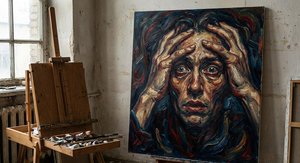
Albert Tucker’s “Judas,” painted in 1955, isn't merely a depiction of the biblical figure; it’s a profoundly unsettling exploration of guilt, isolation, and the enduring consequences of transgression. Rendered in his signature Expressionistic style, the painting immediately commands attention with its earthy palette – deep browns, ochres, and muted yellows—a visual embodiment of sorrow and decay. Tucker masterfully employs visible brushstrokes, layering paint to create a textured surface that feels both rough and vulnerable, mirroring the subject’s internal turmoil.

The composition is strikingly intimate, focusing on Judas's face – a study in shadowed features and downcast eyes. The figure dominates the frame, positioned slightly off-center within a tightly cropped space, creating a dynamic tension that draws the viewer into his despair. A stark rectangular block, held firmly by his hands, acts as a powerful visual barrier, isolating him from any potential solace or connection. This deliberate framing amplifies the sense of loneliness and reinforces the weight of his actions.

The Language of Expressionism

Tucker’s choice of technique is crucial to understanding the painting's emotional resonance. He eschews realistic representation in favor of a highly expressive approach, utilizing jagged lines to define Judas’s features – emphasizing the sharp edges of his regret and the fractured nature of his psyche. The brushwork itself is deliberately visible, conveying a sense of urgency and immediacy. Thick impasto builds up on certain areas, particularly around the face, creating a tactile quality that invites close inspection and encourages an emotional response.

The use of color further enhances this expressive intent. The dominant earth tones evoke a feeling of heaviness and stagnation, while the strategic application of red – in the hair and skin—adds a dramatic intensity to the scene, symbolizing both passion and violence. The diffused lighting, lacking any clear source, contributes to the overall atmosphere of gloom and despair, casting long shadows that seem to cling to Judas’s form.

Symbolism and Historical Context

“Judas” is steeped in religious symbolism, depicting a pivotal moment in Christian scripture – the betrayal of Jesus Christ. The scattered coins at the base of the painting are a potent reminder of the thirty pieces of silver Judas received for his treachery, representing the material cost of his actions. The rectangular block itself has been interpreted as a symbol of burden or perhaps even a barrier—a physical manifestation of the guilt and shame he carries.

Understanding the historical context is key to appreciating the painting’s depth. Created during a period of significant social and political upheaval, Tucker's work often grappled with themes of alienation, morality, and the complexities of human relationships. His exploration of Judas reflects a broader concern with the darker aspects of human nature – the capacity for betrayal and the enduring consequences of wrongdoing. The painting’s creation coincided with Tucker’s own personal struggles, adding another layer of emotional intensity to the work.

A Timeless Portrait of Regret

“Judas” is more than just a historical depiction; it's a hauntingly beautiful portrait of regret and isolation. Tucker’s masterful use of color, composition, and technique creates an image that lingers in the mind long after viewing. It serves as a powerful reminder of the enduring consequences of our choices and the profound impact of betrayal—a timeless meditation on human fallibility and the search for redemption.

Kérdések és válaszok

Milyen kontraszt jellemzi a „Judas”, Albert Tucker alkotása alkotást?

A „Judas”, Albert Tucker alkotása kontrasztját Statement teszi.

Mekkora a „Judas”, Albert Tucker alkotása valóságos mérete?

A(z) "Judas" eredeti mérete 96 x 130 cm. Az eredeti adatok hasznos referenciát nyújtanak a reprodukció méretének kiválasztásakor.

Milyen hangulat és érzelem ötvöződik a "Judas" alkotásban?

A "Judas" alkotásban egy Dramatic hangulat kíséri egy Melancholic érzelmet.

Több információ erről a festményről

Megtekintés AR előnézet Váltás nyomtatványra Áttérés digitális képre Küldés
Részletek Útmutató Kedvencekhez ad Letöltés Hasonló darabok X-ray felvétel Diavetítés Kérdések és válaszok Statisztika

Számokban kifejezve

  • 1955a festés éve
  • 29választható keretek
  • standard méretek, saját arányokkal
  • 5hetek a festésre és a kézbesítésre

Az eredeti műről

Méretek
96.0 x 130.0 cm
Albert Tucker

Albert Tucker

1905 - 1995, Canada

Gyors információk Albert Tucker művészről

  • Full Name: Albert William Tucker
  • Nationality: Canadian
  • Date Of Birth: 1905
  • Date Of Death: 1995
  • Place Of Birth: Oshawa, Canada
  • Notable Artworks:
    • Philosopher
    • Memory of Leonski
  • Artistic Movement Or Style: Expressionism

A művész életrajza

Albert Tucker: A Life Bridging Mathematics and Art

  • Born: Oshawa, Canada (1905)
  • Died: 1995

Albert William Tucker was a remarkable figure whose life defied easy categorization. While primarily recognized as a distinguished Canadian mathematician, his legacy extends into the realm of art and intellectual history. He is celebrated for significant contributions to topology, game theory (particularly for popularizing the "Prisoner's Dilemma"), and non-linear programming, while also leaving behind a body of artistic work that reflects themes of alienation, morality, and social commentary.

Early Life and Education: A Foundation in Mathematics

Tucker’s journey began in Oshawa, Ontario. His upbringing emphasized education, fostering an early aptitude for mathematics. He pursued his undergraduate studies at the University of Toronto, earning a B.A. in 1928 and an M.A. in 1929. His pursuit of advanced knowledge led him to Princeton University where he earned his Ph.D. under the guidance of Solomon Lefschetz in 1932 with a dissertation titled *An Abstract Approach to Manifolds*. This period laid the groundwork for his future contributions, establishing a strong foundation in abstract mathematics.

Mathematical Contributions and Legacy

  • The Prisoner's Dilemma: Tucker is widely known for giving name and interpretation to Merrill M. Flood and Melvin Dresher’s model of cooperation and conflict, solidifying its place as a cornerstone of game theory.
  • Karush-Kuhn-Tucker Conditions: His work on the Karush-Kuhn-Tucker conditions significantly advanced non-linear programming.
  • Mathematical Education: Tucker was deeply committed to mathematics education, serving as chair of the AP Calculus committee for the College Board (1960-1963) and actively participating with the Committee on the Undergraduate Program in Mathematics (CUPM). He also served as president of the Mathematical Association of America (MAA) from 1961-1962.
  • Mentorship: Tucker’s influence extended through his mentorship of numerous prominent figures, including Nobel Prize winners John Nash and Lloyd Shapley, and Turing Award winner Marvin Minsky. His collaborations with Harold W. Kuhn further enriched the mathematical landscape.

Tucker's legacy is not solely confined to his direct contributions; it also encompasses his role as a vital source for oral histories within the mathematics community, solidifying his position as a respected and influential figure.

Artistic Expression: Themes of Isolation and Social Commentary

While primarily known for his mathematical achievements, Tucker was also an artist. His paintings, often characterized by expressive figurative styles, explored themes of alienation, morality, and the complexities of human existence. His artistic output reflects a keen observation of social issues and wartime experiences, offering poignant commentary on the human condition.

  • Style: Expressionism
  • Recurring Themes: Isolation, contemplation, moral dilemmas, depictions of city life, wartime experiences.

Notable artworks such as "Philosopher" exemplify his ability to convey profound emotions through bold lines, dramatic lighting, and a rich color palette. His artistic vision provides another layer to understanding the multifaceted nature of Albert Tucker's intellectual pursuits.

Gyors információk

  • Artistic style: Distorted forms
  • Subject or theme: Betrayal & Regret
  • Dimensions: 96 x 130 cm
  • Artist: Albert Tucker
  • Influences: Emotional portrayal
  • Title: Judas

Művészeti kvíz

Minden kérdésre csak egy helyes válasz létezik.

Kérdés 1:
What artistic movement is most closely associated with Albert Tucker’s painting ‘Judas’?
Kérdés 2:
The rectangular block held by Judas in the painting likely symbolizes:
Kérdés 3:
What year was Albert Tucker’s painting ‘Judas’ created?
Kérdés 4:
According to the description, what color palette dominates the painting?
Kérdés 5:
Albert Tucker was a prominent figure in which field besides art?