
 Megtekintés
 Küldés
 Megosztás
 Részletek
 Útmutató

 Letöltés
 Hasonló darabok
 X-ray felvétel
 Diavetítés
 Kérdések és válaszok
 Statisztika
Travel plans

- 15.0 x 31.0 cm


 Összes részlet megjelenítése
Giclée / Műnyomat
Múzeumi minőségű giclée vagy vászonnyomat, gyors gyártással és rugalmas finomítási lehetőségekkel. ( Kézzel festett másolat rendelése Áttérés digitális képre)




P118B Ft10

P118H Ft10

P118W Ft10

P438Z Ft10

P508JH Ft12

P508YH Ft12

P805H Ft10

P805Z Ft10

P919BZ Ft10

P919G Ft10

P919XJ Ft10

P959ZH Ft10

P968JZ Ft12

W106C Ft8

W218G Ft10

W218JH Ft8

W218Y Ft10

W307PJ Ft10

W316G Ft10

W316PJ Ft8

W316Y Ft10

W398PJ Ft8

W4111J Ft10

W500HY Ft15

W500JH Ft15

W692G Ft12

W849H Ft8

W940BG Ft15

W953PJ Ft8




Válasszon előre meghatározott méreteink közül, amelyek megfelelnek a műalkotás eredeti arányainak.

Írja be a keretének vagy a falának megfelelő szélességet és magasságot. A nyomatot csak le lehet vágni, soha nem tehető nagyobbá, mint az eredeti kép, így egy eltérő alakú méretnél a kép egy része elveszik. Mielőtt bármit kinyatintanánk, küldünk egy digitális próbamodellt jóváhagyásra. Az oldalon látható kép nem tartalmazza a valós levágást — ezt csak a próbamodell mutatja meg.
Világszerte történő kiszállítás területére mindössze 2 hét alatt, a szokásos 4-5 hét helyett. (3 november)

Ingyenes globális expressz szállítás

Prémium minőségű len vászon

Teljes körű szállítási biztosítás

Vámvisszatérítési Garancia

Hiteles színarányosság garancia

100 napos visszaküldési lehetőség (csak hibás termékek esetén)

100% pénzvisszatérítési garancia

Több darab vásárlásakor kedvezmény
 Az üvegkeretes opció csak 110 cm alatti méretben érhető el

Travel plans
Giclée / Műnyomat
Reprodukció mérete
-


Összesített ár
Ft 26538
Travel Plans by Adolph von Menzel: A Window Into Victorian Leisure
Adolph von Menzel’s “Travel Plans,” completed in 1875, isn't merely a depiction of an outdoor scene; it’s a carefully constructed tableau that encapsulates the spirit of late Victorian England – a moment suspended between contemplation and convivial warmth. Painted in the heart of Impressionism, yet firmly rooted in Realist principles, this monumental oil on canvas transcends simple observation to convey a profound sense of atmosphere and psychological nuance.- Style & Influence: Menzel’s work stands as a testament to the burgeoning Realist movement, rejecting Romantic idealism for unflinching portrayals of everyday life. However, he deftly incorporates Impressionistic techniques—loose brushstrokes, dappled light—to capture the fleeting beauty of the afternoon sun filtering through foliage. Notably influenced by artists like Edgar Degas, Menzel prioritizes capturing a feeling rather than precise anatomical accuracy.
- Composition & Narrative: The painting’s central focus is undeniably captivating: two men engaged in animated conversation around a table laden with wine glasses and fruit. Their posture—one leaning heavily over the table—suggests both seriousness and vulnerability, hinting at unspoken anxieties beneath the surface of social interaction. A woman stands nearby, presenting a bouquet of flowers – a gesture emblematic of romantic affection and domestic tranquility.
- Technique & Texture: Menzel’s masterful brushwork is characterized by layering thin glazes of oil paint to build up color and texture with remarkable subtlety. The artist achieves a hazy, dreamlike quality through meticulous blending, creating an impressionistic feel that prioritizes mood over photographic realism. Observe the soft contours of drapery and foliage—evidence of painstaking attention to detail—contrasting sharply with the diffused illumination that dominates the scene.
- Historical Context: Created during a period of significant social change in Germany – marked by industrialization and urbanization – “Travel Plans” reflects the anxieties and aspirations of the Victorian era. It captures a slice of bourgeois life, portraying individuals navigating complex relationships within a carefully cultivated landscape. The painting serves as a poignant reminder of a bygone age, imbued with an enduring fascination for human connection and sensory experience.
- Symbolism & Emotional Resonance: Beyond its visual splendor, “Travel Plans” resonates deeply on an emotional level. The melancholic gaze of one man speaks volumes about the burdens of responsibility and the yearning for solace—themes that permeate throughout Menzel’s oeuvre. The vibrant colors of the bouquet symbolize hope and beauty amidst uncertainty, underscoring the painting's enduring power to evoke contemplation and introspection.
Provenance & Recognition
“Travel Plans” gained considerable acclaim upon its unveiling and resides today in the Folkwang Museum in Essen, Germany. Its enduring popularity stems from Menzel’s unparalleled ability to distill complex emotions into visually arresting compositions—a skill that cemented his legacy as one of Germany's most celebrated Realist painters. Reproductions of this masterpiece continue to inspire collectors and interior designers alike, offering a glimpse into the aesthetic sensibilities of Victorian England and the profound beauty found within seemingly simple scenes.Kérdések és válaszok
Hol és milyen célra ajánlott a "Travel plans"?
A "Travel plans" művet Accent célokra javasoljuk, a legalkalmasabb helyszín pedig egy Living Room.
Mekkora a mérete az eredeti „Travel plans”, Adolph von Menzel alkotása alkotásnak?
A(z) "Travel plans" eredeti mérete 15 x 31 cm. Az eredeti adatok hasznos referenciát nyújtanak a reprodukció méretének kiválasztásakor.
Hová sorolható a "Travel plans" Adolph von Menzel ismétlődő témái közé?
A "Travel plans" a leisure, social gathering, outdoor scene, wine, bouquet, conversation, melancholy, impressionism ábrázol, míg Adolph von Menzel dokumentált témái a french impressionist influence, 19th century social life, intimacy & contemplation, melancholy undertones, menzel's realist detail", prussian society depiction, urban leisure portraiture, exploring human connection". A kettő összevetése megmutatja, hogyan kapcsolódik ez a mű a művész megszokott motívumaihoz.
A művész életrajza
A Life Etched in Realism: The World of Adolph von Menzel
Adolph Friedrich Erdmann von Menzel, a name synonymous with German Realism, was more than just a painter; he was a visual chronicler of 19th-century life. Born on December 8, 1815, in Breslau (now Wrocław, Poland), his journey began not amidst the hallowed halls of artistic academies, but within the practical world of his father’s lithographic workshop. This early immersion in reproduction and detail would profoundly shape his aesthetic sensibilities. Though initially intended for a professorial path by his father, young Adolph's passion for art proved undeniable, leading to brief studies at the Berlin Academy of Art in 1833 before embracing a largely self-taught approach. He quickly distinguished himself through meticulous draftsmanship and an uncanny ability to capture the essence of everyday scenes, initially through lithography, but soon expanding into painting and etching—media he would master with unparalleled skill. Menzel’s life was one dedicated to observation, to translating the world around him onto canvas and paper with a precision that bordered on photographic realism, yet always imbued with a subtle emotional depth.From Historical Grandeur to Intimate Moments
Menzel's artistic output was remarkably diverse, spanning historical paintings, genre scenes, portraits, and landscapes. Early success came through his illustrations for historical works, notably those depicting the reign of Frederick the Great, showcasing a dedication to accuracy and narrative detail that resonated with a burgeoning national pride in Prussia. These large-scale compositions established him as a leading history painter, satisfying public demand for patriotic imagery during a period of significant political and social change. The *History of Frederick the Great* (1840), a monumental series of around 400 illustrations, stands as a testament to his meticulous research and artistic skill—a detailed portrayal of a king’s life, meticulously rendered with an eye for historical accuracy and dramatic composition. However, it was his later work—the seemingly unassuming genre paintings and intimate studies of modern life—that truly cemented his legacy. The Iron Rolling Mill, completed between 1872 and 1875, stands as a monumental achievement, not merely for its scale but for its unflinching depiction of industrial labor. It’s a scene teeming with energy and grit, capturing the raw power and human cost of the burgeoning Industrial Revolution. This wasn't romanticized industry; it was honest, visceral, and profoundly modern in its approach. Alongside grand historical narratives, Menzel found beauty and significance in quieter moments: a glimpse through a French window, a scene in a palace garden, or a simple portrait revealing character through subtle gestures and expressions.Influences and Artistic Development
While largely self-taught, Menzel was not immune to artistic influences. He admired the Dutch Masters—their mastery of light and shadow, their ability to elevate everyday life to artful significance—and elements of this influence can be seen in his compositions and use of color. The meticulous detail and atmospheric perspective found in works by Rembrandt and Vermeer clearly informed his own approach. However, he forged a distinctly German path, rejecting the overt romanticism prevalent in some contemporary circles in favor of a more objective, analytical approach. His work resonated with French artists as well; Edgar Degas, famously, deeply admired Menzel’s skill, even copying his works and declaring him “the greatest living master.” This mutual respect highlights a shared commitment to realism and observation, despite differing national contexts. Menzel's development wasn't linear. He continually experimented with technique and subject matter, moving from the grand historical canvases of his early career to the more intimate and psychologically nuanced scenes that characterized his later work. His etching skills were particularly noteworthy, allowing for a level of detail and tonal range that further enhanced his realistic style.Major Achievements and Recognition
Menzel’s career spanned several decades, marked by consistent productivity and critical acclaim. He was commissioned to create numerous works for royal patrons, including portraits of Frederick the Great and other prominent figures. His *History of Frederick the Great* remains a cornerstone of Prussian art history, while The Iron Rolling Mill is considered one of the most important depictions of industrial life in 19th-century painting. Beyond these monumental works, Menzel produced thousands of drawings and prints, showcasing his versatility and technical mastery. In 1898, he was knighted by Kaiser Wilhelm II, a significant recognition of his contributions to German culture. His work was widely exhibited throughout Europe, solidifying his reputation as one of the leading artists of his time.Legacy and Historical Significance
Adolph von Menzel’s impact on German art is undeniable. He bridged the gap between traditional historical painting and modern realism, paving the way for future generations of artists to explore new subjects and techniques. His posthumous reputation rests not only on his paintings but also on his extensive graphic work—drawings and etchings that reveal a remarkable sensitivity and observational skill. He was knighted in 1898, becoming Adolph von Menzel, a recognition of his immense contribution to the cultural landscape of Germany. His influence extended beyond painting, impacting illustration and printmaking as well. Museums across Germany—the Museum Georg Schäfer and the Städtische Galerie im Lenbachhaus among them—proudly display his works, ensuring that his vision continues to inspire. Menzel’s art serves as a powerful reminder of the beauty and complexity inherent in everyday life, and his dedication to capturing reality with honesty and precision ensures his enduring place as one of the most important German artists of the 19th century. His work remains relevant today, offering insights into a pivotal period of social and industrial transformation, and reminding us of the power of art to illuminate the human condition.
Adolph von Menzel
1815 - 1905 , Lengyelország
Rövid információk
- Artistic Movement Or Style: Realizmus
- Artists Or Movements Influenced By This Artist: ['Edgar Degas']
- Date Of Birth: 1815. december 8.
- Date Of Death: 1905. február 9.
- Full Name: Adolph Friedrich Erdmann von Menzel
- Nationality: Német
- Notable Artworks:
- Vasöntőműhely
- Veronai piacter
- Nagy Frigyes portré
- Place Of Birth: Wrocław, Lengyelország
Kapcsolódó cikkek

The Enduring Legacy of Oil on Canvas: Technique, History & Aesthetic Impact
Explore the rich history & techniques of oil painting – from Renaissance masters to Impressionism. Discover pigments, layering methods, and why this timeless medium endures. Expert insights for artists & art enthusiasts.

Adolph von Menzel: Realism, Prussian Society & the Painterly Chronicle of a Changing Era
Explore the life & work of Adolph von Menzel, a leading German Realist painter. Discover his detailed depictions of Prussian society, innovative techniques, and lasting influence on art history. Hand-painted reproductions available at OriginalUniqueArt.

Oil on Canvas: A Historical & Technical Exploration of a Timeless Artistic Medium
Explore the rich history & enduring techniques of oil painting on canvas. Discover the science behind its longevity, conservation practices, and contemporary relevance. Expert insights for art enthusiasts.

The Soul of Impressionism: Why Oil on Canvas Captures Eternal Light and Timeless Emotion
Discover the enchanting alchemy of Impressionism. Explore how the mastery of oil on canvas, through glazing and impasto, captures eternal light and emotion. Perfect for lovers of Monet and Van Gogh seeking the profound depth of hand-painted fine art.
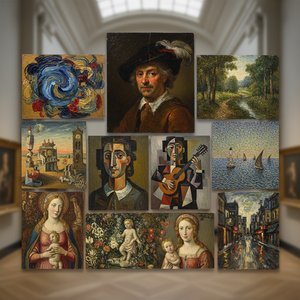
A művészettörténet 10 ikonikus olajfestménye – Vászonra ragasztott örökség a OriginalUniqueArt-tal
Fedezze fel a művészettörténet 10 legikonikusabb olajfestményét! Ismerje meg a híres festők, mint például Van Gogh és Monet történetét. Vászonképek eladó – inspirálja otthonát OriginalUniqueArt-tal! Explore the full collection online.


