

 Megtekintés
 Küldés
 Megosztás
 Részletek

 Letöltés
 Hasonló darabok
 X-ray felvétel
 Diavetítés
Sacrament House


 Összes részlet megjelenítése
Giclée / Műnyomat
Múzeumi minőségű giclée vagy vászonnyomat, gyors gyártással és rugalmas finomítási lehetőségekkel. ( Kézzel festett másolat rendelése Kép letöltése)




































Válasszon előre meghatározott méreteink közül, amelyek megfelelnek a műalkotás eredeti arányainak.

Megadhat saját méreteket is egy konkrét kerethez vagy helyszínhez igazítva. Amennyiben a kiválasztott méret nem egyezik az eredeti kép arányokkal, a műalkotást le fogjuk vágni, vagy kiegészítjük a képet tükrözött vagy egyszínű szélekkel. A gyártás megkezdése előtt egy digitális tervezetet küldünk jóváhagyásra.
Kérjük, vegye figyelembe, hogy a képernyőn látható előnézet nem tükrözi a tényleges levágást vagy kiegészítést. Csak a tervezet mutatja pontosan a végső kompozíciót.
Bár az egyedi méretek is elérhetőek, az eredeti arányok megőrzése érdekében azt javasoljuk, hogy válasszon a előre meghatározott listából származó méretet.
Világszerte történő kiszállítás területére mindössze 2 hét alatt, a szokásos 4-5 hét helyett. (19 augusztus)

Ingyenes globális expressz szállítás

Prémium minőségű len vászon

Teljes körű szállítási biztosítás

Vámvisszatérítési Garancia

Hiteles színpontosság garancia

60 napos visszaküldési lehetőség (csak hibás termékek esetén)

100% pénzvisszatérítési garancia

Több darab vásárlása esetén kedvezmény
 Az üvegkeretes opció csak 110 cm alatti méretben érhető el

Sacrament House
Giclée / Műnyomat
Reprodukció mérete
-


Összesített ár
$ 80
A művész életrajza
The Sculptor of Nuremberg’s Gothic Soul
Adam Kraft remains an enigmatic figure in the annals of German Renaissance art, shrouded in a certain historical obscurity despite his undeniable contribution to the artistic landscape of Nuremberg. Precise details about his birth and formative years are scarce; scholars continue to debate whether he emerged from the creative circles of Prague or Augsburg, leaving historians to reconstruct his life primarily through circumstantial evidence gleaned from surviving commissions and architectural marvels. His oeuvre speaks volumes about a talent that bridged the gap between the late Gothic tradition and the burgeoning sensibilities of a new era. Though his hand is felt in the monumental structures of the fifteenth century, it is his ability to breathe life into cold stone that truly defines his legacy.
Kraft’s ascent began around 1490 when he secured a position as an assistant sculptor at Ulm Minster, arguably the most ambitious Gothic cathedral project in Bavaria. This collaboration with masters like Veit Stoss established him within the influential guild system of Nuremberg and exposed him to the stylistic currents shaping European art. His early career was marked by a mastery of liturgical sculpture, reflecting the profound piety of the age. As he matured, his work transitioned from mere religious ornamentation to complex architectural storytelling, where stone was no longer just a building material but a medium for deep emotional resonance.
Mastery in Stone and the Sacred Tabernacle
The pinnacle of Kraft’s artistic achievement is undoubtedly the Sacrament House at Sankt Lorenz, a monumental edifice that stands as a testament to his technical prowess. Completed in 1493, this eighteen-meter-tall masterpiece embodies the grandeur of Gothic architecture while incorporating innovative sculptural elements that foreshadow Renaissance aesthetics. The structure, shaped like a soaring Gothic tower reaching toward the church's vault, features intricate tracery interspersed with figural scenes from Christ's Passion. It is a work of breathtaking complexity, utilizing even wire to connect difficult pinnacles, demonstrating a level of virtuosity that few of his contemporaries could match.
Beyond the spiritual heights of the tabernacle, Kraft’s skill extended to the delicate and the human. His ability to convey profound narratives is evident in his various reliefs and architectural projects throughout Nuremberg. One of his most captivating works, Girl Holding Coats of Arms, offers a rare glimpse into his ability to capture real-life humanity without the veil of idealization. In this piece, the subject appears sturdy and fresh, holding the heraldic symbols of the Imhoff and Muffel families with a grounded, lifelike presence that breaks away from the rigid formality of traditional medieval sculpture.
A Legacy Carved in Nuremberg
The scope of Kraft’s work was remarkably diverse, ranging from the sacred to the profane. While much of his fame rests on religious monuments like the Schreyer monument and the Crucifixion reliefs at St. Sebaldus Church, he was also a master of civic art. He was entrusted with the design of micro-architectures, complex balustrades for patrician courtyards, and even reliefs for public buildings such as the Toll Hall and the Imperial Stables. This versatility allowed him to shape the very visual identity of Nuremberg, turning the city's stone surfaces into a gallery of historical and spiritual significance.
Ultimately, Adam Kraft’s importance lies in his role as a transitional figure. He introduced a sense of restraint and realism into German late Gothic sculpture, paving the way for the more naturalistic approaches of the following century. His life, though partially lost to time, is preserved in the enduring weight of his stone creations. Through his hands, the heavy, somber textures of the Middle Ages began to yield to a more nuanced, human-centric expression, ensuring that his name would remain etched into the architectural soul of Germany forever.

adam kraft
1460 - 1509 , Germany
A művészről röviden
- Artistic Movement Or Style: Late Gothic
- Artists Or Movements Influenced By This Artist: ['Albrecht Dürer']
- Artists Who Influenced This Artist: ['Veit Stoss']
- Date Of Birth: c. 1460?
- Date Of Death: January 1509
- Full Name: Adam Kraft
- Nationality: German
- Notable Artworks:
- Girl Holding Coats of Arms
- Sacrament House
- Place Of Birth: Nuremberg, Germany
Kapcsolódó cikkek
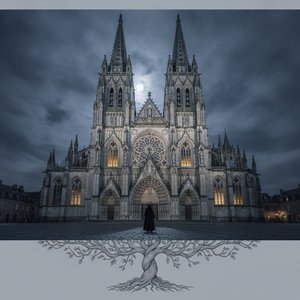
Shadows & Splendor: A Journey Through the Soul of Gothic Art and Architectural Grandeur
Embark on a profound journey through the spiritual intensity of Gothic art. Explore the architectural marvels, luminous stained glass, and sacred sculptures that define this era of grandeur and human devotion.

A művészettörténet 10 legikonikusabb bronzszobra – OriginalUniqueArt.com
Fedezze fel a művészettörténet 10 legikonikusabb bronzszobrát! Ismerje meg Rodint, Michelangelót és más mestereket. Luxus minőségű nyomatok otthonába – OriginalUniqueArt.com.

The Enduring Form: Exploring Themes & Techniques in Sculpture Across Historical Periods
Explore the rich history of sculpture from ancient masterpieces to contemporary innovations. Discover key techniques, influential artists & investment potential for discerning art collectors.
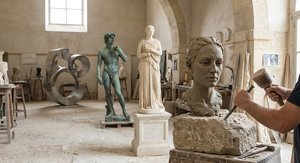
The Enduring Form: Sculpture Across History, Technique & Emotional Resonance
Explore the rich history of sculpture with OriginalUniqueArt. Discover key techniques, influential artists & investment potential for discerning collectors. Expert insights into valuing and collecting timeless masterpieces.

A művészettörténet 10 legikonikusabb bronzszobra – OriginalUniqueArt.com
Fedezze fel a művészettörténet 10 legikonikusabb bronzszobrát! Ismerje meg Rodin, Michelangelo és más mesterek alkotásait. Luxus minőségű reprodukciók otthonába – OriginalUniqueArt.com.

