Umberto Boccioni portréja

A 100 legnevezesebb Umberto Boccioni festmény, egy galériaválaszték

Frissítve: november 2026 · rangsorolva népszerűségi pontszámunk alapján (minden mű keresései, látogatásai és megrendelései alapján) · 117 mű Umberto Boccioni alkotása a katalógusunkban

Röviden

Umberto Boccioni hagyatékából a leghíresebb alkotás Három nő (1910). Röviddel ezután követik őket A város felépítése (1910) és Egy Labdarúgó Dinamikája (1913). Katalógusunkban 117 mű található Umberto Boccioni alkotótól; a galéria megőrizte a világ által leginkább csodált 100 darabot, melyeket a dátummal, a múzeummal és a történetükkel együtt mutatunk be.

1882 – 1916, Reggio Calabria Futurizmus A legtöbb mű: MoMA - Museum of Modern Art

Umberto Boccioni legjobb 10 festménye: a galéria válogatása

1
Három nő (1910) (1889) -ja Umberto Boccioni

Három nő

1910 · Olajfestmény vászonon

Three Women by Umberto Boccioni – A Symphony of Divisionist Light Umberto Boccioni’s “Three Women,” completed in 1910, stands as a cornerstone of Italian Futurism and a poignant exploration of familial intimacy. This captivating artwork resides within a private collection and embodies the artist's masterful fusion of Divisionist technique with the dynamism inherent in the burgeoning modernist movement. Measuring 180 x 132 cm, it’s more than just pigment on canvas;…

2
A város felépítése (1910) (1889) -ja Umberto Boccioni

A város felépítése

1910 · Olajfestmény vászonon · MoMA - Museum of Modern Art, New York

A tárgyalódás és a kompozíció Ez a lenyűgöző mű egy dinamikus építkezési jelenetén keresztül ragadja meg élesen a 20. század eleji városi élet energikus pulzusát. A kompozíció az erőteljes munkálkodásban lévő emberek és lovak ábrázolásával hangsúlyozza azt a könyörtelen mozgást és fejlődést, amely meghatározi a modern városfejlődést. A jelenet az emberi munkaerő és a technológiai haladás ünnepe, bemutatva azt a lüktető aktivitást, amely az új városi tájak növekedését táplálja. Erőteljes…

3
Egy Labdarúgó Dinamikája (1913) (1889) -ja Umberto Boccioni

Egy Labdarúgó Dinamikája

1913 · Olajfestmény vászonon

A modern művészet annálokban kevés olyan alkotás akad, amely olyan mély érzelmi erővel ragadja meg a XX. század elektromos pulzusát, mint Umberto Boccioni „Egy Labdarúgó Sportoló Dinamikája” című remekműve. A 1913-ban készült mestermű lenyűgöző ablakot nyit az olasz futurizmus szívébe – egy olyan mozgalomra, amely a múlt stagnáló hagyományait tiszta energiére cserélte, a sebesség, a technológió és az ipari erő dinamikájának jegyében. Boccioni nem egy sportoló statikus portrét mutat be,…

4
Modern Idol (1911) (1889) -ja Umberto Boccioni

Modern Idol

1911 · Olajfestmény panelen · Estorick Collection of Modern Italian Art, London

Umberto Boccioni 1911-es alkotása, a "Modern Idol", egy lenyűgöző remekmű, amely a portréfestészetet ötvözi a szürreális és szimbolikus elemekkel. Ez a megnyugtatóan izgázó mű egy bonyolult, virágos fejbotozattal díszített arcot mutat be, melyet sugárzó vonalakból és égitesti motívumokból álló, dinamikus háttér foglal össze. A gazdag színpaletta, amely a mély kék árnyalatokat vibráló pirosokkal, sárgákkal, narancssárgákkal és lilákkal kontrasztálja, vizuálisan lenyűgöző és érzelmi hatású alkotást hoz létre.

5
Eszetsétatok II - Azok, akik mennek (1912) (1889) -ja Umberto Boccioni

Eszetsétatok II - Azok, akik mennek

1912 · Olajfestmény vászonon · MoMA - Museum of Modern Art, New York

A Mozgalom és a Lélek Viharos DallamaIn the heart of a turbulent night, Umberto Boccioni’s States of Mind II - Those Who Go emerges not merely as a painting, but as a visceral experience of pure energy. The canvas vibrates with the raw power of a storm, where figures—perhaps riders caught in a sudden deluge—struggle against the elements. There is no stillness here; instead, we find ourselves immersed in a…

6
Egyedi formák folytonultságának térben (1913) (1889) -ja Umberto Boccioni

Egyedi formák folytonultságának térben

1913 · Bronz

Élje át a futurizmus forradalmi szellemiségét Boccioni ikonikus szobájának kiváló minőségű reprodukcióján keresztül. Legyen szó otthoni kreativitás serkentéséről vagy egy impoznzus alkotásnak a galériájához való hozzáadásáról, ez a műalkotás évtizedeken át lenyűgözi és magával ragadja a nézőket.

7
A Városi Ébresztés (1910) (1889) -ja Umberto Boccioni

A Városi Ébresztés

1910 · Olajfestmény vászonon · MoMA - Museum of Modern Art, New York

Umberto Boccioni A Városi Ébresztő (1910) című alkotása túlmutat a pusztán festményen; ez a modern kor energikus kinyilatkoztatása, egy vizuális robbanás, amely megtestesíti a 2 मद्देनk korai 20. századi városi élet dinamizmusát és átalakító erejét. Az olasz futurizmus ezen alapműve nem csupán építkezést ábrázol – maga is az építkezés, amely viharos formákban és vibráló színekben ölt verembe, magával ragadó élményt nyújtva a haladásról és a változásról.

8
A beszélő (1914) (1889) -ja Umberto Boccioni

A beszélő

1914 · Akril festmény vászonon

The painting titled The Drinker by the renowned Italian artist Umberto Boccioni is a quintessential representation of the Futurist movement. Created in 1914, this oil on canvas artwork measures 88 x 87 cm and is currently housed at the Von Der Heydt Museum in Wuppertal, Germany.

9
Eszterkép II - Akik maradnak (1912) (1889) -ja Umberto Boccioni

Eszterkép II - Akik maradnak

1912 · Olajfestmény vászonon · MoMA - Museum of Modern Art, New York

A huszonhetedik század elején, amikor a motorok morajlása kezdte újradefiniálni az emberi tapasztalást, Umberto Boccioni 1912-es mesterművében, a Lelki állapotok II. - Azok, akik maradnak című alkotásában egy mély pszichológiai küszöböt örökített meg. Ez nem csupán egy vasútállomás ábrázolása; ez a futurista lélek belső, érzelmekkel teli feltárása. A vászon ablakként szolgál egy olyan világba, ahol a stabilitás és a távozás összeütközik, megörökítve azt a nehéz, maradék hangulatot, amelyet azok éreznek,…

10
Dynamism of a Cyclist (1913) (1889) -ja Umberto Boccioni

Dynamism of a Cyclist

1913 · Olajfestmény vászonon · Museo del Novecento, Milánó

Umberto Boccioni, az olasz futurista művész, 1913-ban megalkotott “A Kerékpáros Dinamizmusa” (Dinamismo di un Ciclista) nem csupán egy festmény, hanem a modernitás, a sebesség és a dinamika szimbolikus kifejezése. A kép egy olyan pillanatot ábrázol, amikor a kerékpárbajnok a gyorsaság és a mozgás csúcspontján van, egyfajta transzállapotban a géppel és a térrel. Boccioni nem próbálja meg lefesteni a kerékpár valós megjelenését; inkább az érzést kívánja közvetíteni, amitől a sebesség és…

A Umberto Boccioni válogatás folytatódik: 11 – 100

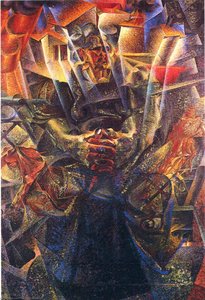
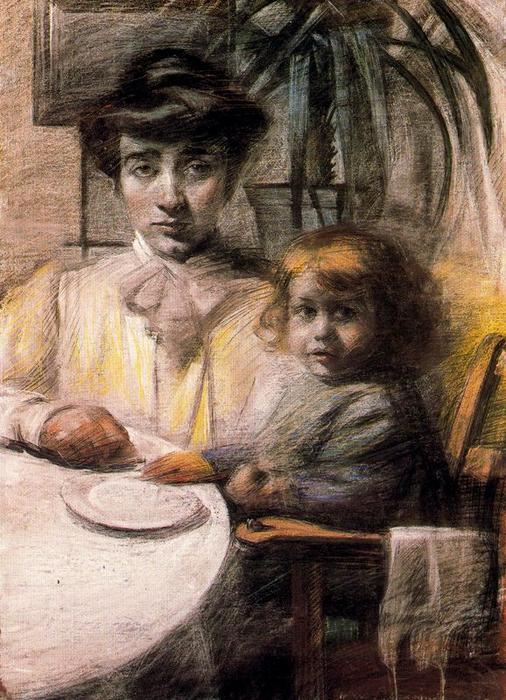
11A utcai macskakőépítők (1914) (1889) -ja Umberto BoccioniA utcai macskakőépítők1914 · Metropolitan Művészeti Múzeum 12Under the Pergola at Naples (1914) (1889) -ja Umberto BoccioniUnder the Pergola at Naples1914 13States of Mind: The Farewells (1911) (1889) -ja Umberto BoccioniStates of Mind: The Farewells1911 14The Strengths of a Street (1911) (1889) -ja Umberto BoccioniThe Strengths of a Street1911 15Dimensional shapes of a horse (1913) (1889) -ja Umberto BoccioniDimensional shapes of a horse1913 16The Ungraceful One (1912) (1889) -ja Umberto BoccioniThe Ungraceful One1912 17Horizontális konstrukció (1912) (1889) -ja Umberto BoccioniHorizontális konstrukció1912 · Bavári Állami Festırménygyűjtemények 18Materia (also known as Portrait of the artist's mother) (1912) (1889) -ja Umberto BoccioniMateria (also known as Portrait of the artist's mother)1912 19Dynamism of a Human Body (1913) (1889) -ja Umberto BoccioniDynamism of a Human Body1913 20States Of Mind (Study): Those Who Stay (1911) (1889) -ja Umberto BoccioniStates Of Mind (Study): Those Who Stay1911 21Spiralos építkezés (1913) (1889) -ja Umberto BoccioniSpiralos építkezés1913 · Museo del Novecento 22Pianist and Listener (1908) (1889) -ja Umberto BoccioniPianist and Listener1908 23Dynamism of a Human Body (1889) -ja Umberto BoccioniDynamism of a Human Body 24Plastic synthesis - seated person (1915) (1889) -ja Umberto BoccioniPlastic synthesis - seated person1915 25Dynamism of the Human Body (1913) (1889) -ja Umberto BoccioniDynamism of the Human Body1913 26Passing Train (1908) (1889) -ja Umberto BoccioniPassing Train1908 27Ferruccio Busoni (1916) (1889) -ja Umberto BoccioniFerruccio Busoni1916 28Áprilisi este (1908) (1889) -ja Umberto BoccioniÁprilisi este1908 29Dynamic Decomposition (1913) (1889) -ja Umberto BoccioniDynamic Decomposition1913 30Riot in the Galleria (1909) (1889) -ja Umberto BoccioniRiot in the Galleria1909 31Glass and Syphon (1913) (1889) -ja Umberto BoccioniGlass and Syphon1913 32Nude (complementary model of form-color) (1913) (1889) -ja Umberto BoccioniNude (complementary model of form-color)1913 33Figure (1912) (1889) -ja Umberto BoccioniFigure1912 34States of Mind III: Those Who Stay (1911) (1889) -ja Umberto BoccioniStates of Mind III: Those Who Stay1911 35Dynamism of a biker (1913) (1889) -ja Umberto BoccioniDynamism of a biker1913 36Cyclist (1913) (1889) -ja Umberto BoccioniCyclist1913 37Analytical Study of a Woman's Head Against Buildings (1911) (1889) -ja Umberto BoccioniAnalytical Study of a Woman's Head Against Buildings1911 · Metropolitan Művészeti Múzeum 38The Athlete (1889) -ja Umberto BoccioniThe AthleteHammer Museum 39Self-portrait (1905) (1889) -ja Umberto BoccioniSelf-portrait1905 40The Mother (1909) (1889) -ja Umberto BoccioniThe Mother1909 41Woman in a Café: Compenetrations of Lights and Planes (1912) (1889) -ja Umberto BoccioniWoman in a Café: Compenetrations of Lights and Planes1912 42Interior with Two Female Figures (1889) -ja Umberto BoccioniInterior with Two Female Figures 43The Reaper (1889) -ja Umberto BoccioniThe Reaper 44Romanzo di una cucitrice (Boccioni) (1908) (1889) -ja Umberto BoccioniRomanzo di una cucitrice (Boccioni)1908 45Dynamism of a man's head (1913) (1889) -ja Umberto BoccioniDynamism of a man's head1913 46States of Mind II: Those Who Go (1911) (1889) -ja Umberto BoccioniStates of Mind II: Those Who Go1911 47Szent Onófrio Kolostora Könyvtára (1904) (1889) -ja Umberto BoccioniSzent Onófrio Kolostora Könyvtára1904 48Abstract Dimensions (1912) (1889) -ja Umberto BoccioniAbstract Dimensions1912 49Moorland (1908) (1889) -ja Umberto BoccioniMoorland1908 50The dream (Paolo and Francesca) (1909) (1889) -ja Umberto BoccioniThe dream (Paolo and Francesca)1909 51Study for sculpture 'Empty and full abstracts of a head' (1912) (1889) -ja Umberto BoccioniStudy for sculpture 'Empty and full abstracts of a head'1912 52Silvia (1915) (1889) -ja Umberto BoccioniSilvia1915 53Boats in Venice (1910) (1889) -ja Umberto BoccioniBoats in Venice1910 54María Sacchi Reading (1907) (1889) -ja Umberto BoccioniMaría Sacchi Reading1907 55Study of a Feminine Face (1910) (1889) -ja Umberto BoccioniStudy of a Feminine Face1910 56Mother and Child (1906) (1889) -ja Umberto BoccioniMother and Child1906 57Farmers at work (Risaiole) (1908) (1889) -ja Umberto BoccioniFarmers at work (Risaiole)1908 58Mourning (1910) (1889) -ja Umberto BoccioniMourning1910 59Nocturne (1911) (1889) -ja Umberto BoccioniNocturne1911 60Boats in Sunlight (1907) (1889) -ja Umberto BoccioniBoats in Sunlight1907 61Countryside with Trees (1908) (1889) -ja Umberto BoccioniCountryside with Trees1908 62The Grand Canal in Venice (1907) (1889) -ja Umberto BoccioniThe Grand Canal in Venice1907 63Plastic Dynamism: Horse+House (1914) (1889) -ja Umberto BoccioniPlastic Dynamism: Horse+House1914 64Car and Hunting Fox (1904) (1889) -ja Umberto BoccioniCar and Hunting Fox1904 65Signora Massimino (1908) (1889) -ja Umberto BoccioniSignora Massimino1908 66Lombard countryside (1908) (1889) -ja Umberto BoccioniLombard countryside1908 67Self-portrait (1905) (1889) -ja Umberto BoccioniSelf-portrait1905 · Metropolitan Művészeti Múzeum 68Seated woman (1908) (1889) -ja Umberto BoccioniSeated woman1908 69Simultaneous Nude (1915) (1889) -ja Umberto BoccioniSimultaneous Nude1915 70Trees (1908) (1889) -ja Umberto BoccioniTrees1908 71Portrait of a Young Woman (1909) (1889) -ja Umberto BoccioniPortrait of a Young Woman1909 72Factory Foltzer (1909) (1889) -ja Umberto BoccioniFactory Foltzer1909 73Horizontal Volumes (1912) (1889) -ja Umberto BoccioniHorizontal Volumes1912 74Antigraceful (1913) (1889) -ja Umberto BoccioniAntigraceful1913 75Development of a Bottle in Space (1913) (1889) -ja Umberto BoccioniDevelopment of a Bottle in Space1913 · Galleria d'Arte Moderna 76Campagna (1908) (1889) -ja Umberto BoccioniCampagna1908 77Az Antigrációs (1912) (1889) -ja Umberto BoccioniAz Antigrációs1912 78Kneeling Allegorical Figure (1889) -ja Umberto BoccioniKneeling Allegorical Figure 79A Futurist Evening in Milan (1889) -ja Umberto BoccioniA Futurist Evening in Milan 80Adriana Bisi Fabbri (1907) (1889) -ja Umberto BoccioniAdriana Bisi Fabbri1907 81Virgilio Brocchi (1907) (1889) -ja Umberto BoccioniVirgilio Brocchi1907 82Carlo Carrá (1889) -ja Umberto BoccioniCarlo Carrá 83Dynamism of a Woman's Head (1914) (1889) -ja Umberto BoccioniDynamism of a Woman's Head1914 84Landscape (mountains) (1916) (1889) -ja Umberto BoccioniLandscape (mountains)1916 85Self Portrait (also known as As a Young Man) (1889) -ja Umberto BoccioniSelf Portrait (also known as As a Young Man) 86Drawing After 'States of Mind: The Farewells' (1889) -ja Umberto BoccioniDrawing After 'States of Mind: The Farewells' 87Horse+Rider+Houses (1889) -ja Umberto BoccioniHorse+Rider+Houses 88Simultaneous Visions (1911) (1889) -ja Umberto BoccioniSimultaneous Visions1911 · Von der Heydt Museum 89The Mother (1889) -ja Umberto BoccioniThe Mother 90Carlo Carrá (1889) -ja Umberto BoccioniCarlo Carrá 91Study from Pontormo (1889) -ja Umberto BoccioniStudy from Pontormo 92Elasticitás (1912) (1889) -ja Umberto BoccioniElasticitás1912 · Civica Galleria d'Arte Moderna 93Riot (a Galleria-i lázméretű zavargások is ismert néven) (1910) (1889) -ja Umberto BoccioniRiot (a Galleria-i lázméretű zavargások is ismert néven)1910 · Pinacoteca di Brera 94The Street Enters the House (1911) (1889) -ja Umberto BoccioniThe Street Enters the House1911 95Állapotok az elménél I: A búcsúelköszönések (1911) (1889) -ja Umberto BoccioniÁllapotok az elménél I: A búcsúelköszönések1911 · MoMA - Museum of Modern Art 96Factories At Porta Romana (1889) -ja Umberto BoccioniFactories At Porta RomanaGallerie d'Italia – Milano 97The Laugh (1911) (1889) -ja Umberto BoccioniThe Laugh1911 · MoMA - Museum of Modern Art 98Borgo di Milano (1910) (1889) -ja Umberto BoccioniBorgo di Milano1910 99Materia (1912) (1889) -ja Umberto BoccioniMateria1912 · Peggy Guggenheim Gyűjtemény 100Twilight (1909) (1889) -ja Umberto BoccioniTwilight1909

Umberto Boccioni híres festményei, korszakonként

A témák, amelyek Umberto Boccioni figyelmét meghúzták

A négy leggyakorobban előforduló téma ebben az eredeti művekben, mindegyik a legkiválóbb példájával.

A műemlékek, amelyek Umberto Boccioni eredeti műveit őrzik

A 8 olyan múzeum, amely a legtöbb ezen az oldalon szereplő festményet őrzi.

Múzeum Város Umberto Boccioni művei Ebből a listából származó festmények
MoMA - Museum of Modern Art, New YorkMoMA - Museum of Modern Art New York 8 A város felépítése, Eszetsétatok II - Azok, akik mennek, A Városi Ébresztés
Metropolitan Művészeti Múzeum, New YorkMetropolitan Művészeti Múzeum New York 3 A utcai macskakőépítők, Analytical Study of a Woman's Head Against Buildings, Self-portrait
Museo del Novecento, MilánóMuseo del Novecento Milánó 4 Dynamism of a Cyclist, Spiralos építkezés
Estorick Collection of Modern Italian Art, LondonEstorick Collection of Modern Italian Art London 1 Modern Idol
Bavári Állami Festırménygyűjtemények, MunchenBavári Állami Festırménygyűjtemények Munchen 1 Horizontális konstrukció
Hammer Museum, Los AngelesHammer Museum Los Angeles 1 The Athlete
Galleria d'Arte Moderna, MilánóGalleria d'Arte Moderna Milánó 1 Development of a Bottle in Space
Von der Heydt Museum, WuppertalVon der Heydt Museum Wuppertal 1 Simultaneous Visions

Umberto Boccioni év évtizedéja: az egyes éveket meghatározó eredeti művek

A válogatás Umberto Boccioni pályafutását követi 13 évig, 1904től 1916ig, az egyes évek legkiválóbb eredeti műveit megőrizve.

Művek évszáma szerint

Váasszon egy évet az eredetiek megtekintéséhez.

Gyűjtői kérdések Umberto Boccioni festményeivel kapcsolatban

Melyik művel a(z) Umberto Boccioni a leghíresebb?Fedje fel a választ

Három nő (1910). Ezt követi A város felépítése (1910) és Egy Labdarúgó Dinamikája (1913).

Hány éves volt Umberto Boccioni, amikor a Három nő készült?Fedje fel a választ

28 éves: Három nő 1910-ből származik, Umberto Boccioni pedig 1882-ben született.

Melyek a tíz leghíresebb Umberto Boccioni festmény?Fedje fel a választ

Három nő, A város felépítése, Egy Labdarúgó Dinamikája, Modern Idol, Eszetsétatok II - Azok, akik mennek, Egyedi formák folytonultságának térben, A Városi Ébresztés, A beszélő, Eszterkép II - Akik maradnak és Dynamism of a Cyclist. A fenti rangsor a művek évszamarát és a múzeumát jelzi.

Hány festményet hagyott hátra Umberto Boccioni?Fedje fel a választ

Katalógusunkban 117 mű található Umberto Boccioni alkotótól, 1904 és 1916 év közötti időszakból.

Mely múzeumokban állnak Umberto Boccioni remekművei?Fedje fel a választ

Leginkább MoMA - Museum of Modern Art (New York), Metropolitan Művészeti Múzeum (New York) és Museo del Novecento (Milánó) található. A fenti múzeumi táblázatban mindegyik felsorolásra került.

Mely években festette Umberto Boccioni leghíresebb műveit?Fedje fel a választ

1913 alatt: a jelen laphonon található 100 műből 15 készült ebben az időszakban, köztük Egy Labdarúgó Dinamikája.

Mikszétek az első és az utolsó híres eredeti műve a(z) Umberto Boccioni alkotótól?Fedje fel a választ

Ezen az oldalon a leghitelesebb Szent Onófrio Kolostora Könyvtára (1904), a legutóbbi pedig Ferruccio Busoni (1916).

Milyen témaköröket választott leggyakrabban Umberto Boccioni?Fedje fel a választ

Italian art (17), Speed (14) és Portrait (11), a jelen oldalon található 100 műművészeti alkotás között.

Melyik technikát alkalmazta leggyakrabban Umberto Boccioni?Fedje fel a választ

Oil On Canvas, a jelen oldalon található 100 műből 29 darab esetén.

Mely művészeti irányba tartozik Umberto Boccioni?Fedje fel a választ

Futurizmus, ezen az oldalon található eredetiek alapján.

Mely Umberto Boccioni művei láthatóak a MoMA - Museum of Modern Art kiállتításán?Fedje fel a választ

A város felépítése, Eszetsétatok II - Azok, akik mennek és A Városi Ébresztés: a MoMA - Museum of Modern Art, New York 6 művet őrzi ezen az oldalon.

Umberto Boccioni: életmű és életút

Early Life and Artistic Training

To understand the kinetic energy of Umberto Boccioni, one must look at the disciplined, almost scientific foundation he built before the chaos of Futurism took hold. Born in Reggio Calabria, Italy, on October 19, 1882, his early development was defined by a rigorous technical education. He did not simply stumble into art; he built his skill through a structured progression that began in the studio of Giacomo Balla. Between 1898 and 1902, Boccioni operated within this specific environment, absorbing the Divisionist technique. This period was crucial. He learned to apply color in the manner of the pointillists, a method that prioritized the separation of individual strokes to create a sense of light and vibration. This technical precision would later provide the structural logic needed to deconstruct form.

His move to Rome in 1899 marked a significant shift toward formal academic training. By attending the Scuola Libera del Nudo and the Accademia di Belle Arti di Roma, Boccioni moved beyond the private studio setting into the heart of Italian artistic institutions. This dual education—the specialized, technique-heavy instruction under Balla and the broader academic rigor of the Roman academies—created a tension in his work. He possessed the ability to handle traditional subjects while simultaneously developing the tools to dismantle them. His early training was not about capturing a static moment, but about mastering the mechanics of light and color that would eventually allow him to represent the very sensation of movement.

The Rise of Italian Futurism

Boccioni did not merely participate in Italian Futurism; he defined its visual logic. His encounter with the poet F. T. Marinetti in Milan in 1907 provided the spark for this transformation. While Marinetti provided the literary fire, Boccioni translated those aggressive, anti-traditionalist ideas into a concrete visual language. He became the movement's leading theoretician, moving beyond simple painting to establish the philosophical framework for an entire era of modernism.

The movement gained its first formal footing in 1910. That year, Boccioni and a group of fellow painters published the Manifesto of the Futurist Painters. This document was a direct assault on the weight of tradition. It demanded an art that embraced the violence, speed, and power of the machine age. Boccioni’s contribution was the successful adaptation of these literary provocations into a rigorous aesthetic system. He moved the conversation from mere words to the actual mechanics of how a canvas or a sculpture could represent the frantic energy of modern life.

Technique and Artistic Style

Boccioni’s approach to the canvas was a calculated assault on the static nature of traditional representation. In his early Futurist period, he utilized Divisionist techniques, applying strokes of color to build up the surface. This method allowed him to move beyond mere depiction toward the representation of psychological states and the chaotic energy of urban scenes. He was not interested in the surface-level appearance of a city, but in the internal tension it generated. His work sought to capture the experience of flux and the inter-penetration of objects, where boundaries between a subject and its environment begin to dissolve.

The artist’s evolution was driven by a rejection of the rational, descriptive methods found in Cubism. Instead, he leaned into the philosophies of Henri Bergson, prioritizing intuition and the subjective experience of reality. This focus on the "interior force" of objects meant that his compositions often felt fragmented and explosive. He integrated influences from Symbolism and Expressionism to ensure that his depictions of modern life were not merely visual records, but expressions of a restless, moving reality. He moved away from the "cinematographic" approach of dividing motion into sequential stages, opting instead to depict the continuity of movement itself.

In sculpture, Boccioni’s theories were even more disruptive. He pushed for a total break from traditional bronze and marble, advocating for the use of nontraditional materials like glass, wood, cement, cloth, and even electric lights. He wanted sculpture to mold and enclose the space around it, rather than simply occupying it. This was a direct attempt to create a sculptural environment that mirrored the dynamism of the modern age.

Key Works and Masterpieces

Looking back from the modern era, Boccioni’s output reveals a relentless drive to translate speed into physical form. His 1909 work, Riot in the Gallery, remains a critical point of transition; it clings to pointillist techniques while adopting a dynamic composition that signals the arrival of Futurist energy. By the time he produced The City Rises (1910–11), the shift was complete. This painting is widely recognized as the first truly Futurist work, using a massive scale to capture the chaotic, swirling movement of urban labor and light.

His ability to deconstruct reality reached its peak through the integration of diverse European influences. The Street Enters the House demonstrates a clear debt to both Expressionism and Cubism, using geometric distortion to simulate the sensory overload of a city rushing into a domestic space. He also explored psychological states through his series of paintings, beginning with States of Mind I: The Farewells, which sought to map internal emotions onto the external world.

In the realm of three-dimensional form, 1913 produced a definitive shift in how space is occupied. Unique Forms of Continuity in Space functions as a primary example of early modern sculpture, moving beyond static representation to depict a figure in a state of constant, fluid motion. This work does not merely represent a body; it represents the movement of a body through space.

Later Years and Untimely Death

The trajectory of Boccioni’s career was abruptly severed by the onset of World War I. He enlisted in the army, moving from the theoretical debates of the studio to the physical realities of military service. This transition from the intellectual construction of motion to the literal violence of modern warfare marked the final chapter of his life. He died in Verona on August 16, 1916, following a fall from a horse during cavalry exercises. He was only thirty-three years old.

This sudden end occurred just as his theories on sculpture were reaching their most radical application. The physical accident was a stark, unpoetic conclusion to a life spent attempting to capture the fluid essence of movement. His death effectively signaled the conclusion of the most intense period of the Futurist movement. The energy he sought to represent in bronze and oil was cut short by a singular, accidental moment of impact.

Legacy and Lasting Impact

Boccioni’s death in 1916 effectively signaled the end of the Futurist movement. His absence left a void that the movement struggled to fill, yet his theoretical and visual breakthroughs continued to exert pressure on the trajectory of modern art. He did not merely depict movement; he provided a framework for how art could interact with the speed of the machine age. This shift from static representation to the depiction of flux changed the fundamental goals of many subsequent creators.

His influence extends far beyond the initial Futurist circle. The fragmentation of form and the emphasis on dynamism helped shape the foundations of Constructivism and later informed the developments of Abstract Expressionism. By deconstructing the physical object to reveal its internal energy, he forced a confrontation between the viewer and the perceived reality of motion. This approach moved art away from the descriptive and toward the experiential.

The lasting weight of his work is found in the way it challenged the necessity of a fixed perspective. His experiments with non-traditional materials and the integration of space into three-dimensional forms anticipated much of the sculptural evolution in the twentieth century. He remains a central figure for anyone studying the transition from traditional representation to the radical abstraction of the modern era.