Borisz Mihajlovics Kusztogyijev portréja

Borisz Mihajlovics Kusztogyijev festményei: A 100 leghíresebb alkotás, egy galéria szemével

Frissítve: október 2026 · rangsorolva népszerűségi pontszámunk alapján (minden mű keresései, látogatásai és megrendelései alapján) · 847 mű Borisz Mihajlovics Kusztogyijev alkotása a katalógusunkban

Röviden

A galéria szerint Borisz Mihajlovics Kusztogyijev leghíresebb festménye a Maslenica (1916). Moscow in 1905 (1905) és Kereskedők asszonyai (1912) kiegészítik azt a triót, amelyet minden szem felismer. A katalógusunkban szereplő 847 művész Borisz Mihajlovics Kusztogyijev alkotásából a galéria az alábbi 100 leghíresebbet mutatja be, amelyek mind egyedi originális művek, a készítés évszámával, a múzeum megnevezésével és a különlegességük leírásával.

1878 – 1927, Asztrahán Realism A legtöbb mű: Tretyakov-galéria

A galéria top 10 Borisz Mihajlovics Kusztogyijev festménye

1
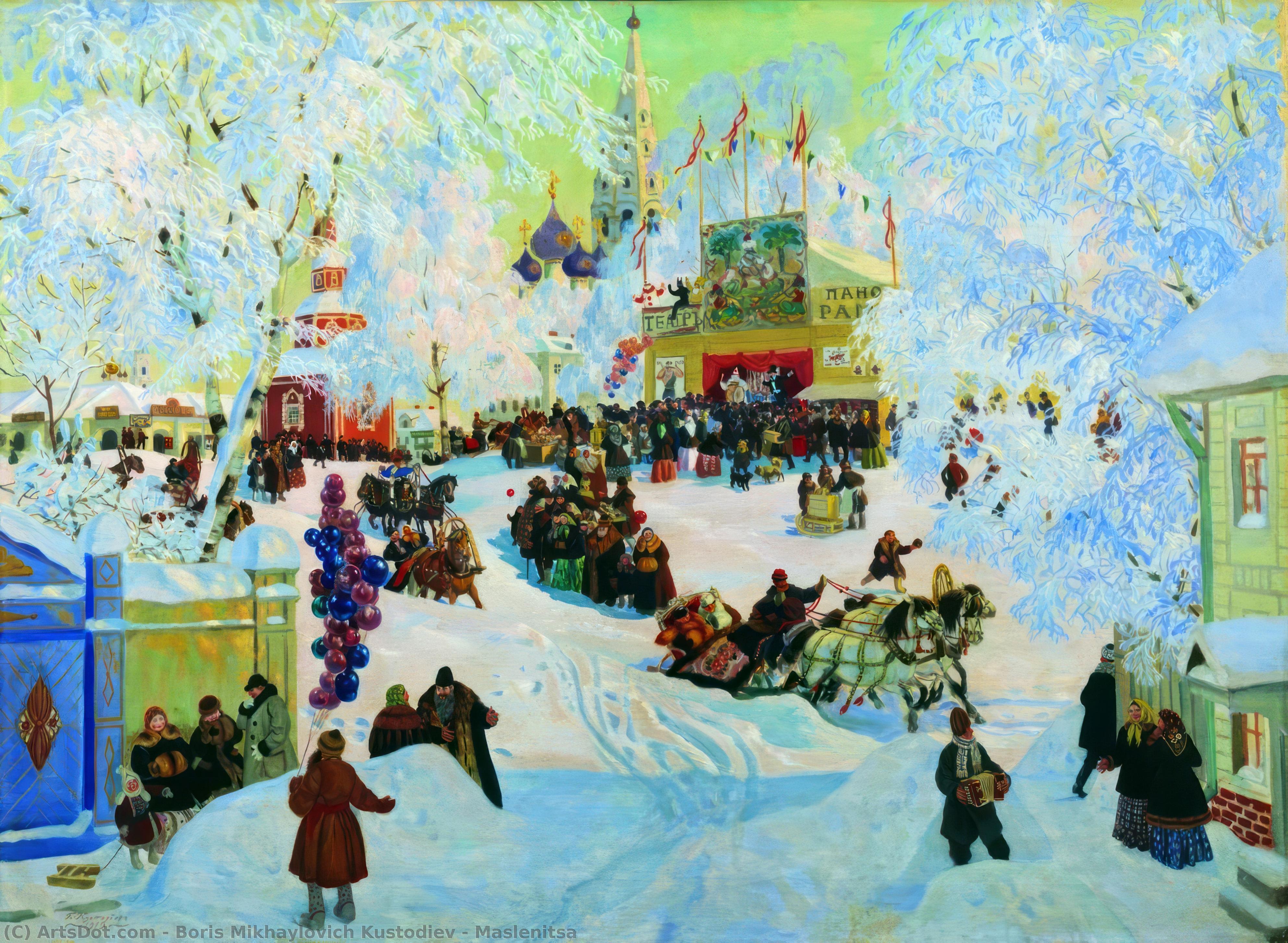
Maslenica (1916) (1889) -ja Borisz Mihajlovics Kusztogyijev

Maslenica

1916 · Olajfestmény vászonon

Boris Mihajlovics Kustodiev Maslenica-ábrázolásának megtekintése azonnal egy távoli, lelkesebb idők Oroszországába repít minket. Ez a festmény valami többet ábrázol, mint egy egyszerű szezonális ünnepet; közösségi öröm lényegét foglalja össze, amely még a tél csípős hidege ellen is kitart. A jelenet a tiszta hó takarata alatt bontakozik ki, mégis a légkör tagadhatatlan, vibráló energiával vibrál. Szinte hallható a nevetés visszhangja a havas utcákon, ahogy az alakok mozognak – ez életteli kontrasztot…

2
Moscow in 1905 (1905) (1889) -ja Borisz Mihajlovics Kusztogyijev

Moscow in 1905

1905 · Oil On Canvas

To stand before this depiction of Moscow in 1905 is not merely to observe a painting; it is to confront a moment suspended between vibrant life and utter collapse. Boris Mikhailovich Kustodiev, master chronicler of the Russian spirit, has captured a scene steeped in revolutionary fervor and palpable chaos. The canvas throbs with an energy that speaks of upheaval—a city caught in the violent currents of history. One cannot look…

3
Kereskedők asszonyai (1912) (1889) -ja Borisz Mihajlovics Kusztogyijev

Kereskedők asszonyai

1912 · Olajfestmény vászonon

Egy olyan ábrázolás előtt állni, mint a „Kereskedők asszonyai”, közvetlenül belép a 20. század eleji orosz élet vibráló, gazdag textúrájú szövetébe. Ez a festmény nem csupán egy női összejövetelt örökít meg; egy az időben felfüggesztett pillanatot foglal össze – a barátság és a halk családi dráma élő képet (tableau vivant), amely az urbanisztikus építészet háttérében bontakozik ki. A jelenet szinte érezhető energiével vibrál, suttogott beszélgetéseket és a szabadban lévők közötti…

4
Pancake Tuesday in a Village. Maslenitsa (1916) (1889) -ja Borisz Mihajlovics Kusztogyijev

Pancake Tuesday in a Village. Maslenitsa

1916 · Oil On Canvas

To gaze upon this vibrant depiction of Maslenitsa is to be instantly transported to the heart of rural Russia during the cusp of spring. Boris Mikhailovich Kustodiev masterfully captures not merely a scene, but a palpable moment of communal joy and enduring cultural resilience. The air itself seems thick with the music emanating from the young man playing the accordion, a focal point radiating warmth against the crisp, snowy backdrop.…

5
Portrait of V. Shishkov (1926) (1889) -ja Borisz Mihajlovics Kusztogyijev

Portrait of V. Shishkov

1926 · Ink On Paper

The portrait of V. Shishkov, executed in 1926, presents a monochrome study of a seated man. The subject is positioned from the chest up, occupying the central space of the frame. He is depicted with a downward gaze, his head tilted slightly toward a stack of papers or books resting before him. The lighting originates from an elevated position to the left, casting distinct shadows beneath the chin and along…

6
S.P. Podyachev in his hut in the village Obolyaninove (1926) (1889) -ja Borisz Mihajlovics Kusztogyijev

S.P. Podyachev in his hut in the village Obolyaninove

1926 · Graphite

A monochromatic study from 1926, this graphite and charcoal drawing captures S.P. Podyachev positioned before his dwelling in the village of Obolyaninove. The figure occupies the lower left, creating a visual anchor against the rustic architecture of the hut. Trees frame the upper right corner, providing a sense of depth through overlapping forms and varying line density. The composition balances the human presence with the natural and built environment, reflecting…

7
Portrait of Y.E. Kustodieva (1926) (1889) -ja Borisz Mihajlovics Kusztogyijev

Portrait of Y.E. Kustodieva

1926 · Lithograph

In this 1920 oil on canvas, we find ourselves within a private, domestic sphere that feels both intimate and profoundly staged. The subject, Y.E. Kustodieva, is seated with a serene grace, her presence anchoring a room filled with the textures of a refined life. There is a stillness here, a sense of a moment suspended in the soft, diffused light of a Russian interior. The composition draws the eye toward…

8
Bolshevik (1889) -ja Borisz Mihajlovics Kusztogyijev

Bolshevik

Oil On Canvas

In the evocative oil on canvas titled Bolshevik, the legendary Russian master Boris Mikhailovich Kustodiev invites viewers into a poignant moment of collective human experience. The scene unfolds within a biting, snow-swept landscape, where the chill of winter is palpable through the artist's masterful brushwork. At the heart of this composition stands a solitary figure, a man anchored by the striking presence of a vibrant red umbrella. This splash of…

9
Portrait of a priest and a deacon (1907) (1889) -ja Borisz Mihajlovics Kusztogyijev

Portrait of a priest and a deacon

1907 · Oil On Canvas

Two elderly Russian Orthodox monks sit side-by-side within a richly decorated interior, their presence anchoring a composition of quiet solemnity. The figures are rendered with a heavy emphasis on texture, utilizing thick impasto brushwork to define the weight of their robes and the patterned surfaces surrounding them. Deep blues, reds, and browns dominate the palette, creating a sense of warmth that contrasts with the stillness of the subjects. Light filters…

10
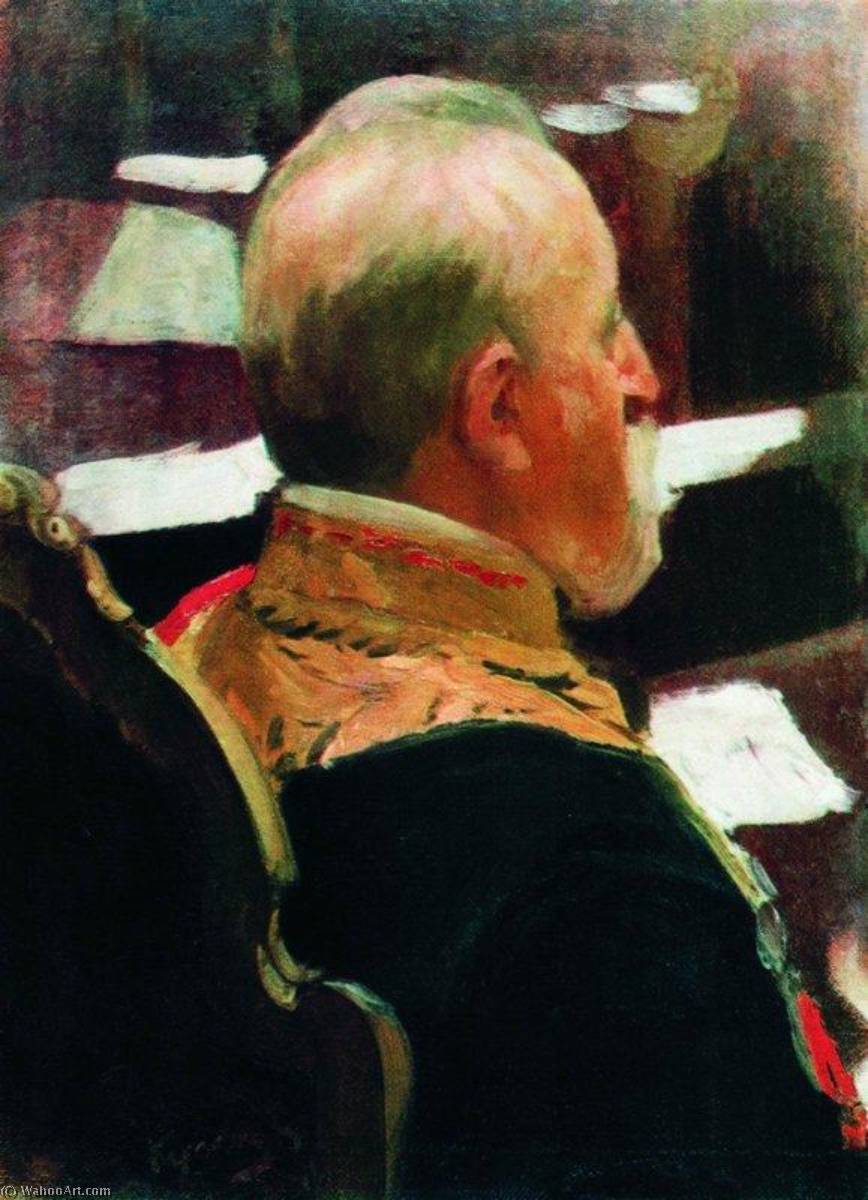
General Galkin Vransky (1903) (1889) -ja Borisz Mihajlovics Kusztogyijev

General Galkin Vransky

Step closer to observe the presence of General Galkin Vransky. In this 1903 portrait, we encounter an elderly gentleman captured in a moment of profound stillness. The composition focuses our attention on his upper torso and head, set against a dark, indistinct background that pushes the figure toward us. There is a certain weight to his posture, a sense of authority held within the very lines of his uniform. The…

Borisz Mihajlovics Kusztogyijev festményei, 11. helyezéstől 100. helyezésig

11Portrait of Peter Kapitza and Nikolai Semyonov (1921) (1889) -ja Borisz Mihajlovics KusztogyijevPortrait of Peter Kapitza and Nikolai Semyonov1921 12Baker (1918) (1889) -ja Borisz Mihajlovics KusztogyijevBaker1918 13Above the river, Autumn (1915) (1889) -ja Borisz Mihajlovics KusztogyijevAbove the river, Autumn1915 14A Meeting (1917) (1889) -ja Borisz Mihajlovics KusztogyijevA Meeting1917 15The Consecration of Water on the Theophany (1915) (1889) -ja Borisz Mihajlovics KusztogyijevThe Consecration of Water on the Theophany1915 16Horses in the storm (1918) (1889) -ja Borisz Mihajlovics KusztogyijevHorses in the storm1918 17Exlibris V.I. Anisimov (1921) (1889) -ja Borisz Mihajlovics KusztogyijevExlibris V.I. Anisimov1921 18Province (1919) (1889) -ja Borisz Mihajlovics KusztogyijevProvince1919 19The Merchant's Wife with a Mirror (1920) (1889) -ja Borisz Mihajlovics KusztogyijevThe Merchant's Wife with a Mirror1920 20A Hall of the Noble Assembly in St.Petersburg (1913) (1889) -ja Borisz Mihajlovics KusztogyijevA Hall of the Noble Assembly in St.Petersburg1913 21Portrait of the Artist's Wife (1909) (1889) -ja Borisz Mihajlovics KusztogyijevPortrait of the Artist's Wife1909 22Portrait of K.B. Kustodiev (1921) (1889) -ja Borisz Mihajlovics KusztogyijevPortrait of K.B. Kustodiev1921 23Winter (1889) -ja Borisz Mihajlovics KusztogyijevWinter 24The attack on the wedding carriage (1919) (1889) -ja Borisz Mihajlovics KusztogyijevThe attack on the wedding carriage1919 25Portrait of Nikolay Rerich (1913) (1889) -ja Borisz Mihajlovics KusztogyijevPortrait of Nikolay Rerich1913 26Portrait of Y.E. Kustodieva with daughter Irina (1908) (1889) -ja Borisz Mihajlovics KusztogyijevPortrait of Y.E. Kustodieva with daughter Irina1908 27Seated Model (1898) (1889) -ja Borisz Mihajlovics KusztogyijevSeated Model1898 28In the Manor Vysokovo (Kostroma) (1901) (1889) -ja Borisz Mihajlovics KusztogyijevIn the Manor Vysokovo (Kostroma)1901 29Portrait of landowner A P Warfolomev (1902) (1889) -ja Borisz Mihajlovics KusztogyijevPortrait of landowner A P Warfolomev1902 30Self Portrait (1904) (1889) -ja Borisz Mihajlovics KusztogyijevSelf Portrait1904 31Children (1900) (1889) -ja Borisz Mihajlovics KusztogyijevChildren1900 32Portrait of Ilya Repin (1902) (1889) -ja Borisz Mihajlovics KusztogyijevPortrait of Ilya Repin1902 33Akaky Akakiyevich in the new coat (1905) (1889) -ja Borisz Mihajlovics KusztogyijevAkaky Akakiyevich in the new coat1905 34Portrait of Ilya Repin (1900) (1889) -ja Borisz Mihajlovics KusztogyijevPortrait of Ilya Repin1900 35Self Portrait (1904) (1889) -ja Borisz Mihajlovics KusztogyijevSelf Portrait1904 36Portrait of D.S. Stelletsky at work (1900) (1889) -ja Borisz Mihajlovics KusztogyijevPortrait of D.S. Stelletsky at work1900 37Abbess (1901) (1889) -ja Borisz Mihajlovics KusztogyijevAbbess1901 38Portrait of D.F. Bogoslovsky (1900) (1889) -ja Borisz Mihajlovics KusztogyijevPortrait of D.F. Bogoslovsky1900 39Portrait of A.N. Protasova (1900) (1889) -ja Borisz Mihajlovics KusztogyijevPortrait of A.N. Protasova1900 40Portrait of Philip IV (1904) (1889) -ja Borisz Mihajlovics KusztogyijevPortrait of Philip IV1904 41Portrait of the Painter Ivan Bilibin (1901) (1889) -ja Borisz Mihajlovics KusztogyijevPortrait of the Painter Ivan Bilibin1901 42Poetry (1902) (1889) -ja Borisz Mihajlovics KusztogyijevPoetry1902 43The Bath (1910) (1889) -ja Borisz Mihajlovics KusztogyijevThe Bath1910 44Policeman Zhigunov (1911) (1889) -ja Borisz Mihajlovics KusztogyijevPoliceman Zhigunov1911 45Chief Procurator of the Synod K. Pobedonostsev (1906) (1889) -ja Borisz Mihajlovics KusztogyijevChief Procurator of the Synod K. Pobedonostsev1906 46Agitator (Man with arm raised) (1906) (1889) -ja Borisz Mihajlovics KusztogyijevAgitator (Man with arm raised)1906 47Portrait of Alexander Golovin (1907) (1889) -ja Borisz Mihajlovics KusztogyijevPortrait of Alexander Golovin1907 48At the icon of the Saviour (1910) (1889) -ja Borisz Mihajlovics KusztogyijevAt the icon of the Saviour1910 49Portrait of the writer A.M. Remizov (1907) (1889) -ja Borisz Mihajlovics KusztogyijevPortrait of the writer A.M. Remizov1907 50Irina Kustodieva (1906) (1889) -ja Borisz Mihajlovics KusztogyijevIrina Kustodieva1906 51Finance Minister V.N. Kokovtsoff (1906) (1889) -ja Borisz Mihajlovics KusztogyijevFinance Minister V.N. Kokovtsoff1906 52Assistant Minister of Interior Count A.P. Ignatiev (1906) (1889) -ja Borisz Mihajlovics KusztogyijevAssistant Minister of Interior Count A.P. Ignatiev1906 53Province (Kostroma) (1906) (1889) -ja Borisz Mihajlovics KusztogyijevProvince (Kostroma)1906 54Paris at Night (1909) (1889) -ja Borisz Mihajlovics KusztogyijevParis at Night1909 55Portrait of L.S. Bakst (1910) (1889) -ja Borisz Mihajlovics KusztogyijevPortrait of L.S. Bakst1910 56Square at the exit of the city (1911) (1889) -ja Borisz Mihajlovics KusztogyijevSquare at the exit of the city1911 57Easter Night (1917) (1889) -ja Borisz Mihajlovics KusztogyijevEaster Night1917 58Peasant (1914) (1889) -ja Borisz Mihajlovics KusztogyijevPeasant1914 59Sketch (1917) (1889) -ja Borisz Mihajlovics KusztogyijevSketch1917 60Portrait of V. Luzhsky (1915) (1889) -ja Borisz Mihajlovics KusztogyijevPortrait of V. Luzhsky1915 61Portrait of G.S. Vereisky (1917) (1889) -ja Borisz Mihajlovics KusztogyijevPortrait of G.S. Vereisky1917 62Self Portrait (11) (1917) (1889) -ja Borisz Mihajlovics KusztogyijevSelf Portrait (11)1917 63Portrait of N.S. Butova (1915) (1889) -ja Borisz Mihajlovics KusztogyijevPortrait of N.S. Butova1915 64Portrait of I.A. Ryazanovsky (1914) (1889) -ja Borisz Mihajlovics KusztogyijevPortrait of I.A. Ryazanovsky1914 65A Soldier with a Rifle (1917) (1889) -ja Borisz Mihajlovics KusztogyijevA Soldier with a Rifle1917 66Portrait of Vladimir Nemirovich-Danchenko (1915) (1889) -ja Borisz Mihajlovics KusztogyijevPortrait of Vladimir Nemirovich-Danchenko1915 67On the bridge (the wife and daughter of the artist) (1917) (1889) -ja Borisz Mihajlovics KusztogyijevOn the bridge (the wife and daughter of the artist)1917 68Portrait of K.N. Sapunov (1915) (1889) -ja Borisz Mihajlovics KusztogyijevPortrait of K.N. Sapunov1915 69Portrait of N.G. Aleksandrov (1914) (1889) -ja Borisz Mihajlovics KusztogyijevPortrait of N.G. Aleksandrov1914 70Ride (1915) (1889) -ja Borisz Mihajlovics KusztogyijevRide1915 71Vasiliy Luzhsky on vacation in London's Hyde Park (1914) (1889) -ja Borisz Mihajlovics KusztogyijevVasiliy Luzhsky on vacation in London's Hyde Park1914 72Ride. Boris and Yu. Kustodiyevs (1915) (1889) -ja Borisz Mihajlovics KusztogyijevRide. Boris and Yu. Kustodiyevs1915 73Portrait of Ivan Moskvin (1914) (1889) -ja Borisz Mihajlovics KusztogyijevPortrait of Ivan Moskvin1914 74Composition with three female figures (1915) (1889) -ja Borisz Mihajlovics KusztogyijevComposition with three female figures1915 75Portrait of the Artist Igor Grabar (1915) (1889) -ja Borisz Mihajlovics KusztogyijevPortrait of the Artist Igor Grabar1915 76From the books of R. Notgaft. Bookplate (1912) (1889) -ja Borisz Mihajlovics KusztogyijevFrom the books of R. Notgaft. Bookplate1912 77Self Portrait (10) (1914) (1889) -ja Borisz Mihajlovics KusztogyijevSelf Portrait (10)1914 78A Moscow Salon (1912) (1889) -ja Borisz Mihajlovics KusztogyijevA Moscow Salon1912 79The hut. Kostroma Province (1917) (1889) -ja Borisz Mihajlovics KusztogyijevThe hut. Kostroma Province1917 80Beauty (1921) (1889) -ja Borisz Mihajlovics KusztogyijevBeauty1921 · Tretyakov-galéria 81Frontispiece (1922) (1889) -ja Borisz Mihajlovics KusztogyijevFrontispiece1922 82Waiter (1922) (1889) -ja Borisz Mihajlovics KusztogyijevWaiter1922 83Porter (1922) (1889) -ja Borisz Mihajlovics KusztogyijevPorter1922 84Nude (1920) (1889) -ja Borisz Mihajlovics KusztogyijevNude1920 85Portrait of I.V. Ershov (1922) (1889) -ja Borisz Mihajlovics KusztogyijevPortrait of I.V. Ershov1922 86Portrait of Vsevolod Voinov (1921) (1889) -ja Borisz Mihajlovics KusztogyijevPortrait of Vsevolod Voinov1921 87Portrait of I.S. Zolotarevsky (1921) (1889) -ja Borisz Mihajlovics KusztogyijevPortrait of I.S. Zolotarevsky1921 88Portrait of V. Zamirailo (1919) (1889) -ja Borisz Mihajlovics KusztogyijevPortrait of V. Zamirailo1919 89Self Portrait with wife (1918) (1889) -ja Borisz Mihajlovics KusztogyijevSelf Portrait with wife1918 90Self Portrait (13) (1920) (1889) -ja Borisz Mihajlovics KusztogyijevSelf Portrait (13)1920 91Portrait of a Woman (1920) (1889) -ja Borisz Mihajlovics KusztogyijevPortrait of a Woman1920 92Portrait of V. Zamirailo (1922) (1889) -ja Borisz Mihajlovics KusztogyijevPortrait of V. Zamirailo1922 93Winter festivities on the river (1919) (1889) -ja Borisz Mihajlovics KusztogyijevWinter festivities on the river1919 94Portrait of Isaak Izrailevich Brodsky (1920) (1889) -ja Borisz Mihajlovics KusztogyijevPortrait of Isaak Izrailevich Brodsky1920 95Harvester (1918) (1889) -ja Borisz Mihajlovics KusztogyijevHarvester1918 96Portrait of Maria Ryazantseva (1922) (1889) -ja Borisz Mihajlovics KusztogyijevPortrait of Maria Ryazantseva1922 97Portrait of S.R. Ernst (1921) (1889) -ja Borisz Mihajlovics KusztogyijevPortrait of S.R. Ernst1921 98Two portraits of Annushka (1918) (1889) -ja Borisz Mihajlovics KusztogyijevTwo portraits of Annushka1918 99Christmas tree bargain (1918) (1889) -ja Borisz Mihajlovics KusztogyijevChristmas tree bargain1918 100On the balcony (1922) (1889) -ja Borisz Mihajlovics KusztogyijevOn the balcony1922

Borisz Mihajlovics Kusztogyijev híres festményei, korszakonként

A témák, amelyek Borisz Mihajlovics Kusztogyijev figyelmét meghúzták

A négy leggyakorobban előforduló téma ebben az eredeti művekben, mindegyik a legkiválóbb példájával.

A műemlékek, amelyek Borisz Mihajlovics Kusztogyijev eredeti műveit őrzik

A 2 olyan múzeum, amely a legtöbb ezen az oldalon szereplő festményet őrzi.

Múzeum Város Borisz Mihajlovics Kusztogyijev művei Ebből a listából származó festmények
Tretyakov-galéria, MoszkvaTretyakov-galéria Moszkva 6 Beauty
State Fine Arts Museum of The Republic of Kazakhstan, AlmatyState Fine Arts Museum of The Republic of Kazakhstan Almaty 1 General Galkin Vransky

Borisz Mihajlovics Kusztogyijev, egy aláírott festmény évtizedenként

Művek évtizedenként

Váassz ki egy évtizedet, hogy megnézhesd az azt meghatározó eredetiműveket.

Borisz Mihajlovics Kusztogyijev festményei: a galéria válaszai

Melyik Borisz Mihajlovics Kusztogyijev festmény a leghíresebb?Fedje fel a választ

Maslenica (1916). Ezt követi Moscow in 1905 (1905) és Kereskedők asszonyai (1912).

Hány éves volt Borisz Mihajlovics Kusztogyijev, amikor elkészítette a(t): Maslenica?Fedje fel a választ

38 éves: Maslenica 1916-ből származik, Borisz Mihajlovics Kusztogyijev pedig 1878-ben született.

Melyek Borisz Mihajlovics Kusztogyijev top 10 festménye?Fedje fel a választ

Maslenica, Moscow in 1905, Kereskedők asszonyai, Pancake Tuesday in a Village. Maslenitsa, Portrait of V. Shishkov, S.P. Podyachev in his hut in the village Obolyaninove, Portrait of Y.E. Kustodieva, Bolshevik, Portrait of a priest and a deacon és General Galkin Vransky. A fenti rangsor a művek évszamarát és a múzeumát jelzi.

Hány műve született Borisz Mihajlovics Kusztogyijev nevére?Fedje fel a választ

Katalógusunkban 847 mű található Borisz Mihajlovics Kusztogyijev alkotótól, 1898 és 1926 év közötti időszakból.

Hol találhatóak Borisz Mihajlovics Kusztogyijev leghíresebb eredeti művei?Fedje fel a választ

Leginkább Tretyakov-galéria (Moszkva) és State Fine Arts Museum of The Republic of Kazakhstan (Almaty) található. A fenti múzeumi táblázatban mindegyik felsorolásra került.

Mikor festette Borisz Mihajlovics Kusztogyijev le leghíresebb műveit?Fedje fel a választ

1910s alatt: a jelen laphonon található 100 műből 46 készült ebben az időszakban, köztük Maslenica.

Melyek Borisz Mihajlovics Kusztogyijev legkorábbi és legutóbbi híres művei?Fedje fel a választ

Ezen az oldalon a leghitelesebb Seated Model (1898), a legutóbbi pedig Portrait of V. Shishkov (1926).

Mely témakörökkel foglaltaszkodott a legtöbbször Borisz Mihajlovics Kusztogyijev?Fedje fel a választ

Men (27), Famous people (26) és Portraits (26), a jelen oldalon található 100 műművészeti alkotás között.

Melyik technikával foglalt leginkább Borisz Mihajlovics Kusztogyijev?Fedje fel a választ

Oil On Canvas, a jelen oldalon található 100 műből 15 darab esetén.

Mely művészeti irányhoz tartozik Borisz Mihajlovics Kusztogyijev?Fedje fel a választ

Realism, ezen az oldalon található eredetiek alapján.

Borisz Mihajlovics Kusztogyijev: a művész

Early Life, Family and Training

The story of Boris Mikhailovich Kustodiev begins in Astrakhan, Russia, where he was born on March 7, 1878. His early years were shaped by a sudden and heavy silence in the household; his father, a man of deep intellect who taught philosophy, history, and logic, passed away when Boris was only one year old. This loss left the family to navigate the complexities of life without him, and the boy grew up in a home where the presence of the merchant class was felt daily. Living in a rented wing of a wealthy merchant's house, he watched the customs and the lively, often loud, traditions of the provincial people unfold right before his eyes. These early observations of the local way of life would eventually find their way onto his canvases.

His path toward the arts was not a direct one. Between 1893 and 1896, he spent his time studying within a theological seminary, a setting far removed from the colorful markets of his childhood. However, a different calling was already taking hold. He sought out private art lessons in Astrakhan from Pavel Vlasov, a man who had himself studied under Vasily Perov. Under Vlasov's guidance, the young student began to transform his observations of the world into deliberate strokes of paint. This foundational training provided the technical discipline necessary for the ambitions that would soon lead him away from the provincial quietude of Astrakhan and toward the great centers of learning.

Studies at the Imperial Academy of Arts

Upon arriving in St. Petersburg, Kustodiev entered the Imperial Academy of Arts, where his formal training would shape the very foundation of his vision. From 1896 to 1903, he immersed himself in the rigorous discipline of the academy, seeking to master the nuances of form and light. It was here that he came under the guidance of Ilya Repin, a teacher who possessed a keen eye for emerging talent. Repin saw something special in the young man's approach and recognized his potential early in his studies. This mentorship was not merely academic; it was a practical apprenticeship that allowed Kustodiev to witness the complexities of large-scale composition firsthand. He was even invited to serve as an assistant to Repin, contributing to a monumental commemorative painting that required immense technical skill and patience.

His curiosity extended beyond the brush and the canvas. Kustodiev sought to understand the physical weight of his subjects, leading him to study sculpture under Dmitry Stelletsky. This training in three dimensions likely informed the sense of presence and volume found in his later figures. He also turned his attention to the precision of line and the delicate art of etching, seeking instruction from Vasiliy Mate. By moving between the study of sculpture, the technicality of etching, and the grand traditions of painting, he built a versatile toolkit. He was a student of many facets, absorbing the diverse methods of the academy to prepare for a life spent translating the spirit of his homeland into color and form.

Travels and Artistic Development

In 1904, a grant from the Imperial Academy of Arts allowed him to step beyond the borders of Russia. He traveled through France and Spain, seeking to understand the light and forms of the West. These excursions were not mere sightseeing; they were essential encounters that expanded his vision. He later found himself in Italy, Austria, and Germany, absorbing the diverse atmospheres of Europe. Each landscape and city added a new layer to his understanding of composition and color.

As his hands moved across the canvas, his style began to weave together several distinct influences. He drew heavily from Realism, maintaining a keen eye for the tangible details of life, yet he increasingly embraced the flowing, decorative lines of Art Nouveau. His work also carried the light-filled qualities of Impressionism and the deeper, more suggestive moods of Symbolism. This blend allowed him to move beyond simple representation, seeking instead to capture the essence of the subjects he encountered.

  • The Fair (1906)
  • The Sleigh (1910)
  • The Beautiful Woman (1915)

Key Works and Artistic Themes

His brush often sought the pulse of the Russian people, finding deep meaning in the customs of the merchant class and the rhythms of rural life. In 1906, he captured the bustling energy of a fair, a scene filled with movement and color. This interest in the social fabric of his homeland continued as he observed the quiet, intimate moments of childhood, such as in his 1907 depiction of a boy with a teddy bear. He possessed a particular talent for portraying the dignity of those who lived through the changing tides of the era, focusing on the character and presence of the common folk.

The atmosphere of traditional celebrations also found a place on his canvases. His 1916 painting of Maslenitsa portrays the joy of the Pancake Week festival, filled with the spirit of a communal celebration. He also turned his gaze toward the land itself, as seen in his 1914 work, Harvest, which captures the light and labor of the fields. These scenes were never mere observations; they were attempts to grasp the very soul of a nation through its most familiar sights.

As his life progressed, his depictions of the merchant class grew even more profound. In 1918, he produced The Merchant's Wife, a work that demonstrated his command of Russian realism. That same year, he painted The Merchant, further exploring the lives and textures of this specific social group. Through these works, he sought to recreate the beauty and the strength of the Russian spirit, even as the world around him underwent immense transformation.

Later Years and Resilience

The year 1916 brought a profound change to Kustodiev’s existence when he was struck with paraplegia. This sudden affliction confined him to a wheelchair for the remainder of his life, a physical limitation that fundamentally altered his daily reality. Yet, rather than allowing his suffering to silence his creative spirit, he met this adversity with a remarkable tenacity. He continued to paint prolifically, turning his gaze toward the canvas even as his physical world grew smaller. There was a certain defiance in his persistence, a refusal to let illness dictate the boundaries of his imagination.

As his physical strength waned, his brushwork seemed to gain a new kind of intensity. His later works moved toward a more decorative approach, characterized by an intensified joyfulness and a palette of colors that felt more vivid than those of his earlier years. It was as if he sought to recreate the beauty and light of the world he could no longer physically traverse. This period of his life produced works that celebrated the simple, festive pleasures of Russian life with a renewed sense of energy. His ability to find such brightness amidst personal hardship remains a central part of his story.

Legacy and Historical Significance

The influence of Boris Mikhailovich Kustodiev reached far beyond the canvas, as he moved through the shifting tides of the Modernist period. He was a man of many disciplines, finding success as a draughtsman and a stage designer, while his skill in book illustration allowed him to shape the visual language of literature. His ability to capture the inner workings of a person through psychological portraiture ensured that his subjects felt present and alive, rather than mere likenesses. Even as the political landscape of Russia underwent profound transformations, he remained deeply connected to the creative community, eventually joining the Association of Artists of Revolutionary Russia in 1923.

His life reached its end on May 28, 1927, leaving behind a body of work that reflected the complex spirit of his era. He did not merely observe the world; he interpreted the customs and characters of his homeland with a specific, focused intent. By blending his talents in various media, he helped define a particular aesthetic that resonated with the changing social structures of the early twentieth century. His presence in the art world was felt through both his public exhibitions and his private, meticulous studies of the human soul.

Where to See the Works Today

To encounter the spirit of his brushwork, one must travel across the vast landscapes of the former empire, where his canvases remain scattered in various repositories. In the city of Saint Petersburg, the Brodsky House Museum preserves his presence, offering a glimpse into the intimate atmosphere he once inhabited. For those seeking his connection to the southern regions, the Astrakhan State Picture Gallery holds several of his works, keeping his memory alive in the very lands that shaped his early perceptions of the merchant class.

His reach extends far beyond these central hubs, reaching into the heart of diverse territories. In the Kramskoy Museum of Fine Arts in Voronezh, his paintings continue to speak to those who walk its halls. The geographic spread of his legacy is quite vast, as seen in the collections held in distant cities. For instance, the State Art Museum of Uzbekistan in Tashkent keeps his 1918 painting, The Merchant, within its walls. Similarly, the National Gallery of Armenia in Yerevan preserves Evening Journey, a work from 1918, ensuring that his vision of Russian life remains accessible to a wide audience across many borders.