


1


Ažurirano Studeni 2026 · rangirano prema našoj ocjeni popularnosti (pretraživanja, posjeti i narudžbe za svako djelo) · 12 djela Barent Gael u našem katalogu
Ukratko
Peasants by a cottage with a horse stalling (1655) je slika autora Barent Gael koja privlači najviše pogleda. Nakon toga, pogled se usmjerava na Pig Trade (1664) i Rest Before the Tavern (1662). Među 12 djela umjetnika Barent Gael u našem katalogu, ovih 11 su najpoznatija, od kojih je svako jedinstveni original predstavljen s godinom nastanka, muzejom i razlogom zbog kojeg je vječno.


6 muzeja u kojima se nalazi najviše djela s ove stranice.
| Muzej | Grad | Djela autora Barent Gael | Slike iz ovog popisa |
|---|---|---|---|
 Bavarske državne slikopisne zbirke |
München | 4 | Pig Trade, Rest Before the Tavern, Farmhouse |
 Museum Boijmans Van Beuningen |
Rotterdam | 2 | The Pancake Cook, Rest at a Village Inn |
 Museum Flehite |
Amersfoort | 1 | Riders and Infantry near a Smithy in a Village |
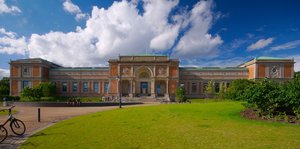 Statens Museum For Kunst |
Kopenhagen | 1 | Horsemen by an Inn |
 Kraljevski muzeji lijepih umjetnosti Belgije |
Bruxelles | 1 | The inn |
 National Gallery of Ireland |
Dublin | 1 | Landscape with Figures |
Odaberite desetljeće kako biste vidjeli original koji ga definira.
Peasants by a cottage with a horse stalling (1655). Sljedeći su Pig Trade (1664) i Rest Before the Tavern (1662).
25 godina: Peasants by a cottage with a horse stalling datira iz 1655, a Barent Gael je rođen/a 1630.
Peasants by a cottage with a horse stalling, Pig Trade, Rest Before the Tavern, Riders and Infantry near a Smithy in a Village, Horsemen by an Inn, The Pancake Cook, Rest at a Village Inn, The inn, Farmhouse i Landscape with Figures. Gornji rang prikazuje godinu i muzej za svako od njih.
Naš katalog sadrži 12 djela umjetnika Barent Gael, datiranih od 1655 do 1680.
Većinom u Bavarske državne slikopisne zbirke (München), Museum Boijmans Van Beuningen (Rotterdam) i Museum Flehite (Amersfoort). Gornja tablica muzeja navodi sve njih.
U 1660s: 4 od 11 djela na ovoj stranici nastalo je tada, od čega je Pig Trade Pig Trade.
Na ovoj stranici najstarije djelo je iz Peasants by a cottage with a horse stalling (1655), a najnovije iz The Pancake Cook (1680).
Pig Trade, Rest Before the Tavern i Farmhouse: Bavarske državne slikopisne zbirke, München posjeduje 4 djela s ove stranice.
In the bustling heart of the Dutch Golden Age, a period defined by a profound appreciation for the tangible world, Barent Gael emerged as a painter of quiet observation. Born in Haarlem, his life was deeply intertwined with the cultural pulse of the Netherlands. He was a man of particular temperament, possessed of a certain stubborn independence that occasionally put him at odds with those who sought his services. There is a story of a patron who arrived at his home for a viewing, only to be told by the artist that he was not at home. This refusal to bend to the whims of others followed him; when the same patron later met him to receive a finished work, Gael reportedly claimed he was once again not at home, leading the insulted man to refuse payment.
His artistic path was shaped by the rigorous traditions of the Haarlem school. While the archives do not provide a definitive record of his apprenticeship, he showed a strong influence from his Haarlem colleagues and the style of Philips Wouwerman. This connection is visible in his ability to compose scenes involving animals and travelers with a sense of structured harmony. He mastered the art of atmospheric perspective, layering subtle tones of color to create an illusion of vast, receding space. Through this method, distant hills and hazy horizons seem to breathe, pulling the spectator into the painted environment.
Gael’s work often focused on the serene beauty of the countryside, finding a sense of permanence in the mundane. He moved from the established artistic circles of Haarlem to the bustling streets of Amsterdam between 1661 and 1673, remaining in the latter city until his death. His canvases provide a window into a soul captivated by the simplicity of rural existence, from the soft glow of sunlight hitting a wayside inn to the delicate interplay of light and shadow upon a shepherd’s path.
His technical approach was marked by a deliberate and understated hand. Rather than relying on flamboyant strokes, he employed a restraint that allowed him to focus on the nuances of texture. His subjects often included:
Though his large oeuvre is sometimes described as somewhat monotonous, his dedication to realism and tonal balance remained constant. He was a prominent figure in the Haarlem Guild of St. Luke by 1642, and his presence in the artistic community was noted long after his most active years. His latest known dated painting dates to 1679, yet his work continues to offer a view into a world where time slows down, inviting the viewer to find meaning in the details of the natural landscape.
