Prebacite na printove
 Prikaži više







































 Za umjetnička djela ili reprodukcije veće od 105 cm (približno 41 inč) na bilo kojoj strani, okvir će biti isporučen u obliku rastavljenog seta za montažu. Ovaj način osigurava sigurnu dostavu i sprječava oštećenja tijekom transporta.


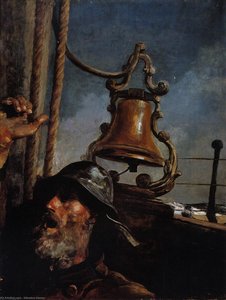
A Masterpiece of Coastal Drama: Winslow Homer’s Driftwood
Winslow Homer's “Driftwood,” completed in 1909, stands as a testament to the artist’s unparalleled ability to distill the sublime beauty and terrifying power of the ocean into a single canvas. More than just a depiction of a seascape, it embodies Homer’s profound engagement with the relationship between humanity and the natural world—a connection explored throughout his prolific career.
- Composition & Technique: Homer employs bold brushstrokes and vibrant hues to convey the dynamism of crashing waves against rugged rocks. The textured surface reflects the artist's meticulous attention to detail, mirroring the physicality of the scene. Thick impasto creates a palpable sense of movement and energy, capturing the raw force of the sea’s assault on the shoreline.
- Subject Matter & Narrative: The painting portrays a solitary figure attempting to retrieve a sizable piece of driftwood—a symbol of resilience amidst adversity—carried ashore by turbulent currents. This simple yet evocative action serves as a microcosm of Homer's broader fascination with confronting nature’s challenges head-on.
Historical Context & Artistic Influences
Painted during Homer’s twilight years, “Driftwood” resonates deeply within the context of late 19th-century American art. Homer drew inspiration from Romantic painters like Turner and Ryder, whose dramatic seascapes championed the sublime—the awe-inspiring grandeur of nature that simultaneously inspires terror and reverence. These influences are evident in Homer’s masterful use of light and shadow to heighten the emotional impact of his compositions.
Symbolism & Emotional Resonance
Beyond its visual splendor, “Driftwood” carries significant symbolic weight. The driftwood itself represents perseverance and adaptation—the ability to endure hardship while maintaining one's integrity. The bird circling overhead symbolizes freedom and aspiration, contrasting with the grounded figure battling against the relentless force of the ocean. Ultimately, Homer’s painting invites contemplation on humanity’s place within the vastness of nature, prompting viewers to confront their own vulnerability alongside its majesty.
Location & Legacy
“Driftwood” resides in the Museum of Fine Arts Boston, where it continues to captivate audiences with its arresting imagery and emotional depth. Its enduring appeal underscores Homer’s legacy as one of America's foremost landscape painters—an artist who dared to confront the sublime and translate its grandeur onto canvas.
- Further Exploration: Interested in delving deeper into Homer’s oeuvre? Consider examining “Undertow,” another masterful seascape showcasing his distinctive style. Alternatively, explore the works of Claude Monet and Joaquin Sorolla Y Bastida on OriginalUniqueArt.com for a broader appreciation of Impressionist aesthetics.
Pitanja i odgovori
Je li prikaz "Driftwood" autora Vinslow Homer u javnom vlasništvu?
"Driftwood" autora Vinslow Homer je u u javnom vlasništvu – autorska prava su istekla. Ovaj status određuje način na koji se prikaz djela može reproducirati.
Je li "Driftwood" ostalo u domovini svog umjetnika?
Ne – umjetničko djelo se nalazi izvan zemlje umjetnika. Djelo "Driftwood" nalazi se u državi United States of America, dok je Vinslow Homer rođen/a u državi Sjedinjene Američke Države.
Koristi li "Driftwood" autora Vinslow Homer snažne kontraste ili meke harmonije?
Koloristička kompozicija djela "Driftwood" autora Vinslow Homer spaja Statement kontrast s Discordant Palette harmonijom.
 Pregledaj u realnoj veličini
 Pošalji
 Podijeli
 Detalji o umjetničkom djelu
 Vodič
Vodič

 Preuzmi umjetničko djelo
 Slični predmeti
 Rentgenska snimka
 Slide show
 Pitanja i odgovori
 Statistika