Pregledaj u stvarnoj veličini
 Pošalji
 Podijeli
 Detalji o umjetničkom djelu

 Preuzmi
 Slični predmeti
 Rentgenska snimka
 Automatska prezentacija
Horses


 Prikaži više
Giclée / Umjetnički otisak
Giclée tisak muzejske kvalitete ili otisak na platnu uz brzu proizvodnju i fleksibilne opcije završne obrade. ( Kupi ručno naslikanu sliku Kupi digitalnu sliku)




P118B $10

P118H $10

P118W $10

P438Z $10

P508JH $12

P508YH $12

P805H $10

P805Z $10

P919BZ $10

P919G $10

P919XJ $10

P959ZH $10

P968JZ $12

W106C $8

W218G $10

W218JH $8

W218Y $10

W307PJ $10

W316G $10

W316PJ $8

W316Y $10

W398PJ $8

W4111J $10

W500HY $15

W500JH $15

W692G $12

W849H $8

W940BG $15

W953PJ $8




Odaberite jednu od naših unaprijed definiranih veličina koje odgovaraju izvornim proporcijama umjetničkog djela.

Možete unijeti vlastite dimenzije kako biste umjetničko djelo prilagodili specifičnom okviru ili prostoru. Ako odabrana veličina ne odgovara proporcijama izvornog rada, izrezat ćemo dio slike ili je proširiti pomoću ogledalnog efekta ili jednobojne rubne površine. Digitalni prikaz (mockup) bit će vam poslan na odobrenje prije početka proizvodnje.
Imajte na umu da pregled na zaslonu ne odražava stvarno izrezivanje ili proširivanje. Samo će mockup točno prikazati konačnu kompoziciju.
Iako su dostupne prilagođene veličine, preporučujemo odabir dimenzije iz unaprijed definirane liste kako biste očuvali izvorne proporcije.
Dostava širom svijeta () u roku od 2 tjedna umjesto standardnih 4/5 tjedana. (26 Kolovoz)

Besplatna ekspresna dostava širom svijeta

Visokokvalitetno laneno platno

Potpuno osiguranje dostave

Jamstvo povrata carine i uvoznih poreza

Garancija vjernog podudaranja boja

Politika povrata u roku od 60 dana (samo u slučaju nedostataka)

Jamstvo povrata 100% novca

Popust na više proizvoda
 Opcija stakla dostupna je samo za dimenzije manje od 110 cm

Horses
Giclée / Umjetnički otisak
Veličina reprodukcije
-


Ukupna cijena
$ 80
Opis djela
Horses: A Symphony of Color and Spirit
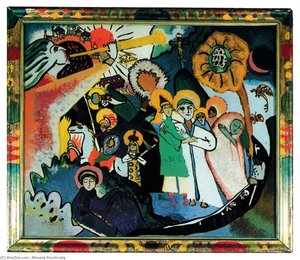
Wassily Kandinsky’s “Horses,” painted in 1909, stands as a cornerstone of Expressionism and a testament to the artist's radical departure from representational art. More than just an image of animals—though undeniably present—the painting is a profound exploration of emotion and spiritual experience, meticulously crafted through a technique that foreshadowed the very essence of abstract art.
- Subject Matter: The artwork depicts a dynamic tableau featuring several horses rendered in bold hues. Dominating the composition is a central horse with its head lowered, conveying a sense of vulnerability and introspection amidst the swirling energy of its surroundings. Complementing this figure are additional horses positioned strategically throughout the canvas, contributing to the overall movement and visual rhythm.
- Style & Technique: Kandinsky’s masterful application of impasto—thickly applied paint—creates palpable texture and depth, inviting viewers to engage with the artwork on a tactile level. The artist eschewed traditional perspective and anatomical accuracy, prioritizing instead the conveyance of feeling through color and form. This deliberate simplification aligns perfectly with the burgeoning movement toward abstraction that was reshaping European art at the time.
- Historical Context: Created during Kandinsky’s formative years in Munich, “Horses” emerged from a milieu characterized by intellectual ferment and artistic experimentation. Influenced by Russian folk art and profoundly moved by Wagnerian opera—particularly "Lohengrin"—Kandinsky sought to transcend the limitations of realism, mirroring the broader ambition of artists like Franz von Stuck to capture inner states rather than merely depicting external appearances.
The color palette employed in “Horses” is deliberately arresting. Vibrant reds and yellows clash against cooler blues and greens, generating a visual tension that mirrors the emotional complexity inherent in Kandinsky’s artistic vision. Critics have interpreted these hues as representing primal forces—passion and vitality—contrasted with serenity and contemplation.
- Symbolism: Beyond its immediate visual impact, “Horses” resonates with symbolic significance. The horse itself has long been associated with nobility, strength, and spiritual aspiration – qualities Kandinsky sought to embody in his artwork. Furthermore, the birds perched atop the canvas serve as emblems of freedom and transcendence, reinforcing the painting’s overarching theme of liberation from conventional artistic conventions.
- Emotional Impact: Viewing “Horses” evokes a visceral response—a feeling of dynamism and unrestrained energy. Kandinsky's intention wasn't to depict reality but rather to elicit an emotional reaction in the viewer, mirroring the core principles of Expressionism. The painting’s textured surface encourages contemplation and invites viewers to immerse themselves in its captivating visual language.
“Horses” remains a compelling example of Kandinsky's pioneering contribution to modern art. Its enduring appeal lies not only in its striking aesthetic qualities but also in its profound exploration of the human spirit—a legacy that continues to inspire artists and collectors alike. Reproductions from OriginalUniqueArt.com offer an opportunity to experience this masterpiece firsthand, capturing its vibrant colors and expressive energy with exceptional fidelity.
Biografija umjetnika
A Life Immersed in Color and Spirit
Wassily Wassilyevich Kandinsky, born December 4, 1866, in Moscow, Russia, was a revolutionary figure who irrevocably altered the course of modern art. His journey wasn’t one of immediate artistic calling; initially destined for a career in law and economics at the University of Moscow, it was a profound encounter with Impressionist painting – specifically Claude Monet's “Haystacks” – and a deeply moving experience witnessing Wagner’s opera "Lohengrin" that ignited within him an irrepressible desire to pursue art. This pivotal moment, occurring around age thirty, marked not merely a career change but a complete transformation of perspective, setting him on a path toward pioneering abstraction. He soon relocated to Munich, enrolling at the prestigious Academy of Fine Arts and studying under Franz von Stuck, though even within formal training, Kandinsky’s spirit yearned for exploration beyond conventional boundaries. Early influences included Russian folk art, gleaned from an ethnographic expedition to the Vologda region in 1889, which instilled a fascination with vibrant color palettes and symbolic imagery. This foundation would prove crucial as he began to develop his unique artistic language. These early explorations weren’t simply about aesthetic preference; they were rooted in a deep cultural connection and a burgeoning understanding of how art could communicate beyond the literal. He experimented with landscapes and portraits, demonstrating considerable skill but always feeling constrained by representational limitations.The Dawn of Abstraction: From Expressionism to Inner Necessity
Kandinsky’s early works reveal a strong expressionistic bent, characterized by bold colors and emotional intensity – pieces like “Papeln (Poplars)” from 1902 exemplify this period. However, he wasn't content with merely representing the external world; he sought to express inner realities, spiritual truths that transcended mere visual depiction. This quest led him gradually away from representational art and toward a revolutionary exploration of color, form, and their emotional resonance. He believed that colors possessed inherent psychological effects, capable of evoking specific feelings and sensations in the viewer. This conviction was deeply intertwined with his burgeoning interest in Theosophy, a spiritual movement emphasizing esoteric knowledge and universal brotherhood. As he delved deeper into these ideas, Kandinsky’s paintings became increasingly non-objective, shedding recognizable forms in favor of abstract compositions driven by an “inner necessity.” This wasn't simply about abandoning representation; it was about discovering a new visual language capable of expressing the intangible realms of emotion and spirituality. He sought to create a visual equivalent of music, where color and form harmonized to evoke profound emotional responses.- Notable Early Works: “Papeln (Poplars),” “Fruitful Tree,” “Moscow Landscape”
- Influences: Impressionism (Monet), Russian Folk Art
Geometric Harmony and Spiritual Resonance
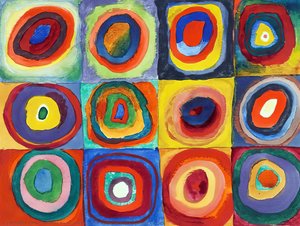
The period following his involvement with the influential artist group Der Blaue Reiter (The Blue Rider), which he co-founded in Munich in 1911, saw a further evolution in Kandinsky’s style. While earlier works often featured fluid, organic shapes, he began to explore geometric abstraction, focusing on the interplay of circles, triangles, and squares. “Several Circles” (140 x 140 cm) stands as a prime example of this phase – a dynamic composition where color and form interact in a harmonious yet energetic dance. He theorized extensively about the relationship between art and spirituality, arguing that abstract forms could convey spiritual truths more effectively than figurative representations.- Theoretical Writings: “Concerning the Spiritual in Art” (1911)
- The Blaue Reiter Group: Collaboration with Franz Marc and Alexei von Jawlensky
Bauhaus Influence and Lasting Legacy
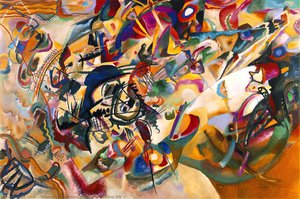
The outbreak of World War I forced Kandinsky's return to Russia in 1914, but following the Russian Revolution, he found himself increasingly at odds with the prevailing artistic climate. In 1920, he accepted a teaching position at the Bauhaus school in Germany, where he profoundly influenced generations of artists with his theories on color, form, and abstraction. The Bauhaus provided an ideal environment for Kandinsky to further develop his ideas and explore new creative avenues. He continued to experiment with geometric forms and vibrant colors, often incorporating layered impasto techniques to create textured surfaces that added depth and complexity to his compositions – as seen in later works like “An Intimate Party” (1942). After the closure of the Bauhaus by the Nazi regime in 1933, Kandinsky moved to France, where he remained for the rest of his life. His impact on modern art is immeasurable; he is widely recognized as a pioneer of abstract expressionism and a key figure in the development of non-representational painting. His works are held in major museums worldwide, including the Tretyakov Gallery in Moscow, which houses his monumental “Composition VII,” a testament to his artistic vision and enduring legacy. He died December 13, 1944, in Neuilly-sur-Seine, France.- Major Achievements: Bauhaus Teaching Position, Development of Geometric Abstraction
- Notable Later Works: “Composition VII,” “Landscape with Figures”

Vasily Wassilyevich Kandinsky
1866 - 1944 , Rusija
Osnovne informacije
- Artistic Movement Or Style: Abstraktna umjetnost, Ekspresionizam
- Artists Or Movements Influenced By This Artist: ['Abstrakt ekspresionizam']
- Artists Who Influenced This Artist:
- Claude Monet
- Richard Wagner
- Date Of Birth: 1866.
- Date Of Death: 1944.
- Full Name: Wassily Wassilyevich Kandinsky
- Nationality: Rusija
- Notable Artworks:
- Murnau s Rainbow
- Tempered Elan
- An Intimate Party
- Place Of Birth: Moskva, Rusija
Srodni članci

Kandinsky's Masterpieces: 25 Paintings That Define Abstract Art | OriginalUniqueArt
Journey through Wassily Kandinsky's 25 most iconic abstract paintings. Explore his revolutionary use of color, form & spiritual expressionism. Find museum-quality Kandinsky reproductions and elevate your home decor with OriginalUniqueArt.com. Discover all masterpieces on OriginalUniqueArt.com!

Desetak Remek-djela koja su Definirala Apstraktni Ekspresionizam: Uljane Slike i Moderna Dekoracija
Otkrijte 10 remek-djela koja su definirala apstraktni ekspresionizam! Jackson Pollock, Mark Rothko i drugi majstori uljane umjetnosti. Ispričajte priču svojim zidovima uz OriginalUniqueArt - vrhunske reprodukcije za vaš dom.
The Soul of Color: A Journey into the Emotional Resonance of Lyrical Abstraction
Embark on a cultural journey through Lyrical Abstraction. Explore how masters like Kandinsky used color and motion to translate emotion into visual poetry. Discover the profound beauty of abstract expressionism and learn to curate emotional resonance in your own art collection.
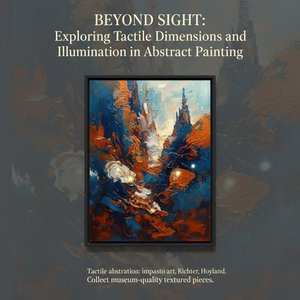
Beyond Sight: Exploring Tactile Dimensions and Illumination in Abstract Painting
Explore the captivating world of tactile abstraction! Discover impasto techniques, influential artists like Richter & Hoyland, and expert insights for collecting textured art. Elevate your space with museum-quality pieces.
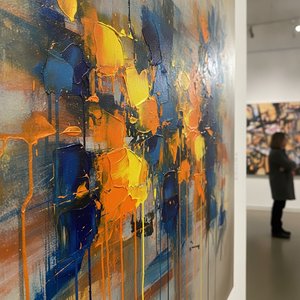
Beyond the Lines: Mastering the High-Impact World of Contemporary Abstraction
Master the high-impact world of contemporary abstraction. Discover how bold colors, textures, and modern movements like Abstract Expressionism can transform your space with premium, high-energy art curated for the design-conscious professional.