

 Pregledaj u stvarnoj veličini
 Pošalji
 Podijeli
 Detalji o umjetničkom djelu

 Preuzmi
 Slični predmeti
 Rentgenska snimka
 Automatska prezentacija
Lamentation
 86.0 x 71.0 cm
 Museum Mayer van den Bergh
 Prikaži više
Kupite digitalnu sliku visoke rezolucije i poboljšane kvalitete, koja je znatno superiornija od online prikaza.
Svaka datoteka pedantno je pripremljena od strane naših internih stručnjaka koristeći napredne alate i vještinsku ručnu retušu. Osiguravamo da svaka slika ima iznimnu jasnoću, preciznu točnost boja i visoku razinu detalja.
Konačna datoteka dostavlja se putem e-pošte u roku od 72 sata, optimizirana za neposrednu upotrebu u profesionalnim, uredničkim i tiskarskim okruženjima. To je ista kvaliteta kojoj vjeruju vrhunski studiji dizajna, izdavači i galerije.
Digitalna slika
Preuzmite datoteku visoke rezolucije za osobnu izložbu, tisak i kreativne projekte. ( Kupi print Kupi ručno naslikanu sliku)
Uključeno uz svaku narudžbu digitalne slike
Profesionalna digitalna dostava, zajamčena
Odabirom OriginalUniqueArt.com ne dobivate samo sliku – dobivate profesionalno unapređeno digitalno umjetničko djelo, izrađeno s najvećom preciznošću uz jamstvo zadovoljstva. Evo svega što automatski dolazi uz vašu narudžbu:

Brza dostava e-poštom
Vaša digitalna slika visoke rezolucije bit će vam poslana e-mailom u roku od 72 sata od narudžbe – spremna za neposrednu upotrebu.

Digitalna datoteka poboljšana AI-om
Vaše umjetničko djelo profesionalno je optimizirano pomoću naprednih AI alata i ručnog uređivanja, čime se osigurava maksimalna razina detalja, oštrine i točnosti boja.

Besplatna ponovna dostava doživotno
Slučajno ste obrisali ili izgubili svoju datoteku? Ne brinite – ponovno ćemo vam je poslati u bilo kojem trenutku, potpuno besplatno.

Bez uvoznih carina – ikada
Uživajte u svojim umjetničkim djelima trenutno, bez carina, pristojbi ili troškova dostave – digitalne datoteke uvijek su oslobođene poreza.

Jamstvo točnosti boja
Uz pomoć profesionalnih alata i upravljanja bojama, osiguravamo da vaša digitalna slika što vjernije odražava izvorne boje.

Jamstvo zadovoljstva u trajanju od 60 dana
Ako niste zadovoljni svojom digitalnom slikom, revidirat ćemo je ili vratiti 100% novca u roku od 60 dana – bez ikakvih pitanja.

100% Jamstvo povrata novca
Niste zadovoljni? Osigurajte puni povrat novca u roku od 60 dana od primitka vaše digitalne datoteke – bez suvišnih pitanja.

Popusti na velike narudžbe
Kupite 3 slike, uštedite 10% - Kupite 5 slika, uštedite 15% - Kupite 10+ slika, uštedite 20%. Odlično za kreativne projekte, galerije i agencije.
Biografija umjetnika
The Gentle Heir of Netherlandish Grandeur
In the golden, luminous era of Early Netherlandish painting, few names resonate with as much quiet dignity as Vrancke van der Stockt. While history often casts a brilliant, sometimes blinding light upon his mentor, the legendary Rogier van der Weyden, Van der Stockt emerged not merely as a shadow, but as a vital successor who carried the torch of Flemish emotional depth into a new generation. Born in Leuven before 1420, his life was woven into the very fabric of the Burgundian Netherlands, a period defined by unparalleled technical mastery and a profound spiritual intensity that sought to bridge the gap between the earthly and the divine.
Van der Stockt’s artistic journey began within the disciplined walls of his father’s workshop. Under the tutelage of Jan van der Stockt, he mastered the meticulous craftsmanship required by the era's high standards, learning to manipulate oil pigments to capture the subtle textures of velvet, the cold glint of metal, and the soft glow of skin. This foundational training provided him with the technical vocabulary that would later allow him to serve as a direct heir and popularizer of the Weyden style. His association with Rogier van der Weyden was perhaps the most defining chapter of his career; as an assistant and collaborator, he absorbed the master's ability to sculpt human grief and spiritual ecstasy onto wooden panels, yet he began to infuse these lessons with a uniquely restrained elegance.
A Legacy of Devotion and Civic Grace
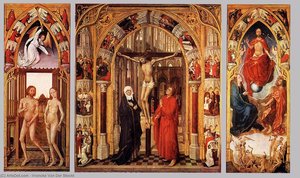
As his career matured, Van der Stockt’s work became characterized by a certain gentle sensitivity. Where Weyden might employ dramatic, sweeping gestures to convey agony, Van der Stockt often favored a more poised and graceful aesthetic. This is nowhere more evident than in his celebrated Triptych of the Redemption. In this monumental work, one finds a breathtaking narrative journey that guides the viewer through the sacred cycle of Christ's sacrifice. He possessed a miraculous ability to ground cosmic theological events in the recognizable human experience, populating his divine landscapes with tiny, meticulously rendered figures engaged in quiet, everyday activities—a technique that makes the sacred feel tangibly present and intimately reachable.
Beyond the confines of his studio, Van der Stockt was a man of significant civic importance. His life was marked by a profound engagement with the community of Leuven and Brussels, reflecting the high social standing of successful master painters in the 15th century. His achievements extended far beyond the easel:
- Mastery of the Guild: In 1445, he achieved the prestigious status of master within the Brussels Guild of St. Luke, a testament to his technical skill and professional standing.
- Civic Leadership: He served with distinction on the Leuven Town Council during several terms, including 1465, 1472, and 1475, demonstrating his influence in the political life of the city.
- Religious Stewardship: His leadership as the head of the Confraternity of St. Eloy between 1471 and 1473 highlighted his deep integration into the religious and social structures of his time.
- Official Recognition: Following the death of Rogier van der Weyden in 1464, Van der Stockt ascended to the position of the official painter of Leuven, a role that solidified his reputation as a premier artist of the region.
The Enduring Echo of a Master
Though the passage of centuries has left certain gaps in our biographical knowledge—a frustrating lacuna for modern art historians—the stylistic fingerprints of Vrancke van der Stockt remain indelible. His ability to balance the monumental with the minute, and the dramatic with the serene, ensures his place in the pantheon of the Northern Renaissance. He did not seek to eclipse the giants upon whose shoulders he stood; instead, he sought to refine their vision, offering a more tempered, graceful window into the soul of the late medieval world. Today, when we gaze upon his Lamentation or the intricate panels of his triptychs, we do not merely see a follower of Weyden, but a master in his own right, whose gentle hand helped define the very heartbeat of Netherlandish art.
vrancke van der stockt
1420 - 1495
Kratke činjenice
- Artistic Movement Or Style: Early Netherlandish Painting
- Artists Or Movements Influenced By This Artist: ['Rogier van der Weyden']
- Artists Who Influenced This Artist: ['Rogier van der Weyden']
- Date Of Death: 14 June 1495
- Full Name: Vrancke van der Stockt
- Nationality: Dutch
- Notable Artworks:
- Triptych of the Redemption
- Lamentation
- Pietà
- Place Of Birth: Brussels, Belgium

