

 Pregledaj u stvarnoj veličini
 Pošalji
 Podijeli
 Detalji o umjetničkom djelu

 Preuzmi
 Slični predmeti
 Rentgenska snimka
 Automatska prezentacija
Egault level

 Prikaži više
Giclée / Umjetnički otisak
Giclée tisak muzejske kvalitete ili otisak na platnu uz brzu proizvodnju i fleksibilne opcije završne obrade. ( Kupi ručno naslikanu sliku Kupi digitalnu sliku)




































Odaberite jednu od naših unaprijed definiranih veličina koje odgovaraju izvornim proporcijama umjetničkog djela.

Možete unijeti vlastite dimenzije kako biste umjetničko djelo prilagodili specifičnom okviru ili prostoru. Ako odabrana veličina ne odgovara proporcijama izvornog rada, izrezat ćemo dio slike ili je proširiti pomoću ogledalnog efekta ili jednobojne rubne površine. Digitalni prikaz (mockup) bit će vam poslan na odobrenje prije početka proizvodnje.
Imajte na umu da pregled na zaslonu ne odražava stvarno izrezivanje ili proširivanje. Samo će mockup točno prikazati konačnu kompoziciju.
Iako su dostupne prilagođene veličine, preporučujemo odabir dimenzije iz unaprijed definirane liste kako biste očuvali izvorne proporcije.
Dostava širom svijeta () u roku od 2 tjedna umjesto standardnih 4/5 tjedana. (23 Kolovoz)

Besplatna ekspresna dostava širom svijeta

Visokokvalitetno laneno platno

Potpuno osiguranje dostave

Jamstvo povrata carine i uvoznih poreza

Garancija vjernog podudaranja boja

Politika povrata u roku od 60 dana (samo u slučaju nedostataka)

Jamstvo povrata 100% novca

Popust na više proizvoda
 Opcija stakla dostupna je samo za dimenzije manje od 110 cm

Egault level
Giclée / Umjetnički otisak
Veličina reprodukcije
-


Ukupna cijena
$ 80
Biografija umjetnika
The Genesis of a Precision Pioneer
The story of Tecnomasio Italiano begins not with grand pronouncements or revolutionary designs, but with the quiet dedication of a small group of engineers and artisans in Milan at the close of the 19th century. Founded in 1863 by Luigi Longoni, Carlo Dell’Acqua, and Ignazio Porro – figures deeply rooted in the burgeoning fields of mechanics, optics, and photography – the company initially sought to establish itself as a purveyor of scientific instruments. This wasn't merely about manufacturing; it was about facilitating observation, measurement, and understanding—a core ethos that would define Tecnomasio’s trajectory for over a century. Porro’s departure in 1864 marked a pivotal moment, leading to the incorporation of Alessandro Duroni into the partnership, bringing with him a crucial expertise in photography which significantly shaped the company's early output. The name “Tecnomasio” itself – a blend of "tecnico" (technical) and "italiano" – immediately signaled its commitment to Italian craftsmanship and technological advancement.
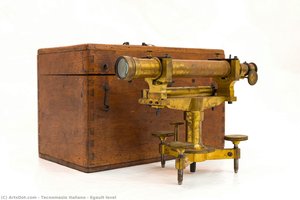
Early endeavors focused on producing essential tools for scientific research: meticulously crafted microscopes, sophisticated heliostats used in astronomical observations, precise cathetometers for surveying, and theodolites vital for accurate mapping. These instruments weren’t simply assembled; they were engineered with a remarkable attention to detail, reflecting the meticulous standards of the time. The company quickly gained recognition within Italy's scientific community, supplying institutions and researchers with reliable tools that contributed to advancements in various fields. This initial success laid the foundation for Tecnomasio’s expansion into more complex industrial applications.
Expansion and Industrial Transformation
As the 20th century dawned, Tecnomasio embarked on a strategic shift, recognizing the growing demand for electrical equipment. Driven by Bartolomeo Cabella's leadership following Longoni’s death in 1871, the company began to manufacture alternators and dynamos – essential components of the burgeoning electricity grid. This move demonstrated an astute understanding of emerging technologies and a willingness to adapt to changing industrial needs. The transition was formalized in 1898 with the establishment of Società Anonima Tecnomasio Italiano ing. B. Cabella e C., signifying a professionalization of the business and a commitment to long-term growth. Crucially, this period witnessed a growing collaboration with Brown Boveri of Switzerland, a partnership that would profoundly shape Tecnomasio’s future.
The early 20th century saw Tecnomasio playing a vital role in Italy's industrial development. The company supplied electrical generators and transformers to support the expansion of hydroelectric power plants across the country – a critical undertaking for fueling economic growth. Furthermore, Tecnomasio became involved in railway electrification projects, contributing significantly to the modernization of Italy’s transportation network. This period wasn’t just about producing equipment; it was about enabling infrastructure development and supporting national progress.
The Brown Boveri Era and Legacy
A defining moment arrived in 1903 when Brown Boveri acquired a controlling stake in Tecnomasio, forming Tecnomasio Italiano Brown Boveri (TIBB). This merger marked a significant turning point, integrating the Swiss company’s expertise in electrical engineering with Tecnomasio's established Italian manufacturing capabilities. The subsequent years witnessed a consolidation of resources and technologies, leading to increased production volumes and expanded product offerings. However, this also meant a gradual shift away from its initial focus on precision instruments, as TIBB increasingly concentrated on industrial electrical equipment.
World War II brought immense challenges, with the Vado Ligure factory suffering significant damage. Despite these setbacks, Tecnomasio demonstrated resilience, resuming production of locomotives and large-scale generators after the war. The company’s involvement in railway electrification continued, contributing to the development of Italy's rail infrastructure. In 1988, TIBB became part of ABB Group, solidifying its position within a global engineering giant. The Vado Ligure plant subsequently transitioned into Adtranz and later Bombardier Transportation Italy S.p.A., continuing to manufacture locomotives today.
A Testament to Italian Engineering
Tecnomasio Italiano’s story is more than just the chronicle of a company; it's a reflection of Italy’s industrial evolution during the late 19th and 20th centuries. From its humble beginnings as a purveyor of scientific instruments, Tecnomasio evolved into a key player in electrical engineering and railway technology, leaving an indelible mark on Italian industry. The company’s commitment to precision, innovation, and collaboration—particularly with Brown Boveri—demonstrates the power of strategic partnerships and adaptability. While the name “Tecnomasio Italiano” may no longer exist as an independent entity, its legacy lives on through the continued production of locomotives at Vado Ligure, a testament to the enduring spirit of Italian engineering.
tecnomasio italiano
Italy
Osnovne informacije
- Artistic Movement Or Style: Precisionism, Industrial Design
- Artists Or Movements Influenced By This Artist:
- Brown Boveri
- ABB Group
- Artists Who Influenced This Artist:
- Luigi Longoni
- Carlo Dell'Acqua
- Ignazio Porro
- Full Name: Tecnomasio Italiano
- Nationality: Italian
- Notable Artworks:
- Various precision instruments
- Electrical equipment prototypes
- Place Of Birth: Milan, Italy

