
() ·
A print made for you, with care
Giclée / Umjetnički otisak
Giclée tisak muzejske kvalitete ili otisak na platnu uz brzu izradu i raznolike opcije završne obrade. ( Kupi ručno oslikano djelo Prebacite na digitalnu sliku)
Biografija umjetnika
Explore the landscapes & genre paintings of Richard Redgrave (1804-1888), a British artist known for Gulliver & evocative scenes of rural life. Discover Victorian art at its finest.
 Prikaži više
od ·
Poglavlje 1
On which medium should it be printed?
Canvas is printed with giclée inks and can be stretched or framed like a painting; paper comes flat, or framed behind glass.
Poglavlje 2
Koje bi dimenzije trebalo imati?
Povucite kako biste promijenili dimenziju; slika s lijeve strane prikazuje okvir u njegovoj stvarnoj širini. Zadržane su proporcije originala.
Odaberite jednu od naših unaprijed definiranih veličina koje odgovaraju izvornim proporcijama umjetničkog djela.

Unesite potrebnu širinu i visinu kako bi odgovarali vašem okviru ili zidu. Print se može samo izrezati, nikada ne može biti veći od slike, stoga format s drugačijim omjerom stranica uzrokuje gubitak dijela slike. Prije bilo kakve štampe šaljemo vam digitalni prikaz (mockup) na odobrenje. Slika prikazana na ovoj stranici ne prikazuje stvarni rez — to prikazuje isključivo digitalni prikaz.
Poglavlje 3
U kakvom bi stanju trebalo stići?
Odaberite rubove platna
Odaberite svoj okvir

Bijela rubna traka €1

Zamućeni rubovi €1

Prošireno €1

P118B €10

P118H €10

P118W €10

P438Z €10

P508JH €12

P508YH €12

P805H €10

P805Z €10

P919BZ €10

P919G €10

P919XJ €10

P959ZH €10

P968JZ €12

W106C €8

W218G €10

W218JH €8

W218Y €10

W307PJ €10

W316G €10

W316PJ €8

W316Y €10

W398PJ €8

W4111J €10

W500HY €15

W500JH €15

W692G €12

W849H €8

W940BG €15

W953PJ €8

H24-GOLD €30

H24-SILVER €30

H36-GOLD €45

H36-SILVER €45
Uokvireno
Profil: . Ukupna veličina s okvirom: .
Poglavlje 4
Dostava širom svijeta () u roku od 2 tjedna umjesto standardnih 4/5 tjedana. (21 Studeni)
Završni dodir
Pločica s natpisom, kao u muzeju?
Detalji gravirane brončane pločice
This elegant plaque features the artist's name and the title of the artwork, finely engraved for a timeless presentation.
It is made from bronze with a refined, elegant finish. The text is precisely laser-engraved for a sharp and permanent result. Measuring 9x2 cm, the plaque is compact yet easy to read. It's built to be durable and scratch-resistant, offering a professional, museum-quality look. Mounting is simple thanks to the included adhesive backing.
Detalji prozirne akrilne pločice
The plaque includes essential engraved details such as the artist's name, the title of the artwork, the date it was created, the type of media used-like oil on canvas or watercolor-a brief description of the piece, and a QR code that links to the complete artwork information.
It is crafted from clear acrylic, offering a sleek, modern appearance. The text is UV-engraved in black to ensure strong visual contrast. With a size of 10x15 cm, it ensures optimal readability. It comes equipped with two metal hooks for secure wall mounting. The plaque is designed to be weather-resistant, making it suitable for various environments, and it includes interactive features that work seamlessly with smartphone scanning.
Detalji crne akrilne pločice
This elegant plaque includes engraved information such as the artist's name, the title of the artwork, the date it was created, the type of media used (like oil on canvas or watercolor), a short description of the artwork, and a QR code for quick access to more information.
The plaque itself is made from refined black acrylic with a premium finish. The text is laser-engraved in white for high contrast and readability. Its size is 10x15 cm, designed to be easy to read. It comes with two metal hooks for professional mounting. The design is sleek and fits any interior style. It is also weather-resistant and durable, with built-in digital integration for mobile compatibility.
Zaštitni lak?
Kada vam je potrebno?
Poglavlje 5
Your print, as you ordered it

Dilatory
Tehnika reprodukcije
Veličina reprodukcije
-

Okvir za reprodukciju
-
-
Za umjetnička djela ili reprodukcije veće od 105 cm (približno 41 inč) na bilo kojoj strani, okvir će biti isporučen u obliku rastavljenog seta za montažu. Ovaj način osigurava sigurnu dostavu i sprječava oštećenja tijekom transporta.
Potrebna je profesionalna montaža – ovo nije proizvod za samostalnu izradu.
Set mora sastaviti i platno zategnuti iskusni profesionalni uokvirivač, koristeći drvno ljepilo (nije uključeno u set), kljeste za zatezanje platna i stege kako bi se održao pravilan kut letvica dok se ljepilo suši. Nepravilna montaža ili neravnomjerno zategnuto platno mogu trajno oštetiti umjetničko djelo, a takva oštećenja nisu pokrivena našim jamstvom.
 Za umjetnička djela ili reprodukcije veće od 105 cm (približno 41 inč) na bilo kojoj strani, okvir će biti isporučen u obliku rastavljenog seta za montažu. Ovaj način osigurava sigurnu dostavu i sprječava oštećenja tijekom transporta.
Sve letvice od punog drveta su uključene, precizno izrezane po mjeri.
Montira se pomoću priloženih vijaka, uz dodatak ljepila za drvo za spojeve u kutovima, koje nije uključeno u set i koje vaš okviraš mora vlastito nabaviti.
Potrebni su profesionalni alati koji nisu uključeni: škripc za zatezanje platna (zatezač) i stezaljke za održavanje pravokonačnosti letvica tijekom sušenja ljepila.
Važno:
Za spojeve u kutovima potrebno je ljepilo za drvo, letvice se moraju pričvrstiti stezgama dok se ljepilo potpuno ne osuši, a za zatezanje platna na sastavljenom okviru potreban je alat za zatezanje platna. Nijedan od ovih alata nije uključen u set. Molimo vas da prije narudžbe ove veličine osigurate uslugu iskusnog profesionalnog uokvirivača.

Natpisna pločica
-
-

Zaštitni lak
Sjajni lak (pojačava intenzitet boja, štiti od svjetlosti i vlage)
-

Hitna dostava
Dostava širom svijeta () u roku od 2 tjedna umjesto standardnih 4-5 tjedana. (21 Studeni)
-
Brza dostava
Dostava širom svijeta () u roku od 4-5 tjedana. (28 Studeni).
Uključeno u cijenu
Ukupna cijena
€ 72
Opcija stakla dostupna je samo za dimenzije manje od 110 cm
Uključeno uz svaku narudžbu
- Besplatna ekspresna dostava širom svijeta
- Visokokvalitetno laneno platno
- Potpuno osiguranje dostave
- Jamstvo povrata carine i uvoznih poreza
- Jamstvo vjernosti boja
- Politika povrata u roku od 100 dana (samo u slučaju nedostataka)
- Jamstvo povrata 100% novca
- Popust na više proizvoda


 Pregledaj u realnoj veličini

 Pošalji
 Podijeli
 Detalji o umjetničkom djelu
 Vodič


 Preuzmi umjetničko djelo
 Slični predmeti
 Rentgenska snimka
 Slide show
 Pitanja i odgovori
 Statistika
U brojkama
- 29okviri koji možete odabrati
- standardne dimenzije, u vlastitim proporcijama
- 5tjedana za slikanje i dostavu
O izvornom djelu

Richard Redgrave
1804 - 1888, United Kingdom
Brzi pregled o Richard Redgrave
- Full Name: Richard Redgrave ARA RA
- Nationality: British
- Date Of Birth: 1804
- Date Of Death: 1888
- Place Of Birth: Pimlico, United Kingdom
- Notable Artworks:
- The River Brent
- Gulliver on the Farmer's Table
- Olivia’s Return to Her Parents
- The Governess
- The Pont au Change and the Conciergerie
- Artistic Movement Or Style: Victorian Landscape Art
- Artists Who Influenced This Artist:
- William Redgrave
- Samuel Redgrave
- Artists Or Movements Influenced By This Artist: ['Romanticism']
Biografija umjetnika
A Legacy of Light and Narrative: The Life of Richard Redgrave
In the heart of Victorian London, amidst the burgeoning intellectual energy of Pimlico, Richard Redgrave was born into a world where art, science, and history were beginning to intertwine. Born on April 30th, 1804, Redgrave descended from a lineage of profound thinkers; his father, William, was a distinguished barrister, and his brother, Samuel, would become a celebrated Egyptologist. This atmosphere of scholarly rigor and antiquarian curiosity deeply permeated Richard’s early years, shaping an artist who was as much a storyteller and administrator as he was a painter. His initial steps into the world of art were not purely academic but were forged through practical experience in his father's manufacturing firm, where he developed a keen eye for design and detail—a skill that would later define his meticulous approach to both landscape and genre painting.
The true awakening of Redgrave’s artistic soul occurred within the hallowed halls of the British Museum. While working in the family business, he found himself captivated by the silent majesty of marble sculptures. These classical forms instilled in him a profound respect for structure and natural beauty, influencing his ability to imbue even the most delicate landscapes with a sense of permanence and weight. By 1825, his talent led him to the Royal Academy Schools, where he began to refine the observational skills that would become his hallmark. His early work, such as The River Brent, near Hanwell, signaled the arrival of a promising talent capable of capturing the quiet, evocative essence of the English countryside.
Mastery of Genre and the Romantic Landscape
Redgrave’s career was marked by an extraordinary ability to navigate the shifting tides of 19th-century aesthetics. He rose to prominence not merely as a painter of scenery, but as a master of the genre scene—paintings that captured the intimate, often dramatic, moments of human existence. His breakthrough came in 1837 with the widely acclaimed Gulliver on the Farmer’s Table. This work demonstrated his unique gift for blending humor, narrative, and a touch of the fantastic within a realistic framework, instantly establishing his reputation among the British artistic elite. As he progressed, his canvases began to explore deeper emotional territories, ranging from the domestic warmth of Country Cousins to the poignant tension found in The Outcast.
Beyond the human drama, Redgrave remained a devoted chronicler of the natural world. His landscapes are characterized by a Romantic sensibility, where lush forests and tranquil river views serve as more than mere backdrops; they are living participants in the emotional landscape of his work. In pieces such as The Woodland Mirror, one can sense his dedication to capturing the interplay of light and shadow, creating scenes that feel both deeply rooted in the English soil and elevated by a poetic, almost ethereal, quality. His technical precision allowed him to render textures—the roughness of bark, the shimmer of water, the softness of foliage—with an accuracy that invited the viewer to step directly into his meticulously composed worlds.
A Visionary for the Arts and National Heritage
Perhaps Redgrave’s most enduring contribution to the art world lies not in what he painted, but in how he championed the institution of art itself. His influence extended far beyond the easel; he was a pivotal figure in the administrative and educational advancement of British culture. As an Associate of the Royal Academy in 1840 and later an Academician in 1851, he occupied a position of significant authority, helping to shape the standards of Victorian art. His dedication to the democratization of art education was instrumental in his role within the establishment of what would become the South Kensington Museum, now known as the Victoria and Albert Museum.
Redgrave’s life was a testament to the idea that an artist could be both a creator of beauty and a guardian of culture. His multifaceted career—spanning design, painting, authorship, and administration—reflects the very essence of the Victorian era's drive for progress and preservation. When he passed away in Kensington in 1888, he left behind a legacy that continues to resonate through his evocative canvases and his foundational role in the institutions that continue to celebrate the triumphs of human creativity.
Srodni članci

The Architecture of Chaos: Evaluating Expressive Motion and Abstract Energy
Explore the profound link between Post-Impressionist technique and abstract energy. Discover how masters capture motion through paint.

Mastering the Classics: The Top 25 Iconic Works by Marc Duvallier
Explore Marc Duvallier's top 25 reimagined masterpieces. Discover museum-quality classics on OriginalUniqueArt.com.

Gerhard Richter: A Retrospective on Abstraction, Memory & the Photographic Source
Explore the profound world of Gerhard Richter's abstract paintings. Discover his techniques, influences, and lasting impact on contemporary art – a guide for discerning collectors.
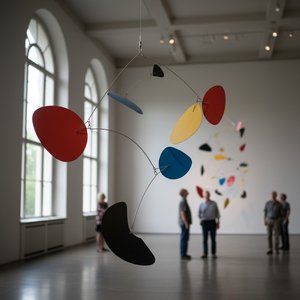
Alexander Calder: Kinetic Sculpture, Mobile Art & the Poetics of Chance
Explore the revolutionary world of Alexander Calder's kinetic sculptures & mobiles. Discover insights for collectors, acquisition advice, and the enduring legacy of this modern master. Expert analysis & art valuation.