Pregledaj u stvarnoj veličini
 Podijeli
 Podijeli
 Detalji
 Vodič
Vodič

 Preuzmi datoteku
 Slični predmeti
 Rentgenska snimka
 Slide show
 Statistika
Clairvoyance


 Pročitajte više
Djelo prikazano na ovoj stranici zaštićeno je autorskim pravima, što znači da zakonski ne možemo izraditi niti prodati identičnu reprodukciju. Ova se zaštita provodi u skladu s međunarodnim sporazumima kao što su Bernska konvencija i nacionalnim zakonima, uključujući i one koji su utvrđeni u Američki zakon o autorskom pravu – Title 17.
Ova metoda u potpunosti je usklađena s autorskim pravima jer ne uključuje kopiranje ili dupliciranje zaštićenih umjetničkih djela. Umjesto toga, riječ je o kreativnoj reinterpretaciji – novoj slici koja je dobila utjecaj na izvornik, ali nije identična njemu.
Giclée / Umjetnički otisak
Giclée tisak muzejske kvalitete ili otisak na platnu uz brzu proizvodnju i fleksibilne opcije završne obrade. ( Naručite ručno oslikano reprodukciju Prebacite na digitalnu prodaju slika)




P118B €10

P118H €10

P118W €10

P438Z €10

P508JH €12

P508YH €12

P805H €10

P805Z €10

P919BZ €10

P919G €10

P919XJ €10

P959ZH €10

P968JZ €12

W106C €8

W218G €10

W218JH €8

W218Y €10

W307PJ €10

W316G €10

W316PJ €8

W316Y €10

W398PJ €8

W4111J €10

W500HY €15

W500JH €15

W692G €12

W849H €8

W940BG €15

W953PJ €8




Odaberite jednu od naših unaprijed definiranih veličina koje odgovaraju izvornim proporcijama umjetničkog djela.

Unesite širinu i visinu koja vam je potrebna, kako bi odgovarali vašem okviru ili zidu. Print se može samo izrezati, nikada ne može biti veći od slike, stoga veličina s drugačijim oblikom gubi dio slike. Šaljemo vam digitalni prikaz (mockup) na odobrenje prije bilo kakve štampe. Slika prikazana na ovoj stranici ne prikazuje stvarni rez — to čini samo digitalni prikaz.
Dostava širom svijeta () u roku od 2 tjedna umjesto standardnih 4/5 tjedana. (22 Listopad)

Besplatna ekspresna dostava širom svijeta

Visokokvalitetno laneno platno

Potpuno osiguranje transporta

Jamstvo povrata carine i uvoznih poreza

Jamstvo vjernosti boja

Politika povrata u roku od 100 dana (samo u slučaju nedostataka)

Jamstvo povrata 100% novca

Popust na više proizvoda
 Opcija stakla dostupna je samo za dimenzije manje od 110 cm

Clairvoyance
Giclée / Umjetnički otisak
Veličina reprodukcije
-


Ukupna cijena
€ 70
A Painter’s Vision: Unveiling René Magritte's *Clairvoyance*
This captivating work by René Magritte presents a compelling exploration of artistic creation and its inherent mysteries. The painting depicts an artist, formally dressed, meticulously rendering a large, imposing bird – a scene steeped in surrealism and psychological tension. It’s a piece that doesn't simply *show* us a painter at work; it invites us to contemplate the very act of seeing, imagining, and bringing form to the unseen.Decoding the Surrealist Style
Magritte is, of course, a cornerstone of the Surrealist movement, and *Clairvoyance* exemplifies his signature style. The painting eschews traditional perspective in favor of a flattened picture plane, creating an unsettling sense of depth – or rather, its deliberate absence. The proportions are deliberately skewed, lending a dreamlike quality to the scene. This isn’t about realistic representation; it's about accessing the realm of the subconscious and presenting images that challenge our perceptions of reality. The muted color palette—dominated by blues and browns—further enhances this melancholic and introspective atmosphere. The work shares stylistic kinship with other Surrealist masters like Salvador Dalí, particularly in its exploration of illogical juxtapositions and symbolic imagery.Technique & Composition
Executed likely in oil on canvas, the painting reveals visible brushstrokes that add a tactile quality to the otherwise smooth surfaces. The composition is carefully balanced despite its inherent strangeness. The artist’s placement in the background, seemingly detached from his creation, immediately establishes a sense of distance and perhaps even alienation. The cluttered table—strewn with paint tubes and brushes—hints at the chaotic process underlying artistic endeavor. A small, enigmatic white sphere rests on the table, adding another layer of visual intrigue and symbolic ambiguity. The dramatic use of light and shadow emphasizes the flatness of the image while simultaneously highlighting key elements like the bird and the artist’s hands.Symbolism & Interpretation
What does this unsettling scene *mean*? The dark bird, dominating the composition, is often interpreted as a symbol of the unconscious—a powerful, perhaps even menacing force that the artist attempts to control through his work. The artist himself, in formal attire, could represent reason and intellect attempting to grapple with these primal instincts. The act of painting the bird can be seen as a metaphor for the creative process itself, a struggle to bring form to intangible ideas. The white sphere is particularly intriguing; it might symbolize clarity, potential, or even the eye – suggesting that the artist’s vision *is* clairvoyance, an ability to see beyond the surface of things. The painting subtly questions the relationship between creator and creation, raising doubts about who truly controls whom.Historical Context & Magritte's Legacy
Born in 1898, René Magritte navigated a period of immense social and artistic upheaval. His early work experimented with Impressionism and Futurism before he fully embraced Surrealism in the 1920s. He sought to challenge conventional ways of seeing and thinking, questioning the very nature of representation. *Clairvoyance*, while undated, embodies this core tenet of his artistic philosophy. Magritte’s influence extends far beyond the realm of painting; his imagery has permeated popular culture, inspiring filmmakers, designers, and artists across various disciplines. His works are held in major museums worldwide, including The Menil Collection in Houston and the Royal Museums of Fine Arts in Brussels – a testament to his enduring legacy.Emotional Impact & Interior Design
*Clairvoyance* is not a painting that offers easy answers or comforting imagery. It evokes a sense of unease, mystery, and intellectual curiosity. Its somber tones and surreal composition make it a striking focal point for any space. In an interior design context, this piece would lend itself well to modern, minimalist settings where its enigmatic quality can truly shine.- It pairs beautifully with neutral color palettes.
- The painting’s intellectual depth makes it ideal for studies or libraries.
- Its unsettling beauty adds a touch of sophistication and intrigue to living areas.
Pitanja i odgovori
Gdje mogu pronaći vodič za "Clairvoyance"?
Vodič za "Clairvoyance" je stranica Vodič umjetničkog djela – isprintani informativni list koji prikazuje umjetničko djelo s njegovim opisom, izvorom i tablicom podataka (umjetnik, datumi, tehnika, izvorni dimenzije, kolekcija).
Preporučena veličina za "Clairvoyance" u prostoriji tipa Dnevni boravak je?
Preporučeni par za "Clairvoyance" autora René Magritte: print u veličini Veliki format za prostoriju kao što je Dnevni boravak.
Koja je tehnika korištena za "Clairvoyance" autora René Magritte?
"Clairvoyance" je izvedeno u tehnici Ulje na platnu.
Biografija umjetnika
Early Life and the Seeds of Surrealism
René Magritte, born René François Ghislain Magritte on November 21, 1898, in Lessines, Belgium, emerged into a world that would profoundly shape his enigmatic artistic vision. His early years were marked by an unsettling event – the suicide of his mother when he was just thirteen. The image of her body being recovered from the River Sambre, with her dress obscuring her face, became a haunting motif that would subtly permeate his later work, manifesting in veiled figures and a persistent exploration of hidden realities. This early trauma instilled within him a fascination with mystery, loss, and the unsettling power of what remains unseen. While details of his childhood remain somewhat elusive, it’s clear this formative experience laid the groundwork for his lifelong questioning of perception and representation. He began drawing lessons at age ten, revealing an innate inclination towards visual expression, but initially explored Impressionism before embarking on a path that would lead him to become one of the most significant figures in Surrealist art.
Artistic Development and Influences
Magritte’s artistic journey was not immediate or straightforward. He studied at the Académie Royale des Beaux-Arts in Brussels, yet found its traditional methods stifling. His early work experimented with Futurism and Cubism, absorbing elements of these avant-garde movements but ultimately rejecting their purely formal concerns. It wasn't until encountering Giorgio de Chirico’s painting *The Song of Love* in 1922 that Magritte discovered a resonance that would irrevocably alter his artistic course. De Chirico’s dreamlike landscapes and unsettling juxtapositions unlocked within Magritte a new way of seeing – a world where the familiar could be rendered strange, and the ordinary imbued with profound mystery. This encounter sparked his commitment to Surrealism, though he often maintained a unique distance from its more overtly psychological or automatic approaches. He preferred a meticulous, almost clinical precision in his painting, using realistic techniques to depict illogical scenarios.
The Heart of Surrealism: Challenging Reality
By 1926, Magritte had fully embraced the tenets of Surrealism, producing *Le Jockey Perdu (The Lost Jockey)*, widely considered his first truly surrealist work. However, his brand of Surrealism was distinct. He wasn’t interested in exploring the subconscious through free association or dream imagery in the manner of some of his contemporaries. Instead, Magritte sought to challenge viewers' perceptions of reality by presenting ordinary objects in unexpected contexts, forcing them to question their assumptions about the world around them. Iconic works like *The Treachery of Images (This is not a pipe)* (1929) brilliantly deconstructs the relationship between image and object, reminding us that a representation is never the thing itself. *Les Amants (The Lovers)* (1927-1928), with its shrouded figures, echoes the trauma of his mother’s death while simultaneously exploring themes of concealment and intimacy. *Time Transfixed* (1938) presents a locomotive bursting through a brick wall, disrupting our sense of space and time. And *The Human Condition* (1933), a canvas within a canvas, blurs the boundaries between representation and reality, prompting us to consider how we perceive and interpret the world.
Later Life, Recognition, and Enduring Legacy
Despite initial struggles for recognition, Magritte’s work gradually gained prominence, particularly in the United States with exhibitions in 1936 and later retrospective shows at the Museum of Modern Art (1965) and the Metropolitan Museum of Art (1992). He continued to refine his signature style, exploring themes of repetition, illusion, and the power of language in paintings that are both intellectually stimulating and visually arresting. Magritte died on August 15, 1967, leaving behind a body of work that continues to captivate and challenge audiences worldwide. His influence extends far beyond the realm of painting, impacting pop art, minimalist art, conceptual art, and even advertising and film. Today, his paintings are held in major museum collections around the globe, including the Musées royaux des beaux-arts de Belgique in Brussels, which houses the Magritte Museum – dedicated entirely to his work and boasting the world’s largest collection of his creations.
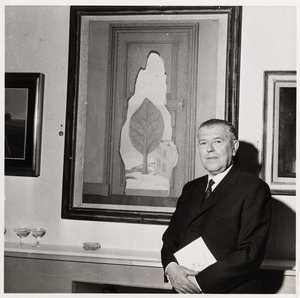
René Magritte
1898 - 1967 , Belgija
Brzi pregled
- Artistic Movement Or Style: Surealizam
- Artists Who Influenced This Artist: ['Giorgio de Chirico']
- Date Of Birth: 21. studenog 1898.
- Date Of Death: 15. kolovoza 1967.
- Full Name: René François Ghislain Magritte
- Nationality: Belgijanin
- Notable Artworks:
- Les Amants
- The Treachery of Images
- Time Transfixed
- The Human Condition
- Place Of Birth: Lessines, Belgiji
Povezani članci
Surrealist Painting Masterpieces: 10 Artworks That Redefined Reality | OriginalUniqueArt
Journey into the dreamlike world of Surrealism! Explore 10 masterpieces by Dali, Magritte & Miró that redefined art. Discover their stories & find museum-quality reproductions to elevate your home decor on OriginalUniqueArt.com.
Deset Genijalnih Remeka-djela Surrealizma: Uronite u Svijet Fantazije i Snoviđenja | OriginalUniqueArt
Otkrijte 10 remek-djela koja su definirala surrealizam! Uronite u svijet Dalija, Magritta i drugih genijalaca. Istražite priče iza slika, pronađite inspiraciju za svoj interijer te kupujte vrhunske reprodukcije na OriginalUniqueArt.com!
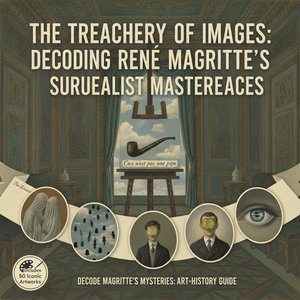
The Treachery of Images: Decoding René Magritte’s Surrealist Philosophy and the Paradox of Representation
Explore the profound mystery of René Magritte’s 'The Treachery of Images.' Dive into an expert analysis of his Surrealist philosophy, the paradox of representation, and how he challenged reality through the interplay of language and visual perception.
Surrealist Expression: Unlocking the Power of Dreams and the Subconscious through Art History
Explore the profound depths of Surrealism. From Dalí’s dreamscapes to Magritte’s enigmas, master the history of the subconscious mind through our expert art guide and discover museum-quality oil reproductions of the world's most iconic surrealist masterpieces.

The Treachery of Images: Decoding René Magritte’s Surrealist Vision and the Paradox of Representation
Delve into the profound mysteries of René Magritte’s Surrealism. Explore an expert analysis of 'The Treachery of Images,' decoding the philosophical paradoxes and visual subversions that redefined modern art history for collectors and connoisseurs alike.