Prebacite na printove
 Prikaži više







































 Za umjetnička djela ili reprodukcije veće od 105 cm (približno 41 inč) na bilo kojoj strani, okvir će biti isporučen u obliku rastavljenog seta za montažu. Ovaj način osigurava sigurnu dostavu i sprječava oštećenja tijekom transporta.


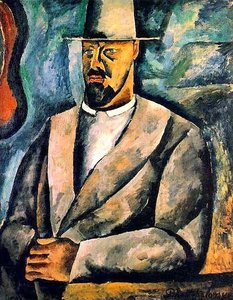
Still Life. Peaches.: A Vibrant Exploration of Color and Form
Pyotr Konchalovsky's "Still Life. Peaches," created in 1916, is a captivating example of Fauvism, an art movement celebrated for its bold use of color and expressive brushwork. This artwork, measuring 64 x 81 cm, transcends the traditional still life genre by imbuing everyday objects with a dynamic energy and emotional depth.
The Artist and His Style: A Pioneer of Russian Modernism
Pyotr Konchalovsky (1876-1956) was a pivotal figure in Russian art, recognized as a founding member of the "Jack of Diamonds" group. This collective championed avant-garde styles, seeking to modernize Russian art by embracing influences from Western European movements like Fauvism and Cubism. Konchalovsky's artistic journey reflects this evolution, moving from representational realism towards increasingly expressive and abstract forms. His work is characterized by a spontaneity and vitality that are particularly evident in "Still Life. Peaches." He was born in Slavianka, Kharkov Gubernia (now Ukraine) into an artistic family – his father being an art publisher. Konchalovsky’s early exposure to the world of art undoubtedly shaped his future career. He studied at the Imperial Academy of Arts in Saint Petersburg and later traveled to Paris to study at the Académie Julian.
Fauvism: A Revolution in Color
"Still Life. Peaches" exemplifies the core tenets of Fauvism, which translates literally as "wild beasts." This movement, flourishing in the early 20th century, rejected traditional academic approaches to color and form. Instead, Fauvist artists like Konchalovsky employed intense, non-naturalistic colors to convey emotion and create a visual impact. The painting features a bowl of peaches set against a deep purple background. These vibrant hues are not intended to accurately represent the objects' appearance but rather to evoke a feeling—a sense of warmth, ripeness, and perhaps even a touch of melancholy. The expressive brushstrokes further amplify this emotional intensity, adding texture and movement to the composition.
Composition and Symbolism
While seemingly simple in subject matter, "Still Life. Peaches" demonstrates a sophisticated understanding of composition. The arrangement of the peaches within the bowl creates a sense of balance and harmony, while the contrasting colors draw the viewer's eye across the canvas. The choice of peaches themselves carries symbolic weight; often associated with abundance, prosperity, and sensuality, they add another layer of meaning to the artwork. The inclusion of other elements like cups and saucers suggests an intimate domestic setting, inviting viewers to contemplate the quiet beauty of everyday life.
Emotional Impact and Legacy
"Still Life. Peaches" is more than just a depiction of fruit; it's a powerful expression of emotion through color and form. The painting’s vibrant palette and energetic brushwork create a dynamic visual experience that resonates with viewers long after they have looked away. Konchalovsky's work, including this striking still life, continues to inspire artists and art lovers alike, solidifying his place as a significant figure in the history of Russian modernism.
Pitanja i odgovori
Gdje mogu pronaći umjetnička djela slična djelu "Still Life. Peaches." autora Petar Končalovski?
Djela slična djelu "Still Life. Peaches." autora Petar Končalovski možete pronaći na stranici Slična djela tog umjetničkog djela.
Po kojim drugim imenima je Petar Končalovski poznat/a?
Petar Končalovski je poznat/a i pod imenom Petro Petrovič Končalovski, Pyotr Petrovich Konchalovsky.
Kojoj tonini teži "Still Life. Peaches."?
Green to Violet Spectrum nijansa prožima "Still Life. Peaches." autora Petar Končalovski.
 Pregledaj u realnoj veličini
 Pošalji
 Podijeli
 Detalji o umjetničkom djelu
 Vodič
Vodič

 Preuzmi umjetničko djelo
 Slični predmeti
 Rentgenska snimka
 Slide show
 Q&A
Q&A Statistika