Izbornik
Pregledaj u realnoj veličini Pregled u AR-u Prebacite na printove Prebacite na digitalnu sliku Pošalji
Detalji o umjetničkom djelu Vodič Dodaj u omiljene Preuzmi umjetničko djelo Slični predmeti Rentgenska snimka Slide show Statistika

Poliptih

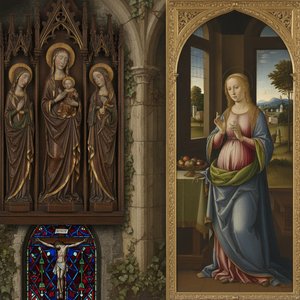
Poznati poliptih Pietro Alemanna iz Goetweiga, Austrije, prikazuje Majku Božju s Djetikom Isusom i skupinu svetaca – vrhunak kasnog gotičkog stilskog prelaza u renesanssku umjetnost Venecije. Isprobajte njegovstvo!

Discover Pietro Alemanno's stunning Polyptychs & religious art from 15th-century Goetweig, Austria. Explore his masterful late Gothic style and legacy as a key Renaissance painter.

Ručno rađena uljana reprodukcija

Ručno oslikano uljanim bojama na platnu u dimenzijama i okviru po vašem izboru, izrađeno po narudžbi od strane naših umjetnika. ( Prebacite na printove Prebacite na digitalnu sliku)

Corner sample of the P118B picture frame: oblikovani polistiren, 5 cm wide and 3 cm thick
P118B €10
Corner sample of the P118H picture frame: oblikovani polistiren, 5 cm wide and 3 cm thick
P118H €10
Corner sample of the P118W picture frame: oblikovani polistiren, 5 cm wide and 3 cm thick
P118W €10
Corner sample of the P438Z picture frame: oblikovani polistiren, 5.5 cm wide and 3.5 cm thick
P438Z €10
Corner sample of the P508JH picture frame: oblikovani polistiren, 7 cm wide and 3.5 cm thick
P508JH €12
Corner sample of the P508YH picture frame: oblikovani polistiren, 7 cm wide and 3.5 cm thick
P508YH €12
Corner sample of the P805H picture frame: oblikovani polistiren, 5 cm wide and 3.5 cm thick
P805H €10
Corner sample of the P805Z picture frame: oblikovani polistiren, 5 cm wide and 3.5 cm thick
P805Z €10
Corner sample of the P919BZ picture frame: oblikovani polistiren, 7 cm wide and 3.5 cm thick
P919BZ €10
Corner sample of the P919G picture frame: oblikovani polistiren, 7 cm wide and 3.5 cm thick
P919G €10
Corner sample of the P919XJ picture frame: oblikovani polistiren, 7 cm wide and 3.5 cm thick
P919XJ €10
Corner sample of the P959ZH picture frame: oblikovani polistiren, 5 cm wide and 3 cm thick
P959ZH €10
Corner sample of the P968JZ picture frame: oblikovani polistiren, 6 cm wide and 4 cm thick
P968JZ €12
Corner sample of the W106C picture frame: masivno drvo, 5 cm wide and 3 cm thick
W106C €8
Corner sample of the W218G picture frame: masivno drvo, 5 cm wide and 3 cm thick
W218G €10
Corner sample of the W218JH picture frame: masivno drvo, 5 cm wide and 3 cm thick
W218JH €8
Corner sample of the W218Y picture frame: masivno drvo, 5 cm wide and 3 cm thick
W218Y €10
Corner sample of the W307PJ picture frame: masivno drvo, 6 cm wide and 3 cm thick
W307PJ €10
Corner sample of the W316G picture frame: masivno drvo, 6 cm wide and 3 cm thick
W316G €10
Corner sample of the W316PJ picture frame: masivno drvo, 6 cm wide and 3 cm thick
W316PJ €8
Corner sample of the W316Y picture frame: masivno drvo, 6 cm wide and 3 cm thick
W316Y €10
Corner sample of the W398PJ picture frame: masivno drvo, 5 cm wide and 3 cm thick
W398PJ €8
Corner sample of the W4111J picture frame: masivno drvo, 6.5 cm wide and 3.5 cm thick
W4111J €10
Corner sample of the W500HY picture frame: masivno drvo, 7 cm wide and 5 cm thick
W500HY €15
Corner sample of the W500JH picture frame: masivno drvo, 7 cm wide and 5 cm thick
W500JH €15
Corner sample of the W692G picture frame: masivno drvo, 8 cm wide and 4 cm thick
W692G €12
Corner sample of the W849H picture frame: masivno drvo, 5 cm wide and 3 cm thick
W849H €8
Corner sample of the W940BG picture frame: masivno drvo, 7.5 cm wide and 4.5 cm thick
W940BG €15
Corner sample of the W953PJ picture frame: masivno drvo, 6 cm wide and 3.5 cm thick
W953PJ €8

Standardne dimenzije
po mjeri
CM
INCH

Odaberite jednu od naših unaprijed definiranih veličina koje odgovaraju izvornim proporcijama umjetničkog djela.

širina
visina

Unesite potrebnu širinu i visinu kako bi dimenzije odgovarale vašem okviru ili zidu. Budući da je riječ o ručno oslikanom djelu, umjetnik može malo proširiti rubove slike ili ih skratiti kako bi postigao drugačiji oblik — izbor je vaš. Prije početka slikanja poslat ćemo vam digitalni prikaz (mockup) radi potvrde. Slika prikazana na ovoj stranici ne predstavlja stvarni rezultat — samo digitalni prikaz to čini.

Primjeri mogućnosti prilagodbe: Zamijenite lice fotografijom klijenta; Dodajte ljubimca (npr. zamijenite mačku psom); Uključite skrivenu poruku u pozadinu; Promijenite pejzaž ili elemente pozadine.
Nakon narudžbe, tim OriginalUniqueArt.com kontaktirat će klijenta putem e-pošte radi dobivanja uputa te dostaviti probni prikaz (mockup)

Isporuka širom svijeta () u roku od 3-4 tjedna umjesto standardnih 5 tjedana. (28 Listopad). Bez kompromisa u kvaliteti.

Besplatna ekspresna dostava širom svijeta
Visokokvalitetno laneno platno
Potpuno osiguranje dostave
Jamstvo povrata carine i uvoznih poreza
Jamstvo vjernosti boja
Politika povrata u roku od 100 dana (samo u slučaju nedostataka)
Jamstvo povrata 100% novca
Popust na više proizvoda

Ukupna cijena

€ 264

Poliptih

Tehnika reprodukcije

Veličina reprodukcije

-

Ukupna cijena

€ 264

Osnovne informacije

  • Influences: Carlo Crivelli
  • Artist: Pietro Alemanno
  • Subject or theme: Religious iconography
  • Artistic style: Detailed realism
  • Title: Polyptych
  • Notable elements or techniques: Gold leaf application

Pietro Alemanno i Poliptih – Jedinstvo Late Gotike i Renesanse

Pietro Alemanno (c. 1430 – ca. 1498), rođen u Göttweicu, Austriji, predstavlja ključnu figuru koja spaja poslednje gotičke umetničke tradicije sa rastućom renesansskom školom Italije. Iako je bio zanemarujući za svoje vreme u poređenju sa velikanima kao što su Piero della Francesca i Fra Angelico, Alemannojev stil – karakterističan po pažnju na detalje i duboku senzitivnost prema religijskoj ikonografiji – osvojio je priznanje tokom svog života i nastavlja da fascinira umetničke istorije danas. Njegovo nasleđe nalazi se uglavnom u njegovom monumentalnom Poliptihu koji je naručio za Crkvu Svetog Petra Martire u Veneciji, zajedno sa velikim brojem oltara i duhovnih slika koje prikazuju stilsku sintezu dve umetničke ere. Ranije godine Alemannoove životopisne okolnosti ostaju oskudni, što odražava ograničenja arhivskih zapisa tokom XV veka. Međutim, znanstvena konsenzus sugeriše da je bio učenik Karla Kriveli i nastavio svoj umetnički razvoj u Veneciji, gde je stekao velikih priznanja kao jedan od najvažnijih umetnika svoje ere. Alemannojev stil je kombinacija poslednje gotičke estetike sa prvim znakovima renesanse, što se vidi u njegovoj izuzetnoj pažnji prema detaljima i korišćenju zlatnih folija koje su bile karakteristične za vreme njegove umetničke aktivnosti. Detalji Poliptha Alemanna Poliptih je izvrstan primer umetnosti svoje ere koji prikazuje svetopismo Marije i Isusa Hrista u centru kompozicije, okružen velikim brojem svetaca i figura iz kristanske ikonografije. Svaki svetac ima svoj atribut koji simbolizuje njegovu ulogu u istoriji vere. Izraziti detalji slike ukazuju na ogromnu umetničku vrednost Poliptha Alemanna kao umetničkog dela koje je bilo veoma cenjeno tokom XV veka. Zlatna folija koja se koristi u Polipthu Alemanna nije samo dekorativni element, već simbolizuje Božju svetlost i veličanstvo, što je bio cilj umetnika da izazove osećanje poštovanja kod gledalaca. Korištenje tehnike i Stilski karakteristika Alemanno je koristio tehniku koja je bila veoma poznata u vreme njegove aktivnosti – zlatnu foliju, koja je bila korišćena za dekoraciju oltara i drugih velikih umetničkih dela. Zlatna folija je bila pečljivo nanošena na površinu slike kako bi se postigli maksimalni efekti svetlosti i boje. Osim toga, Alemanno je koristio tehniku perspektive kako bi prostor slike bio što verodostojniji i lepši za gledalce. Stilski karakteristika Poliptha Alemanna su veoma bogata dekoracija i detaljni prikaz svetaca i drugih figura iz istorije vere. Historijski kontekst i Simbolizam Poliptih je nastao u vreme kada je bila veoma važna umetnost kao sredstvo komunikacije između ljudi i Boga. Crkva Svetog Petra Martire u Veneciji je bila poznata po svojim velikim oltarima i drugim umetničkim delima koje su prikazivale svetopismo i istoriju vere. Poliptih Alemanna je bio izraz umetničkog talenta svog vremena i pokazao kako se umetnost može koristiti za afirmaciju religijske veroobraznosti. Simbolizam koji koristi Alemanno u svom Polipthu je veoma bogat i kompleksan, što zahteva pažljivo upoznavanje istorijskog konteksta kako bi se potpuno razumela umetnička vrednost dela. Zlatna folija koja se koristi u Polipthu simbolizuje Božju svetlost i veličanstvo, dok detaljni prikaz svetaca i drugih figura iz istorije vere služi kao podsetnik na važnost religijske veroobraznosti. Emocionalni Utisak i Inspiracija Poliptih Alemanna ima veliki emocionalni utisak kod gledalaca koji su upoznati sa umetnošću XV veka. Izraziti detalji slike, bogata dekoracija i svetlost zlatne folije stvaraju osećanje veličanstva i poštovanja prema Bogu. Poliptih Alemanno je bio izvor inspiracije za mnoge umetnike svoje ere i nastavlja da inspiriše umetničke kreativnosti danas. Ako ste zainteresovani za umetnost XV veka ili želite pronaći novi izvor inspiracije, Poliptih Alemanna je vredan upozorenja.

Pitanja i odgovori

Mogu li vidjeti rentgenski prikaz djela "Poliptih" autora Pietro Alemanno?

Djelo "Poliptih" možete istraživati sloj po sloj na stranici Rentgenska snimka, koja nudi interaktivni pregled inspiriran restauratorskim svjetlosnim stolom, s jedanaest optičkih prikaza slike.

Kakvu atmosferu unosi "Poliptih" autora Pietro Alemanno u interijer?

"Poliptih" autora Pietro Alemanno odiše Spokojno atmosferom i preporučuje se za Dnevni boravak. Raspoloženje je ono što umjetničko djelo unosi u prostor oko sebe.

Kako se boje djela "Poliptih" autora Pietro Alemanno povezuju s njegovom emocionalnošću?

"Poliptih" autora Pietro Alemanno spaja Zemljani paletu s Spokojno tonom.


Biografija umjetnika

A Bridge Between Eras: The Life and Legacy of Pietro Alemanno

In the vibrant, shifting landscape of the fifteenth century, few artists embodied the transition from the medieval to the modern as gracefully as Pietro Alemanno. Born around 1430 in the serene surroundings of Göttweich, Austria, Alemanno’s life was a journey across borders and artistic philosophies. He emerged as a pivotal figure who bridged the gap between the lingering, ornate traditions of the Late Gothic style and the burgeoning, humanistic dynamism of the Italian Renaissance. While history often casts him in the shadow of giants like Piero della Francesca or Fra Angelico, a closer look at his oeuvre reveals an artist of profound independence and technical mastery, capable of weaving together the spiritual gravity of Northern Europe with the luminous innovations of the Italian peninsula.

The early chapters of Alemanno’s life remain shrouded in the mists of time, yet his artistic lineage is clearly traced through his connection to the masters of the Marches. Scholarly tradition long suggested he was a mere pupil or follower of the renowned Carlo Crivelli, a Venetian master celebrated for his blend of Gothic elegance and Renaissance realism. However, recent historical rediscoveries have painted a much more compelling portrait of an accomplished professional. Evidence suggests that Alemanno’s presence in the Marches region predates even that of Crivelli, positioning him not as a student seeking guidance, but as an established master capable of securing significant and complex commissions almost immediately upon his arrival in Italy.

The Synthesis of Style and Sacred Iconography

Alemanno’s work is a breathtaking synthesis of textures, light, and devotion. His stylistic evolution is most strikingly visible in his ability to integrate the meticulous, almost tactile detail characteristic of Gothic art with the new, sophisticated command of perspective emerging from the Renaissance. In his monumental Polyptych, commissioned for San Pietro Martire in Venice, one can witness this beautiful tension. The architectural framework—composed of elegant arches and columns—does not merely serve as a decorative border; it functions as a window into a sacred space, using deliberate spatial arrangement to guide the viewer’s eye toward the central figures of the Virgin and Child.

His mastery extended beyond mere structure to the very soul of his subjects. Alemanno possessed an unwavering devotion to Christian iconography, imbuing his saints and divine figures with a profound sensitivity that resonated deeply with the faithful of his era. His technique involved a meticulous approach to pigment preparation and compositional planning, allowing him to create surfaces that felt both ethereal and tangibly real. Whether through the soft glow of a Madonna’s countenance or the intricate, jewel-like details of an altarpiece, his work sought to achieve a visual harmony that reflected the divine order.

Major Achievements and Historical Significance

The breadth of Alemanno's contributions can be seen in the diverse range of his commissions, from grand frescoes to intimate devotional panels. His ability to adapt to different mediums and regional tastes solidified his reputation as a leading personality in the Northern-inspired figure painting that flourished in the Marches during the late 15th century. Some of his most notable milestones include:

  • The Annunciation Fresco (1484): Executed for the Palazzo Communale in Ascoli, this work demonstrates his sophisticated use of elaborate architectural settings to create a sense of depth and drama.
  • Altarpiece of the Virgin and Child (1489): Created for the church of Santa Maria della Carita, this piece showcases his skill in arranging complex groups of saints—including SS. Michael, Biaise, Jerome, and Nicholas—within a cohesive, sacred narrative.
  • The Venetian Polyptych: A testament to his ability to absorb the luminosity and grandeur of the Venetian school, blending it with his inherent Gothic sensibilities.

Ultimately, Pietro Alemanno’s significance lies in his role as a cultural conduit. He was an artist who moved between the Germanic roots of his birth and the Italian heart of the Renaissance, carrying with him a unique aesthetic language that honored the past while embracing the future. Though he passed away in Ascoli Piceno around 1497 or 1498, his legacy survives in the quiet majesty of his altarpieces, which continue to captivate art historians and devotees alike with their enduring spiritual power and technical brilliance.

Pietro Alemanno

Pietro Alemanno

1430 - 1497 , Austria

Osnovne informacije

  • Full Name: Pietro Alemanno
  • Nationality: Austrian
  • Date Of Birth: 1430
  • Date Of Death: 1497
  • Place Of Birth: Goetweig, Austria
  • Notable Artworks: ['Polyptych']
  • Artistic Movement Or Style: Late Gothic Style / Renaissance Painting
  • Artists Who Influenced This Artist: Carlo Crivelli
  • Artists Or Movements Influenced By This Artist: Perugino
Istražite umjetnička djela organizirana prema temama, stilovima i karakteristikama.