

 Pregledaj u stvarnoj veličini
 Podijeli
 Podijeli
 Detalji
 Vodič
Vodič

 Preuzmi datoteku
 Slični predmeti
 Rentgenska snimka
 Slide show
 Statistika
A Musical Party
 Oil On Canvas
- WallArt
- Dutch Golden Age
 1675
1675- Early Modern
 106.0 x 137.0 cm
 English Heritage
 Pročitajte više
Giclée / Umjetnički otisak
Giclée tisak muzejske kvalitete ili otisak na platnu uz brzu proizvodnju i fleksibilne opcije završne obrade. ( Naručite ručno oslikano reprodukciju Prebacite na digitalnu prodaju slika)




P118B $10

P118H $10

P118W $10

P438Z $10

P508JH $12

P508YH $12

P805H $10

P805Z $10

P919BZ $10

P919G $10

P919XJ $10

P959ZH $10

P968JZ $12

W106C $8

W218G $10

W218JH $8

W218Y $10

W307PJ $10

W316G $10

W316PJ $8

W316Y $10

W398PJ $8

W4111J $10

W500HY $15

W500JH $15

W692G $12

W849H $8

W940BG $15

W953PJ $8




Odaberite jednu od naših unaprijed definiranih veličina koje odgovaraju izvornim proporcijama umjetničkog djela.

Možete unijeti vlastite dimenzije kako biste umjetničko djelo prilagodili specifičnom okviru ili prostoru. Ako odabrana veličina ne odgovara proporcijama izvornog rada, izrezat ćemo dio slike ili je proširiti pomoću ogledalnog efekta ili jednobojne rubne površine. Digitalni prikaz (mockup) bit će vam poslan na odobrenje prije početka proizvodnje.
Imajte na umu da pregled na zaslonu ne odražava stvarno izrezivanje ili proširivanje. Samo će mockup točno prikazati konačnu kompoziciju.
Iako su dostupne prilagođene veličine, preporučujemo odabir dimenzije iz unaprijed definirane liste kako biste očuvali izvorne proporcije.
Dostava širom svijeta () u roku od 2 tjedna umjesto standardnih 4/5 tjedana. (26 Rujan)

Besplatna ekspresna dostava širom svijeta

Visokokvalitetno laneno platno

Potpuno osiguranje transporta

Jamstvo povrata carine i uvoznih poreza

Jamstvo vjernosti boja

Politika povrata u roku od 100 dana (samo u slučaju nedostataka)

Jamstvo povrata 100% novca

Popust na više proizvoda
 Opcija stakla dostupna je samo za dimenzije manje od 110 cm

A Musical Party
Giclée / Umjetnički otisak
Veličina reprodukcije
-


Ukupna cijena
$ 80
The Luminous Heart of Domestic Merriment
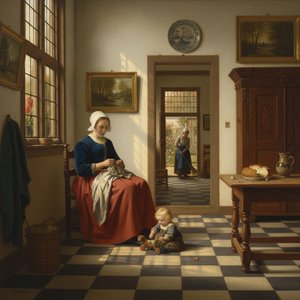
To gaze upon this depiction of "A Musical Party" is to step directly into the warm, glowing embrace of the Dutch Golden Age. Pieter de Hooch masterfully captures not merely an event, but a palpable atmosphere—a moment suspended in time where conviviality and artistry intertwine. The scene unfolds within a richly appointed interior, suggesting the comfortable elegance of a prosperous household from 1675. It is a tableau vivant of social grace; one can almost hear the vibrant strains of the violin echoing through the room, mingling with hushed laughter and murmured conversation. De Hooch’s genius lies in his ability to elevate the everyday gathering into something mythic, suggesting that true beauty resides within shared human experience.
Mastery of Light and Domestic Space
Technically, this work is a profound study in light. Pieter de Hooch was renowned for his unparalleled handling of natural illumination, and here it shines through with breathtaking clarity. The light seems to pour in from unseen sources—perhaps an open doorway just beyond the frame—illuminating dust motes dancing in the air and casting those characteristic, gentle shadows that define Dutch genre painting. Notice how the light catches the polished wood of the dining table and reflects softly off the gathered figures. This meticulous attention to naturalism is what makes the scene feel so immediate; it breathes. The composition guides the eye effortlessly across the assembled company—the musicians, the attentive listeners, even the casually placed pets, such as the watchful dogs and the resting cat—all contributing to a sense of ordered, yet joyful, chaos.
A Glimpse into 17th-Century Society
Historically, this painting offers an intimate window into the life of the burgeoning middle class in the Netherlands. These were not scenes of royal excess, but rather celebrations rooted in culture, music, and community—the hallmarks of a society that valued domestic tranquility alongside artistic pursuit. The inclusion of so many figures suggests a gathering of friends or family enjoying leisure time, an activity highly prized during this era. It speaks to a life lived with refinement, where the arts were not mere entertainment, but integral components of social bonding. For the modern admirer, it serves as a poignant reminder of the enduring power of shared cultural moments.
Symbolism and Enduring Warmth
Beyond the surface gaiety, there is a subtle symbolism at play. The music itself acts as the emotional conduit; it binds the disparate individuals into one collective experience. The presence of domestic animals—the dogs and the cat—grounds the lofty celebration in tangible reality, suggesting that life’s greatest joys are often found amidst the familiar comforts of home. When considering this piece for a collector's wall or an interior design focal point, one is not simply acquiring paint on canvas; one is adopting a feeling—a deep, resonant sense of belonging and cultured warmth that transcends the centuries.
Biografija umjetnika
ranim i edukacija
Pieter de Hooch, istaknuta figura hollandskog zlatnog doba, rođen je 20. prosinca 1629. godine u Rotterdamu, u Nizozemskoj. Bio je najstariji od petoro djece Hendricka Hendricksza de Hoocha, zidar, i Annetge Pieters, koja je bila pratilja pri rođenju. Iako su detalji o njegovom ranoj životu oskudni, vjeruje se da je stvarao u Rotterdamu, Delftu i Amsterdamu. De Hoochina umjetnička edukacija odvijala se u Haarlemu pod vodstvom pejzažnog slikara Nicolaesa Berchema, uz sudjelovanje Jacoba Ochtervelta. To su razdoblje postavila temelje njegovom budućem uspjehu kao majstora tihih domaćih scena koje često krase otvorena vrata.umjetnički stil i teme
De Hoochoovo djelo prepoznatljivo je po nevjerojatnoj pažnji posvećenoj detaljima, naturalizmu i virtuoznom korištenju svjetlosti. Njegova umjetnost često slavi svakodnevni život, odražavajući vrijednosti i težnje tada usredotočenog novog sloja srednje klase. Izvanredan primjer tog stila je "dvorište kuće u Delftu" (1658), koje demonstrira njegovu sposobnost da uhvati najobičnije detalje svakodnevice. Iako de Hoochovo djelo dijeli teme i kompozicije s Emanuelom de Wittem, njegova fokusiranost na ljude i njihove međusobne odnose izdvaja ga od ostalih. To je jasno vidljivo u djelima kao što su "žena koja doji" (1658) i "žena s bebom u krilu" (1658), koja svjedoče njegovom dubokom interesu za intimne domaće prizore.istaknuta djela i naslijeđe
Neka od najznačajnijih de Hoochevih remek-djela uključuju:- "veseli pijanica" (oko 1650.)
- "igrači karata u suncem okupanom prostoriji" (1658.)
- "žena koja priprema kruh i maslac za dječaka" (1661.)
muzeji i kolekcije
De Hoocheva djela mogu se pronaći u brojnim muzejima, uključujući Koninklijk Museum voor Schone Kunsten u Antverpu, Belgija, koji posjeduje goleme zbirke europske umjetnosti od 15. do 20. stoljeća. Otkrijte više o Pieteru de Hoochu i njegovim djelima na OriginalUniqueArt: [https://OriginalUniqueArt.com/@/pieter-de-hooch](https://OriginalUniqueArt.com/@/pieter-de-hooch) /hr/art/show/art-d3b4kt-hr/ (otkrijte remek-djela iz Koninklijk Museum voor Schone Kunsten, Belgija)
Pieter De Hooch
1629 - 1694 , Nizozemska
Brzi pregled
- Datum Rođenja: 20. prosinca 1629.
- Datum Smrti: 1694.
- Državljanstvo: Nizozemac
- Mjesto Rođenja: Rotterdam, Nizozemska
- Puno Ime: Pieter Hendricksz de Hooch
- Umjetnici Koji Su Utjecali Na Njega: ['Nicolaes Berchem']
- Umjetnici/Pokreti Koje Je Utjecao: ['Jan Vermeer']
- Umjetnički Pokret/Stil: Delft School, Zlatno doba
- Značajna Djela:
- Veseli pijanac
- Kartaši u sunčanoj sobi
- Žena priprema kruh i maslac
Povezani članci

Francisco Goya: 25 Remek-djela Španjolskog Majstora za Vaš Dom | OriginalUniqueArt
Uronite u svijet Francisca Goye! Otkrijte 25 remek-djela španjolskog majstora – od portreta do crnih slika. Povijest umjetnosti, tehnike i inspiracija za vaš dom. Kupite reprodukcije na OriginalUniqueArt.com!

Golden Light & Dutch Skies: The Timeless Magic of Dutch Golden Age Landscapes
Discover the breathtaking beauty of Dutch Golden Age landscapes. Explore the mastery of light, chiaroscuro, and 17th-century realism through an expert art history lens, celebrating the enduring legacy of the Dutch Masters for discerning collectors and art lovers.
Pieter de Hooch: Illuminating Dutch Domestic Life & Golden Age Charm
Explore the captivating world of Pieter de Hooch, a master of Dutch Golden Age painting. Discover his innovative use of light, intimate domestic scenes, and lasting influence on art history. Learn more at OriginalUniqueArt.

Willem van de Velde the Elder: Master of Maritime Painting & Chronicler of the Dutch Golden Age
Discover the captivating maritime paintings of Willem van de Velde the Elder, a master chronicler of the Dutch Golden Age. Explore his unparalleled realism and lasting influence on naval art history.

Zlatno Dobo Nizozemske: 10 Remekdjela Koja Su Definirala Umjetnost i Dekor
Otkrijte remekdjela nizozemskog Zlatnog doba! Uronite u svijet Rembrandta, Vermeera i drugih majstora. 10 slika koje su definirale holandsku umjetnost & barokni stil. Inspirirajte se za dekoraciju doma s OriginalUniqueArt.com – reprodukcije vrhunske kvalitete!
