
 Pregledaj u stvarnoj veličini
 Podijeli
 Podijeli
 Detalji
 Vodič
Vodič

 Preuzmi datoteku
 Slični predmeti
 Rentgenska snimka
 Slide show
 Statistika
George Weimer


 Pročitajte više
Giclée / Umjetnički otisak
Giclée tisak muzejske kvalitete ili otisak na platnu uz brzu proizvodnju i fleksibilne opcije završne obrade. ( Naručite ručno oslikano reprodukciju Prebacite na digitalnu prodaju slika)




P118B €10

P118H €10

P118W €10

P438Z €10

P508JH €12

P508YH €12

P805H €10

P805Z €10

P919BZ €10

P919G €10

P919XJ €10

P959ZH €10

P968JZ €12

W106C €8

W218G €10

W218JH €8

W218Y €10

W307PJ €10

W316G €10

W316PJ €8

W316Y €10

W398PJ €8

W4111J €10

W500HY €15

W500JH €15

W692G €12

W849H €8

W940BG €15

W953PJ €8




Odaberite jednu od naših unaprijed definiranih veličina koje odgovaraju izvornim proporcijama umjetničkog djela.

Unesite širinu i visinu koja vam je potrebna, kako bi odgovarali vašem okviru ili zidu. Print se može samo izrezati, nikada ne može biti veći od slike, stoga veličina s drugačijim oblikom gubi dio slike. Šaljemo vam digitalni prikaz (mockup) na odobrenje prije bilo kakve štampe. Slika prikazana na ovoj stranici ne prikazuje stvarni rez — to čini samo digitalni prikaz.
Dostava širom svijeta () u roku od 2 tjedna umjesto standardnih 4/5 tjedana. (25 Listopad)

Besplatna ekspresna dostava širom svijeta

Visokokvalitetno laneno platno

Potpuno osiguranje transporta

Jamstvo povrata carine i uvoznih poreza

Jamstvo vjernosti boja

Politika povrata u roku od 100 dana (samo u slučaju nedostataka)

Jamstvo povrata 100% novca

Popust na više proizvoda
 Opcija stakla dostupna je samo za dimenzije manje od 110 cm

George Weimer
Giclée / Umjetnički otisak
Veličina reprodukcije
-


Ukupna cijena
€ 70
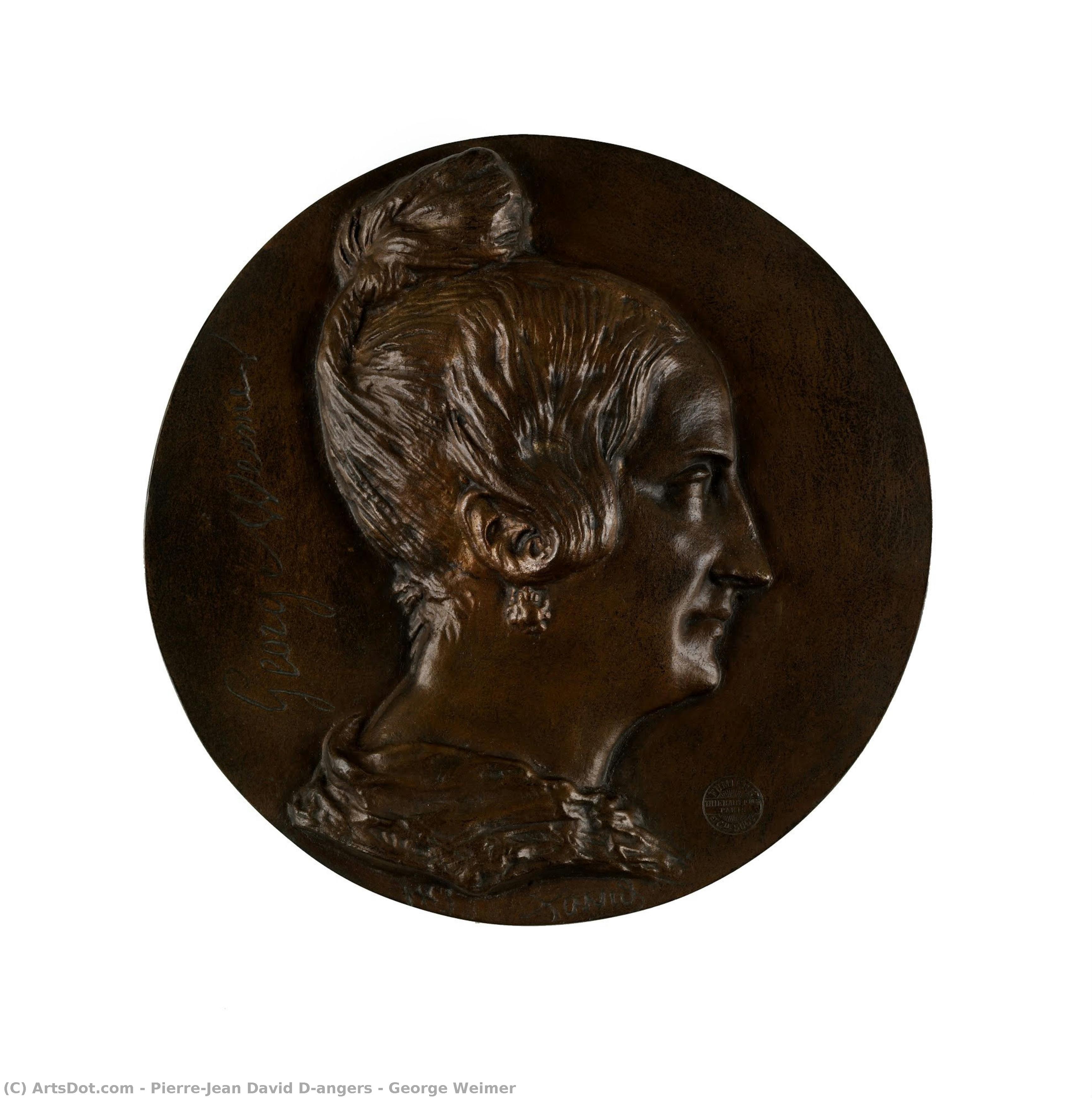
A Portrait of Romanticism: George Weimer by Pierre-Jean David d'Angers
The image before you isn’t merely a depiction of a man; it’s a window into the heart of 19th-century France, a poignant study in melancholy and quiet dignity. This captivating portrait of Marguerite-Josephine Weimer, known as Mademoiselle George, is a masterful work by Pierre-Jean David d'Angers, executed around 1833, and now meticulously reproduced for discerning collectors and admirers of Romantic art. David’s skill lies not just in capturing likeness, but in imbuing his subject with an almost palpable sense of introspection – a quiet sorrow that resonates deeply even across the centuries.
The composition itself is deceptively simple. A close-up view focuses on Weimer's face, rendered with exquisite detail. The bronze coin serves as a compelling backdrop, its smooth surface and intricate design offering a subtle contrast to the softness of her features. Her gaze, directed downward, speaks volumes – it’s not a look of defiance or anger, but rather one of quiet resignation, perhaps reflecting the challenges faced by a woman navigating the demanding world of Parisian theatre in an era where female performers often struggled for recognition and respect. The pearl necklace, a symbol of elegance and status, hints at her past successes, while the hat adds a touch of formality, suggesting a life lived within the constraints of societal expectations.
The Artist and His Time
Pierre-Jean David d'Angers (1788-1856) was a pivotal figure in French art during a period of dramatic social and political change. Born in Angers, he initially trained as a woodcarver before being drawn to the burgeoning world of sculpture. His early apprenticeship with Jacques-Louis David, the celebrated neoclassical painter, provided him with a rigorous foundation in artistic technique and a deep understanding of classical ideals. However, David d’Angers quickly developed his own distinctive style, embracing the emotional intensity and dramatic narratives characteristic of the Romantic movement. His work frequently explored themes of heroism, tragedy, and the human condition – subjects that mirrored the turbulent times he inhabited.
The portrait itself was created during a period of intense artistic experimentation and social upheaval. The Napoleonic era had left France profoundly changed, and artists were grappling with questions of identity, national pride, and the role of art in shaping public opinion. David d’Angers's decision to adopt the name “David d’Angers” – a deliberate homage to his master while asserting his own artistic lineage – reflects this complex interplay between tradition and innovation.
Symbolism and Emotional Resonance
Beyond its technical brilliance, the portrait is rich in symbolic meaning. The downward gaze of Weimer suggests introspection and perhaps a sense of isolation—a common theme within Romantic art. The coin, with its intricate details, could represent fleeting beauty or the ephemeral nature of fame. It’s a subtle reminder that even the most celebrated figures are ultimately subject to time and decay. The choice of bronze as the medium further enhances this sense of permanence and timelessness – a material chosen for its durability and ability to capture both form and texture with remarkable fidelity.
The portrait's emotional impact is undeniable. It’s not a celebratory depiction of beauty, but rather a poignant exploration of human vulnerability. Weimer’s expression invites the viewer to contemplate her story – her struggles, her triumphs, and ultimately, her enduring legacy as a captivating performer in a world that often failed to recognize her worth.
A Legacy Reimagined
This meticulously crafted reproduction captures not only the visual details of David d’Angers's original masterpiece but also its profound emotional resonance. Whether adorning a grand salon or a more intimate space, this artwork offers a captivating glimpse into the heart of Romanticism – a testament to the enduring power of art to illuminate the human experience. The quality of the reproduction ensures that every nuance of the original is faithfully preserved, allowing you to appreciate the artist’s skill and the subject's story with unparalleled clarity.
Consider this piece as more than just decoration; it’s an investment in a timeless work of art—a conversation starter, a source of inspiration, and a beautiful addition to any collection.
Pitanja i odgovori
Koje motive i atmosferu spaja "George Weimer" autora Pierre-Jean David D'Angers?
"George Weimer" autora Pierre-Jean David D'Angers spaja french actress, romanticism, bronze coin, portrait, historical figure, 19th century, weimer s Romantic atmosferom.
Za koji prostor sugeriramo "George Weimer" autora Pierre-Jean David D'Angers?
Reprodukcija djela "George Weimer" izvrsno se uklapa u Living Room.
Može li se prikaz "George Weimer" autora Pierre-Jean David D'Angers slobodno reproducirati?
"George Weimer" autora Pierre-Jean David D'Angers je u u javnom vlasništvu – autorska prava su istekla. Ovaj status određuje način na koji se prikaz djela može reproducirati.
Biografija umjetnika
Naslije utkane u kamen: Život i umjetnost Pierre-Jeana Davida d’Angersa
Rođen u francuskom Angersu 1788. godine, Pierre-Jean David započeo je svoj umjetnički put prožet republikanskim žarom koji će obilježiti veći dio njegovog života i stvaralaštva. Počevši kao šegrt lokalnog drvosjekara – svog oca – mladi David brzo je pokazao talenat za kiparstvo koji će ga pogoniti prema višim ambicijama. Pariz je dočekao 1808. godine, grad prepun klasične tradicije i revolucionarnog duha, gdje je tražio podučavanje pod Philippeom-Laurentom Rolandom u École des Beaux-Arts. To je bilo formativno razdoblje koje ga je učvrstilo u neoklasičnim principima, istovremeno ga izlažući rastućem pokretu romantizma. Ključni trenutak dogodio se 1809. godine kada je ušao u studio Jacquesa-Louisa Davida, usvajajući ime „David d’Angers” ne samo kao profesionalnu oznaku, već i kao svjesno isticanje vlastitog porijekla i umjetničke ambicije – kako bi se razlikovao od svog slavnog učitelja. To usvajanje naziva signaliziralo je želju da izgradi vlastiti put uz priznanje dubokog utjecaja vodećeg slikara tog doba. Rani izazovi obilježili su njegove parizske godine, no on je opstao, stekavši priznanje djelima poput „Othryades” 1810. godine i naposljetku osvojivši prestižnu nagradu Prix de Rome 1811. za svoju skulpturu „Epaminondas”.Od rimskih sanjarenja do neoklasičnog majstorstva
Pet godina koje je David d’Angers proveo u Rimu, od ente 1811. do 1816. godine, pokazalo se transformativnim. Uronjen u svijet klasične antike i pod utjecajem majstora poput Antonia Canove, njegov je umjetnički vid sazrijevao. Upio je ideale grčke skulpture – njezin naglasak na idealiziranom obliku, herojskom narativu i emocionalnoj suzdržanosti – no počeo je te principe prožimati vlastitom, osobnom senzibilnošću. Ovo razdoblje nije bilo samo akademsko proučavanje; bilo je to i vrijeme političkog buđenja. Restauracija Bourbon monarhije u Francuskoj bacila je sjenu na njegov povratak, što je potaknulo kratko boravište u Engleskoj gdje se susreo s divljenjem, ali i s kritičkim pogledima zbog svoje povezanosti s Jacquesom-Louisom Davidom, koji je bio vezan uz revolucionarni režim. Međutim, po povratku u Pariz, njegov talent brzo je pronašao priznanje. Postao je poznat po svojim portretnim medaljonima – nevjerojatno detaljnim i psihološki prodorno prikazima istaknutih osoba – kao i po monumentalnim skulpturama koje su slavile građanske vrline i nacionalne heroje. Njegov rad na Trijumfalnom kapiji i u Louvru pokazao je rano majstorstvo u velikim projektima, utvrđujući ga kao kipara sposobnog za najambicioznije narudžbe.Kipar heroja i ideala
Umjetnički opus Davida d’Angersa bio je iznimno raznolik, obuhvaćajući statue, reljefe, grobnice i, što je najznačajnije, portretne medaljone. Posjedovao je izvanrednu sposobnost ne samo da uhvati fizičku sličnost, već i unutarnji karakter svojih subjekata. Njegovi portreti nisu bili puko predstavljanje; bili su interpretacije – prožete osjećajem dostojanstva, inteligencije i moralne snacije. Među njegovim najslavnijim djelima nalaze se „Ranjeni Philopoemen”, smješten u Louvre, potresan prikaz tragične sudbine grčkog generala, te „La Douleur”, koja pokazuje njegovo majstorstvo u emocionalnom izražavanju. Ipak, upravo su njegove monumentalne narudžbe utvrdile njegovu reputaciju. Pedimentalna skulptura za Panthéon u Parizu stoji kao možda njegovo najznačajnije postignuće – sveobuhvatni alegorijski prikaz francuskog patriotizma i intelektualnog naslijeđa. Ostala značajna djela uključuju spomenik Gutenbergu u Strasbourgu i konjičku statuu generala Goberta na groblju Père Lachaise, što su oba dokazi njegove vještine u prenošenju snage i dinamike kroz skulpturalni oblik. Također je stvorio bust Lafayettea za Kongres Sjedinjenih Država, simbol francusko-američkog prijateljstva.Trajni utjecaj: Naslijeđe i povijesna važnost
Pierre-Jean David d’Angers bio je više od običnog kipara; bio je proizvod svog vremena – svjedok revolucije, carstva i restauracije. Njegova umjetnost odražava političke i intelektualne struje koje su oblikovale Francusku 19. stoljeća. Obabrao je republikanske ideale, slaveći likove koji su utjelovljivali hrabrost, integritet i predanost javnoj službi. Iako čvrsto ukorijenjen u neoklasičnoj tradiciji, njegov rad je također nagovijestio pojavu romantizma, s naglaskom na emocionalni intenzitet i dramatični narativ. Njegov utjecaj protezao se izvan domena kiparstva, inspirirajući generacije umjetnika i oblikujući vizualni krajolik Francuske. Danas se njegova djela mogu pronaći u istaknutim muzejima diljem svijeta, uključujući The Walters Art Museum u Baltimoreu i The Metropolitan Museum of Art u New Yorku. Musée David u Angersu služi kao posvećeno čvorište njegove umjetnosti, čuvajući njegovo naslijeđe za buduće generacije. David d’Angers ostaje uvjerljiva figura – kipar koji nije samo uhvatio lica heroja, već je i utjelovio duh jedne ere. Njegova sposobnost spajanja klasičnog oblika s romantičnim izrazom nastavlja odjekivati kod publike i danas, učvršćujući njegovo mjesto kao jednog od najvažnijih i najtrajnijih umjetnika Francuske.
Pierre-Jean David D'Angers
1788 - 1856 , Francuska
Brzi pregled
- Artistic Movement Or Style: Neoklasicizam
- Artists Who Influenced This Artist:
- Jacques-Louis David
- Philippe-Laurent Roland
- Date Of Birth: 1788.
- Date Of Death: 1856.
- Full Name: Pierre-Jean David d'Angers
- Nationality: Francuz
- Notable Artworks:
- Ranjeni Filopimen
- La Douleur
- Epaminondas
- Place Of Birth: Angers, Francuska
Povezani članci
25 Remek-djela Musée d'Orsay: Monet, Van Gogh i ljepota impresionizma za vaš dom
Uronite u svijet impresionizma i postimpresionizma s 25 remek-djela Musée d'Orsay! Otkrijte priče Moneta, Van Gogha, Degasa i drugih majstora. Pronađite savršenu reprodukciju za vaš dom na OriginalUniqueArt.com

Jacques-Louis David: Neoclassical Ideals & Revolutionary Witness
Explore the life & art of Jacques-Louis David, leading Neoclassical painter of the French Revolution. Discover iconic works like 'The Death of Marat' and his lasting impact on art history. Expert analysis & high-quality reproductions at OriginalUniqueArt.

Georges Braque: 25 Remek-djela Kubizma i Modernog Umjetnosti za Vaš Dom
Uronite u svijet Georges Braquea! Otkrijte 25 remek-djela kubizma i moderne umjetnosti. Saznajte priče iza slika, tehnike i inspiraciju ovog francuskog slikara. Kupite reprodukcije vrhunske kvalitete za vaš dom na OriginalUniqueArt.com
Gerard David: Bridging Late Medieval Tradition with Early Renaissance Humanism
Explore the captivating world of Gerard David, a pivotal figure bridging late medieval artistry with the Early Renaissance. Discover his innovative techniques, religious masterpieces, and enduring legacy – a must-read for discerning art collectors.

Georges Seurat: 25 Remek-djela Pointilizma za Uljepšanje Vašeg Prostora | OriginalUniqueArt
Uronite u svijet Georges Seurata i njegovih 25 remek-djela pointilizma! Otkrijte priče iza ikonskih slika, tehniku chromoluminarizma i inspiraciju za vaš dom. Reprodukcije vrhunske kvalitete dostupne na OriginalUniqueArt.com.