Prebacite na printove
 Prikaži više







































 Za umjetnička djela ili reprodukcije veće od 105 cm (približno 41 inč) na bilo kojoj strani, okvir će biti isporučen u obliku rastavljenog seta za montažu. Ovaj način osigurava sigurnu dostavu i sprječava oštećenja tijekom transporta.


Buveuse d'absinthe: A Portrait of Quiet Contemplation
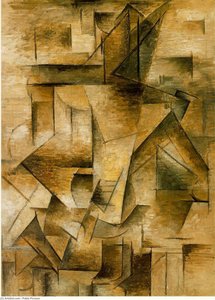
Pablo Picasso’s “Buveuse d’absinthe,” completed in 1902, is more than just a depiction of a woman; it’s a snapshot of Parisian bohemian life and a masterful exploration of psychological portraiture. Painted during Picasso's formative years—a period marked by experimentation with Cubism and grappling with personal loss—the artwork embodies the spirit of its time while simultaneously delving into themes of introspection and melancholy.
- Subject Matter: The painting portrays a woman seated at a table, seemingly absorbed in her thoughts. Her gaze downward suggests a profound contemplation, hinting at inner turmoil beneath a veneer of composure.
- Style & Technique: Picasso employs a fragmented Cubist style, characteristic of his early oeuvre. Geometric shapes dominate the composition—the table, chair, and even the woman’s torso are broken down into planes and facets—creating an illusionistic effect that defies traditional perspective. The muted palette contributes to the painting's somber mood.
- Historical Context: “Buveuse d’absinthe” emerged during a vibrant cultural landscape in Paris, where absinthe – a potent anise liqueur – was consumed widely by artists and intellectuals as a stimulant for creativity. Picasso himself frequented cafés frequented by bohemian figures, absorbing the atmosphere of intellectual discourse and artistic innovation.
Symbolism & Emotional Resonance
The woman’s posture—her hands resting on her face—is laden with symbolic significance. It represents vulnerability, introspection, and perhaps a desire to escape from external pressures. The inclusion of the wine glasses and bottle serves as subtle reminders of social rituals and indulgence, juxtaposed against the woman's solitary gaze.
- Wine Glasses & Bottle: These objects symbolize conviviality and pleasure but also highlight the woman’s isolation from others.
- Clock: The clock hanging on the wall above her head underscores the passage of time—a poignant reminder of mortality and the fleeting nature of experience.
A Legacy of Impressionistic Fragmentation
Picasso's masterful manipulation of form and color elevates “Buveuse d’absinthe” beyond mere representation, transforming it into an emotionally resonant portrait that captures a moment of quiet contemplation. It stands as a testament to Picasso’s pioneering approach to painting—a rejection of academic conventions in favor of subjective vision—and continues to fascinate viewers with its understated beauty and psychological depth.
- Influence: This artwork profoundly impacted the development of Cubism, establishing Picasso's reputation as a visionary artist who challenged artistic norms.
- Reproductions: High-quality reproductions of “Buveuse d’absinthe” offer art lovers and interior designers alike an opportunity to experience the painting's evocative atmosphere and intellectual complexity in their own homes.
Pitanja i odgovori
Kako mogu pregledati reprodukciju djela "Buveuse d'absinthe" autora Pablo Picasso?
Kako biste pregledali reprodukciju djela "Buveuse d'absinthe" autora Pablo Picasso, otvorite stranicu Pregled u prostoru tog umjetničkog djela.
Kako mogu otkriti umjetnička djela slična djelu "Buveuse d'absinthe" autora Pablo Picasso?
Djela slična djelu "Buveuse d'absinthe" možete pronaći na stranici Slična djela tog umjetničkog djela.
Koja je postava prikladna za format djela "Buveuse d'absinthe" autora Pablo Picasso?
Format (Portrait) i preporučeni prostor (Coffee Shop) dvije su ključne informacije o postavljanju za "Buveuse d'absinthe" autora Pablo Picasso.
 Pregledaj u realnoj veličini
 Pošalji
 Podijeli
 Detalji o umjetničkom djelu
 Vodič
Vodič

 Preuzmi umjetničko djelo
 Slični predmeti
 Rentgenska snimka
 Slide show
 Q&A
Q&A Statistika