- Početna stranica

- Digitalna umjetnina
- Odilon Redon
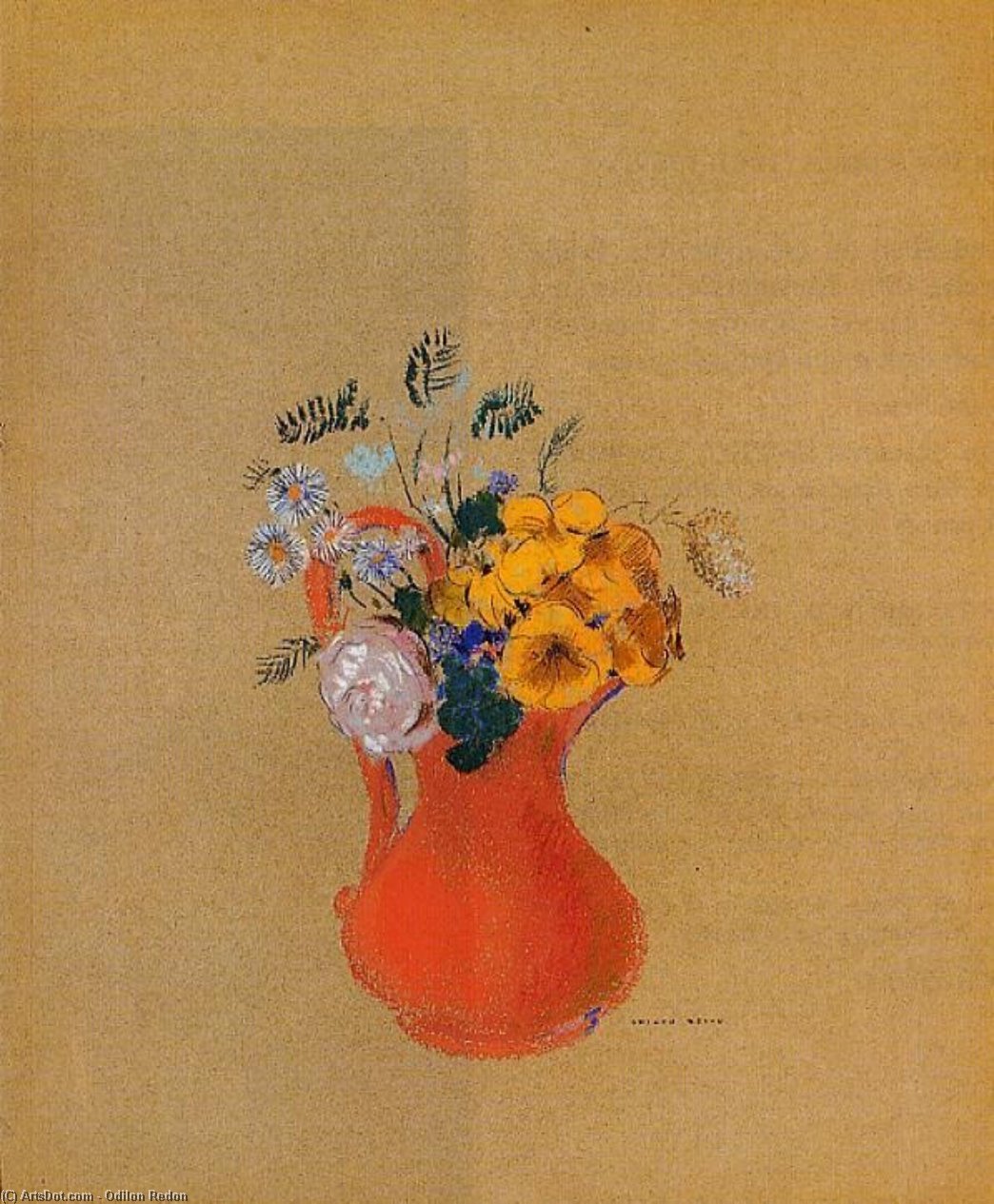
- Flowers in a Red Pitcher
 Pregledaj u stvarnoj veličini
 Pošalji
 Podijeli
 Detalji o umjetničkom djelu

 Preuzmi
 Slični predmeti
 Rentgenska snimka
 Automatska prezentacija
Flowers in a Red Pitcher


 Prikaži više
Kupite digitalnu sliku visoke rezolucije i poboljšane kvalitete, koja je znatno superiornija od online prikaza.
Svaka datoteka pedantno je pripremljena od strane naših internih stručnjaka koristeći napredne alate i vještinsku ručnu retušu. Osiguravamo da svaka slika ima iznimnu jasnoću, preciznu točnost boja i visoku razinu detalja.
Konačna datoteka dostavlja se putem e-pošte u roku od 72 sata, optimizirana za neposrednu upotrebu u profesionalnim, uredničkim i tiskarskim okruženjima. To je ista kvaliteta kojoj vjeruju vrhunski studiji dizajna, izdavači i galerije.
Digitalna slika
Preuzmite datoteku visoke rezolucije za osobnu izložbu, tisak i kreativne projekte. ( Pređi na tisak Prebacite se na ručno oslikano djelo)
Uključeno uz svaku narudžbu digitalne slike
Profesionalna digitalna dostava, zajamčena
Odabirom OriginalUniqueArt.com ne dobivate samo sliku – dobivate profesionalno unapređeno digitalno umjetničko djelo, izrađeno s najvećom preciznošću uz jamstvo zadovoljstva. Evo svega što automatski dolazi uz vašu narudžbu:

Brza dostava e-poštom
Vaša digitalna slika visoke rezolucije bit će vam poslana e-mailom u roku od 72 sata od narudžbe – spremna za neposrednu upotrebu.

Digitalna datoteka poboljšana AI-om
Vaše umjetničko djelo profesionalno je optimizirano pomoću naprednih AI alata i ručnog uređivanja, čime se osigurava maksimalna razina detalja, oštrine i točnosti boja.

Besplatna ponovna dostava doživotno
Slučajno ste obrisali ili izgubili svoju datoteku? Ne brinite – ponovno ćemo vam je poslati u bilo kojem trenutku, potpuno besplatno.

Bez uvoznih carina – ikada
Uživajte u svojim umjetničkim djelima trenutno, bez carina, pristojbi ili troškova dostave – digitalne datoteke uvijek su oslobođene poreza.

Jamstvo točnosti boja
Uz pomoć profesionalnih alata i upravljanja bojama, osiguravamo da vaša digitalna slika što vjernije odražava izvorne boje.

Jamstvo zadovoljstva u trajanju od 60 dana
Ako niste zadovoljni svojom digitalnom slikom, revidirat ćemo je ili vratiti 100% novca u roku od 60 dana – bez ikakvih pitanja.

100% Jamstvo povrata novca
Niste zadovoljni? Osigurajte puni povrat novca u roku od 60 dana od primitka vaše digitalne datoteke – bez suvišnih pitanja.

Popusti na velike narudžbe
Kupite 3 slike, uštedite 10% - Kupite 5 slika, uštedite 15% - Kupite 10+ slika, uštedite 20%. Odlično za kreativne projekte, galerije i agencije.
Opis kolekcionarskog djela
A Vision in Pastel: The Dreamlike Allure of Redon’s Floral Symphony
In the delicate dance of Flowers in a Red Pitcher, created in 1900, we encounter one of the most enchanting moments in the career of Odilon Redon. This masterpiece serves as a breathtaking departure from the artist's earlier, more somber "noirs," stepping instead into a luminous realm of color and light. At first glance, the viewer is greeted by a vibrant arrangement of blossoms overflowing from a striking red pitcher, a composition that captures the very essence of Naive Art through its charming simplicity and unpretentious grace. The pitcher itself, with its sturdy handle and spout, acts as an anchor for the swirling, organic forms of the flowers, creating a still life that feels less like a static object and more like a living, breathing entity.
The technique employed in this work is nothing short of hypnotic. Utilizing the soft, powdery medium of pastel, Redon achieves a texture that seems to vibrate with life. While the piece draws inspiration from the bold, simplified forms found in Fauvism, it also incorporates a subtle, pointillist influence. Small, rhythmic applications of color create a sense of depth and movement, as if the light itself is composed of tiny, dancing particles. This meticulous approach avoids harsh outlines, allowing shapes to emerge organically from a muted, beige background. For the discerning collector or interior designer, this technique offers a unique tactile quality; even in a high-quality reproduction, the illusion of soft, multidimensional texture remains palpable, making it a centerpiece that invites close, lingering inspection.
Symbolism and the Emotional Resonance of Nature
Beyond its aesthetic brilliance, Flowers in a Red Pitcher carries a profound emotional weight. In the hands of a Symbolist master like Redon, flowers are never merely botanical specimens; they are vessels for deeper meaning. The vibrant blooms represent the ephemeral beauty of life, their delicate petals suggesting both vitality and fragility. The choice of a bold red pitcher provides a striking contrast to the soft tones of the flora, perhaps symbolizing the grounded, physical world supporting the ethereal, dreaming spirit of nature. There is an inherent sense of serenity and warmth within the composition, yet a touch of nostalgia lingers in its vintage aesthetic, evoking a time when art sought to reconnect with the innocence of the primitive.
For those looking to infuse a living space with tranquility and inspiration, this artwork offers an unparalleled emotional landscape. It possesses the rare ability to evoke feelings of peace and wonder, making it an ideal selection for sophisticated interiors that prioritize atmosphere and soul. Whether displayed in a sunlit gallery or a quiet study, Redon’s work acts as a window into a world beyond the visible—a place where color speaks louder than words and where every brushstroke is a step toward the sublime. Owning a reproduction of such a significant piece allows one to bring this timeless, dreamlike elegance into the modern home, celebrating the enduring power of beauty and the quiet magic of the natural world.
Biografija umjetnika
Odilon Redon (1840-1916): Between Shadow and Light
Odilon Redon, born Bertrand Jean Redon in Bordeaux, France, on April 20, 1840, was an artist whose profound engagement with the unseen realms of imagination solidified his place as a pivotal figure in Symbolism. His artistic journey began not with grand ambition but with quiet observation; at just ten years old he won a drawing prize—a foreshadowing of the visual sensitivity that would define his life’s work. Though initially steered towards architecture by familial expectations, Redon's true calling lay elsewhere, illuminated by instruction from Jean-Léon Gérôme and, crucially, Rodolphe Bresdin, who guided him in the intricate arts of etching and lithography. These techniques became foundational to his early explorations, allowing him to delve into a world of shadowy figures and ambiguous forms that would soon captivate those seeking an alternative to academic realism. The interruption of the Franco-Prussian War saw Redon briefly serving in the military, but it was upon his return to Paris that his artistic vision truly began to coalesce.Early Life & Artistic Training
Redon’s childhood was marked by a peculiar blend of solitude and fascination with nature—a formative experience that would profoundly shape his artistic sensibilities. Living primarily with his uncle in Bordeaux's countryside, he cultivated an intimate connection with the landscape, meticulously studying trees and undergrowth. This early immersion in natural beauty instilled within him a deep appreciation for observation and detail, qualities that would permeate his entire oeuvre. At age 15, he began formal study in drawing but on the insistence of his father he switched to architecture—a decision ultimately thwarted by his failure to pass the École des Beaux-Arts entrance examinations. Despite this setback, Redon continued to pursue artistic development, studying under Jean-Léon Gérôme and honing his skills in watercolor and charcoal. His encounter with Rodolphe Bresdin proved particularly influential; Bresdin instructed him in etching and lithography—techniques that would become indispensable tools for exploring the expressive potential of monochrome prints.The Birth of Symbolism & The “Noirs”
Redon’s artistic trajectory diverged sharply from prevailing trends during his time, rejecting the pursuit of realistic representation in favor of conveying emotional depth and spiritual resonance. This conviction led him to create his celebrated series of “noirs”—monochromatic works executed primarily in charcoal and lithography—a stylistic choice that would become synonymous with Symbolism itself. These weren’t merely studies in darkness; they were explorations of the subconscious, populated by unsettling creatures, disembodied eyes, and haunting figures emerging from swirling mists. The influence of writers like Edgar Allan Poe and Charles Baudelaire is palpable here—a shared fascination with the macabre, the mysterious, and the power of suggestion. Critics initially dismissed Redon’s “noirs” as morbid and unsettling, yet they nonetheless captured the essence of Symbolist aesthetics: a deliberate rejection of naturalism in favor of conveying inner psychological states.Lithography & Artistic Innovation
Redon's mastery of lithography was instrumental to his artistic success. He recognized its capacity to achieve remarkable tonal effects—particularly the subtle gradations of black and gray—that surpassed those attainable with watercolor or oil paint alone. Bresdin’s guidance ensured that Redon possessed the technical skills necessary to exploit this medium’s expressive potential, allowing him to produce prints that conveyed a sense of atmosphere and psychological complexity. His early lithographs, such as *Le Gué* (The Ford), demonstrated his ability to capture the mood of a scene with remarkable precision—a characteristic that would persist throughout his career. Redon's innovative approach to printmaking established him as a pioneer in modern art, anticipating developments in Expressionism and abstraction decades later.Later Years & Legacy
Redon’s artistic vision matured during the 1890s, marked by a gradual embrace of color—first pastel, then oil—which infused his paintings with vibrancy and luminosity. This stylistic shift reflected an evolving inner landscape within the artist himself—a move away from the melancholic introspection of his early works toward a more optimistic engagement with mythology, Buddhism, and Japanese art (*Japonism*). The influence of *Japonism* is evident in numerous compositions featuring flattened planes and decorative ensembles—a testament to Redon’s openness to new artistic ideas. His paintings gained considerable acclaim during the Armory Show of 1913, attracting international attention and cementing his reputation as a visionary artist. Odilon Redon died peacefully in Paris on July 6, 1916, leaving behind an enduring legacy—one characterized by courage, imagination, and a profound belief in art’s capacity to illuminate the hidden dimensions of human experience. His work continues to inspire artists today, serving as a reminder that true artistic expression lies beyond the confines of conventional realism.
Odilon Redon
1840 - 1916 , Francuska
Kratke činjenice
- Artistic Movement Or Style: Simbolizam
- Artists Or Movements Influenced By This Artist:
- Surrealizm
- Marcel Duchamp
- Artists Who Influenced This Artist:
- Jean-Léon Gérôme
- Rodolphe Bresdin
- Date Of Birth: 1840
- Full Name: Odilon Redon
- Nationality: Francuski
- Notable Artworks:
- Centaurs
- Onnes
- Portrait of Ari Redon
- Place Of Death: Paris

