- Početna stranica

- Otisak na platnu
- Odilon Redon
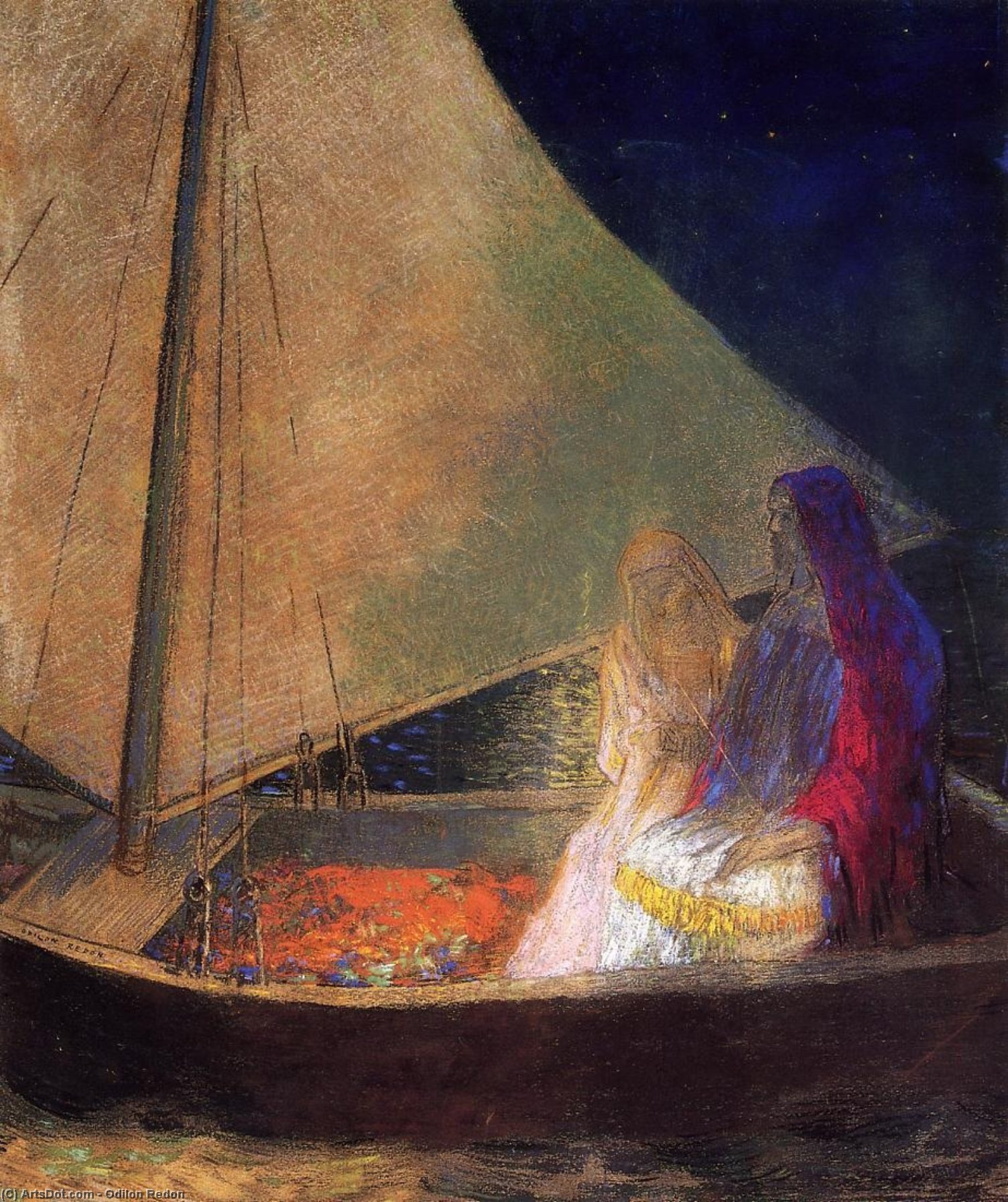
- Boat with Two Figures
 Preview
 Naručite reprodukciju Kupi digitalnu sliku
 Pošalji
 Podijeli
 Detalji o umjetničkom djelu
 Dodaj u omiljene

 Preuzmi
 Slični predmeti
 Rentgenska snimka
 Automatska prezentacija
Boat with Two Figures
 Painting
- Symbolism
 1902
1902- 19th Century
 61.0 x 51.0 cm
 Prikaži više
Giclée / Umjetnički otisak
Giclée tisak muzejske kvalitete ili otisak na platnu uz brzu proizvodnju i fleksibilne opcije završne obrade.




P118B $10

P118H $10

P118W $10

P438Z $10

P508JH $12

P508YH $12

P805H $10

P805Z $10

P919BZ $10

P919G $10

P919XJ $10

P959ZH $10

P968JZ $12

W106C $8

W218G $10

W218JH $8

W218Y $10

W307PJ $10

W316G $10

W316PJ $8

W316Y $10

W398PJ $8

W4111J $10

W500HY $15

W500JH $15

W692G $12

W849H $8

W940BG $15

W953PJ $8




Odaberite jednu od naših unaprijed definiranih veličina koje odgovaraju izvornim proporcijama umjetničkog djela.

Možete unijeti vlastite dimenzije kako biste umjetničko djelo prilagodili specifičnom okviru ili prostoru. Ako odabrana veličina ne odgovara proporcijama izvornog rada, izrezat ćemo dio slike ili je proširiti pomoću ogledalnog efekta ili jednobojne rubne površine. Digitalni prikaz (mockup) bit će vam poslan na odobrenje prije početka proizvodnje.
Imajte na umu da pregled na zaslonu ne odražava stvarno izrezivanje ili proširivanje. Samo će mockup točno prikazati konačnu kompoziciju.
Iako su dostupne prilagođene veličine, preporučujemo odabir dimenzije iz unaprijed definirane liste kako biste očuvali izvorne proporcije.
Dostava širom svijeta () u roku od 2 tjedna umjesto standardnih 4/5 tjedana. (23 Srpanj)

Besplatna ekspresna dostava širom svijeta

Visokokvalitetno laneno platno

Potpuno osiguranje dostave

Jamstvo povrata carine i uvoznih poreza

Garancija vjernog podudaranja boja

Politika povrata u roku od 60 dana (samo u slučaju nedostataka)

Jamstvo povrata 100% novca

Popust na više proizvoda
 Opcija stakla dostupna je samo za dimenzije manje od 110 cm

Boat with Two Figures
Giclée / Umjetnički otisak
Veličina reprodukcije
-


Ukupna cijena
-
Opis djela
The Dreamscape of Companionship: Exploring Odilon Redon's "Boat with Two Figures"
To gaze upon Odilon Redon’s Boat with Two Figures is to step across the threshold into a realm woven from twilight and memory. This painting, executed in 1902, transcends a mere depiction of leisure on the water; it is an intimate meditation on companionship, shared silence, and the enigmatic beauty that resides just beyond the reach of clear daylight. Redon, forever drawn to the unseen currents of the human imagination, captures here not just two women in a boat, but perhaps the very essence of connection itself—a moment suspended between conversation and contemplation.
Symbolism and the Allure of the Submerged World
Redon’s oeuvre is steeped in Symbolist undertones, an artistic language that favored suggestion over statement. In Boat with Two Figures, the water acts as much a psychological space as it is a physical one. The boat itself becomes a fragile vessel carrying two souls adrift on the vast expanse of feeling. Notice the subtle interplay between the figures; while they share this intimate journey, their gazes and postures suggest individual depths. One woman, perhaps highlighted by the suggestion of red in her gown, anchors the composition, while the other drifts slightly into the mystery of the background. These are not portraits of reality, but rather embodiments of emotional states—a quiet dialogue played out against the backdrop of an undefined, dreamlike landscape.
Mastery of Tone and Form
Technically, Redon employs a masterful handling of tone, even when the original work is viewed in monochrome or muted palettes. The composition is balanced by the strong horizontal sweep of the boat contrasting with the verticality of the figures' long dresses. His technique allows the forms to emerge from shadow and suggestion rather than being sharply delineated. This soft focus, characteristic of his later period works, lends an ethereal quality to the scene. For those considering a reproduction for your space, understanding this delicate tonal balance is key; it ensures that the piece will interact with ambient light in a way that mimics its original, haunting luminescence.
A Touch of Fin-de-Siècle Melancholy
Painted at the turn of the 20th century, this work resonates with the lingering spirit of Symbolism—a period grappling with industrial change and the search for deeper meaning. The mood is one of beautiful melancholy; it suggests moments of profound connection that are inherently fleeting. It speaks to the quiet understanding shared between companions who do not need grand gestures to validate their bond. Owning this piece, or a high-quality reproduction thereof, invites a sense of reflective calm into any room, transforming it into a sanctuary for thought and gentle reminiscence.
Biografija umjetnika
Odilon Redon (1840-1916): Between Shadow and Light
Odilon Redon, born Bertrand Jean Redon in Bordeaux, France, on April 20, 1840, was an artist whose profound engagement with the unseen realms of imagination solidified his place as a pivotal figure in Symbolism. His artistic journey began not with grand ambition but with quiet observation; at just ten years old he won a drawing prize—a foreshadowing of the visual sensitivity that would define his life’s work. Though initially steered towards architecture by familial expectations, Redon's true calling lay elsewhere, illuminated by instruction from Jean-Léon Gérôme and, crucially, Rodolphe Bresdin, who guided him in the intricate arts of etching and lithography. These techniques became foundational to his early explorations, allowing him to delve into a world of shadowy figures and ambiguous forms that would soon captivate those seeking an alternative to academic realism. The interruption of the Franco-Prussian War saw Redon briefly serving in the military, but it was upon his return to Paris that his artistic vision truly began to coalesce.Early Life & Artistic Training
Redon’s childhood was marked by a peculiar blend of solitude and fascination with nature—a formative experience that would profoundly shape his artistic sensibilities. Living primarily with his uncle in Bordeaux's countryside, he cultivated an intimate connection with the landscape, meticulously studying trees and undergrowth. This early immersion in natural beauty instilled within him a deep appreciation for observation and detail, qualities that would permeate his entire oeuvre. At age 15, he began formal study in drawing but on the insistence of his father he switched to architecture—a decision ultimately thwarted by his failure to pass the École des Beaux-Arts entrance examinations. Despite this setback, Redon continued to pursue artistic development, studying under Jean-Léon Gérôme and honing his skills in watercolor and charcoal. His encounter with Rodolphe Bresdin proved particularly influential; Bresdin instructed him in etching and lithography—techniques that would become indispensable tools for exploring the expressive potential of monochrome prints.The Birth of Symbolism & The “Noirs”
Redon’s artistic trajectory diverged sharply from prevailing trends during his time, rejecting the pursuit of realistic representation in favor of conveying emotional depth and spiritual resonance. This conviction led him to create his celebrated series of “noirs”—monochromatic works executed primarily in charcoal and lithography—a stylistic choice that would become synonymous with Symbolism itself. These weren’t merely studies in darkness; they were explorations of the subconscious, populated by unsettling creatures, disembodied eyes, and haunting figures emerging from swirling mists. The influence of writers like Edgar Allan Poe and Charles Baudelaire is palpable here—a shared fascination with the macabre, the mysterious, and the power of suggestion. Critics initially dismissed Redon’s “noirs” as morbid and unsettling, yet they nonetheless captured the essence of Symbolist aesthetics: a deliberate rejection of naturalism in favor of conveying inner psychological states.Lithography & Artistic Innovation
Redon's mastery of lithography was instrumental to his artistic success. He recognized its capacity to achieve remarkable tonal effects—particularly the subtle gradations of black and gray—that surpassed those attainable with watercolor or oil paint alone. Bresdin’s guidance ensured that Redon possessed the technical skills necessary to exploit this medium’s expressive potential, allowing him to produce prints that conveyed a sense of atmosphere and psychological complexity. His early lithographs, such as *Le Gué* (The Ford), demonstrated his ability to capture the mood of a scene with remarkable precision—a characteristic that would persist throughout his career. Redon's innovative approach to printmaking established him as a pioneer in modern art, anticipating developments in Expressionism and abstraction decades later.Later Years & Legacy
Redon’s artistic vision matured during the 1890s, marked by a gradual embrace of color—first pastel, then oil—which infused his paintings with vibrancy and luminosity. This stylistic shift reflected an evolving inner landscape within the artist himself—a move away from the melancholic introspection of his early works toward a more optimistic engagement with mythology, Buddhism, and Japanese art (*Japonism*). The influence of *Japonism* is evident in numerous compositions featuring flattened planes and decorative ensembles—a testament to Redon’s openness to new artistic ideas. His paintings gained considerable acclaim during the Armory Show of 1913, attracting international attention and cementing his reputation as a visionary artist. Odilon Redon died peacefully in Paris on July 6, 1916, leaving behind an enduring legacy—one characterized by courage, imagination, and a profound belief in art’s capacity to illuminate the hidden dimensions of human experience. His work continues to inspire artists today, serving as a reminder that true artistic expression lies beyond the confines of conventional realism.
Odilon Redon
1840 - 1916 , Francuska
Osnovne informacije
- Artistic Movement Or Style: Simbolizam
- Artists Or Movements Influenced By This Artist:
- Surrealizm
- Marcel Duchamp
- Artists Who Influenced This Artist:
- Jean-Léon Gérôme
- Rodolphe Bresdin
- Date Of Birth: 1840
- Full Name: Odilon Redon
- Nationality: Francuski
- Notable Artworks:
- Centaurs
- Onnes
- Portrait of Ari Redon
- Place Of Death: Paris
Srodni članci
25 Remek-djela Metropolitana: Umjetnička Baština za Vaš Dom | OriginalUniqueArt.com
Istražite 25 najpoznatijih remek-djela Metropolitana u New Yorku! Otkrijte priče Van Gogha, Moneta i drugih majstora. Inspirirajte se za dekoraciju doma s luksuznim reprodukcijama slika na OriginalUniqueArt.com.

Dante Gabriel Rossetti: 25 Remek-djela Pre-Raphaelita i Inspiracija za Vaš Dom
Uronite u svijet Dantea Gabriela Rossettija! Otkrijte 25 remek-djela Pre-Raphaelita, njihove priče i inspiraciju. Reprodukcije slika vrhunske kvalitete za vaš dom dostupne na OriginalUniqueArt.com. Ekskluzivna kolekcija online!

James Abbott McNeill Whistler: 25 Remek-djela Majstora Tonalizma | OriginalUniqueArt
Istražite 25 remek-djela Jamesa Abbotta McNeilla Whistlera, majstora tonalizma i američkog impresionizma. Otkrijte priče iza njegovih čuvenih 'Nocturna' i portreta te pronađite inspiraciju za luksuznu dekoraciju interijera na OriginalUniqueArt.com.
25 Remek-djela Nacionalne galerije umjetnosti u Washingtonu: Inspiracija za vaš dom
Otkrijte 25 remek-djela Nacionalne galerije u Washingtonu! Istražite priče iza Cézannea, Matissea i Picassa. Inspirirajte se za dekoraciju doma s luksuznim reprodukcijama slika na OriginalUniqueArt.com.
Henri Matisse: 25 Remek-djela koje morate vidjeti | OriginalUniqueArt.hr
Uronite u svijet Henri Matissea! Otkrijte 25 remek-djela Fauvizma i moderne umjetnosti. Priče iza slika, boje i tehnike slavnog umjetnika. Pronađite savršenu reprodukciju za vaš interijer na OriginalUniqueArt.com.


