

 Pregledaj u stvarnoj veličini
 Pošalji
 Podijeli
 Detalji o umjetničkom djelu

 Preuzmi
 Slični predmeti
 Rentgenska snimka
 Automatska prezentacija
 Statistika
Portrait of Anna Codde
 Oil On Canvas
- WallArt
- Renaissance
 1529
1529 86.0 x 66.0 cm
 Rijksmuseum
 Prikaži više
Giclée / Umjetnički otisak
Giclée tisak muzejske kvalitete ili otisak na platnu uz brzu proizvodnju i fleksibilne opcije završne obrade. ( Kupi ručno naslikanu sliku Prebacite na digitalnu sliku)




P118B $10

P118H $10

P118W $10

P438Z $10

P508JH $12

P508YH $12

P805H $10

P805Z $10

P919BZ $10

P919G $10

P919XJ $10

P959ZH $10

P968JZ $12

W106C $8

W218G $10

W218JH $8

W218Y $10

W307PJ $10

W316G $10

W316PJ $8

W316Y $10

W398PJ $8

W4111J $10

W500HY $15

W500JH $15

W692G $12

W849H $8

W940BG $15

W953PJ $8




Odaberite jednu od naših unaprijed definiranih veličina koje odgovaraju izvornim proporcijama umjetničkog djela.

Možete unijeti vlastite dimenzije kako biste umjetničko djelo prilagodili specifičnom okviru ili prostoru. Ako odabrana veličina ne odgovara proporcijama izvornog rada, izrezat ćemo dio slike ili je proširiti pomoću ogledalnog efekta ili jednobojne rubne površine. Digitalni prikaz (mockup) bit će vam poslan na odobrenje prije početka proizvodnje.
Imajte na umu da pregled na zaslonu ne odražava stvarno izrezivanje ili proširivanje. Samo će mockup točno prikazati konačnu kompoziciju.
Iako su dostupne prilagođene veličine, preporučujemo odabir dimenzije iz unaprijed definirane liste kako biste očuvali izvorne proporcije.
Dostava širom svijeta () u roku od 2 tjedna umjesto standardnih 4/5 tjedana. (17 Rujan)

Besplatna ekspresna dostava širom svijeta

Visokokvalitetno laneno platno

Potpuno osiguranje dostave

Jamstvo povrata carine i uvoznih poreza

Garancija vjernog podudaranja boja

Politika povrata u roku od 100 dana (samo u slučaju nedostataka)

Jamstvo povrata 100% novca

Popust na više proizvoda
 Opcija stakla dostupna je samo za dimenzije manje od 110 cm

Portrait of Anna Codde
Giclée / Umjetnički otisak
Veličina reprodukcije
-


Ukupna cijena
$ 80
A Window into the Dutch Renaissance: The Portrait of Anna Codde
Maerten van Heemskerck’s “Portrait of Anna Codde,” painted in 1529, isn't merely a likeness; it’s a meticulously crafted tableau vivant – a snapshot of life within the burgeoning world of early Dutch Renaissance society. More than just a portrait, this work offers a rare glimpse into the domestic sphere, revealing a woman engaged in a timeless activity: spinning wool. The scene unfolds with quiet dignity and understated elegance, capturing not only Anna’s physical appearance but also her role as a skilled artisan and devoted wife – a common yet increasingly valued ideal within the Dutch merchant class of the era.
The painting immediately draws the eye to Anna herself, seated comfortably in a simple chair. Her long, flowing hair is partially arranged, suggesting a deliberate effort towards presentation, while her gaze is direct and engaging, inviting the viewer into her world. The spindle she holds isn’t just an object of craft; it's a symbol of domesticity, industry, and the woman’s vital contribution to the household economy. Her dress, though modest in style, speaks volumes about her status – a subtle indication of wealth and refinement. Notice the careful attention to detail in the rendering of her hands, demonstrating Heemskerck’s mastery of capturing texture and form.
The Painter's Palette: Technique and Style
Heemskerck’s style is immediately recognizable as a masterful blend of Italian Renaissance ideals with distinctly Dutch sensibilities. The influence of Jan van Scorel, his former teacher, is evident in the use of light and shadow – a technique known as *chiaroscuro* – which creates a sense of depth and volume within the composition. However, Heemskerck departs from the purely idealized forms often found in Italian portraits, opting for a more naturalistic approach that reflects the growing interest in portraying individuals with greater realism.
The painting’s color palette is restrained yet sophisticated, dominated by earthy tones – browns, ochres, and muted greens – which evoke the textures of the wool and the surrounding domestic environment. The background, featuring a chair and a clock on the wall, provides context without overwhelming the central figure. Heemskerck's skill lies not just in depicting individual features but also in creating a harmonious whole, where every element contributes to the overall narrative.
A Portrait of an Era: Historical Context
“Portrait of Anna Codde” was painted during a period of significant social and economic transformation in the Netherlands. The rise of merchant families like the Coddes fueled a burgeoning economy and a growing emphasis on wealth, status, and family lineage. Portraits became increasingly important as a means of documenting these achievements and solidifying one’s place within society. The inclusion of domestic scenes like this one was not uncommon; it served to portray the subject as both a successful businesswoman and a devoted wife – qualities highly valued in 16th-century Dutch culture.
Furthermore, the painting reflects the growing interest in secular portraiture during this time. While religious subjects remained important, artists began experimenting with depicting everyday life and capturing the personalities of their patrons. The meticulous detail and realistic portrayal of Anna Codde demonstrate Heemskerck’s commitment to portraying his subject with honesty and dignity.
Symbolism and Emotional Resonance
Beyond its technical merits, “Portrait of Anna Codde” is rich in symbolism. The spinning wheel represents not only her craft but also the woman's role as a provider for her household – a vital contribution to the family’s well-being. The clock on the wall serves as a reminder of time and the passage of life, subtly emphasizing the importance of cherishing each moment. The birds in the background, one near the top right corner and another towards the bottom left of the painting, may represent good fortune or simply add to the idyllic scene.
Ultimately, “Portrait of Anna Codde” is a poignant reminder of a bygone era – a time when domesticity was intertwined with prosperity and artistry. It’s a testament to Heemskerck's skill as a painter and his ability to capture not just a likeness but also the essence of a human being within her historical context. Reproductions of this captivating work offer a beautiful window into the heart of the Dutch Renaissance.
Biografija umjetnika
ranije godine i obuka
Maerten van Heemskerck, istaknuti nizozemski umjetnik portreta i religioznog slikarstva, rođen je 1. lipnja 1498. godine u selu Heemskerk, u sjevernoj Holandiji. Njegovo umjetničko putovanje započelo je pod vodstvom Corneliusa Willemsza u Haarlemu, nakon čega je uslijedio kratki boravak u Delftu kod Jana Lucasa. Naposljetku, postao je učenik Jana van Scorela, usvajajući stil svog učitelja koji je bio snažno prožet talijanskim utjecajima.istaknuti trenuci u karijeri
- Rad Maertena van Heemskercka odlikuje inovativna mješavina nizozemskih i talijanskih utjecaja, što se najbolje vidi u njegovom poznatom obiteljskom portretu, koji se smatra prvim onakvom vrstom u dugoj tradiciji nizozemskih obiteljskih slika.
- Njegova suradnja s Antoniom da Sangallom mlađim, Battistom Francom i Francescom de' Rossijem (Il Salviati) na obnovi Porta San Sebastiano u Rimu, trijumfalnog luka u čast cara Karla V, svjedoči njegovoj nevjerojatnoj brzini i vještini kao scenografa.
- Heemskerckove crteži klasične skulpture i arhitekture, koji su danas čuvani u dvije skicarnice u Kupferstichkabinett Berlin, demonstriraju njegovu sposobnost da uhvati samu srž talijanske umjetnosti.
značajna djela i naslijeđe
- Donator i Sveta Marija Magdalena (pogledajte na OriginalUniqueArt)
- Djevica i Sveti Ivan Evangelist (pogledajte na OriginalUniqueArt)
- Samsun ruši stupove hrama, Maarten van Heemskerck (pogledajte na OriginalUniqueArt)
zaključak
Maerten van Heemskerckov duboki utjecaj na svijet umjetnosti neosporan je. Njegova djela, koja su danas dio raznih muzejskih kolekcija, uključujući Rijksmuseum, i dalje inspiriraju umjetnike i ljubitelje umjetnosti. Kako biste istražili više njegovih remek-djela, posjetite stranicu Maertena van Heemskercka na OriginalUniqueArt. Za dublje razumijevanje njegovog života i djela, pogledajte njegovu biografiju na Wikipediji.
Maerten Van Heemskerck
1498 - 1574 , Nizozemska
Osnovne informacije
- Artistic Movement Or Style: Manirizam
- Artists Who Influenced This Artist:
- Jan van Scorel
- Antonio da Sangallo mlađi
- Date Of Birth: 1. lipnja 1498.
- Date Of Death: 1. listopada 1574.
- Full Name: Maerten Jacobsz van Heemskerck
- Nationality: Nizemac
- Notable Artworks:
- Jalovanj Isusa Krista
- Pieter Jan Foppeszoon i njegova obitelj
- Krist kao Mučitelj
- Place Of Birth: Heemskerk, Nizozemska
Srodni članci

Rembrandt van Rijn: 25 Majstorstava Svjetla i Sjene | Reprodukcije za Vaš Dom
Uronite u svijet Rembrandta van Rijna! Otkrijte 25 najpoznatijih djela nizozemskog baroka, priče iza portreta i biblijskih scena te majstorstvo svjetla i sjene. Kupite reprodukcije vrhunske kvalitete za vaš dom na OriginalUniqueArt.com

Jan van Goyen: Master of Dutch Landscape & Atmospheric Perspective
Discover Jan van Goyen, the master of Dutch landscape painting. Explore his subtle technique, atmospheric realism & lasting influence on art history. Learn about this 17th-century pioneer at OriginalUniqueArt.
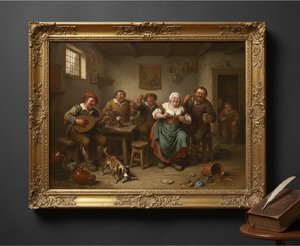
Adriaen van Ostade: A Master of Dutch Genre Painting & Social Commentary
Explore the life & work of Adriaen van Ostade, a leading Dutch Golden Age painter. Discover his realistic genre scenes, social commentary, and lasting influence on art history. Learn more at OriginalUniqueArt.

Willem van de Velde the Elder: Master of Maritime Painting & Chronicler of the Dutch Golden Age
Discover the captivating maritime paintings of Willem van de Velde the Elder, a master chronicler of the Dutch Golden Age. Explore his unparalleled realism and lasting influence on naval art history.

Maerten van Heemskerck: Bridging Mannerism & Renaissance Ideals
Explore the captivating world of Maerten van Heemskerck, a pivotal Dutch Renaissance painter bridging Mannerism & Italian influence. Discover his masterpieces and legacy with OriginalUniqueArt.