

 Pregledaj u stvarnoj veličini
 Podijeli
 Podijeli
 Detalji
 Vodič
Vodič

 Preuzmi datoteku
 Slični predmeti
 Rentgenska snimka
 Slide show
 Statistika
(Elikan)


 Pročitajte više
Giclée / Umjetnički otisak
Giclée tisak muzejske kvalitete ili otisak na platnu uz brzu proizvodnju i fleksibilne opcije završne obrade. ( Naručite ručno oslikano reprodukciju Prebacite na digitalnu prodaju slika)




P118B $10

P118H $10

P118W $10

P438Z $10

P508JH $12

P508YH $12

P805H $10

P805Z $10

P919BZ $10

P919G $10

P919XJ $10

P959ZH $10

P968JZ $12

W106C $8

W218G $10

W218JH $8

W218Y $10

W307PJ $10

W316G $10

W316PJ $8

W316Y $10

W398PJ $8

W4111J $10

W500HY $15

W500JH $15

W692G $12

W849H $8

W940BG $15

W953PJ $8




Odaberite jednu od naših unaprijed definiranih veličina koje odgovaraju izvornim proporcijama umjetničkog djela.

Možete unijeti vlastite dimenzije kako biste umjetničko djelo prilagodili specifičnom okviru ili prostoru. Ako odabrana veličina ne odgovara proporcijama izvornog rada, izrezat ćemo dio slike ili je proširiti pomoću ogledalnog efekta ili jednobojne rubne površine. Digitalni prikaz (mockup) bit će vam poslan na odobrenje prije početka proizvodnje.
Imajte na umu da pregled na zaslonu ne odražava stvarno izrezivanje ili proširivanje. Samo će mockup točno prikazati konačnu kompoziciju.
Iako su dostupne prilagođene veličine, preporučujemo odabir dimenzije iz unaprijed definirane liste kako biste očuvali izvorne proporcije.
Dostava širom svijeta () u roku od 2 tjedna umjesto standardnih 4/5 tjedana. (25 Rujan)

Besplatna ekspresna dostava širom svijeta

Visokokvalitetno laneno platno

Potpuno osiguranje transporta

Jamstvo povrata carine i uvoznih poreza

Jamstvo vjernosti boja

Politika povrata u roku od 100 dana (samo u slučaju nedostataka)

Jamstvo povrata 100% novca

Popust na više proizvoda
 Opcija stakla dostupna je samo za dimenzije manje od 110 cm

(Elikan)
Giclée / Umjetnički otisak
Veličina reprodukcije
-


Ukupna cijena
$ 80
A Symphony of Fragments: Reimagining Kurt Schwitters’ Elikan
In the fractured landscape of post-World War I Europe, where the very foundations of society seemed to crumble, Kurt Schwitters emerged with a radical new language of creation. His 1925 masterpiece, "Elikan," is not merely an arrangement of materials but a profound visual manifesto of the Dada movement. To gaze upon this work is to witness a deliberate reconstruction of reality from its broken pieces. Through his signature technique of collage, Schwitters took the discarded—scraps of cardboard, fragments of paper, and bits of found matter—and elevated them into a complex, rhythmic composition. This piece serves as a cornerstone for anyone captivated by the beauty found within chaos, offering a sophisticated interplay of texture and form that defies traditional boundaries.
The visual journey through "Elikan" is one of unexpected discovery. The artwork is dominated by a dynamic architecture of geometric shapes; rectangles, squares, and triangles intersect and overlap in a way that suggests both structural stability and sudden disintegration. The color palette is masterfully balanced, utilizing deep blues, vibrant yellows, and striking reds against a stark backdrop of black and white. These colors do not merely decorate the surface; they pulse with an emotional intensity, guiding the eye through a labyrinth of layers. For the discerning collector or interior designer, this piece offers a captivating focal point that brings a sense of intellectual depth and avant-garde energy to any modern space.
The Spirit of Merz: Technique and Historical Resonance
At the heart of "Elikan" lies the concept of Merz—Schwitters’ personal philosophy of artistic synthesis. Born from the wreckage of a continent in turmoil, Merz was an attempt to create something whole from the fragments of a shattered world. Unlike the meticulous planning of academic painting, Schwitters embraced spontaneity and chance. The technique used here is a tactile exploration of materiality; one can almost feel the rough, organic grain of the cardboard contrasting with the smooth, deliberate sheen of painted paper surfaces. This tension between the raw and the refined creates a sensory experience that is both intellectually stimulating and visually rich.
Beyond its physical components, "Elikan" carries a heavy symbolic weight. It represents the rejection of bourgeois order and the embrace of the irrational, mirroring the turbulent spirit of the 1920s. There is no singular narrative to follow, which allows the viewer to project their own reflections onto the work. For those seeking to adorn a curated collection or a contemporary living space, a high-quality reproduction of this piece provides more than just decoration; it offers an invitation to contemplate the resilience of creativity. It is a testament to the idea that even from the most disparate and broken elements, a magnificent and enduring symphony can be composed.
Biografija umjetnika
Kurt Schwitters: A Life in Merz
Early Life and Education
- Born: June 20, 1887, in Hanover, Germany.
- Schwitters was the only child of Eduard and Henriette Schwitters. His father co-owned a ladies' clothing shop.
- The family’s financial situation improved after selling the business in 1898, allowing them to live off rental income from properties they acquired.
- He studied art at the Dresden Academy from 1909-1915 alongside artists like Otto Dix and George Grosz, though he seemingly remained unaware of their work at the time.
- Schwitters suffered his first epileptic seizure in 1901, which later exempted him from military service for a period during World War I.
Artistic Development and the Birth of Merz
- Initially, Schwitters worked in a post-impressionist style. His early work reflected this influence.
- The devastation of World War I profoundly impacted his artistic direction. He felt traditional academic training was irrelevant in the face of societal collapse.
- “In the war, things were in terrible turmoil…everything had broken down and new things had to be made out of the fragments; and this is Merz.”
- Around 1918, he began creating abstract collages using found objects – scraps of paper, tickets, and other discarded materials.
- The term “Merz” itself came from a fragment of text (“Commerz und Privatbank”) cut from an advertisement and incorporated into one of his early works, *Das Merzbild* (1918-19).
Key Works and Artistic Styles
- Merz Pictures: These collages are arguably Schwitters’ most famous contribution. They represent a radical departure from traditional art, embracing chance and the aesthetics of everyday life.
- Merzbau: A monumental architectural construction within his home in Hanover, continuously evolving over decades. It was a three-dimensional embodiment of Merz principles – a labyrinthine space filled with niches, grottoes, and found objects.
- Assemblage & Installation Art: Schwitters pioneered these forms, blurring the boundaries between painting, sculpture, and architecture.
- He also worked in poetry, sound, graphic design, and typography, exploring a wide range of artistic media.
Influences and Connections
- Early influences included post-impressionism, but he quickly moved beyond these conventions.
- He came into contact with members of the Berlin avant-garde – Raoul Hausmann, Hannah Höch, and Hans Arp – through Herwarth Walden’s *Der Sturm* gallery.
- While associated with Dadaism, Schwitters maintained a distinct artistic identity. He was initially rejected by some Dadaists for his ties to expressionism.
Later Life and Legacy
- Facing increasing persecution under the Nazi regime due to his “degenerate art,” Schwitters fled Germany in 1937.
- He spent time in Norway and England, continuing to create Merz works despite challenging circumstances. He was briefly interned as an enemy alien during World War II.
- Died: January 8, 1948, in Ambleside, England.
- Kurt Schwitters’ work profoundly influenced subsequent generations of artists, particularly those involved in Pop Art, Minimalism, and Conceptual Art.
- His innovative use of found objects and his exploration of the relationship between art and everyday life continue to resonate with contemporary audiences.
Historical Significance
- Schwitters’ Merz aesthetic challenged traditional notions of artistic beauty and authorship.
- He expanded the definition of art by incorporating non-art materials and blurring the lines between different disciplines.
- His work remains a powerful testament to the creative potential of fragmentation, reconstruction, and the embrace of chance.

kurt schwitters
1887 - 1948
Brzi pregled
- Birth Date: June 20, 1887
- Birth Place: Hanover, Germany
- Death Date: 1948
- Movement:
- Dadaism
- Constructivism
- Surrealism
- Merz
- Name: Kurt Schwitters
- Nationality: German
- Notable Works:
- Merz pictures
- Merzbau
Povezani članci

Geometrijska Apstrakcija: 10 Remek-djela Koja Su Promijenila Umjetnost | OriginalUniqueArt
Istražite 10 remek-djela geometrijske apstrakcije! Otkrijte priče Kandinskog, Mondriana i drugih majstora. Inspirirajte se za svoj interijer s vrhunskim reprodukcijama slika na OriginalUniqueArt.com

Neo-Abstract Art: The High-Impact Evolution of Modern Visual Energy and Geometric Sophistication
Discover the power of Neo-Abstract art. Explore how bold geometric forms and high-impact visual energy are redefining modern design. Learn to curate sophisticated, high-energy spaces with the latest trends in contemporary abstraction and structural color.

Kandinsky's Masterpieces: 25 Paintings That Define Abstract Art | OriginalUniqueArt
Journey through Wassily Kandinsky's 25 most iconic abstract paintings. Explore his revolutionary use of color, form & spiritual expressionism. Find museum-quality Kandinsky reproductions and elevate your home decor with OriginalUniqueArt.com. Discover all masterpieces on OriginalUniqueArt.com!

Beyond Form & Color: Geometric Abstraction's Evolution in 20th/21st Century Art
Explore the evolution of geometric abstraction from Cubism to contemporary art. Discover key artists like Malevich & Mondrian, investment insights, and expert collecting advice at OriginalUniqueArt.
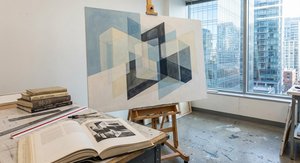
Beyond Form & Color: Geometric Abstraction's Enduring Legacy in Art History
Explore the captivating world of geometric abstraction! Discover its origins, key artists like Malevich & Mondrian, and why this movement remains highly valued by art collectors today. Expert insights at OriginalUniqueArt.