
() ·
Slika izrađena ručno, baš za vas
Ručno rađena uljana reprodukcija
Ručno oslikano uljanim bojama na platnu u dimenzijama i okviru po vašem izboru, izrađeno po narudžbi od strane naših umjetnika. ( Prebacite na printove Prebacite na digitalnu sliku)
Opis kolekcionarskog predmeta
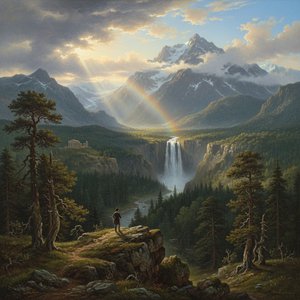
Discover Károly Markó the Younger’s ‘Self Portrait.’ Explore this 19th-century Hungarian landscape painting featuring a captivating figure & serene composition. Art history, unique style.
Biografija umjetnika
Explore the landscapes of Hungarian painter Károly Markó the Younger. Admire his 19th-century scenes, including Visegrád & Italian countryside, showcasing a unique artistic style.
 Prikaži više
od ·
Poglavlje 1
Koje bi dimenzije trebalo imati?
Povucite kako biste promijenili dimenziju; slika s lijeve strane prikazuje okvir u njegovoj stvarnoj širini. Zadržane su proporcije originala.
Odaberite jednu od naših unaprijed definiranih veličina koje odgovaraju izvornim proporcijama umjetničkog djela.

Unesite potrebnu širinu i visinu kako bi dimenzije odgovarale vašem okviru ili zidu. Budući da je riječ o ručno oslikanom djelu, umjetnik može malo proširiti rubove slike ili ih skratiti kako bi postigao drugačiji oblik — izbor je vaš. Prije početka slikanja poslat ćemo vam digitalni prikaz (mockup) radi potvrde. Slika prikazana na ovoj stranici ne predstavlja stvarni rezultat — samo digitalni prikaz to čini.
Poglavlje 2
U kakvom bi stanju trebalo stići?
Odaberite rubove platna
Odaberite svoj okvir

Bijela rubna traka €1

Zamućeni rubovi €1

Prošireno €1

P118B €10

P118H €10

P118W €10

P438Z €10

P508JH €12

P508YH €12

P805H €10

P805Z €10

P919BZ €10

P919G €10

P919XJ €10

P959ZH €10

P968JZ €12

W106C €8

W218G €10

W218JH €8

W218Y €10

W307PJ €10

W316G €10

W316PJ €8

W316Y €10

W398PJ €8

W4111J €10

W500HY €15

W500JH €15

W692G €12

W849H €8

W940BG €15

W953PJ €8

H24-GOLD €30

H24-SILVER €30

H36-GOLD €45

H36-SILVER €45
Uokvireno
Profil: . Ukupna veličina s okvirom: .
Poglavlje 3
Tko to slika i treba li išta promijeniti?
Nakon narudžbe, tim OriginalUniqueArt.com kontaktirat će klijenta putem e-pošte radi uputa te dostaviti pregledni prikaz (mockup)
Isporuka širom svijeta () u roku od 3-4 tjedna umjesto standardnih 5 tjedana. (5 Studeni). Bez kompromisa u kvaliteti.
Poglavlje 4
Završni dodir
Pločica s natpisom, kao u muzeju?
Detalji gravirane brončane pločice
This elegant plaque features the artist's name and the title of the artwork, finely engraved for a timeless presentation.
It is made from bronze with a refined, elegant finish. The text is precisely laser-engraved for a sharp and permanent result. Measuring 9x2 cm, the plaque is compact yet easy to read. It's built to be durable and scratch-resistant, offering a professional, museum-quality look. Mounting is simple thanks to the included adhesive backing.
Detalji prozirne akrilne pločice
The plaque includes essential engraved details such as the artist's name, the title of the artwork, the date it was created, the type of media used-like oil on canvas or watercolor-a brief description of the piece, and a QR code that links to the complete artwork information.
It is crafted from clear acrylic, offering a sleek, modern appearance. The text is UV-engraved in black to ensure strong visual contrast. With a size of 10x15 cm, it ensures optimal readability. It comes equipped with two metal hooks for secure wall mounting. The plaque is designed to be weather-resistant, making it suitable for various environments, and it includes interactive features that work seamlessly with smartphone scanning.
Detalji crne akrilne pločice
This elegant plaque includes engraved information such as the artist's name, the title of the artwork, the date it was created, the type of media used (like oil on canvas or watercolor), a short description of the artwork, and a QR code for quick access to more information.
The plaque itself is made from refined black acrylic with a premium finish. The text is laser-engraved in white for high contrast and readability. Its size is 10x15 cm, designed to be easy to read. It comes with two metal hooks for professional mounting. The design is sleek and fits any interior style. It is also weather-resistant and durable, with built-in digital integration for mobile compatibility.
Zaštitni lak?
Kada vam je potrebno?
Poglavlje 5
Vaša slika, prema vašoj narudžbi

Self portrait
Tehnika reprodukcije
Veličina reprodukcije
-

Odabrani vrhunski umjetnik
Više detalja, profinjenosti i dodatnog vremena za izradu
-

Okvir za reprodukciju
-
-
Za umjetnička djela ili reprodukcije veće od 105 cm (približno 41 inč) na bilo kojoj strani, okvir će biti isporučen u obliku rastavljenog seta za montažu. Ovaj način osigurava sigurnu dostavu i sprječava oštećenja tijekom transporta.
Potrebna je profesionalna montaža – ovo nije proizvod za samostalnu izradu.
Set mora sastaviti i platno zategnuti iskusni profesionalni uokvirivač, koristeći drvno ljepilo (nije uključeno u set), kljeste za zatezanje platna i stege kako bi se održao pravilan kut letvica dok se ljepilo suši. Nepravilna montaža ili neravnomjerno zategnuto platno mogu trajno oštetiti umjetničko djelo, a takva oštećenja nisu pokrivena našim jamstvom.
 Za umjetnička djela ili reprodukcije veće od 105 cm (približno 41 inč) na bilo kojoj strani, okvir će biti isporučen u obliku rastavljenog seta za montažu. Ovaj način osigurava sigurnu dostavu i sprječava oštećenja tijekom transporta.
Sve letvice od punog drveta su uključene, precizno izrezane po mjeri.
Montira se pomoću priloženih vijaka, uz dodatak ljepila za drvo za spojeve u kutovima, koje nije uključeno u set i koje vaš okviraš mora vlastito nabaviti.
Potrebni su profesionalni alati koji nisu uključeni: škripc za zatezanje platna (zatezač) i stezaljke za održavanje pravokonačnosti letvica tijekom sušenja ljepila.
Važno:
Za spojeve u kutovima potrebno je ljepilo za drvo, letvice se moraju pričvrstiti stezgama dok se ljepilo potpuno ne osuši, a za zatezanje platna na sastavljenom okviru potreban je alat za zatezanje platna. Nijedan od ovih alata nije uključen u set. Molimo vas da prije narudžbe ove veličine osigurate uslugu iskusnog profesionalnog uokvirivača.

Natpisna pločica
-
-

Zaštitni lak
Sjajni lak (pojačava intenzitet boja, štiti od svjetlosti i vlage)
-

Prilagodite svoje umjetničko djelo
Primjeri mogućnosti prilagodbe: Zamijenite lice fotografijom kupca; Dodajte ljubimca (npr. zamijenite mačku psom); Uključite skrivenu poruku u pozadinu; Promijenite pejzaž ili elemente pozadine.
-

Hitna dostava
Globalna dostava () u roku od 3-4 tjedna umjesto standardnih 5 tjedana. (5 Studeni). Bez kompromisa u kvaliteti.
-
Brza dostava
Dostava širom svijeta () u roku od 5 tjedana. (12 Studeni).
Uključeno u cijenu
Ukupna cijena
€ 267
Opcija stakla dostupna je samo za dimenzije manje od 110 cm
Uključeno uz svaku narudžbu
- Besplatna ekspresna dostava širom svijeta
- Visokokvalitetno laneno platno
- Potpuno osiguranje dostave
- Jamstvo povrata carine i uvoznih poreza
- Jamstvo vjernosti boja
- Politika povrata u roku od 100 dana (samo u slučaju nedostataka)
- Jamstvo povrata 100% novca
- Popust na više proizvoda


 Pregledaj u realnoj veličini
 Pošalji
 Podijeli
 Detalji o umjetničkom djelu
 Vodič
Vodič

 Preuzmi umjetničko djelo
 Slični predmeti
 Rentgenska snimka
 Slide show
 Pitanja i odgovori
 Statistika
U brojkama
- 29okviri koji možete odabrati
- standardne dimenzije, u vlastitim proporcijama
- 5tjedana za slikanje i dostavu
O izvornom djelu


Károly Markó The Younger
1822 - 1891
Brzi pregled o Károly Markó The Younger
- Full Name: Károly Markó the Younger
- Nationality: Hungarian
- Date Of Birth: 1822
- Date Of Death: 1891
- Place Of Birth: Pest, Hungary
- Notable Artworks:
- Visegrád
- The Puszta
- Italian Landscape with Viaduct and Rainbow
- Artistic Movement Or Style: Landscape Painting
- Artists Who Influenced This Artist: ['Contemporary Artists']
- Artists Or Movements Influenced By This Artist: ['European Watercolor']
Biografija umjetnika
The Visionary Landscapes of Károly Markó the Younger
In the grand tapestry of nineteenth-century European art, few figures bridge the gap between technical precision and romantic soul as gracefully as Károly Markó the Younger. Born in Pest in 1822, Markó was a man of dual identities: an engineer by training and a master of light by vocation. This unique duality allowed him to approach the canvas with a structural understanding of the world, yet fill it with the ephemeral beauty of the Hungarian Puszta and the sun-drenched vistas of Italy. His journey from the disciplined corridors of engineering in Kolozsvár to the prestigious academies of Vienna and Florence represents a profound metamorphosis, one that saw him emerge as a pioneer of Hungarian landscape painting.
The early years of Markó’s life were defined by a rigorous pursuit of technical mastery. Before he ever wielded a brush to capture the soft glow of a sunset, he honed his skills in the precise language of mathematics and mechanics. This foundation proved invaluable; his landscapes possess an inherent architectural stability, where every horizon line and topographical feature feels grounded in reality. However, it was during his time in Rozsnyó that the call of the aesthetic began to eclipse the call of the mechanical. Inspired by the sweeping vistas of the Hungarian countryside and the evocative works of Eugène Delacroix, Markó began to translate the rugged beauty of his homeland into a visual language that resonated with the Romantic movement.
A Journey Through Light and Shadow
Markó’s artistic evolution was deeply influenced by his migrations across Europe. His move to Vienna in 1818 brought him into contact with the prestigious Academy of Fine Arts, where he refined his draftsmanship under the watchful eyes of the era's great masters. Yet, it was his Italian expeditions between 1832 and 1838 that truly ignited his creative spirit. In the warmth of Rome and the scenic landscapes near Pisa, Markó encountered a palette of light that would forever haunt his work. Despite enduring the physical hardships of malaria during his Roman sojourn, he emerged with a renewed devotion to capturing the atmospheric nuances of the Mediterranean landscape.
His style became a sophisticated dialogue between different artistic traditions. While his brushwork often recalled the classical elegance of Claude Lorrain, there was an unmistakable connection to the Macchiaoli painters and the School of Posillipo, particularly in his ability to capture spontaneous light and shadow. His works frequently feature:
- Atmospheric Depth: A masterful use of haze and light to create a sense of infinite distance.
- Narrative Landscapes: Scenes where human figures, such as fishermen or travelers, are integrated into the environment, often appearing small against the majesty of nature.
- Tonal Harmony: An earthy yet vibrant color palette that reflects both the ruggedness of the Hungarian plains and the luminous clarity of the Italian coast.
Legacy and Historical Significance
As his career progressed, Markó’s influence extended far beyond the canvas. He became a respected educator, serving as a Professor at the Academy of Fine Arts in Florence, Genoa, Perugia, and Urbino. Through his teaching, he shaped the next generation of landscape artists, imparting both his technical rigor and his romantic sensibility. His life eventually took him to Russia, where he sought new horizons before passing away in Moscow in 1891, marking the end of a truly cosmopolitan era of Hungarian art.
Today, the works of Károly Markó the Younger stand as vital historical documents of a changing Europe. He did not merely paint scenery; he captured the very essence of a landscape's spirit—the quietude of a river at dusk, the strength of a mountain range, and the nostalgic beauty of a vanishing era. His ability to blend the precision of an engineer with the passion of a Romantic poet ensures his place as a cornerstone of nineteenth-century art history, leaving behind a legacy that continues to inspire awe in all who gaze upon his luminous horizons.
Srodni članci
Evoking Nature's Sublime: A Comprehensive Exploration of 19th-Century Landscape Painting
Explore the captivating world of 19th-century landscape painting! Discover renowned artists like Friedrich & Monet, key movements, and find the perfect artwork to bring nature's serenity into your home. Expert insights at OriginalUniqueArt.

Oil on Canvas: A Historical & Technical Exploration of a Timeless Artistic Medium
Explore the rich history & enduring techniques of oil painting on canvas. Discover the science behind its longevity, conservation practices, and contemporary relevance. Expert insights for art enthusiasts.

The Enduring Legacy of Oil on Canvas: Technique, History & Aesthetic Impact
Explore the rich history & techniques of oil painting – from Renaissance masters to Impressionism. Discover pigments, layering methods, and why this timeless medium endures. Expert insights for artists & art enthusiasts.

Trajnost platna i duh boje: Povijest tehnike uljanog slikarstva kroz stoljeća
Istražite povijest uljanog slikarstva od renesanse do danas! Otkrijte tajne tehnika, materijala i očuvanja remek-djela. Stručni vodič za umjetnike i ljubitelje umjetnosti.