Baroque
St. Peter (Jose De Ribera)
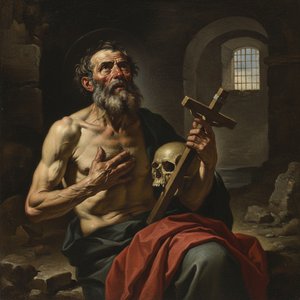
Jose De Ribera (1591–1652) je izradio St. Peter. Pripada pokretu Baroque. Izrađeno je u Oil On Canvas. Čuva se u muzeju Muzej Prado u mjestu Madrid, Španjolska.
- Oil On Canvas
- Muzej Prado, Madrid

 Pregledaj u realnoj veličini

 Ručno oslikano uljanim bojama
 Pošalji
 Podijeli
 Informativni list


 Preuzmi umjetničko djelo
 Slični predmeti
 Rentgenska snimka
 Slide show
 Pitanja i odgovori

 Statistika
St. Peter, ukratko
- Naslov
- St. Peter
- umjetnik
- Jose De Ribera (1591–1652)
- Rođen/a u
- Xativa, Španjolska
- Tehnika
- Oil On Canvas
- Gdje se može vidjeti
- Muzej Prado, Madrid, Španjolska
- Pokret
- Baroque
- Razdoblje
- Early Modern
- Tema
- man, beard, book, keys, cloak, brown
Što prikazuje St. Peter?
The Portrait of St. Peter by Jusepe de Ribera
In this oil painting on canvas, Jusepe de Ribera presents us with a portrait of St. Peter. The subject, a central figure among the apostles of Jesus and recognized as the first Pope, is rendered with a profound sense of presence. Ribera focuses on the man himself, capturing the weight of his role and the character of his lived experience. There is a quiet intensity in the way the figure is presented, inviting a closer look at the weathered details of his countenance.
The work is a significant example of the Baroque style. Through this approach, the artist emphasizes the spiritual and human dimensions of the apostle. The depiction avoids idealization, opting instead for a directness that feels immediate. By focusing on the specific attributes of the saint, Ribera allows the subject to command the space, presenting a figure that is both a religious icon and a man of flesh and bone.
Composition and Visual Elements of the Portrait
The composition is built upon a stable pyramidal structure, with the head of St. Peter forming the apex of the form. He is presented from the waist up, his body turned slightly toward the viewer's left. In his right hand, he holds a book and a set of keys, objects that anchor the figure within the frame. This arrangement directs the eye upward toward his weathered features, creating a sense of quiet, grounded presence.
A strong light source enters from the left, illuminating his face and upper body while casting the rest of the figure into deep shadow. This light creates a sharp contrast against a background that is nearly black, pushing the subject forward into the viewer's space. The color palette is restrained, dominated by warm earth tones—ochre, brown, and gold—which emphasize the textures of his skin and the heavy folds of his clothing.
Technique and Artistic Style of the Work
The work is defined by a profound use of tenebrism, where the subject emerges from a nearly black background into a sharp, focused light. This dramatic chiaroscuro creates a sense of volume, pulling the figure forward and emphasizing the physical presence of the man. Such a heavy interplay of light and shadow reflects the influence of Caravaggio, grounding the religious subject in a palpable, earthly reality. The light source, positioned to the left, carves out the contours of the face and the weathered texture of the skin, casting deep shadows that heighten the emotional weight of the portrait.
Ribera’s approach to the medium is tactile and deliberate. He employs a technique of layering paint to build up depth, allowing the viewer to sense the physical weight of the drapery and the coarse nature of the beard. Visible brushstrokes are not hidden; instead, they contribute to the overall effect, lending a sense of immediacy to the rendering of the fabric and the aged features. Strong, defined lines delineate the eyes, nose, and mouth, providing a structural clarity that balances the more fluid, organic shapes of the figure. The result is a composition that feels both intensely personal and physically substantial.
Other Works by Jusepe de Ribera
The artist's exploration of this particular subject matter is reflected in several other significant pieces within our collection and major institutions. We hold St. Simeon 1 in our catalog, a work that speaks to the same profound human experience found in this portrait. Another notable piece in our collection is The Repentance of Saint Peter, which is currently housed in the Museum of Fine Arts, Lyon.
Beyond our own holdings, Ribera's preoccupation with the themes of remorse and spiritual weight is evident in other historical examples. The work known as Penitent St. Peter, dated about 1630, is held at the Kunsthistorisches Museum in Vienna. This piece shares a similar intensity in its depiction of the apostle's character. Additionally, The Tears of Saint Peter, which dates to 1612, is part of the collection at the Metropolitan Museum of Art in New York. These works collectively illustrate the artist's ability to capture the complexities of faith and the physical reality of the human condition through his characteristic use of light and shadow.
U kojem se muzeju nalazi St. Peter?
Muzej Prado
Madrid, Španjolska
Povijest Muzeja Prado Korijeni Muzeja Prado povezani su s kraljevskom kolekcijom Španjolske, a njihovo trajanje seže u 18. stoljeće. Ono što je započelo kao vizija Kabineta prirodne povijesti pod vladavinom Ferdinanda VII., s vremenom se pretvorilo u posvećeno svetište slikarstva i skulpture.


Slike visoke rezolucije djela St. Peter
Javno dobro: umjetnik je preminuo 1652.
Jose De Ribera, St. Peter, Muzej Prado. Javno dobro.
Boje usklađene s originalom od strane digitalnog stručnjaka, datoteka fine retuše, vjerna umjetnikovim potezima kistom.
Preuzmite datoteku visoke rezolucijeOdgovori na pitanja o St. Peter
Gdje se danas može vidjeti "St. Peter" autora Jose De Ribera?
Originalno djelo "St. Peter" autora Jose De Ribera čuva se u muzeju Muzej Prado, Madrid, Španjolska. Reprodukcija omogućuje prikazivanje ovog djela u vašem domu.
Koja je tehnika korištena za "St. Peter"?
"St. Peter" je izvedeno u tehnici Oil On Canvas.
Koje se teme pojavljuju u djelu "St. Peter" autora Jose De Ribera?
Teme prisutne u djelu "St. Peter" autora Jose De Ribera uključuju man, beard, book, keys, cloak, brown, gold, skin, što zajedno sažima samu bit umjetničkog djela.
Je li "St. Peter" autora Jose De Ribera u javnom vlasništvu?
Status autorskih prava za "St. Peter" autora Jose De Ribera: djelo je u javnom vlasništvu – autorska prava su istekla. To određuje smiju li se slobodno izrađivati reprodukcije slike.
Tko je stvorio "St. Peter"?
"St. Peter" je djelo koje je stvorio/la Jose De Ribera. Informacije na ovoj stranici opisuju izvorni rad umjetnika Jose De Ribera.
Koji umjetnički pravac obuhvaća "St. Peter" autora Jose De Ribera?
"St. Peter" autora Jose De Ribera pripada pokretu Baroque. Ovaj pokret pruža stilski kontekst djela.
U kojem se razdoblju karijere umjetnika Jose De Ribera nalazi djelo "St. Peter"?
"St. Peter" predstavlja Mature Period umjetnika Jose De Ribera.
Što objašnjava status autorskih prava za "St. Peter" autora Jose De Ribera?
Status autorskih prava za djelo "St. Peter" – u javnom vlasništvu – autorska prava su istekla – proizlazi iz godine smrti umjetnika, 1652.
Nalazi li se "St. Peter" autora Jose De Ribera u domovini umjetnika?
Da – umjetničko djelo se čuva u domovini umjetnika. Djelo "St. Peter" nalazi se u državi Španjolska, dok je Jose De Ribera rođen/a u državi Španjolska.
O umjetniku, Jose De Ribera

1591–1652, Španjolska
Jose De Ribera
Život utkan u sjenu i svjetlost Jusepe de Ribera, poznat mnogima kao Lo Spagnoletto – “Mali Španjolac” – bio je istaknuta figura baroknog razdoblja, umjetnik čija su platna pulsirala dramatičnom snagom i nekompromisnim realizmom. Rođen u Xàtivi, Španjolska, 1591. godine, njegov put ga je odveo daleko od valencijanskih korijena, uspostavljajući ga kao jednog od najznačajnijih slikara u 17. stoljeću Napulja, grada tada pod španjolskom vlašću.
I ostalo djelo autora Jose De Ribera
 Magdalena Ventura sa svojim suprugom i sinom1631
 Klepavost
 St. Onuphrius1637
 The Duel of Women (The Duel of Isabella de Carazzi and Diambra de Pettinella)1636
Eseji o djelu St. Peter
 Mastering the Shadows: The Dramatic Power of Chiaroscuro and Tenebrism in Baroque Fine ArtExplore the profound drama of chiaroscuro and tenebrism. Discover how masters like Caravaggio used light and shadow to sculpt emotion and v…
 Masterpieces of Light: The Top 25 Artworks by Duccio di BuoninsegnaJourney through the divine elegance of Duccio di Buoninsegna. Explore 25 iconic Sienese masterpieces, from the Maestà to the Rucellai Madon…
 Jusepe de Ribera: Dramatic Realism & Spiritual Intensity in the Spanish Golden AgeExplore the powerful Baroque paintings of Jusepe de Ribera, master of tenebrism and dramatic realism. Discover his spiritual intensity, inf…