

 Pregledaj u stvarnoj veličini
 Pošalji
 Podijeli
 Detalji o umjetničkom djelu

 Preuzmi
 Slični predmeti
 Rentgenska snimka
 Automatska prezentacija
 Statistika
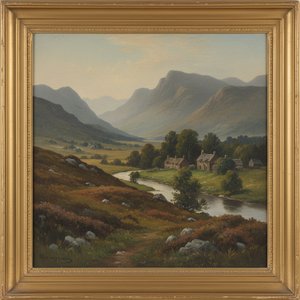
Fishers' Nets, Loch Fyne
 Contemporary Realism
 68.0 x 106.0 cm
 Prikaži više
Ručno rađena uljana reprodukcija
Ručno oslikano uljanim bojama na platnu u dimenzijama i okviru po vašem izboru, izrađeno po narudžbi od strane naših umjetnika. ( Prebacite na print Prebacite na digitalnu sliku)




































Odaberite jednu od naših unaprijed definiranih veličina koje odgovaraju izvornim proporcijama umjetničkog djela.

Možete unijeti vlastite dimenzije kako bi odgovarale određenom okviru ili prostoru. Ako odabrana veličina ne odgovara proporcijama izvorne slike, izrezat ćemo umjetničko djelo ili proširiti sliku dodatnim ručno oslikanim elementima. Digitalni nacrt bit će vam poslan na odobrenje prije početka proizvodnje.
Imajte na umu da pregled na ekranu ne prikazuje stvarno izrezivanje ili proširivanje. Samo će nacrt točno prikazati konačni sastav.
Iako su dostupne prilagođene veličine, preporučujemo odabir dimenzije s preddefiniranog popisa kako bismo očuvali izvorne proporcije.
Nakon narudžbe, tim OriginalUniqueArt.com kontaktirat će klijenta putem e-pošte radi dobivanja uputa te dostaviti probni prikaz (mockup).
Isporuka širom svijeta () u roku od 3-4 tjedna umjesto standardnih 5 tjedana. (19 Rujan). Bez kompromisa u kvaliteti.

Besplatna ekspresna dostava širom svijeta

Visokokvalitetno laneno platno

Potpuno osiguranje dostave

Jamstvo povrata carine i uvoznih poreza

Garancija vjernog podudaranja boja

Politika povrata u roku od 100 dana (samo u slučaju nedostataka)

Jamstvo povrata 100% novca

Popust na više proizvoda
 Opcija stakla dostupna je samo za dimenzije manje od 110 cm

Fishers' Nets, Loch Fyne
Tehnika reprodukcije
Veličina reprodukcije
-


Ukupna cijena
$ 325
Biografija umjetnika
The Explorer’s Eye: The Dual Legacy of John Chalmers
In the annals of the Heroic Age of Antarctic exploration, few figures possess a legacy as multifaceted as John Chalmers. Born in Melbourne, Victoria, in 1874, Chalmers was a man whose life was defined by the pursuit of the unseen, whether it lay beneath the geological strata of a frozen continent or within the delicate nuances of a watercolor wash. The son of a professor of geology, his intellectual lineage provided him with a scientific rigor that would later serve as the foundation for his most daring adventures. Despite the physical trials imposed by childhood polio, Chalmers possessed an indomitable spirit, navigating the halls of Scotch College Melbourne and eventually earning a doctorate in geology from Oxford University. This unique synthesis of academic precision and adventurous courage allowed him to approach the world not merely as a traveler, but as a chronicler of the earth's most profound mysteries.
His contributions to polar science remain a cornerstone of early 20th-century exploration. As the geologist for the legendary Endurance Expedition led by Ernest Shackleton between 1914 and 1917, Chalmers stood at the precipice of the unknown. Amidst the biting winds and the crushing ice of Ross Island, he meticulously documented geological formations that were, to the scientific community, entirely new. Yet, even as he labored to map the physical realities of Antarctica, a different kind of mapping was occurring within his soul. The stark, ethereal beauty of the polar landscape—the interplay of light on crystalline ice and the deep, silent shadows of the glaciers—found expression through his paintbrush. His work transitioned from the clinical observations of a scientist to the emotive captures of an artist, creating a visual record that breathed life into the cold, desolate landscapes he studied.
A Mastery of Light and Landscape
The artistry of John Chalmers is characterized by a profound sensitivity to atmosphere and a remarkable ability to translate the sublime into medium. While his scientific training demanded accuracy, his watercolor paintings sought something more elusive: the essence of place. His works often evoke a sense of quietude and vastness, utilizing a delicate palette to represent the shifting moods of the natural world. Whether capturing the rugged, verdant textures of the Cadzow Forest or the serene, maritime industry found in Fishers' Nets, Loch Fyne, Chalmers demonstrated an uncanny ability to manipulate light to suggest depth and emotion.
His technique often relied on the fluid nature of watercolor to mirror the organic unpredictability of his subjects. In his landscapes, one can observe:
- Atmospheric Perspective: A masterful use of soft edges and receding tones to create an immense sense of scale and distance.
- Luminous Layering: The careful application of washes to capture the translucent quality of light passing through mist or reflecting off water.
- Textural Contrast: The ability to juxtapose the sharp, detailed rendering of geological or botanical elements against broad, sweeping skies.
This artistic development was not merely a hobby but an extension of his exploratory mission. To paint the Antarctic was to attempt to document its spirit, providing a sensory dimension to the data-driven reports of his scientific peers. His ability to move between the gloaming of a Scottish road and the blinding white of an ice shelf speaks to a universal artistic vision—one that finds beauty in the structural integrity of the earth and the ephemeral beauty of its weather.
Historical Significance and Enduring Inspiration
The historical significance of John Chalmers lies in his ability to bridge two seemingly disparate worlds: the empirical and the aesthetic. He represents a rare breed of polymath who understood that true discovery requires both the measuring tool and the observing eye. His life serves as a testament to the idea that science and art are not opposing forces, but rather complementary lenses through which we can comprehend the complexity of our planet. Through his geological findings, he contributed to our fundamental understanding of polar earth sciences; through his paintings, he preserved the emotional resonance of an era of exploration that has since passed into legend.
Today, the works of Chalmers continue to resonate with collectors and historians alike. They offer a window into a time when the world still held vast, unmapped territories and when the act of discovery was as much about personal endurance as it was about scientific achievement. His legacy remains etched in the icy chronicles of Antarctica and preserved in the vibrant, enduring colors of his canvases, reminding us that to truly see the world, one must be willing to both study its bones and admire its beauty.

Osnovne informacije
- Artistic Movement Or Style: Early 20th Century Photog
- Artists Or Movements Influenced By This Artist: ['National Geographic']
- Artists Who Influenced This Artist: ['David Chalmers']
- Full Name: John Chalmers
- Nationality: Australian
- Notable Artworks:
- Fishers’ Nets, Loch Fyne
- Sunday morning
- Loch Doon Castle
- THE DAY'S CATCH, OFF THE WEST COAST, AISLA CRAIG
- Place Of Birth: Sydney, Australia
Srodni članci

Glavna 10 Remek-djela Romantizma: Uljepšajte Svoj Dom Umjetnošću
Otkrijte 10 remek-djela romantizma koja su definirala pejzažno slikarstvo! Uronite u svijet Friedricha, Turnera i Aivazovskog. Inspirirajte svoj interijer vrhunskim umjetničkim djelima. Kupujte reprodukcije na OriginalUniqueArt.com!
Sir John Watson Gordon: A Study in Scottish Landscape Painting & Tonal Impressionism
Explore the captivating portraits of Sir John Watson Gordon, a leading Scottish master. Discover his evolution from neoclassical style to atmospheric Tonalism and influence on 19th-century British art. Learn about his iconic sitters & legacy.

John Singer Sargent: 25 Remek-djela Portreta i Impresionizma | OriginalUniqueArt
Uronite u svijet John Singera Sargenta! Otkrijte 25 remek-djela portreta i impresionizma, priče iza slika te tehničku genijalnost američkog slikara. Reprodukcije vrhunske kvalitete za luksuzni dekor interijera na OriginalUniqueArt.com.
George Paul Chalmers: Rediscovering the Angus Rembrandt & Scottish Colourist Roots
Explore the captivating world of George Paul Chalmers (1833-1878), a pivotal Scottish painter. Discover his landscapes, portraits & connection to the Aesthetic Movement and Colourists. Learn about this 'Angus Rembrandt's' legacy with OriginalUniqueArt.

John Constable: 25 Remek-djela Engleskog Majstora Krajolika | OriginalUniqueArt
Uronite u svijet John Constabla! Otkrijte 25 remek-djela engleskog romantizma i pejzaža. Ekskluzivne reprodukcije slika, zidna dekoracija & inspiracija za dizajn interijera na OriginalUniqueArt.com. Istražite cijelu kolekciju online!