

 Pregledaj u realnoj veličini
 Pošalji
 Podijeli
 Detalji o umjetničkom djelu
 Vodič
Vodič

 Preuzmi umjetničko djelo
 Slični predmeti
 Rentgenska snimka
 Slide show
 Q&A
Q&A Statistika
Ensor musicien et ses clefs de sol


 Prikaži više
Giclée / Umjetnički otisak
Giclée tisak muzejske kvalitete ili otisak na platnu uz brzu izradu i raznolike opcije završne obrade. ( Kupi ručno oslikano djelo Prebacite na digitalnu sliku)




P118B €10

P118H €10

P118W €10

P438Z €10

P508JH €12

P508YH €12

P805H €10

P805Z €10

P919BZ €10

P919G €10

P919XJ €10

P959ZH €10

P968JZ €12

W106C €8

W218G €10

W218JH €8

W218Y €10

W307PJ €10

W316G €10

W316PJ €8

W316Y €10

W398PJ €8

W4111J €10

W500HY €15

W500JH €15

W692G €12

W849H €8

W940BG €15

W953PJ €8




Odaberite jednu od naših unaprijed definiranih veličina koje odgovaraju izvornim proporcijama umjetničkog djela.

Unesite potrebnu širinu i visinu kako bi odgovarali vašem okviru ili zidu. Print se može samo izrezati, nikada ne može biti veći od slike, stoga format s drugačijim omjerom stranica uzrokuje gubitak dijela slike. Prije bilo kakve štampe šaljemo vam digitalni prikaz (mockup) na odobrenje. Slika prikazana na ovoj stranici ne prikazuje stvarni rez — to prikazuje isključivo digitalni prikaz.
Dostava širom svijeta () u roku od 2 tjedna umjesto standardnih 4/5 tjedana. (30 Listopad)

Besplatna ekspresna dostava širom svijeta

Visokokvalitetno laneno platno

Potpuno osiguranje dostave

Jamstvo povrata carine i uvoznih poreza

Jamstvo vjernosti boja

Politika povrata u roku od 100 dana (samo u slučaju nedostataka)

Jamstvo povrata 100% novca

Popust na više proizvoda
 Opcija stakla dostupna je samo za dimenzije manje od 110 cm

Ensor musicien et ses clefs de sol
Giclée / Umjetnički otisak
Veličina reprodukcije
-


Ukupna cijena
€ 71
James Ensor’s Unsettling Portrait of Musical Mystery
James Ensor's "Ensor musicien et ses clefs de sol" (Ensor the Musician and His Clefs) is not merely a portrait; it’s an immersion into a world of psychological unease, theatricality, and subtle symbolism. Painted in 1888, this work stands as a pivotal example of Ensor's unique artistic vision – a blend of Symbolism, Expressionism, and touches of Surrealism that continues to fascinate and disturb viewers over a century later. The painting depicts a man, likely self-portrait, seated before a wall adorned with musical notes, his gaze direct and unsettlingly intense. His brown coat provides a grounding element against the vibrant, almost hallucinatory background, while the inclusion of a clock subtly introduces themes of time, mortality, and perhaps, the relentless march of artistic judgment.
Ensor’s stylistic choices are immediately arresting. The palette is rich and saturated, dominated by reds – not comforting hues, but rather intense, bordering on alarming shades that contribute to the painting's overall sense of disquiet. This boldness was a deliberate departure from the prevailing academic styles of the time, reflecting Ensor’s rejection of rigid artistic conventions. He employed a technique characterized by thick impasto, particularly noticeable in the background, creating a tactile surface that seems to pulsate with energy. The figures are rendered with an almost mask-like quality – their features simplified and exaggerated, hinting at hidden emotions and concealed identities. This echoes Ensor’s lifelong fascination with masks, a motif deeply ingrained in his artistic practice, stemming from his childhood spent amidst the spectacle of Ostend's carnival.
The Carnival Within: Symbolism and Personal Narrative
The painting is profoundly rooted in Ensor’s personal history and experiences. The souvenir shop run by his parents, overflowing with masks, curiosities, and theatrical props, served as a constant source of inspiration. These objects weren't simply decorative; they represented a world of performance, disguise, and the blurring of reality and illusion – themes that would become central to Ensor’s artistic exploration. The musical notes scattered across the wall are not just an incidental detail; they symbolize the artist’s own engagement with music, a passion he pursued despite lacking formal training. The act of playing music, particularly improvising, was for Ensor a means of expressing his innermost thoughts and emotions, often in ways that challenged societal norms.
Furthermore, the inclusion of skeletons – a recurring motif in Ensor’s work – suggests an awareness of mortality and the ephemeral nature of existence. They are not presented as frightening specters but rather as participants in this strange musical tableau, adding to the painting's unsettling atmosphere. The man’s direct gaze at the viewer is particularly significant. It’s a confrontational stare, suggesting that he is not simply presenting himself; he is challenging the observer to contemplate their own role within his world of masks and shadows.
Contextualizing Ensor: A Revolutionary Artist
James Ensor was a truly groundbreaking figure in 19th-century art. He rejected the prevailing artistic trends, forging his own distinctive style that defied easy categorization. His work was often met with hostility and criticism, particularly during his early career, as evidenced by the scathing reviews of “Christ’s Entry Into Brussels.” However, Ensor persevered, developing a unique visual language that anticipated the developments of Expressionism and Surrealism. He was associated with the Les XX group, a circle of avant-garde artists who championed innovation and challenged artistic conventions.
Ensor's influence extends far beyond his own lifetime. His exploration of psychological themes, his use of unsettling imagery, and his rejection of academic tradition paved the way for future generations of artists. His work continues to resonate with contemporary audiences, offering a glimpse into the mind of an artist who dared to confront the darker aspects of human experience. Reproductions of "Ensor musicien et ses clefs de sol" provide a tangible connection to this remarkable and profoundly unsettling artistic legacy.
Bringing Ensor Home: A High-Quality Reproduction
OriginalUniqueArt offers meticulously crafted, hand-painted reproductions of James Ensor’s “Ensor musicien et ses clefs de sol,” capturing the artist's distinctive style and emotional intensity. Our skilled artisans use archival-quality materials and techniques to faithfully recreate every detail of this iconic painting, ensuring that your reproduction will be a treasured addition to your art collection for years to come. Whether you’re an art enthusiast, a collector seeking to expand your holdings, or simply someone drawn to the power of evocative imagery, a OriginalUniqueArt reproduction offers a beautiful and authentic way to experience the genius of James Ensor.
Pitanja i odgovori
Koja veličina ispisa za "Ensor musicien et ses clefs de sol" najbolje odgovara mojoj prostoriji?
Za Living Room, preporučena veličina printa za "Ensor musicien et ses clefs de sol" autora James Ensor je Large.
Kakvo je opće raspoloženje djela "Ensor musicien et ses clefs de sol" autora James Ensor?
"Ensor musicien et ses clefs de sol" autora James Ensor opisuje se kao djelo Dramatic raspoloženja. Ova klasifikacija može pomoći u usklađivanju umjetnine s prostorom.
Pod kojim drugim imenima ili pseudonimima poznat je/poznata je James Ensor?
Ostala imena zabilježena za James Ensor, autora djela "Ensor musicien et ses clefs de sol", uključuju James Sidney Edouard Ensor, Baron Ensor.
Biografija umjetnika
James Ensor (1860-1949): A Pioneer of Expressionism & Surrealism
James Sidney Edouard Ensor, Baron Ensor (Ostend, 13 April 1860 – 19 November 1949) was a Belgian painter and printmaker who stands as one of the most influential figures in the development of Expressionism and Surrealism. Born into an English father and Belgian mother—a duality that profoundly shaped his artistic worldview—Ensor defied convention from the outset, rejecting academic formalism for a bold exploration of psychological depth and grotesque imagery.
Early Influences & Artistic Training
His formative years were marked by exposure to the vibrant atmosphere of Ostend’s seaside resort town, where his parents operated a souvenir shop brimming with curiosities—a veritable cabinet of wonders that ignited his imagination. From 1876 until 1880 he studied at the Académie Royale des Beaux-Arts in Brussels, alongside fellow students like Fernand Khnopff and Theo Van Rysselberghe, where Jean Portales instilled in him a commitment to artistic innovation.
A Shift Towards Grotesque Vision & Expressionist Style
Ensor’s early paintings reflected a more traditional approach, depicting scenes of everyday life rendered in somber tones. However, he swiftly abandoned these conventions as he embraced the expressive qualities of light, line, and color—a decisive move toward Expressionism. Influenced by Rembrandt, Goya, and Japanese woodcuts, Ensor developed a distinctive iconography characterized by unsettling juxtapositions and symbolic references to death and decay.
Key Masterpieces & Recurring Themes
His most celebrated works – including *Christ’s Entry into Brussels* (1888-1889), *The Scandalized Masks* (1883) and *Skeletons Fighting over a Hanged Man* (1891) – exemplify his unwavering commitment to confronting uncomfortable truths and exploring the darkest recesses of human psychology. These paintings are not merely aesthetically striking; they serve as powerful critiques of societal norms, religious hypocrisy, and the absurdity of existence.
Legacy & Influence
James Ensor’s artistic legacy extends far beyond his own lifetime. He is recognized as a pivotal catalyst in the transition from Symbolism to Expressionism and Surrealism—a true pioneer who challenged artistic conventions and paved the way for future generations of artists. His fearless exploration of the subconscious, combined with his masterful use of grotesque imagery and symbolic language, continues to inspire artists today.

James Ensor
1860 - 1949 , België
Osnovne informacije
- Artistic Movement Or Style: Expressionism, Surrealism
- Artists Who Influenced This Artist:
- Bruegel the Elder
- Francisco Goya
- Whistler
- Date Of Birth: April 13, 1860
- Date Of Death: November 19, 1949
- Full Name: James Sidney Edouard Ensor
- Nationality: Belgian
- Notable Artworks:
- The Scandalized Masks
- Skeletons Fighting...
- Christ's Entry into Brussels
- Place Of Birth: Ostend, Belgium
Srodni članci
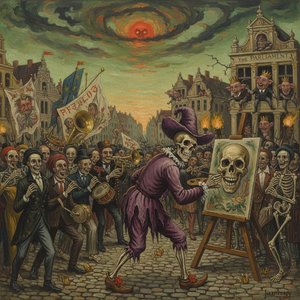
James Ensor's Grotesque Visions: Social Commentary & Artistic Innovation
Explore the unsettling yet captivating world of James Ensor, a pioneer of Expressionism. Discover his satirical masterpieces, symbolic imagery & lasting influence on modern art. High-quality reproductions available at OriginalUniqueArt.

Figurative Expressionism: Emotional Intensity & Subjective Reality in 20th-Century Art
Explore the powerful world of Figurative Expressionism with OriginalUniqueArt. Discover key artists like Kirchner & Beckmann, understand its emotional depth, and learn how to collect this influential 20th-century art movement.
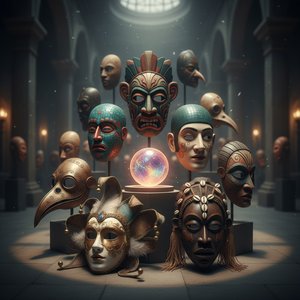
Unveiling the Mystery: A Journey Through the World's Most Iconic Mask Artworks
Embark on a profound journey through the world's most iconic mask artworks. Explore the spiritual depth, intricate craftsmanship, and rich cultural heritage of global traditions, from Chhau to Gomira, in this expert-led exploration of ancestral artistry and symbolic beauty.

James Abbott McNeill Whistler: 25 Remek-djela Majstora Tonalizma | OriginalUniqueArt
Istražite 25 remek-djela Jamesa Abbotta McNeilla Whistlera, majstora tonalizma i američkog impresionizma. Otkrijte priče iza njegovih čuvenih 'Nocturna' i portreta te pronađite inspiraciju za luksuznu dekoraciju interijera na OriginalUniqueArt.com.

Sir Alfred Munnings' Masterpieces: 25 Paintings That Define Equine Art | OriginalUniqueArt
Explore 25 iconic Sir Alfred Munnings paintings! Discover the beauty of British Impressionism, equine art & rural England. Find museum-quality reproductions and elevate your home decor with OriginalUniqueArt. Explore the full collection online.


