
 Pregledaj u realnoj veličini
 Pošalji
 Podijeli
 Detalji o umjetničkom djelu
 Vodič
Vodič

 Preuzmi umjetničko djelo
 Slični predmeti
 Rentgenska snimka
 Slide show
 Pitanja i odgovori
 Statistika
Duet

- 101.0 x 81.0 cm


 Prikaži više
Giclée / Umjetnički otisak
Giclée tisak muzejske kvalitete ili otisak na platnu uz brzu izradu i raznolike opcije završne obrade. ( Kupi ručno oslikano djelo Prebacite na digitalnu sliku)




P118B €10

P118H €10

P118W €10

P438Z €10

P508JH €12

P508YH €12

P805H €10

P805Z €10

P919BZ €10

P919G €10

P919XJ €10

P959ZH €10

P968JZ €12

W106C €8

W218G €10

W218JH €8

W218Y €10

W307PJ €10

W316G €10

W316PJ €8

W316Y €10

W398PJ €8

W4111J €10

W500HY €15

W500JH €15

W692G €12

W849H €8

W940BG €15

W953PJ €8




Odaberite jednu od naših unaprijed definiranih veličina koje odgovaraju izvornim proporcijama umjetničkog djela.

Unesite potrebnu širinu i visinu kako bi odgovarali vašem okviru ili zidu. Print se može samo izrezati, nikada ne može biti veći od slike, stoga format s drugačijim omjerom stranica uzrokuje gubitak dijela slike. Prije bilo kakve štampe šaljemo vam digitalni prikaz (mockup) na odobrenje. Slika prikazana na ovoj stranici ne prikazuje stvarni rez — to prikazuje isključivo digitalni prikaz.
Dostava širom svijeta () u roku od 2 tjedna umjesto standardnih 4/5 tjedana. (3 Studeni)

Besplatna ekspresna dostava širom svijeta

Visokokvalitetno laneno platno

Potpuno osiguranje dostave

Jamstvo povrata carine i uvoznih poreza

Jamstvo vjernosti boja

Politika povrata u roku od 100 dana (samo u slučaju nedostataka)

Jamstvo povrata 100% novca

Popust na više proizvoda
 Opcija stakla dostupna je samo za dimenzije manje od 110 cm

Duet
Giclée / Umjetnički otisak
Veličina reprodukcije
-


Ukupna cijena
€ 72
Hendrick Terbrugghen’s “Duet”: A Window into Dutch Baroque Sensuality
“Duet,” painted in 1628 by Hendrick Jansz ter Brugghen, is more than just a depiction of two young musicians; it's a vibrant snapshot of the burgeoning artistic and social landscape of the Dutch Golden Age. This captivating oil on canvas, now residing within the esteemed collection of the Louvre Museum in Paris, offers a glimpse into the world of Caravaggism – a movement that profoundly influenced Terbrugghen’s distinctive style and approach to portraying human emotion.
Ter Brugghen, born in 1588 in Overijssel, Netherlands, was deeply connected to the artistic currents of his time. His father, Jan Egbertsz ter Brugghen, served as secretary to Prince William the Silent, exposing young Hendrick to a world of courtly patronage and artistic refinement. This early exposure undoubtedly shaped his trajectory, leading him to study under Abraham Bloemaert, a prominent Mannerist painter, before embracing the dramatic intensity of Caravaggio’s style – characterized by intense contrasts of light and shadow, known as *chiaroscuro*. The Utrecht Caravaggisti group, of which Terbrugghen was a key member alongside Gerrit van Hondhorst and Dirck van Baburen, sought to capture the same emotional depth and dynamism found in Caravaggio's works, adapting them to the Dutch context.
A Symphony of Light and Color: Artistic Technique
The painting’s immediate impact lies in its masterful use of light. Terbrugghen expertly employs *chiaroscuro* to sculpt the figures, creating a dramatic interplay between illumination and shadow that draws the viewer's eye and imbues the scene with a palpable sense of drama. The strong directional lighting highlights the youthful faces of the musicians, emphasizing their expressions of joy and engagement. Notice how the light catches the feathered cap of the male figure, adding to his theatrical presence, while simultaneously casting subtle shadows across his face, hinting at an underlying intensity.
Terbrugghen’s brushwork is remarkably fluid and expressive. He utilizes loose, gestural strokes to convey movement and energy, particularly in the depiction of the lute and the flowing garments. The vibrant palette – dominated by rich reds, blues, and yellows – contributes significantly to the painting's overall dynamism. These colors aren’t merely decorative; they are carefully chosen to evoke a sense of warmth, sensuality, and youthful exuberance.
Symbolism and Social Context
Beyond its technical brilliance, “Duet” is rich in symbolic meaning. The lute itself, a prominent instrument in the Baroque era, was often associated with pleasure, music, and even eroticism. The young men’s attire – featuring flamboyant colors and feathered accessories – reflects the influence of theatrical traditions and suggests a world of entertainment and indulgence. The low-cut dress worn by the female musician is particularly noteworthy; it subtly challenges conventional notions of modesty, hinting at a playful disregard for social norms.
Furthermore, the scene can be interpreted as an allegory for harmony and balance – both musical and emotional. The two figures, engaged in a shared activity, represent a union of spirits, reflecting the broader humanist ideals prevalent during the Dutch Golden Age. The inclusion of the clock in the background subtly reminds us of the fleeting nature of time and the importance of savoring these moments of joy.
A Timeless Masterpiece: Emotional Resonance
“Duet” transcends its historical context to resonate with viewers today. The painting’s depiction of youthful exuberance, musical passion, and intimate connection evokes a powerful sense of nostalgia and delight. Terbrugghen's ability to capture the fleeting expressions of human emotion – the joy in the male musician’s gaze, the gentle affection in the female musician’s expression – is truly remarkable. It’s a painting that invites us to step into the scene, to feel the warmth of the music, and to share in the simple pleasures of companionship.
Reproductions of “Duet” offer an accessible way to experience this masterpiece firsthand, bringing its vibrant colors and captivating imagery into your home or office. Consider a high-quality reproduction to add a touch of Dutch Baroque elegance to any space – a reminder of the enduring power of art to inspire and uplift.
Pitanja i odgovori
Koji su oblik i dimenzije djela "Duet" autora Hendrick Terbrugghen?
"Duet" autora Hendrick Terbrugghen je kompozicija u formatu Portrait čija su dimenzije u izvornom izdanju 101 x 81 cm.
Je li "Duet" autora Hendrick Terbrugghen slika, crtež ili grafika?
U katalogu je djelo "Duet" autora Hendrick Terbrugghen klasificirano kao WallArt. Ova kategorija pomaže u pronalaženju sličnih radova.
U kojoj je godini nastalo "Duet"?
Djelo "Duet" datira iz 1628 godine. Taj datum smješta rad unutar karijere Hendrick Terbrugghen i pripadajućeg mu razdoblja.
Biografija umjetnika
Rani život i utjecaji
Hendrick Jansz Ter Brugghen, istaknuta figura u slikarstvu Zlatnog doba Nizozemske, rođen je 1588. godine u Overijselu, Nizozemska. Njegov otac, Jan Egbertsz Ter Brugghen, radio je kao sekretar na dvoru u Utrechtu pod Knežem Williamom Tišim. Ova izloženost vjerojatno je utjecala na Hendrickov rani interes za umjetnost.Umjetnička karijera i stil
Ter Brugghenov umjetnički put započeo je učenjem kod Abraham Bloemaerta, manirističkog slikarja. Kasnije je postao jedan od vodećih članova Utrecht Caravaggisti, grupe nizozemskih slikarja inspiriranih Caravaggiom. Njegovo djelo karakterizira dramatična upotreba svjetlosti i sjene, što se vidi u njegovim slikama poput Anunciacije (Alte Pinakothek, Muzej u Münchenu, Njemačka) i Revellera (Alte Pinakothek, Muzej u Münchenu, Njemačka).Značajna djela i nasljeđe
Pjevač lute (Kremerova kolekcija, Amsterdam, Nizozemska), autografska replika slike iz Nacionalne galerije u Londonu, koja prikazuje njegov bogatstvo boja.Također se ističe i Anunciacija, remek-djelo koje odražava njegovo majstorstvo Caravaggiojevog stila.
Utjecaj na kasnije umjetnike:
Ter Brugghenovo djelo imalo je dubok utjecaj na kasnije umjetnike, uključujući Rembrandta van Rijna, čija je slavna slika Noćni stražar (Rijksmuseum, Amsterdam, Nizozemska) svjedočanstvo o trajnom utjecaju Utrecht Caravaggisti.
Muzej i kolekcije koje prikazuju djela Ter Brugghena
Mauritshuis (Laag, Nizozemska), s djelima poput Nimfe i satir od Sir Petera Paula Rubensa.Također je u Kremerovoj kolekciji (Amsterdam, Nizozemska) izloženo Pjevač lute.
- Istražite više djela Ter Brugghena na OriginalUniqueArt.com
- Otkrijte slikarstvo Zlatnog doba Nizozemske i njegov utjecaj na odjeljak povijesti umjetnosti OriginalUniqueArt.com
- Saznajte više o drugim umjetnicima poput Dirka van Baburena, kolege Utrecht Caravaggisti, na OriginalUniqueArt.com
Zaključak
Ter Brugghenov enigmatičan život i njegovi značajni doprinosi slikarstvu Zlatnog doba Nizozemske ostavili su neizbrisiv trag u povijesti umjetnosti. Njegova dramatična upotreba svjetlosti i sjene nastavlja inspirirati umjetnike i ljubitelje umjetnosti, čineći ga fascinantnom figurom u svijetu umjetnosti.
Hendrick Terbrugghen
1627 - 1629 , Nizozemska
Osnovne informacije
- Artistic Movement Or Style: Caravaggisti slikarstvo
- Artists Or Movements Influenced By This Artist: Rembrandt van Rijjn
- Artists Who Influenced This Artist: Abraham Bloemaert
- Date Of Birth: 1588.
- Date Of Death: Listopad 1629.
- Full Name: Hendrick Jansz Terbrugghen
- Nationality: Nizozemski
- Notable Artworks:
- Slinger lutnjak
- Anuncijacija
- David hvaljen od strane izraelki žena
- Place Of Birth: Overijssel, Nizozemska
Srodni članci

Zlatno Dobo Nizozemske: 10 Remekdjela Koja Su Definirala Umjetnost i Dekor
Otkrijte remekdjela nizozemskog Zlatnog doba! Uronite u svijet Rembrandta, Vermeera i drugih majstora. 10 slika koje su definirale holandsku umjetnost & barokni stil. Inspirirajte se za dekoraciju doma s OriginalUniqueArt.com – reprodukcije vrhunske kvalitete!
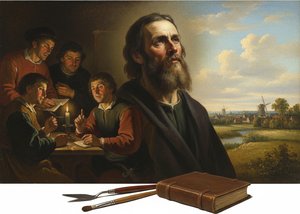
Hendrick Terbrugghen: Caravaggism, Spirituality & the Dutch Golden Age Painter's Evolving Style
Explore the captivating world of Hendrick Terbrugghen, a leading Dutch Golden Age painter influenced by Caravaggio. Discover his dramatic use of light, spiritual depth & lasting legacy. Learn more at OriginalUniqueArt.

Golden Age Reflections: Dutch Baroque Painting & Cultural Innovation
Explore the Dutch Golden Age of painting! Discover key artists like Vermeer & ter Borch, their innovative techniques, and the rich cultural context behind these Baroque masterpieces. Learn about collecting & appreciating this iconic art period.

Mastering Light & Shadow: A Journey Through the Dutch Golden Age's Luminous Legacy
Embark on a cultural journey through the Dutch Golden Age. Explore the masterful interplay of light and shadow in 17th-century masterpieces, from Rembrandt to Vermeer, and discover how this era of profound realism continues to inspire fine art collectors today.

Golden Light & Dutch Skies: The Timeless Magic of Dutch Golden Age Landscapes
Discover the breathtaking beauty of Dutch Golden Age landscapes. Explore the mastery of light, chiaroscuro, and 17th-century realism through an expert art history lens, celebrating the enduring legacy of the Dutch Masters for discerning collectors and art lovers.
