

 Pregledaj u stvarnoj veličini
 Pošalji
 Podijeli
 Detalji o umjetničkom djelu

 Preuzmi
 Slični predmeti
 Rentgenska snimka
 Automatska prezentacija
 Statistika
Bacchus, Ceres and Cupid
 Acrylic On Canvas
- WallArt
- Northern Mannerism
 163.0 x 113.0 cm
 Kunsthistorisches Museum
 Prikaži više
Giclée / Umjetnički otisak
Giclée tisak muzejske kvalitete ili otisak na platnu uz brzu proizvodnju i fleksibilne opcije završne obrade. ( Kupi ručno naslikanu sliku Prebacite na digitalnu sliku)




P118B $10

P118H $10

P118W $10

P438Z $10

P508JH $12

P508YH $12

P805H $10

P805Z $10

P919BZ $10

P919G $10

P919XJ $10

P959ZH $10

P968JZ $12

W106C $8

W218G $10

W218JH $8

W218Y $10

W307PJ $10

W316G $10

W316PJ $8

W316Y $10

W398PJ $8

W4111J $10

W500HY $15

W500JH $15

W692G $12

W849H $8

W940BG $15

W953PJ $8




Odaberite jednu od naših unaprijed definiranih veličina koje odgovaraju izvornim proporcijama umjetničkog djela.

Možete unijeti vlastite dimenzije kako biste umjetničko djelo prilagodili specifičnom okviru ili prostoru. Ako odabrana veličina ne odgovara proporcijama izvornog rada, izrezat ćemo dio slike ili je proširiti pomoću ogledalnog efekta ili jednobojne rubne površine. Digitalni prikaz (mockup) bit će vam poslan na odobrenje prije početka proizvodnje.
Imajte na umu da pregled na zaslonu ne odražava stvarno izrezivanje ili proširivanje. Samo će mockup točno prikazati konačnu kompoziciju.
Iako su dostupne prilagođene veličine, preporučujemo odabir dimenzije iz unaprijed definirane liste kako biste očuvali izvorne proporcije.
Dostava širom svijeta () u roku od 2 tjedna umjesto standardnih 4/5 tjedana. (16 Rujan)

Besplatna ekspresna dostava širom svijeta

Visokokvalitetno laneno platno

Potpuno osiguranje dostave

Jamstvo povrata carine i uvoznih poreza

Garancija vjernog podudaranja boja

Politika povrata u roku od 100 dana (samo u slučaju nedostataka)

Jamstvo povrata 100% novca

Popust na više proizvoda
 Opcija stakla dostupna je samo za dimenzije manje od 110 cm

Bacchus, Ceres and Cupid
Giclée / Umjetnički otisak
Veličina reprodukcije
-


Ukupna cijena
$ 80
Bacchus, Ceres, and Cupid: A Baroque Dance of Divine Excess
Hans von Aachen’s “Bacchus, Ceres, and Cupid,” painted likely in the late 16th century, is more than just a depiction of mythological figures; it's a vibrant distillation of the Northern Mannerist style – a period characterized by its dramatic contrasts, elongated forms, and an intense exploration of psychological depth. The painting, now residing within the Kunsthistorisches Museum in Vienna, offers a glimpse into the artistic currents flowing between Italy, Germany, and beyond during this transformative era. Von Aachen’s work stands out not merely for its technical skill but also for its ability to imbue classical subjects with a palpable sense of energy and sensuality, reflecting the tastes of powerful patrons like Emperor Rudolf II of Prague.
The composition immediately draws the eye into a dynamic interplay of figures. Dominating the left side is Bacchus, the god of wine, rendered in robust musculature and adorned with a leafy crown – symbols of his intoxicating domain. His expression is one of unrestrained joy, a boisterous celebration that spills outwards, inviting the viewer to partake in his revelry. To his right sits Ceres, the goddess of agriculture, embodying abundance and fertility. She’s depicted with serene grace, holding a basket overflowing with fruits – a visual testament to her role as provider and sustainer. Finally, Cupid, the mischievous god of love, darts across the scene, an arrow poised in his hand, representing desire and passion. The positioning of these three deities isn't merely decorative; it’s carefully orchestrated to suggest a narrative arc—a dance between indulgence, sustenance, and the driving force of romantic longing.
A Mannerist Masterpiece: Technique and Style
Von Aachen’s mastery lies in his skillful manipulation of light and shadow, a hallmark of the Baroque style that was beginning to emerge during this period. The painting is bathed in dramatic chiaroscuro – stark contrasts between light and dark – which sculpts the figures and creates a sense of theatricality. Notice how the musculature of Bacchus is highlighted against the darker background, emphasizing his power and vitality. The elongated forms characteristic of Mannerism are evident throughout, lending an air of elegance and sophistication to the scene. Von Aachen’s brushwork is remarkably detailed, particularly in the rendering of drapery and the intricate patterns on the figures' attire. This meticulous attention to detail speaks to both his technical proficiency and his desire to capture the textures and nuances of the world around him.
The color palette is rich and vibrant, dominated by deep reds, golds, and blues – colors associated with royalty, wealth, and divine power. These hues are juxtaposed against earthy tones, creating a visual tension that mirrors the painting’s thematic complexity. The background landscape, rendered in muted greens and browns, serves as a grounding element, anchoring the figures within a believable, albeit stylized, setting.
Symbolism and Historical Context
“Bacchus, Ceres, and Cupid” is steeped in classical mythology, but it also carries layers of symbolic meaning. The arrangement of the three deities alludes to the Roman proverb “Sine Cerere et Bacchus friget Venus,” or "Without Ceres and Bacchus, Venus would freeze"—a reminder that pleasure, abundance, and love are essential components of a fulfilling life. The painting reflects the artistic tastes of Emperor Rudolf II, who was known for his patronage of both art and science, and whose court in Prague became a hub for cultural exchange between Northern and Southern Europe.
Von Aachen’s work is deeply intertwined with the broader context of the Renaissance and Mannerism. He drew inspiration from Italian masters like Raphael and Michelangelo, but he also incorporated elements of Netherlandish realism – particularly in his attention to detail and his use of light and shadow. His paintings were highly sought after by European nobility, who commissioned them as symbols of wealth, power, and sophistication.
A Timeless Appeal: Reproduction and Interpretation
Today, “Bacchus, Ceres, and Cupid” continues to captivate viewers with its dramatic composition, vibrant colors, and profound symbolism. Reproductions offer a wonderful opportunity to bring this masterpiece into your home or office, allowing you to appreciate its beauty and complexity on a daily basis. When selecting a reproduction, consider the quality of materials used – a high-quality print on archival paper will ensure that the colors remain true for years to come. Whether displayed as a statement piece in a grand salon or as a subtle accent in a smaller room, this painting’s enduring appeal is sure to spark conversation and inspire contemplation.
Biografija umjetnika
Rani život i edukacija
Hans von Aachen, njemački slikar, rođen je 1552. godine u gradu Kölnu. Iako su detalji o njegovom ranom životu obavijeni velom tajne, vjeruje se da je svoje umjetničko obrazovanje stekao u radionici Leonardusa Sievenhovena, tadašnjeg lokalnog majstora.Umjetnički stil i utjecaji
Von Aachenovo djelo prepoznatljivo je po upotrebi živopisnih boja i dramatičnih kompozicija, što su obilježja karakteristična za manieristički stil. Njegova umjetnost često prikazuje izdužene figure, zamršene detalje i osjećaj napetosti, a na njegov razvoj snažno je utjecalo djelo El Greca (Domenikosa Theotokopulosa). Među njegova najznačajnija remek-djela možemo izdvojiti:- Razapriće (1585), sliku koja veličanstveno prikazuje njegovu upotrebu jarkih boja i dramatičnog osvjetljenja.
- Posljednji sud (1590), djelo koje demonstrira njegovu nevjerojatnu sposobnost uravnoteženja višestrukih figura unutar jedne kompozicije.
- Portret nepoznate dame (1595), portret koji ističe njegovu vještinu u dočaravanju najsuptilnijih nijansi ljudskoga izraza.
Značajne kolekcije i izložbe
Djela Hansa von AACHENA mogu se pronaći u brojnim prestižnim muzejima, uključujući:- Gemäldegalerie Alte Meister u Dresdenu, Njemačka - koji čuva opsežnu kolekciju europskih slika od 15. do 18. stoljeća.
- Museum Ostdeutsche Galerie u Regensburgu, Njemačka - koji predstavlja jedinstvenu zbirku istočnonjemačke umjetnosti.
Istražite svijet manierizma i renesansne umjetnosti uz ručno rađene uljane reprodukcije OriginalUniqueArta: [https://OriginalUniqueArt.com/@@/a@d3cku7--the-renaissance-revived:-a-closer-look-at-OriginalUniqueArt-com-s-classical-reprodu..](https://OriginalUniqueArt.com/@@/a@d3cku7--the-renaissance-revived:-a-closer-look-at-OriginalUniqueArt-com-s-classical-reprodu..)
Naslijeđe
Hans von Aachen preminuo je 1515. godine, ostavivši za sobom naslijeđe složenih i emocionalno nabijenih slika. Njegov rad nastavlja inspirirati umjetnike i ljubitelje umjetnosti, nudeći nam jedinstven uvid u fascinantan svijet manierističke umjetnosti.Saznajte više o životu i djelu Hansa von AACHENA na OriginalUniqueArt.com: [https://AllPaintingslo.com/@@/a@d3aquv](https://OriginalUniqueArt.com/@@/a@d3aquv) | otkrivanje muzeja Ostdeutsche Galerie (Njemačka)

Hans Von Aachen
1552 - 1615 , Njemačka
Osnovne informacije
- Artistic Movement Or Style: Manirističko slikarstvo
- Artists Or Movements Influenced By This Artist: ['Renesansna umjetnost']
- Artists Who Influenced This Artist: ['El Greco']
- Date Of Birth: 1552 Köln, Njemačka
- Date Of Death: 1615
- Full Name: Hans von Aachen
- Nationality: Njemački
- Notable Artworks:
- Razapinjanje
- Posljednji sud
- Portret nepoznate dame
- Place Of Birth: Köln
Srodni članci

Baroque Classicism: The Grandeur of Order and Drama in 17th-Century Art History
Explore the profound elegance of Baroque Classicism. Discover how 17th-century masters synthesized dramatic emotion with classical order through the lens of the Counter-Reformation and the works of legends like Carlo Maratta and Andrea Sacchi.
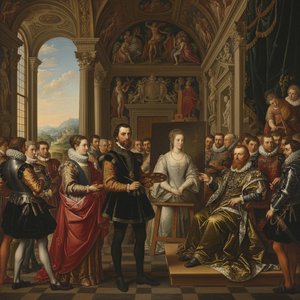
Hans von Aachen: Mannerism's Courtly Visionary & Imperial Portraiture
Explore the captivating world of Hans von Aachen, a leading Mannerist painter renowned for his exquisite imperial portraits & mythological scenes. Discover his legacy and influence on 16th-century European art.

The Dramatic Flourish: Exploring the Baroque Movement's Enduring Legacy in Art History
Explore the dramatic world of Baroque art! Discover iconic artists like Caravaggio & Rubens, defining techniques, and its lasting impact on art history. Expert insights for collectors & enthusiasts at OriginalUniqueArt.
Echoes of Olympus: Mythological Narratives in Western Art Through the Ages
Explore the captivating history of mythological narratives in Western art! From ancient Greece to modern masterpieces, discover iconic artworks & symbolism. Expert analysis and high-quality reproductions at OriginalUniqueArt.

Barokna Drama: Uvođenje Velikolepja i Emocija u Savremene Interijere
Otkrijte dramatičnost i raskoš barokne umjetnosti! OriginalUniqueArt nudi vrhunske reprodukcije, personalizirane portrete i stručne savjete za integraciju ovog veličanstvenog stila u vaš dom. Kvaliteta zajamčena!