
 Pregledaj u realnoj veličini
 Pošalji
 Podijeli
 Detalji o umjetničkom djelu
 Vodič
Vodič

 Preuzmi umjetničko djelo
 Slični predmeti
 Rentgenska snimka
 Slide show
 Q&A
Q&A Statistika
Imago Pietatis

- 40.0 x 50.0 cm


 Prikaži više
Giclée / Umjetnički otisak
Giclée tisak muzejske kvalitete ili otisak na platnu uz brzu izradu i raznolike opcije završne obrade. ( Kupi ručno oslikano djelo Prebacite na digitalnu sliku)




P118B €10

P118H €10

P118W €10

P438Z €10

P508JH €12

P508YH €12

P805H €10

P805Z €10

P919BZ €10

P919G €10

P919XJ €10

P959ZH €10

P968JZ €12

W106C €8

W218G €10

W218JH €8

W218Y €10

W307PJ €10

W316G €10

W316PJ €8

W316Y €10

W398PJ €8

W4111J €10

W500HY €15

W500JH €15

W692G €12

W849H €8

W940BG €15

W953PJ €8




Odaberite jednu od naših unaprijed definiranih veličina koje odgovaraju izvornim proporcijama umjetničkog djela.

Unesite potrebnu širinu i visinu kako bi odgovarali vašem okviru ili zidu. Print se može samo izrezati, nikada ne može biti veći od slike, stoga format s drugačijim omjerom stranica uzrokuje gubitak dijela slike. Prije bilo kakve štampe šaljemo vam digitalni prikaz (mockup) na odobrenje. Slika prikazana na ovoj stranici ne prikazuje stvarni rez — to prikazuje isključivo digitalni prikaz.
Dostava širom svijeta () u roku od 2 tjedna umjesto standardnih 4/5 tjedana. (1 Studeni)

Besplatna ekspresna dostava širom svijeta

Visokokvalitetno laneno platno

Potpuno osiguranje dostave

Jamstvo povrata carine i uvoznih poreza

Jamstvo vjernosti boja

Politika povrata u roku od 100 dana (samo u slučaju nedostataka)

Jamstvo povrata 100% novca

Popust na više proizvoda
 Opcija stakla dostupna je samo za dimenzije manje od 110 cm

Imago Pietatis
Giclée / Umjetnički otisak
Veličina reprodukcije
-


Ukupna cijena
€ 71
A Vision of Devotion: The Soul of Bellini’s Imago Pietatis
In the quiet corridors of the Fondazione artistica Poldi Pezzoli Museum in Milan, there exists a window into the profound spiritual landscape of the Venetian Renaissance. Giovanni Bellini’s Imago Pietatis, created around 1457, is far more than a mere depiction of Christ's burial; it is an intimate, breathing meditation on faith, sorrow, and the eternal cycle of life. As the viewer approaches this masterpiece, they are not simply looking at a painting, but are invited into a sacred space where the boundaries between the earthly and the divine begin to dissolve. The central figure of Jesus, bearing the unmistakable pallor of death, rises from the stone sarcophagus, his presence commanding a heavy, reverent silence that resonates through the centuries.
Bellini’s early mastery is on full display here, showcasing a transition from the rigid, sculptural influences of Andrea Mantegna toward a more luminous, atmospheric style that would eventually define the Venetian school. The composition is structured with a breathtaking precision; the perspective of the tomb's side walls draws the eye inward, guiding the observer through a meticulously rendered landscape. Beyond the immediate tragedy of the sepulchre, one finds a world in motion—a footbridge crossing a gentle watercourse, dense forests, and a distant cityscape that stretches toward a horizon bathed in the soft, rosy light of a new dawn. This movement from the dark, enclosed space of death toward the expansive, light-filled distance serves as a visual metaphor for the journey from mortality to immortality.
Symbolic Landscapes and the Language of Light
Every element within this composition is steeped in a deliberate, symbolic language designed to stir the soul. Bellini utilizes the natural world to mirror the theological weight of the subject matter. On the right, a stark, dry tree clings to a high cliff, serving as a poignant emblem of sin and the desolation of death. In beautiful, heartbreaking contrast, the left side of the frame features lush, vibrant foliage, representing the promise of rebirth and the redemption of humankind through Christ's sacrifice. This duality—the withered against the blooming—creates a tension that is both intellectually stimulating and emotionally moving.
The technique employed, tempera on wood panel, allows for an extraordinary level of detail and a subtle, velvety texture that enhances the painting's emotional depth. Through the careful layering of pigments, Bellini achieves a soft, diffused light that seems to emanate from within the landscape itself. This light does not merely illuminate; it sanctifies, casting a gentle glow over the water and the distant hills, suggesting that even in the depths of grief, divine grace is present. For the collector or the interior designer, this artwork offers a profound sense of tranquility and intellectual richness, making it an ideal centerpiece for spaces dedicated to reflection, elegance, and timeless beauty.
An Enduring Legacy for the Discerning Collector
To possess a reproduction of Imago Pietatis is to bring a piece of Renaissance history into the modern home. The muted earth tones, punctuated by subtle blues and tender pinks, provide a sophisticated palette that complements both classical and contemporary interiors. It is a work that demands attention not through loudness, but through its quiet, persistent power. Whether placed in a study, a library, or a grand living hall, this painting serves as a constant reminder of the human capacity for resilience and the enduring beauty found in moments of profound contemplation.
Pitanja i odgovori
Koliko ljudi gleda "Imago Pietatis"?
Statistike o djelu "Imago Pietatis" autora Giovannije Belin možete pronaći na stranici Statistika pregleda tog umjetničkog djela: mjesečni broj posjeta umjetničkom djelu, broj posjeta umjetnikovim radovima te pregled nedavnih posjetitelja prema državi i jeziku.
Odgovara li datum 1457. godine za "Imago Pietatis" kojoj fazi karijere Giovannije Belin pripada?
Datum 1457 smješta "Imago Pietatis" u Early Manner razvoja umjetnika Giovannije Belin.
Koje boje dominiraju u djelu "Imago Pietatis" autora Giovannije Belin?
"Imago Pietatis" definira paleta boja Earthy koju predvodi Walnut (#73532d).
Biografija umjetnika
A Venetian Master: The Life and Legacy of Giovanni Bellini
Giovanni Bellini, a name synonymous with the blossoming Renaissance in Venice, stands as a pivotal figure bridging the gap between the traditions of Byzantine art and the innovative spirit that would define the 16th century. Born around 1430 – though some sources suggest 1433 – into a family deeply entrenched in the artistic world, Bellini’s journey was one of continuous evolution, marked by a profound sensitivity to color, light, and the burgeoning humanism of his era. The precise nature of his familial relationships has been debated; for years Jacopo Bellini was considered his father, but modern scholarship increasingly points towards Jacopo being Giovanni's elder half-brother, with Gentile Bellini as his nephew rather than sibling. Regardless of these intricacies, young Giovanni grew up immersed in a workshop brimming with creativity and technical expertise, absorbing the foundations of painting from an early age. His initial training likely involved the traditional tempera techniques favored at the time, but it was his innate talent for observation and emotional expression that would set him apart.Early Influences and Artistic Development
The artistic landscape of 15th-century Venice was a unique blend of influences. The city’s position as a major trading hub exposed its artists to diverse styles and ideas, while the Byzantine heritage continued to exert a strong pull. Bellini's early works reflect this duality. Initially, his style bore the mark of his father and brother, Gentile, with compositions often characterized by meticulous detail and a somewhat restrained emotional palette. However, even in these early pieces, hints of his future brilliance began to emerge – a delicate handling of light, a growing interest in naturalistic settings, and an ability to imbue religious figures with a palpable sense of human pathos. The influence of Andrea Mantegna, his brother-in-law, is also readily apparent during this period, particularly in the clarity of line and sculptural forms. Bellini’s early commissions often involved collaborative projects, such as his contributions to the Scuola di San Marco alongside Gentile and other prominent Venetian artists. These large-scale works provided invaluable experience and allowed him to hone his skills while working alongside some of the most talented painters of the day.Revolutionizing Venetian Painting: Color, Light, and Oil
Bellini’s true revolution lay in his embrace of oil paint. While not the inventor of the technique, he was among the first Venetian artists to fully exploit its potential. Unlike tempera, which dried quickly and demanded a precise, linear approach, oil paint allowed for greater blending, richer colors, and subtle gradations of tone. This newfound freedom enabled Bellini to create paintings with an unprecedented depth and luminosity. His use of color became increasingly sophisticated, moving away from the bright, often harsh hues of earlier Venetian painting towards a more nuanced and harmonious palette. He masterfully captured the effects of light and atmosphere, imbuing his landscapes with a sense of serenity and realism that was groundbreaking for its time. This mastery of oil paint not only transformed his own work but also laid the foundation for the distinctive style that would come to define the Venetian school – a style celebrated for its sensuousness, coloristic richness, and atmospheric perspective. He achieved this remarkable feat by painstakingly layering thin glazes of pigment over an underpainting—a technique that created an illusion of depth and luminosity unmatched by previous generations.Mature Works and Lasting Influence
As Bellini matured, his artistic vision continued to evolve. His altarpieces, such as those created for the churches of San Zaccaria and Santa Corona, demonstrate his ability to create complex compositions filled with symbolic meaning and emotional resonance. The *Transfiguration*, now housed in the Capodimonte Museum in Naples, exemplifies his mature style – a serene spirit combined with ripened artistic powers. He also served as conservator of the paintings in Doge’s Palace, further solidifying his reputation as Venice's leading artist. His influence extended far beyond his own lifetime. He became a mentor to a generation of younger painters, including Giorgione and Titian, who would carry on his legacy and push the boundaries of Venetian art even further. These pupils absorbed Bellini’s techniques and aesthetic principles, adapting them to their own individual styles and contributing to the golden age of Venetian painting. Bellini's impact can be seen in the works of countless artists who followed, solidifying his place as a true master of the Renaissance. He died in Venice in 1516, leaving behind a body of work that continues to inspire awe and admiration centuries later.A Legacy Enduring Through Time
Giovanni Bellini’s significance extends beyond his technical innovations and artistic achievements. He captured the spirit of a changing world – a world grappling with new ideas about humanity, spirituality, and the relationship between art and nature. His paintings are not merely representations of religious scenes; they are profound meditations on faith, beauty, and the human condition. His ability to imbue his figures with dignity and grace, combined with his masterful use of color and light, created a visual language that resonated deeply with his contemporaries and continues to captivate audiences today. *Bellini’s legacy is not simply one of artistic brilliance; it is a testament to the power of art to transcend time and connect us to the enduring values of human experience.* From the serene beauty of his Madonnas to the dramatic intensity of his religious scenes, Bellini's work remains a cornerstone of Western art history.
Giovannije Belin
1433 - 1516 , Italija
Osnovne informacije
- Artistic Movement Or Style: Renascensa, Scuola veneta
- Artists Or Movements Influenced By This Artist:
- Giorgione
- Titian
- Artists Who Influenced This Artist:
- Jacopo Bellini
- Gentile Bellini
- Andrea Mantegna
- Date Of Birth: c. 1430
- Date Of Death: 1516
- Full Name: Giovanni Bellini
- Nationality: Talijan
- Notable Artworks:
- Transfigurazione
- Coronazione della Vergine
- San Geromo nel Deserto
- Place Of Birth: Venice, Italy
Srodni članci

Divine Light & Golden Splendor: A Journey Through the Sacred Grandeur of High Medieval Art
Embark on a soulful journey through High Medieval art. Explore the divine light of Gothic cathedrals, Byzantine splendor, and sacred masterpieces that shaped Western history with our expert-led cultural reflections.
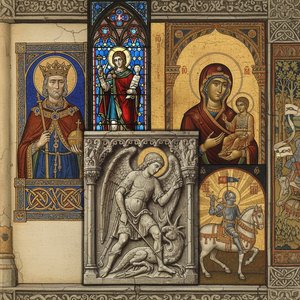
Illuminating Faith & Power: A Journey Through Medieval Art (c. 500 – c. 1500)
Explore the rich history of Medieval Art (c. 500 – c. 1500) with OriginalUniqueArt. Discover Byzantine mosaics, Gothic cathedrals & Renaissance masterpieces. Expert insights & museum-quality reproductions.

Sacred Symbols & Golden Light: A Journey Through the Divine Artistry of the Early Medieval Era
Embark on a visual journey through Early Medieval art. Explore the profound beauty of illuminated manuscripts, sacred symbols, and golden light through an expert historical lens, celebrating the enduring legacy of medieval craftsmanship and divine artistry.

Late Medieval Masterpieces: 10 Artworks That Defined an Era | OriginalUniqueArt
Journey through 10 defining Late Medieval masterpieces – from Giotto's frescoes to Jan van Eyck’s realism. Explore the stories, techniques & vibrant colors of Gothic art. Find museum-quality reproductions and elevate your home decor with OriginalUniqueArt.com! Discover all masterpieces on OriginalUniqueArt.com

High Medieval Art: 10 Masterpieces That Shaped an Era | OriginalUniqueArt
Journey through High Medieval Art! Explore 10 iconic masterpieces – from Giotto's frescoes to stunning Gothic cathedrals. Discover the stories behind these timeless paintings, sculptures & illuminated manuscripts. Find museum-quality art reproductions at OriginalUniqueArt.com.
